What are the major “tree hugging” groups in Canada?
Can you make a living in trees, we wondered?
Could we brainstorm an alphabet of tree-based careers?
(We have decided to share Lucy’s photos of wild flowers in this blog.)
Tree Conservation NGOs in Canada
Ask the Internet, and ye shall find….
Thanks to CanadianForests.com, our first curiosity is readily answered by their alphabetized “Directory of NGOs Working in the Forest Sector in Canada”.
Some names, such as, for example, Forests Ontario, Forests Stewardship Council – Canada, Greenpeace Canada, Nature Canada, Nature Conservancy of Canada, David Suzuki Foundation, Tree Canada and World Wildlife Fund – Canada, were familiar names to us through our past Blogs.
Others were surprises, like Atlantic Salmon Conservation Foundation, and, Canadian Model Forests Network, generating new curiosities and potential topics for future blogs. We wonder what the link is between salmon and trees? What is a ‘model forest’?
Some names just made us smile – Ducks Unlimited Canada.
EcoTrust Canada sounds like it addresses a gap – “builds the capacity of communities, institutions and businesses to participate in the conservation economy; raises and brokers capital to accelerate the transition to a conservation economy; and connects conservation”.
Some NGOs are quite tree specific, such as the Poplar and Willow Council of Canada.
The National Aboriginal Forestry Association (NAFA) “is a national organization created by forestry-minded Aboriginal people to advance the interests and needs of Aboriginal communities, organizations, enterprises and individuals involved in the forest sector.”
The Forest Genetics Council of British Columbia “is appointed by B.C.’s chief forester to guide tree improvement activities in the province.” We thinkg Chief Forester sounds like a cool job title.
Orange Grove Farmer, Organic Farm Gardening Assistant, Organic Landscape Maintenance Crew, Old Growth Forest Protection – Campaign Outreach Canvasser
Pollinator; Parks and Recreation Planner/Specialist; Painter; Philanthroper, Plant Health Care Arborist, Powderman with Ticket (coastal logging), Permaculture Farming Apprentice
Quality Assurance Auditor
Recycling Specialist; Renewable Gas Sector Specialist, Remote Sensing Specialist
Scientist; Shinrin-Yoku (Forest Bathing) Healing Policy Specialist; Soil Quality Specialist; Soil Erosion Mitigation Specialist, Summer Labourer – Municipal Parks and Forests
Tree Farmer; Tree Canopy Specialist; Tree Hugger :); Totem Pole Carver, Tree Service Arborist, Timber Development Specialist, Tree Removal Crew
In Canada, since 2001 apparently, the GoodJobs website has provided a focus on listing paid and volunteer opportunities in the green economy. Makes for interesting and informative reading we found, whether you are in the job market or not. For example, the site also offers lists of, and hotlinks to, major Canadian environmental and conservation organizations, green business and environment industry associations.
For fun, we also Googled “tree careers,” and found long lists of actual job postings on, for example Indeed.com at: https://ca.indeed.com/Career-Tree-jobs.
International Tree Groups
We wondered what a directory of international organizations might look like. Turns out the UN’s Food and Agriculture Organization (FAO) has just such a list, in a publication called, “INTERNATIONAL FOREST SECTOR INSTITUTIONS AND POLICY INSTRUMENTS FOR EUROPE: A SOURCE BOOK (As of February 2006),” available at https://bit.ly/3hRyfqF.
The book’s abstract describes its intent and scope – “provides an overview of the institutional landscape with relevance to forest sector policies in Europe. 43 major international, inter-governmental, private and non-governmental as well as research institutes are introduced, and their multiple activities are presented. Following a brief description of each institution, this report provides relevant information on international policies, policy instruments, programmes and publications that could have an impact on the future development of the forest and forest industry sector in Europe. The information contained in this paper is based on the World Wide Web and a broad review of existing literature.”
Again some are familiar names, such as World Wide Fund for Nature (WWF). Others foster much-needed inter-disciplinary scientific studies in areas such as “Global Change and Forests,” in the case of the IIASA. “The International Institute for Applied Systems Analysis (IIASA) is a non-governmental research organization located in Austria. The institute conducts inter-disciplinary scientific studies on environmental, economic, technological and social issues in the context of the human dimensions of global change. The IIASA overall theme in the forestry area is Global Change and Forests. It addresses the question of how to manage the forest sector in order to harmonize geo- and biospheric functions with socioeconomic development.”
The report also includes descriptions of major international private sector organizations in the forestry sector, such as the European Confederation of Woodworking Industries, Confederation of European Paper Industries, European Federation of Plywood Industry (FEIC), European Federation of Parquet Industry, European Network of Forest Entrepreneurs, Confederation of European Forest Owners (representing ‘16 million family forest owners in 23 European Countries owning on average less than 13 hectares’), and the Forest Stewardship Council (FSC), “an international network to promote responsible management of the world’s forests”.
Emerging from the Pandemic with Panache
We end this Blog post with a smile.
We like Barcelona’s approach to emerging from pandemic lockdown this week, with style.
As Global News reports, “Barcelona’s Gran Teatre del Liceu opera house reopened Monday and performed its first concert since the coronavirus lockdown — to an audience that didn’t have to worry about social distancing.”
“Instead of people, the UceLi Quartet played Giacomo Puccini’s I Crisantemi (Chrysanthemums) for 2,292 plants, one for each seat in the theatre. The concert was also livestreamed for humans to watch.”
“The event was conceived by Spanish artist Eugenio Ampudia, who said he was inspired by nature during the pandemic.”
“ ‘I heard many more birds singing. And the plants in my garden and outside growing faster. And, without a doubt, I thought that maybe I could now relate in a much intimate way with people and nature,’ he said before the performance.” https://bit.ly/37U4HnI
And, if that is not enough to make you smile, The Liceu press release on the event adds, “…The concert is an initiative of the Liceu and the artist, together with the Max Estrella Gallery and the curator Blanca De La Torre.”
“The plants will subsequently be delivered to 2,292 healthcare professionals, specifically at the Hospital Clínic of Barcelona, accompanied by a certificate from the artist.” https://bit.ly/2Z7gECf
There are few places on Earth that showcase the extraordinary beauty, diversity of life and wonders to be discovered as in the Amazon Rainforest. It provides such a unique and vital ecosystem that benefits us all, so its story is both breath-taking and heart-breaking in equal measure.
The Magnitude of the Amazon
The Amazon is the world’s largest rainforest covering over 5.5 million square kilometres. It’s so big that the UK and Ireland would fit into it 17 times!
The Amazon river system is the second longest after the Nile River and spans 6840 kms across eight countries and one overseas territory, through Brazil, Bolivia, Peru, Ecuador, Colombia, Venezuela, Guyana, Suriname and French Guiana/ France.
The Ecosystem of the Amazon
We are learning so much for this post, from sources that includeRhett Butler’s Mongabay research website, InJustOneDay website, the Verge, National Geographic Kids, the Guardian and Wikipedia.
The facts alone on the Amazon Rainforest are staggering. For example, its incredibly rich ecosystem, contains one-tenth of the world’s known species and is one of the Earth’s last refuges for animals such as jaguars, harpy eagles, and pink dolphins. The latest estimates by (InJustOneDay.com) say there are “40,000 plant species, 1600 species of tree, 3,000 freshwater fish species, 1600 bird species, 1000 amphibians, 400+ mammals and more than 370 types of reptiles.This of course doesn’t take account of the myriad of insects and invertebrates that live there.” A recent report by the World Wildlife Foundation confirmed that scientists are discovering an average of one new species in the Amazon every other day.
Photos by Lucy
According to InJustOneDay.com, more than 30 million people and around 350-450 indigenous Amerindian tribes call the Amazon Rainforest home and rely on it for their shelter, food, agriculture and livelihoods. Incredibly, they also indicate that about fifty of these tribes have never had contact with the outside world! Many would argue that the best way to protect this precious forest is to put management back in the hands of indigenous communities.
The Rain in the Amazon
“This rainforest of immense natural beauty plays an important role in limiting climate change. The forest’s rich vegetation takes carbon dioxide (a greenhouse gas) out of the air and releases oxygen. Due to the thickness of the canopy (the top branches and leaves of the trees), the Amazon floor is in permanent darkness. In fact, it’s so thick that when it rains, it takes around ten minutes for the water to reach the ground!” (InJustOneDay.com)
“The Amazon has been variously called the heart of the world or the lungs of the world because of the river’s numerous veins feeding water through to the earth or its capacity to exchange gases with the atmosphere.There are 600 billion trees in the Amazon Rainforest, for example, and with the heat of the sun, each tree every day transfers 1,000 litres of water into the atmosphere through transpiration. Throughout the entire rainforest this equates to 20 billion metric tons of water in one day. Scientists have recently discovered that this water vapour released in to the atmosphere creates low level clouds which then falls as rain in the forest. This rain encourages the air to circulate and draw in more moisture from the oceans which makes it rain even more. Through transpiration, the Amazon rainforest is responsible for creating 50-75% of its own rain.” (Info source: InJustOneDay.com).
Photo by Lucy
“We are also learning from the site that this natural process has a much wider reach, with Amazon rainfall and rivers feeding regions that generate 70 percent of South America’s wealth. Studies (InJustOneDay.com), indicate that moisture from the Amazon influences rainfall as far away as the Western United States and Central America. Without trees, there will be no transpiration which in turns impacts the level of rain which then affects water supply and brings drought to areas.”
Deforestation and Carbon Loss
“Trees not only absorb carbon dioxide from the air, they also store carbon in their roots, leaves and trunk. Trees in the Amazon rainforest hold 48 billion tons of carbon and so when trees are cut down, tons of carbon dioxide is released into our atmosphere, with the negative impact that has on the worldwide environment.” (Info source: National Geographic Kids, at: https://bit.ly/2Y0Ujao).
“Through a concerted effort by Governments and environmental agencies alike and the introduction of various initiatives, deforestation in the Amazon rainforest was in decline after 2004, mostly due to the falling deforestation rate in Brazil.”
“But sadly, according to Rhett Butler’s Mongabay research site, since 2014, deforestation is on the rise again. The site explains that “through logging, fires and land clearance there is a decrease in forest transpiration and a lengthening of dry seasons. Left unchecked, the rainforest can gradually turn into a savanna. In recent years, São Paulo – the biggest city in South America – is facing its worst water shortages in almost a century. Any previous declines in deforestation have been fueled by a number of factors, including increased law enforcement, satellite monitoring, pressure from environmentalists, private and public sector initiatives, new protected areas, and macroeconomic trends.”
Photo by Lucy
“In a study cited in September 2017 on Mongabay, the results for the Amazon are worrying. What they have found by combining studies over the last 12 years in major parts of the world where deforestation is occurring, is that the carbon that is released into the atmosphere is greater than that taken in, giving a net carbon loss, a situation that must be reversed. The study found a net carbon loss on every continent where deforestation occurs. Further, the Amazon, in Latin America, accounted for nearly 60% of the emissions.” More Amazon rainforest information and access to this study may be found at: https://bit.ly/2Y0XOxx.
Fires of 2019 in the Amazon Caused Largely by Intentional Slash and Burn Methods
Wikipedia explains that “fires in the Amazon normally occur around the dry season as slash-and-burn methods are used to clear the forest to make way for agriculture, livestock, logging, and mining, leading to deforestation of the Amazon Rainforest. Such activity is generally illegal within these nations, but enforcement of environmental protection has become lax in recent years in Brazil under the current government of President Jair Bolsanaro.” (https://bit.ly/2UP3t7Y)
Photo by Lucy from National Geographic Family Reference Atlas
Excerpts from an article by The Verge describes scientists’ and the international community’s assessment and concern over the severity of the fires of 2019, and their alarm about the implications for climate change and the world’s environment.
“These are intentional fires to clear the forest,” Cathelijne Stoof, coordinator of the Fire Center at Wageningen University (WUR) in the Netherlands, tells The Verge…The INPE (National Institute for Space Research) found that deforestation in Brazil’s Amazon hit an 11-year high in 2019. … There is no doubt that this rise in fire activity is associated with a sharp rise in deforestation,” Paulo Artaxo, an atmospheric physicist at the University of São Paulo, told Science Magazine.”
“ ‘The Amazon was buying you some time that it is not going to buy anymore,’ Carlos Quesada, a scientist at Brazil’s National Institute for Amazonian Research, told Public Radio International in 2018. Scientists warn that the rainforest could reach a tipping point, turning into something more like a savanna when it can no longer sustain itself as a rainforest. That would mean it’s not able to soak up nearly as much carbon as it does now. And if the Amazon as we know it dies, it wouldn’t go quietly. As the trees and plants perish, they would release billions of tons of carbon that has been stored for decades — making it nearly impossible to escape a climate catastrophe.”
International leaders, including those of France and the UK, called for emergency international talks on the Amazon to exert pressure and offer financial aid, for President Bolsanaro to act on the August 2019 fires.
Photos by Lucy
For the full analysis on the 2019 Amazon fires, including why this is such a hot topic politically, and how the policies and practices of the Bolsanaro government are viewed as making it easier for industry to enter the rainforest and for development to encroach on land previously set aside for Indigenous tribes and preservation, read more at The Verge, at https://bit.ly/2YADimz.
Most of us looking in likely think this was just a bad fire season in the Amazon, but in truth, the climate conditions were not favourable for bad fires, and many of these fires were man-made.
Last word on this goes to Lancaster University’s Jos Barlow, interviewed by the Verge, “The best fire fighting technique in the Amazon is to prevent them in the first place — by controlling deforestation and managing agricultural activities.” (Info sources: https://bit.ly/3hFIzSA; https://bit.ly/3epWMkc; https://bit.ly/3fGdV9x, and, https://bit.ly/3ehCTvY).
Will 2020 be a Better Year in the Amazon?
“It’s too early for a verdict, but at present, threats to the Brazilian Amazon are growing virtually unchecked while the COVID-19 pandemic deepens in 2020. As the virus spreads, ‘land grabbing’ is advancing and there is no sign of deforestation slowing. According to a recent article in The Guardian, “On the contrary, numbers are skyrocketing with nearly 800 square kms of forest cut down during the first quarter of 2020, a 51% increase compared to the same period in 2019. The situation in the Amazon looks to get far worse before it gets better.” https://bit.ly/2UKFN4A.
The Amazon and Generations to Come
A call to action, from InJustOneDay.com, which speaks to us both – “So, for the millions of people, animals and plants that rely on and live in the Amazon and for the millions of us who benefit from its survival, we must protect and preserve it for now and for generations to come.”
Photos by Lucy
“The Amazon rainforest and river and all it holds is a reminder that there are still great wonders to be discovered. They are everywhere, every day often in the things we barely notice, the things we almost forget.” https://bit.ly/2Y5NvbE
We have come to learn and believe that the Amazon rainforest is a treasure, and our heart and lungs for the Earth. https://bit.ly/3de9a5E
“The #AmazonRainforest is a critical piece of the global climate solution. Without the largest rainforest in the world, we cannot keep the Earth’s warming in check. The Amazon needs more than prayers. 50% of all known plants and animals on Earth live in the #rainforest. If these forests disappear, many of these species will have nowhere else to go.”
What Can One Person Do to Save the Amazon Rainforest?
As an individual living so far away from the Amazon it is easy to feel helpless as to how one can make a difference in saving this Rainforest. Here are some suggestions from tanksgoodnews.com, that we each might consider:
“1. Donate to a rainforest-focussed nonprofit:
Organizations like the Rainforest Trust and the Rainforest Alliance are working to combat the destruction of the Amazon rainforest by increasing environmental protections and stopping the rampant and illegal deforestation that is threatening one of the Earth’s most vital ecosystems.”
“2. Be a conscious consumer:
By doing your best to buy products that are certified as sustainable and rainforest-conscious you can help stop the demand that spurs illegal deforestation by ranchers and farmers in the Amazon basin.”
Some people won’t want to hear this one but a huge factor leading to the deforestation that is causing the fires isthe global demand for beef that is spurring ranchers to burn more and more land in the Amazon basin as they clear land for cattle. It may feel like a small thing but maybe reconsider that next burger.”
“The Amazon faces a dire threat: beef production. The record-breaking fires in the rainforest are mostly manmade to clear land for cattle grazing so much of the Amazon Is ‘Burning for Beef’. Fires are three times more common in the Amazon cattle farming areas and are used to clear forest for pasture. Fragile law enforcement means fines are ignored.”
You can lend your name and support to several petitions that have been started both on Change.org and by Greenpeace. A petition started by a private citizen in Brazil titled “Stop the burning of the Amazon rainforest!” has already garnered an incredible 4 million signatures, showing just how much people care about stopping the devastation.”
“5. Read About and Talk About Deforestation of the Amazon:
Whether you do so on social media or in your social circle, the more you and others discuss this issue the more it will be part of the public discourse. By sharing stories about the horrendous damage being done you’re helping to raise awareness of a vital issue, the survival of the Amazon Rainforest.” https://bit.ly/3e6hUfd
Photo by Lucy
We found it very informative to read and learn about the Amazon Rainforest for this blog, and we hope it offers some “food for thought” for our Readers too, as it has raised our own awareness .
As we all continue to shelter-in-place during the pandemic, many of us are becoming more aware and intentional about pursuing opportunities to support local farmers of the food we eat. (Some of us are even trying our hand at vegetable gardening ourselves and learning firsthand just how patient, dedicated and resilient farmers need to be!)
We might want to consider how to extend such mindfulness to include local buying practices that have preserving the Amazon rainforest in mind too (e.g., choosing to buy local beef, soy, grains; or looking for eco-certifications such as ‘green frog’ symbols on international products). Consider all forms of protein when planning meals – the Canadian food guide suggests protein can be in the form of: fish, lentils, beans, nuts, seeds, yogurt, milk, chicken, pork, beef, eggs and tofu.
A Look at Four Of the Amazing Amazon Trees
It’s no secret that we need trees—much more than they need us. To end this blog on a high note, here are just a few beautiful and important species of trees from the Amazon for Readers to behold, courtesy of Rainforest-Alliance.org at https://bit.ly/2YCW6RZ.
Kapok Tree
“This rainforest giant can reach up to 200 feet in height. Some varieties of the kapok tree bear spines or conical thorns, giving the tree a menacing appearance. Many plant and animal species, such as frogs, birds, and bromeliads, appreciate the nooks and crannies formed by the kapok’s roots. Some indigenous communities, such as the Sani Kichwa in Ecuador, believe that the the kapok tree tree is the father of all animals.”
Kapok Tree In Madre de Dios, Peru. Photo Credit Moshin Kazmi
Rubber Tree
“Native to the Amazon, the rubber tree provides material for everything from tires to waterproof clothing. We have the ancient Olmec, Maya, and Aztec to thank for first discovering the versatility of the tree’s milky white sap, known as latex. After approximately six years of age, the tree can be tapped for this substance by removing thin strips of bark. Once collected and dried, the latex gets processed and turns into what we call natural rubber.”
Photo by Lucy
Ramon Tree
“Indigenous to parts of Central America, South America, and the Caribbean, the ramón tree is typically found in abundance in these regions’ forest ecosystems—a result of its centuries-long cultivation by indigenous communities. These communities harvest the nut from the tree’s fruit, for its nutritional value. When dried, it can be stored for up to five years without spoiling, making it an important food source in regions with frequent periods of drought and food instability.”
Photo credit Sergio Izquierdo
Xate Tree
“Xate (pronounced SHA-tay) are the leaves produced from three species of palms most commonly found in Belize and Guatemala. Growing in the understory of Neotropical forests, xate is commonly used in floral arrangements due to their lush appearance and their hardiness—they can last up to 45 days after being cut! By harvesting xate, these women in Guatemala’s Maya Biosphere Reserve have not only found a sustainable way to manage their forests, but also have taken on leadership roles in these enterprises.” https://bit.ly/2V06Zwm
Photo Credit Sergio Izquierdo
Plants Help Home Air Quality
From trees as “lungs of the world” to plants as home air purifiers.
We are happy to build on and follow up last week’s Blog post, which offered research evidence to help answer the question of which trees are best for improving urban air quality, with this tidbit on improving indoor air quality through beautiful house plants.
Turns out there is NASA research (!) which identifies the best house plants for cleaning indoor air.
The skinny is that snake plants, spider plants, Boston ferns and the peace lily are among the best.
Photo by Lucy of Snake Plant and Spider Plant
Here’s the evidence and summary excerpt from the actual NASA research report:
“Low-light-requiring houseplants, along with activated carbon plant filters, have demonstrated the potential for improving indoor air quality by removing trace organic pollutants from the air in energy-efficient buildings. This plant system is one of the most promising means of alleviating the sick building syndrome associated with many new, energyefficient buildings. The plant root-soil zone appears to be the most effective area for removing volatile organic chemicals. Therefore, maximizing air exposure to the plant root-soil area should be considered when placing plants in buildings for best air filtration. Activated carbon filters containing fans have the capacity for rapidly filtering large volumes of polluted air and should be considered an integral part of any plan using houseplants for solving indoor air pollution problems.”
The full (dry) NASA report at: https://go.nasa.gov/3hri82K. ( ” Interior Landscape Plants for Indoor Air Pollution Abatement Final Report – September 15, 1989″.)
What makes us uniquely Canadian? That is a vast topic, for different bloggers to tackle.
In terms of wildlife, however, and more specifically plant wildlife, our interest was piqued by a recent CBC article profiling research called “Ours to Save.” The study apparently achieved a Canadian first.
As the report’s authors and sponsors describe, “NatureServe Canada and the Nature Conservancy of Canada (NCC), in consultation with experts from across the country, have developed the first comprehensive list of plants, animals and fungi that can only be found in Canada.”
This select group of 308 of Canada’s “nationally endemic species” occur only in Canada.
The report systematically identifies wildlife species and sub-species that are unique to each province and territory, and flag more than 200 vulnerable species that “only Canada can save from extinction”.
Here we will keep our focus on the findings related to plant wildlife, illustrating example species and profiles of provinces and territories.
The authors hope that, “The results of this project can be used to prioritize conservation actions and to inspirepublic support for species and habitat protection in Canada.”
Readers who want to learn more about a specific region, and/or the other wildlife addressed in the study (e.g., animals, insects) may read the full report (75 pages) here https://bit.ly/2MGZVQq, and species profiles at https://bit.ly/3h95bKT.
Endemic Plants
“There are 109 nationally endemic plants in Canada. Almost 60% are full species and the remainder are subspecies and varieties. Only 12 are ranked by NatureServe as globally Secure or Apparently Secure. These secure plants include species with restricted ranges that are abundant and not threatened, such as Ogilvie Range Locoweed (Oxytropis nigrescens var. lonchopoda) in Yukon, and species that are more widespread but their global range is restricted to Canada. This includes Limestone Scurvygrass (Cochlearia tridactylites) and Limestone Willow (Salix calcicola var. calcicola).”
“Endemic plants occur in every province and territory, with BC and Quebec having the greatest number. The territories, Newfoundland and Labrador, and Saskatchewan are also relatively rich in endemic flora. Key areas for endemic vascular plants in Canada include the Athabasca Sand Dunes, coasts of the Gulf of St. Lawrence and St. Lawrence River freshwater estuary, islands of Canada’s West Coast, mountainous regions in Yukon and limestone plains on the island of Newfoundland.”
“Canada has 14 species of mosses, liverworts, lichens and fungi that are nationally endemic. Only one of these is a subspecies. All are of global conservation concern or are Unranked. These species occur across the country, including a beard lichen (Usnea fibrillosa) endemic to Nova Scotia, Slender Notchwort (Crossocalyx tenuis) endemic to Ontario and Carlott’s Wijkia Moss (Wijkia carlottae) endemic to Haida Gwaii.”
Example Endemic Plant Species Profiles
“Lake Louise arnica” is a small, perennial herbaceous plant in the sunflower family, named for Lake Louise in the Canadian Rockies.
This species’ pale-yellow colour and drooping shape help distinguish it from similar arnica species in the region.
Lake Louise arnica is unique to Canada and is found only in the Canadian Rockies of Alberta and BC. It grows in alpine meadows and on rocky, exposed slopes at high elevations.
This species is globally imperiled with observations in only about 20 locations.” https://bit.ly/37fG04E
“The Gulf of St. Lawrence Aster is a fleshy annual plant with clusters of small, white to pinkish flowers.”
“Its leaves are lance-shaped and range from 1.1 to 6.5 centimetres in length and from two to 9.8 millimetres in width. The tip of its leaves is slightly rounded.”
“Gulf of St. Lawrence aster produces dry fruits, called achenes, with silky tufts, which help the seeds to be dispersed by wind. This plant is also self-fertile and can reproduce on its own without other plants.”
“There are only 29 known populations of this species, whose range is limited to Quebec’s Magdalen Islands, New Brunswick and Prince Edward Island.”
“This species grows on moist sandy soils. It can be found on coastal habitats: beaches, dunes, lagoons and dry areas in salt marshes.”
“The Gulf of St. Lawrence aster is assessed as threatened by the Committee on the Status of Endangered Wildlife in Canada.”
“Hairy braya was first collected during the Franklin expedition in 1826. Journals from the expedition were used to relocate this wildflower more than 150 years after its discovery. It is restricted to a small area along the northern coast of the Northwest Territories and is highly threatened by climate change and rising sea levels.”
Yukon draba: This delicate, white wildflower lives in dry open meadows in southwestern Yukon and is restricted to just a handful of sites. It is a relic of the land bridge that stretched between Russia and the Yukon during the last Ice Age.
Example Profiles forProvinces and Territories
The following excerpts give an illustrating flavour of the way findings are reported for each province and territory.
“Alberta has 54 nationally endemic species — the third highest in Canada (behind British Columbia and Quebec). Fifteen of these are subspecies or varieties, and four species have unresolved taxonomic questions. Alberta’s nationally endemic species include 16 vascular plants and two species of tiger beetles. Alberta also includes a portion of the breeding habitat for Whooping Crane (Grus americana) in Wood Buffalo National Park.”
Most Canadian endemic species occurring in Alberta are associated with the Rocky Mountains, Lake Athabasca and Cypress Hills. Many of the Rocky Mountain endemics can be found in Banff, Jasper and Waterton Lakes national parks and surrounding areas. Lake Louise Arnica (Arnica louiseana) is a colourful wildflower that can be found on exposed alpine slopes and calcareous rock slides at high elevations. There are also a few nationally endemic species that occur in the prairie region of the province. This includes Margaret’s Diving Beetle (Agabus margaretae), a predaceous beetle that only lives in vernal ponds in the northern prairies of Alberta and Saskatchewan.
“British Columbia has 105 nationally endemic species. This is the highest in all of Canada and represents over one-third of Canada’s nationally endemic species. This includes 36 subspecies or varieties, and five species with questionable taxonomy. Over 70% of the nationally endemic species from BC are vascular plants and invertebrates. The province holds the vast majority of Canada’s endemic mammals and birds. There are 76 nationally endemic species found only in BC, by far the highest number in Canada. Many of these occur on Vancouver Island, Haida Gwaii and other islands that probably acted as refugia during the last period of glaciation. Vancouver Island and Haida Gwaii both have several endemic mammals and birds including Vancouver Island Marmot (Marmota vancouverensis), Vancouver Island Water Shrew, (Sorex navigator brooksi) Queen Charlotte Hairy Woodpecker (Dryobates villosus picoideus),Queen Charlotte Pine Grosbeak (Pinicola enucleator carlottae), and several subspecies of the Townsend’s Vole (Microtus townsendii) (Cornely & Verts, 1988).”
“For its size, Nova Scotia has an extraordinary richness of nationally endemic species. Twenty-eight species have been documented, a richness similar to larger regions, including Ontario, Manitoba and Nunavut.”
“Over 40 percent of the national endemic species found in Nova Scotia do not occur in other jurisdictions (Table 11). This percentage of subnational endemics is only greater in British Columbia and Yukon.”
“Nunavut Canada’s largest territory has 29 nationally endemic species. This includes 13 subspecies or varieties.”
“Five Canadian endemic species are found only in Nunavut (Table 12), including two butterflies. Johansen’s Sulphur (Colias johanseni) is only found on the dry tundra at Bernard Harbour in Nunavut. Rankin Inlet Sulphur (also known as the Kivaliq Sulphur) (Colias rankinensis) is more widespread and has been recorded in several locations across mainland Nunavut (Schmidt, 2018).”
“Ontario has a total of 28 endemic species. One-third are subspecies or varieties, and three species have questionable taxonomy. Most nationally endemic species found in Ontario are vascular plants and invertebrates. Nine of Ontario’s endemic species are entirely restricted to the province (Table 13). These species include a small scavenger beetle (Hydnobius autumnalis) that is only known from eastern Ontario; Slender Notchwort (Crossocalyx tenuis), a liverwort that has only been found on the Bruce Peninsula and Eugenia Falls on the Niagara Escarpment; a lichen (Myriolecis carlottiana) that only occurs on the Bruce Peninsula and Manitoulin Island; and Cain’s Screw Moss (Syntrichia cainii), that is restricted to alvars. The only other moss species restricted to Ontario is now believed to be extinct. Macoun’s Shining Moss (Neomacounia nitida) was first found in 1864 in elm and cedar swamps near Belleville and has only ever been known from those original collections. The original site had been cleared by 1892, and this moss has never been found again despite searches in 1972 and 2001 (COSEWIC, 2002).”
“Quebec has 57 nationally endemic species, the second highest number in Canada. This includes 17 subspecies or varieties, and six species have questionable taxonomy. Over 40% of the nationally endemic species from Quebec are vascular plants and seven are butterflies or moths.”
Which Trees are Best for Reducing Air Pollution?
We are often asked which trees are “best” for climate action.
This May 2020 article in the BBC highlights research findings by “Future Planet” on this question, which to no surprise involves many variables and as such, is complicated to answer.
Nonetheless – our topline take-aways, for Readers who want to cut to the skinny – conifers and low-VOC (volatile organic compound)-emitting trees.
The article starts by giving us examples of urban tree projects intended to help reduce air pollution, with the reminder that of course it is always better “to reduce emissions of pollutants in the first place.”
“But trees also play a vital role in directly removing pollutants from the air. Plants are often seen as the “lungs” of an ecosystem because they absorb carbon dioxide and emit oxygen, says Rita Baraldi, a plant physiologist at the Institute of Bioeconomy of the Italian National Research Council. But they also act as an ecosystems “liver” too, filtering atmospheric pollutants like sulphur dioxide and nitrogen dioxide through their leaves.”
“Trees are particularly effective at removing particulate matter (PM), Nowak adds. PM comes in the form of tiny particles of organic chemicals, acids, metals and dust, emitted from fossil-fuel-burning vehicles and factories, as well as construction sites.”
Our top line take aways: Trees help reduce air pollution through dispersion and deposition of particulate matter (PM). Bigger tree canopies and leaf types with rough, rugged hairy surfaces are the best filters. Silver birch, yew, elder trees, silver maple, honey locusts and conifers, like pines and cypresses, are the most effective. Urban planners are advised to favour conifers and deciduous trees that are low producers of volatile organic compounds (VOCs).
“From an urban planning perspective, plants act as a readily available set of PM purifiers. “Trees can help reduce PM in two main ways,” says Prashant Kumar, the founding director of the Global Centre for Clean Air Research at the University of Surrey.”
Photo by Catherine
“The first one is dispersion – by crashing into trees and plants, concentrated clouds of minuscule particles get dispersed and so diluted by the air, decreasing the risk of inhalation by humans. The second one is deposition. PM can easily get trapped in the waxy, hairy leaves of trees and shrubs. When it rains, most of these particles are washed away by water into drains.”
“The extent to which each species performs such filtering activity depends mostly on canopy size, leaf size and leaf structure,” says Baraldi. Bigger canopies can trap more particles than smaller ones, and larger leaves can trap more pollutants than small ones. When it comes to leaf type, it is those with rough, rugged and hairy surfaces that act as the “best filters” for PM.”
“Recent research suggests that tiny hairs on plant leaves in particular may play a big role in trapping the solid and liquid particles that make up PM. In one recent study, Barbara Maher and colleagues at the University of Lancaster tested the ability of nine tree species to capture PM in wind-tunnel experiments. Silver birch, yew and elder trees were the most effective at capturing particles, and it was the hairs of their leaves that contributed to reduction rates of 79%, 71% and 70% respectively. In contrast, nettles emerged as the least useful of the species studied, though they still captured a respectable 32%.”
Photo by Lucy
Alpine air
“Conifers, like pines and cypresses, are also good natural purifiers. In 2015, Jun Yang, an urban ecologist at the Center for Earth System Science, Tsinghua University, in Beijing, ranked the most frequently occurring species in cities based on their PM 2.5 absorption capacity. The ranking also took into account species’ ability to survive in urban contexts, and any negative impact on air quality, such as the production of allergens, and of volatile organic compounds (VOCs) – a set of substances that can interact with gases emitted by vehicles, like nitrogen dioxide. In the presence of sunlight, these reactions can contribute to ground-level ozone, which is harmful to human health. The effects can be considerable; when a heatwave hit Berlin in 2006, the ozone created by the interaction of plants’ VOCs and vehicles’ pollutants resulted in sudden decreases in air quality.”
Photo by Lucy
“To Yang’s surprise, his ranking system showed that the most widespread species of trees were not the best pollution filters. “Of the 10 most recurring species, only the London plane, silver maple and honey locust ranked above average,” he says. It was conifers, such as pines and cypresses, that were the best pollution filters. Planting conifers, Yang concluded, would make most sense in polluted cities like Beijing to reduce PM2.5s. The Chinese capital routinely reports PM levels above 125 micrograms per cubic meter, more than 10 times greater than World Health Organization recommended threshold of 10 micrograms per cubic meter.”
“The reason for conifers’ success in reducing PM is partly down to their canopy structure – the dense canopy of needle-like leaves typical of conifers is very effective at trapping pollutants. And their seasonal biology helps too. “Conifers offer the best PM reduction because they are an evergreen species,” Nowak says. Unlike deciduous trees, who lose their leaves during winter, evergreen species act as year-round filters. “But that does not automatically make them fit for any context.”
“The issue with conifers, Nowak says, is that many species can be very sensitive to salt levels in soils, which tend to be high in urban areas especially where salt is used to de-ice roads. Compounding the issue, conifers’ year-round canopy can block sunlight from melting snow and ice, which can lead to road traffic problems in cities subject to cold temperatures, Nowak notes. These two drawbacks to conifers were also cited by Yang as caveats to be considered in his recommendations.”
Photo by Catherine
Troubling trees
Our top line take aways: Overall, favour year round canopies offered by conifers, especially conifers with low-production of volatile organic compounds (VOCs) such as hemlocks and junipers and low-VOC deciduous trees like elm, horse chestnuts and basswood.
“Some deciduous species can also come with side-effects, Nowak says. For example, trees commonly found in cities of the northern hemisphere – such as poplars or black gum trees – can emit high levels of VOCs.
“Ideally, you want to be able to identify species that can maximise PM absorption but minimise ozone-precursor production,” says Margarita Préndez, an organic chemist at the University of Chile, who has studied how different species affect air quality in Santiago. Nowak cites conifers like hemlocks, junipers and deciduous trees like elms, horse chestnuts and basswood as examples of low-VOC plants.”
“Based on data from Santiago and other Chilean cities, native trees emit fewer VOCs than non-native trees,” Préndez adds. In Santiago, non-native species like the Prunus and the London plane tree can produce up to 30 times more VOCs than native species.”
“But this rule might not apply everywhere, and Yang says that you can’t generalise when it comes to endemic versus introduced trees. “Some of the best species for air pollution reduction are non-native,” he says. “We should not rule them out for ideological reasons.”
Which trees, where to plant them?
Our top line take aways: Seek expert guidance on which trees to plant and where to plant them to maximize tree benefits for improving urban air quality. It is complicated. Fortunately , there is an expert report to guide urban planners, by the Global Centre for Clean Air Research, University of Surrey, called, “Implementing Green Infrastructure for Air Pollution Abatement: General Recomendations for Management and Plant Species Selection”. The document “summarizes best practice regarding Green Infrastructure implementation for improved urban air quality and reduced pedestrian exposure to air pollution. Generic (i.e. not site-specific) recommendations are offered for typical urban environments.”
“It’s a finely balanced business to find the right trees for a city. But that’s just the start, says Nowak. The next question is where to plant them.”
“Many well-meaning schemes have suffered because of poorly planned planting. “Some cities like Beijing and Mexico City have planted trees pretty far from the city centers,” says Rob McDonald, lead scientist at The Nature Conservancy. ‘That may not be that beneficial.’”
“McDonald, who works with municipal governments to manage urban forests, says that as a rule of thumb, trees need to be planted close to where people – and sources of pollution – are.”
“And as wind direction and landscape structure can affect the way pollution moves, trees need to be planted accordingly, Nowak adds. In narrow streets surrounded by tall buildings, like those of downtown Manhattan, airflow can trap pollutants close to the ground. Planting tall trees with big canopies can make matters worse in this situation by preventing the pollution from dispersing. A recent tree planning scheme in Beijing ended up trapping pollution in certain areas, partly for this reason.”
Photo by Lucy
“Kumar and his team recently issued specific recommendations for urban planners on this point. Hedges or green walls are generally to be preferred to trees in narrow streets flanked by tall buildings. While on broad roads surrounded by low-rise buildings, like those typical of the American suburbs, air can flow more freely so there is less risk of trapping pollutants, making both trees and hedges viable options. Examples of roadside hedges that work well include viburnum, red tip photinia, privet and bay laurel, Baraldi adds.”
“Ensuring biodiversityis also essential, even if one tree species is a standout winner in terms of its pollutant-trapping abilities. Kumar recommends that no more than 5-10% of an urban forest should be made of the same species or family. And a final factor that Nowak notes is that one should be realistic about maintenance and lifespan – plants that require little attention and that will last several decades are to be preferred.”
Implementing Green Infrastructure for Air Pollution Abatement: General Reccomendations for Management and Plant Species Selection – full report https://bit.ly/30qWUMb.
To access the full BBC article on Best Trees to Reduce Air Pollution (May 2020), that is the main source for this Blog post, see https://bbc.in/2XJuR94.
We are leaning that pears can grow in all provinces of Canada and the most common is the Bartlett pear. Pear trees can grow up to 40 feet tall, so you might want to consider a dwarf or semi-dwarf variety. See information below on which pear trees can self-pollinate. There are many varieties to choose from so talk with your local nursery about your choices.
Planting: “Pear trees need to have full sun. For best results do not grow from seed. For planting dig your hole wide and deep, mixing mix plenty of compost into the soil. Remove the tree from its container and set it in the hole to the same depth it was in its container. Gently spread the roots and refill the hole with the extra soil. Water well and continue to water regularly, about once or twice a week, until the roots are well established. Stake the tree too. “
Photo by Shanthi
Pruning: “A pear tree should be pruned immediately after planting, leaving only a central leader and choose three to five branches with outward rather than upward growth and prune out the rest. Trim off the ends of the remaining branches to encourage growth. Luckily pear trees have few insect problems. For the home garden with only one or two trees, fruit tree fertilizer spikes are perfect for fertilizing. Once established pear trees are very little work.” (Source: GardeningKnowHow.com https://bit.ly/2zVPTIr)
Photo by MaryAnn
Pollination of Pear (and Apple) Trees
“Just like apples, pears are predominantly self-sterile and need to be paired with a pollination partner to produce fruit. There are a few partially self-fertile varieties that will crop without a partner, but any crop is much improved with one. Note that ‘Conference‘ and ‘Obelisk‘ are the only varieties that self-pollinate. It is best to ask your nursery which trees are most compatable. In a city, bees are more likely to travel a distance to find another pear tree to pollinate but this is more unlikely in the countryside.” https://bit.ly/2ACBXT
Photo by Lucy
Raspberries
Lucy has been reading about growing raspberries, in the Farmer’s Almanac.
“Raspberries are a bit unsightly and can look bushy, but produce a lot of fruit for a small space. For those of you starting new and with children, there are varieties that have no prickles. There are two main types, those that are summer bearing, growing fruit on last year’s growth, one crop per season and those that are fall bearing (everbearing) producing fruit on the new canes and will produce in the fall and maybe the following summer. A mix of both would produce the biggest harvest. They are self-fertilizing and produce fruit the year after planted. There is a range of types for different climate zones.”
Planting: “Best to plant a one year old plant in the early spring when frost is gone, or in milder zones you can plant in the fall. The more sun the more fruit. The planting site needs rich and well-drained soil, great air circulation, and shelter from wind. Avoid a wet area, as well as a windy spot, as raspberries do not like to stand in water nor totally dry out. Add compost every year. Soak the roots well before planting 18” apart and cut the cane to nine (9)” to encourage fruit.”
Pruning: “The canes live two (2) years and dead canes need to be pruned out annually. Tall varieties may benefit from supports like a trellis or fence. Dig up any suckers that grow well away from the row as they will take away and there will be less fruit production.”
“Prune summer-bearing raspberries immediately after you’re done picking! Cut only the canes that produced berries back down to the ground. Remember this plant produces berries on two year old canes while one year old canes grow right beside them. You shouldn’t have trouble telling which is which: the older canes have brown stems, and the young ones are still green. Prune only the older ones, the ones that have finished their fruitful year.”
“For Pruning fall-bearing raspberries, just cut all canes back the ground in late winter before growth begins in the spring.”
Photo by Lucy
Harvesting: “This is so simple, but best done on a dry day, and the fruit should simply fall off the stem, and you and will be harvesting over 2 week period. Lucy likes to run out in the morning and pick berries to put on her cereal. You can also make raspberry crumble, muffins, pies, sauce or jams. They are a great source of fibre and vitamin C.” https://bit.ly/2zLbLGI
Apple Trees
Photos by Lucy
“The most common fruit tree in Canada is the apple tree, and we grow 40 different varieties of the 7500 varieties in the world. Of the 15 varieties grown in Ontario, the top 5 areMcIntosh, Gala, Empire, Red Delicious and Northern Spy.” In an epic apple pie challenge, chef Heidi Fink compared many apples to determine the best ones for pie, and, surprisingly, many apples tasted great, but it was not the ones you would expect that keep their shape once baked. Check this out if you are particular about your apple pie. In Lucy’s house it is traditional McIntosh, like Grandma used.
According to the reading we did at the site Harvest to Table, which has information on growing anything and everything, here are the many things to consider when choosing the right apple tree:
Photo by Lucy
– “size and shape of tree for the space you have
-age of tree, as it can take 4 or more years to bear fruit
-when you would like your fruit to be mature each season-early or late bearing fruit
-does the tree self pollinate or which trees should be planted together
-color of blossoms
-what grows best in your zone or has longest life span
-flavour of fruit for eating (dessert apple), sweet or tart
-do you want a cooking or culinary apple for sauce, cider or baking or
-do you want fruit to store for a long time, or that tastes better with age”
This is a complex decision, but we are so lucky in Canada to have so many choices.
Strawberries
We were interested to learn about growing strawberries and rhubarb, and to our delight and surprise we learned thanks to GardeningKnowHow.com that, not only are they a tasty pairing, but the two plants also grow well together.
The Ontario Ministry of Agriculture, Food and Rural Affairs (OMAFRA) website advises that, “Strawberries can be grown anywhere in Ontario.”
“Growth in our common varieties is affected greatly by temperature and length of the daylight period. In new plants, runner production occurs during the long days and warm temperatures of summer. “
Photo by MaryAnn
” ‘Everbearing’ and ‘day-neutral’ varieties are less sensitive to temperature and day length than ordinary varieties.”
“Strawberries can be grown in most garden soils. However, they grow best in well-drained, sandy loam soils which are well supplied with organic matter.”
“A good supply of organic matter in the soil is important. Organic matter improves air and water movement, favours growth of helpful soil organisms, provides nutrients, and increases the water-holding capacity of the soil.”
“Wherever possible, plant strawberries in soil which has not grown strawberries, raspberries, potatoes, tomatoes, peppers or eggplants in the past four (4) or five (5) years. This precaution will help avoid serious root diseases such as Verticillium wilt and black root rot.”
“Plant in the spring as soon as the ground can be prepared. This allows plants to become established early and start producing runners. Early-formed runner plants produce more berries than plants formed in late summer and fall.”
“Strawberries are usually grown in the “matted-row” system. Set plants about 60 cm (24 in.) apart in rows which are 90-120 cm (3-4 ft.) apart.”
Care of young plants – Blossom removal
“Remove all blossoms that appear a few weeks after plants are set. (For treatment of everbearers see following pages.) Plants grow better and produce more runner plants when blossoms are removed.”
“Water during dry periods. Wet the soil to a depth of about 15 cm (6 in.) and let it dry out fairly well before watering again.”
“Sawdust or other mulching materials may be placed around the plants in the row to keep down weeds, conserve moisture and keep the fruit clean. This is particularly useful for hill-system plantings. “
Photo by MaryAnn
Spacing runner plants
“In matted rows, space runner plants about 15 cm (6 in.) apart in the row. A small amount of soil can be placed just behind a runner plant to hold it in place. If plants are crowded they do not yield well, and produce small berries. Also, when plants are crowded, blossoms may not be pollinated well and diseases are usually more troublesome.”
Everbearers
“As mentioned under ‘Growth Cycle’, everbearing varieties have the ability to produce blossoms in the summer for a late-summer and fall crop.”
“Culture of everbearers is almost the same as that described for regular varieties. In the year everbearers are planted, remove all blossoms until about the middle of July. The blossoms that form later will produce a late-summer and fall crop. In the following year, these varieties bear a crop at the regular time in early summer.”
Winter protection – Why needed
“Low winter temperatures injure roots, crowns and flower buds. Also, freezing and thawing of the soil lifts plants and breaks roots. With winter protection, strawberry plants can be grown in any part of Ontario.”
“Cover plants with straw (wheat, oat, rye) in the late fall. Use straw which is free of weed and grain seeds.”
More information on topics such as, care when berries are developing, yields and duration of plantings, novelty methods, varieties, performance ratings of frozen straweberries, diseases and insect control, may be found at the OMAFRA site https://bit.ly/2ZWfyLP.
Strawberry-Rhubarb Crisp is so simple and delicious and Lucy’s Favourite Dessert to bring to the office or serve the family when rhubarb is ready for harvest. Easy to substitute apples and blueberries.
Growing Perfect Strawberries
Edmonton’s SalisburyGreenhouse.com site offers a wealth of information and tips for home gardeners, include this on growing perfect strawberries.
“Getting the best tasting strawberries starts with planting. Make sure the soil drains freely and is chopped full of rich organic matter. If water pools, or if it’s dustily depleted, enrich with a generous dose of compost or sea soil.”
“If you’re really keen, check the soil’s pH to ensure it’s slightly acidic (between 6-7). Strawberry plants love potash and phosphorous, so sprinkle wood ash and bone meal in while planting.”
“As with herbs, young plants yield the sweetest fruit. While older plants produce more, it’s by replacing quality with quantity. I suggest re-planting perennial strawberries after 3 years; establish 1/3 rotation so you’re never left hungry.”
Readers may learn more about the June bearing, everbearing, and alpine types of strawberries at https://bit.ly/3gGBJeU.
Rhubarb
“Rheum rhabarbarum (or Rhubarb) is a perennial vegetable, though it is generally used as a fruit in desserts and jams.”
Janet’s rhubarb photo
“Because rhubarb is a perennial, its care is a little different than that of other vegetables. You will want to be sure you are planting rhubarb along the edge of your garden so it doesn’t disturb your other vegetables when it comes up each spring. You should purchase either crowns or divisions from your local garden center. Each of these crowns or divisions will require enough space to come up and provide you with large leaves. This means planting them about 1 to 2 feet (.30 to .60 m.) apart in rows that are 2 to 3 feet (.60 to .91 m.) apart. You can also just plant them on the outside edge of your garden. Each growing rhubarb plant requires about a square yard of space.” Read more at GardeningKnowHow.com, https://bit.ly/2zHOJR3.
The Farmer’s Almanac offers these tips, including links for pie recipes!
“Choose a site that is well-drained, fertile, and preferably in full sunlight. Rhubarb does best where the average temperature falls below 40ºF in the winter and below 75ºF in the summer.
Plant one-year rhubarb crowns in early spring as soon as the ground is workable, when the roots are still dormant and before growth begins or plants are just beginning to leaf out.
Dig large bushel basket-size holes. Space rhubarb plants about 4 feet apart and plant the roots 1 to 2 inches below the surface of the soil.
Be sure to mix compost, rotted manure, or anything high in organic matter in the soil. Rhubarb plants are heavy feeders and need this organic matter. Don’t add a chemical fertilizer when planting rhubarb or during the first year of growth. Direct contact with nitrates can kill your rhubarb plants.
Mulch generously with a heavy layer of straw and cow manure to provide nutrients for the plant, retain moisture, and discourage weeds.
Water your plant well. It needs sufficient moisture during the summer.
Remove seed stalks as soon as they appear.
After the first spring frost, apply a light sprinkling of a high-nitrogen fertilizer (25-3-3 or 10-6-4) when the ground is thawing or has just thawed, so that the fertilizer will go into the ground and not harm the roots.
Do not harvest any stalks during the first growing season so that your plants can become established.
Harvest the stalks when they are 12 to 18 inches long. Usually after 3 years, the harvest period runs 8 to 10 weeks long. If the stalks become thin, stop harvesting; this means the plant’s food reserves are low.”
“Always leave at least two (2) stalks per plant to ensure continued production. You may have a bountiful harvest for up to 20 years without having to replace your rhubarb plants.”
“Red rhubarb varieties, which are more tender, include ‘Valentine’, ‘Crimson Cherry’, and ‘Canada Red’.”
Check the Almanac’s recipe recommendations for Strawberry-Rhubarb Pie; Rhubarb-upside down cake; and Blueberry-rhubarb jam at https://bit.ly/2TZkXOk.
Lucy’s rhubarb photo
Good “Neigh-berry” Relationships
The Cullen brothers offer tips on hedge berry gardening and promoting positive relations with your next door neighbours.
“A hedge between keeps friendship green,” is among the many quotes attributed to 19th-century German philosopher Arthur Schopenhauer. It’s as true today as it was 200 years ago.”
“Now that planting season is here, this is a great weekend to plant a food-producing hedge; these plants are available at most garden centres.”
“The notion of growing a hedge is appealing for several reasons. If you can grow loads of edible berries, it’s an added bonus of nutrition and an opportunity to enhance the hedge friendship with your neighbour with some free food. And with the right plants and care, you can hide unsightly views, create privacy or simply mark off space in your garden or yard that has a specific use — like a vegetable garden or a path. These are our top six picks for edible hedges and screens:
1. Currants (Ribes)
2. Raspberries (Rubus)
3. (Dwarf) Apple fence (Malus)
4. Elderberries (Sambucus)
5. Japanese quince (Chaenomeles japonica)
6. Highbush cranberry (Viburnum trilobum)”
Read the full article including brief descriptors of their top six picks at: https://bit.ly/3cug2M1.
We are following up last week’s tips by Guest blogger Shanthi on fruit tree growing with a focus on some of our favourite fruit trees.
We are finding that in many cases what makes them ‘favourites’ is their connection to fond childhood memories. For example, Lucia and Catherine have a shared childhood memory of bike riding together – we lived so far apart and the bus ride to see each other took ages. Many a visit ended by lounging after a ride on the rooftop of Lucia’s shed, languidly reaching up to pluck and eat fresh sun-kissed plums from the overhanging bounty. Yum.
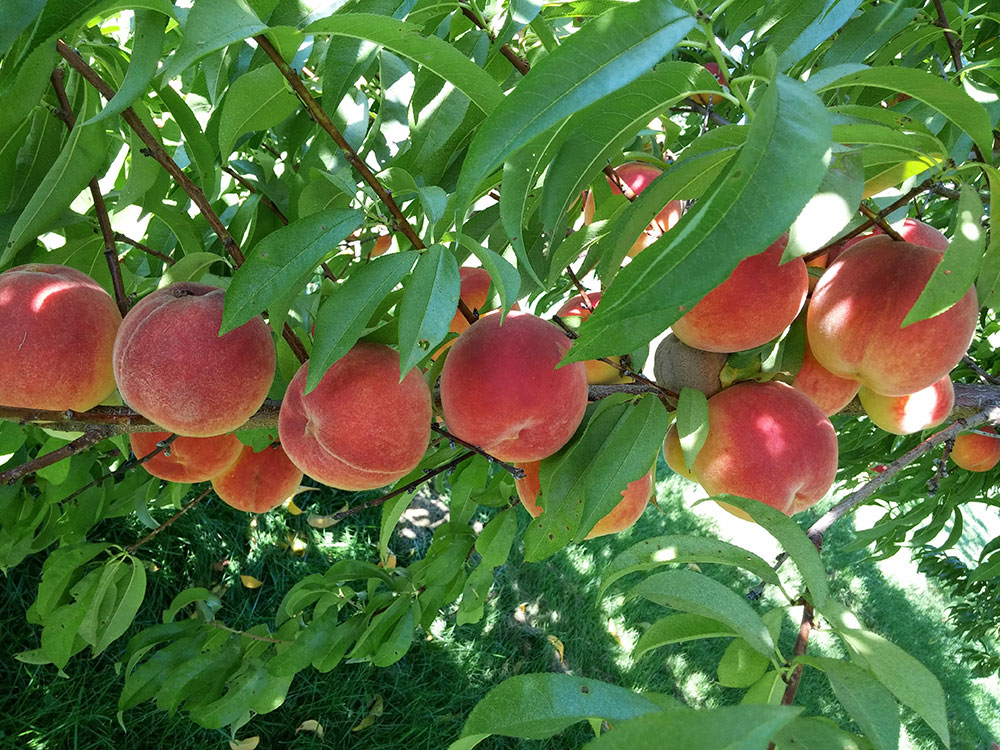
Catherine has fond memories of the shape and bright yellow hue of her childhood peach tree. She is learning from research for today’s post why she has so few memories of bountiful peach harvests from said tree. As the University of Maine web-site explains, while peach and nectarine trees are easy to grow, “In cold climates, peaches have a short life expectancy of about seven years, but severely cold temperatures can kill trees at any age.”
Lucy’s favorite fruit tree is currently the Evan’s Cherry Tree, well suited to Alberta climate, and we featured it in blog 23 in April. Also in Edmonton is a new online map, the Open Data Edible Fruit Trees map. It allows you to access free fruit from more than 22,000 apple, cherry, plum and pear trees as well as Saskatoon berry bushes. “We want to promote a local food movement and support local citizens in that local food movement. People are interested in it, and it contributes to that local food security as well,” said Nicole Fraser, manager-supervisor with the city’s beautification and greener initiative. https://bit.ly/2ZD4aEv
Most, if not all of us attach fond memories to apple trees. Whether from childhood stories and songs about Johnny Appleseed, or fall trips to orchards to ride the tractor-drawn hay wagon out to pick our own apples, to candy apple treats at the fair, or to the aroma of a home-baked holiday apple pie. Yum.
Crabapple Tree Photo by MaryAnn
Fruit Tree Culture
The more we research about fruit trees, the more we learn there is much to learn about fruit tree growing in general, as well as specific information for each tree type.
For example, Ontario’s Ministry of Agriculture, Food and Rural Affairs has a bland-looking but informative website that offers the following helpful tips for fruit tree growing success.
“There are several things that you should know about fruit tree culture that will improve your chances of success and make your hobby more rewarding. Each kind of fruit tree, even each cultivar (variety), has its own climatic adaptations and limitations.Stone fruits such as peach, sweet cherry, and plum will perform best in the warmer regions of the province.”
“Buying Fruit Trees: Well-grown, one-year-old trees are preferable to poorly-grown, two-year-old trees. One-year-old trees should have a well-grown main stem, while two-year-old trees should be well branched. Both should have good fibrous root systems. Peach and cherry trees are normally planted as one-year-old branched trees.”
“Planting in spring rather than in the fall is recommended, especially in the colder districts of the province. You should plant without delay as soon as the ground can be worked, usually in early April to early May.”
“Fertilizing: If the fruit trees are grown in a good garden soil, most trees will not require fertilizer before they come into bearing in the third or fourth year. Once in production, fruit trees benefit from light applications of fertilizer in early spring each year. A good rule of thumb for trees grown in an average lawn is to apply to each tree 300 g of a 10-10-10 mixture, per year of the tree’s age. In most instances, no more than 2.5 kg of complete fertilizer, (e.g., 10-10-10 mixture) will be required per mature tree.”
Rootstocks
“Fruit trees consist of two parts – a scion (pronounced sigh-on) and a rootstock. The scion or fruiting cultivar is grafted or budded onto a chosen rootstock and forms the above ground part of the tree. The new tree is the same cultivar as the tree from which the buds were taken, and will produce fruit of that cultivar.
Peaches are commonly grown on Bailey seedling rootstocks, which offer some winter hardiness. Certain plum rootstocks are occasionally recommended for peaches and apricots because they tolerate imperfectly drained soils. Myrobalan is the most popular standard rootstock for plum.”
Pollination
“With tart cherry, apricot and peach, a single tree will crop well when planted in the home garden. These fruits are referred to as “self-fruitful”, and will set fruit with their own pollen. Those which are “self-unfruitful” will not bear fruit unless cross-pollinated with pollen from another cultivar.Apple, pear, plum and sweet cherry are good examples of self-unfruitful fruits which require pollen from another cultivar for fruit set. When any of the above fruits are grown, two or more cross-compatible cultivars must be planted together. Crabapples can also pollinate apples.”
Training and Pruning
“The transplanted tree should be pruned immediately after planting and before growth starts. Withoutthis initial pruning to balance the tree, more leaves will develop than there is root system to support and the tree may not grow well or even die during the first summer.”
“In general, apricot, cherry, peach, and plum trees may be pruned after planting to a single whip, and cut off (headed) at about 90 cm above the soil. On peaches, if some well-developed branches exist, four or five of these may be cut back and left as short stubs of about two buds in length.” https://bit.ly/2Zwqujb
Plant Hardiness Zones – Maine Example
The University of Maine’s Co-operative Extension website is more appealing overall than OMAFRA’s, offering colourful visuals along with its fruit tree information and growing advice. Note, however, that not all information may apply fully to our Canadian growing conditions. When in doubt, it is likely best to ask your local nursery for advice in choosing a fruit tree best suited to thriving where you live.
“There are many types or species of fruit trees to choose from, but not all are suitable for a cold climate or short growing season. When choosing a fruit tree for a new orchard, consider its winter hardiness, disease resistance and the ripening date of the fruit. Flavor, suitability for baking, cider or preserves can also be deciding factors in selection.”
“Low winter temperatures limit which species or variety that can be grown.”
“The US Department of Agriculture’s Plant Hardiness Zone Map divides the United States into zones according to the expected coldest winter temperature. Zone 1 is the coldest and Zone 11 the warmest. Within Zone 6, winter temperatures are expected to get as cold as -10ºF. Most tree fruits can survive in Zone 5, but peaches, sweet cherries, and Asian plums will suffer from winter injury in colder years. More northern and western regions fall within Zone 4, which is expected to get as cold as -30ºF, too cold for peaches, nectarines, apricots, cherries, Asian plums and European plums. Some varieties of pear and plum will tolerate winter in Zone 4. The most northerly regions are within Zone 3, and only a few varieties will survive the cold in this region.”
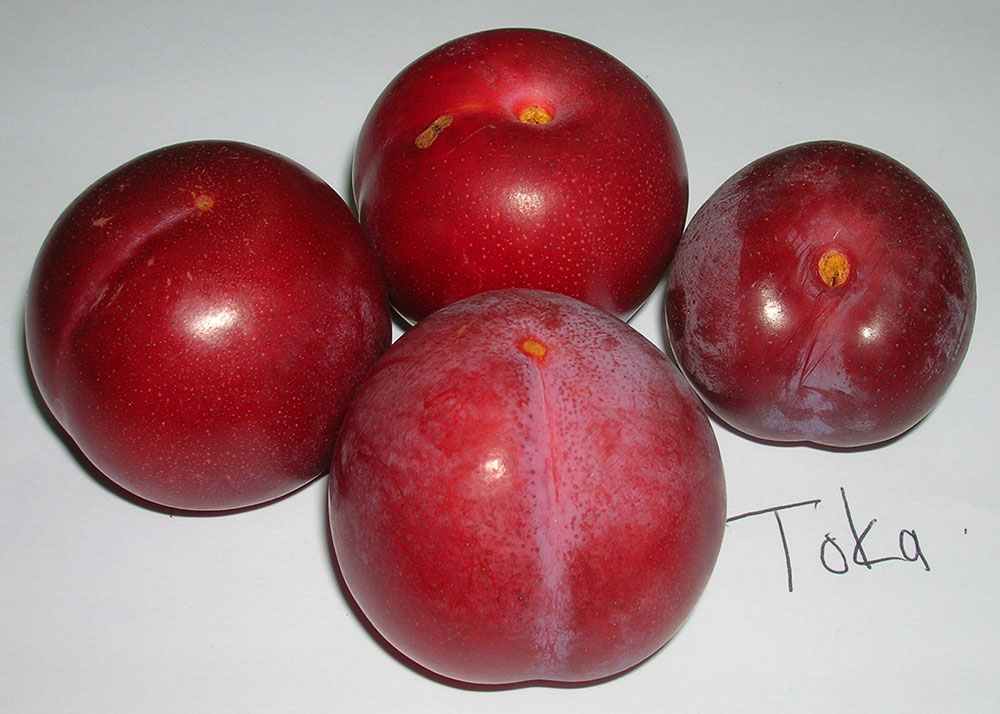
The Toka plum, also called Bubblegum, is hardy to -30°F (-34.4ºC).
The University of Maine’s website offers the following on various plum species; looks like the Toka plum or Bubblegum species would be a good bet for Canada’s colder climates, being hardy to -30F (-34.4ºC).
“Plums are a stone fruit along with cherry, peach, nectarine, apricot and almond. Several species of plum exist, so they are highly variable in color and flavor, as well as climactic adaptability and disease resistance. In spring, the abundant, white flowers attract native bees.”
“Despite the existence of many different plum species, only two are widely grown, Asian and European, and they differ in many ways. The Asian plum, also called the Japanese plum, ripens earlier, over a two-month period beginning in late July and continuing through September. Asian plums come in many colors ranging from pale yellow to dark purple, but most have a light purple skin and yellow flesh. A few varieties have red flesh. They are more sour than European plums. Because it is a hybridization of several plum species, the Asian type is highly variable in cold hardiness. Some varieties are very tender and cannot be successfully grown in colder regions. Others are extremely hardy and can be grown in Zone 4 and possibly Zone 3. European plums begin to ripen in mid-August with late varieties ripening in late October. They range in shape from oblong to round and are less variable in color than Asian types, usually purple skin with yellow flesh. European plums are hardy enough to be grown in the warmer part of Zone 4.”
“Many varieties of Japanese plum survive temperatures as cold as -20°F, such as Early Golden, Ozark Premier, Methley, Obilinaja, Shiro and Vanier. However, warm temperatures during winter months that are followed by severe cold will damage some of these hardy varieties. For the coldest regions, select the type of plum that was cross bred with the American species to allow gardeners to grow plums in zone 4. Varieties with sufficient hardiness for Zone 4 (-30°F) are Alderman, Black Ice, LaCresent, Pipestone, South Dakota, Superior, Toka, Underwood, and a few others.”
“Because the two most common types do not adequately cross pollinate each other, poor yield is a common problem for plum growers, but can be prevented by planting several varieties that are the same type or species. Plant Japanese plums with other varieties of Japanese plums.”https://bit.ly/2AXtRoV
The OMAFRA website adds this on pollination, “In Japanese plums, Burbank is a satisfactory pollenizer for Early Golden and Shiro. Burbank and Early Golden are pollinated by Shiro. In European plums most cultivars will pollinate each other with a few minor exceptions. Generally three cultivars will ensure good pollination.”
For aspiring plum tree growers in Ontario, the OMAFRA website lists the following types, for reference:
The University of Maine’s website offers the following on peach tree growing.
“Peaches can be grown successfully in a cold climate with good site selection and tree care. Where winter temperatures fall below -15°F (-26.1C), peach trees can be short lived.”
“Peaches are an easy-to-grow fruit despite their lack of cold hardiness. Compared to other types of tree fruits, the fruit can be relatively free of insect problems, but the trees can be killed by trunk boring insects. In cold climates, peaches have a short life expectancy of about seven years, but severely cold temperatures can kill trees at any age. On the other hand, hardier varieties planted in a good site can live 20 years or more. Good tree care and planting in sites with good airflow improves tree survival.”
“Nectarines are identical to peaches with the exception of their smooth peel, and consequently have the same cultural requirements. However, they are not as hardy as peaches and may pose more of a challenge to the home gardener. Peach trees are generally adapted to Zone 6, and some varieties can be grown in Zone 5 (-20°F / -28.9ºC ).”
“There are two types of cultivated peaches which vary in eating quality and how they are used. Freestone peaches have a melting flesh that makes them great for eating fresh. Clingstone peaches have a dense flesh that makes them useful for canning. Among the freestone peaches, some varieties have a flattened shape and are called doughnut or Peento peaches. Peaches also vary in their flesh color with yellow being the most common, but some have white or red flesh. With many different peach varieties available, consider winter hardiness and disease resistance to prevent long-term problems. Fruit quality, ripening date, and showiness of the flowers can also be important considerations in choosing a variety.”
We wanted to pass along a few more tips we have learned about since our last two posts on vegetable gardening.
Raised Garden Beds
In this weekend’s Toronto Star, we learned from the Cullen brothers’ column that raised garden beds are becoming popular among urban gardeners. Why? “…A raised bed can produce more flowers and a larger harvest than at ground level since it gives you complete control over the quality of soil you use. A raised bed drains well (but needs more regular watering than ground-level beds), and encourages better root growth. It warms more quickly in the spring, allowing you to get a jump on sowing and planting.” https://bit.ly/2WY4hst
Seed Tape
Catherine discovered seed tape by chance among some of the seed packets she purchased and thinks this is a brilliant invention for evenly spacing seeds as you sow, especially for novice vegetable gardeners. Audrey found this YouTube DIY video on lessons for making your own seed tape. https://bit.ly/2yBhNck
Free On-line Garden Talk – June 2
The Toronto Botanical Garden is offering a free Garden Talk on June 2, 12:30 p.m. EDT, called Top Tips for Top Vegetables (Part 2).
The event is described as, “Top Tips for Top Vegetables, Part 2 helps you expand your home-grown palette with five easy vegetables, such as peas and garlic. Learn the difference between cool-season and warm-season veggies and the many ways to squeeze more vegetables into small spaces. The session will end with a questions and answer period.”
“Presenter: Helen Battersby has volunteered with the Toronto Master Gardeners for 15 years. Her shady garden in Toronto’s east end includes containers of vegetables and cut flowers. With her sister, Sarah, she writes the award-winning blog TorontoGardens.com and publishes the Toronto & Golden Horseshoe Gardener’s Journal.” Register for this free online event at https://bit.ly/3exk0oz.
Optimism in the Future
Some inspiring quotes that we found on OneTreePlanted.
“Even if I knew that tomorrow the world would go to pieces, I would still plant my apple tree.”― Martin Luther
“Someone’s sitting in the shade today because someone planted a tree a long time ago.” ― Warren Buffett
“The best time to plant a tree was 20 years ago. The second best time is now.” ― Chinese proverb
“Trees are poems that the earth writes upon the sky.”― Kahlil Gebran
Thank you to last week’s Guest Bloggers Audrey, Shanthi, Leslie and Ross for all the many helpful tips to inspire and launch us onto a successful first timer’s vegetable gardening adventure.
Let’s start Part Two with more information on soil preparation.
Wendy’s Garden
Planting and Soil Temperature
Living in regions with short growing seasons, it is not always practical to wait for the earth to warm to optimal soil temperatures for seed germination, before planting your vegetable seeds. As newbie vegetable gardeners, chomping at the bit to get outside and get going, we also may yet to have fully developed our gardening “patience” skills. Resources such as this by the Harvest Table offer guidance on minimum soil temperatures to wait for in order to maximize potential for harvesting success. Of course, if you are able to wait a bit longer, they also offer advice on warmer, optimal soil temperatures for supporting best conditions for seed germination once planted. We are impatient to get started sowing seeds, so we will be following the minimum soil temperatures listed below. [Tip: the electronic thermometer you may have acquired to take your temperature during the pandemic also works for taking soil surface temperature!]
Harvest Table’s Advice on Minimum Soil Temperatures for Seed Sowing and Germination:
The ideal or optimal soil temperature for planting and growing most vegetables is 18° to 24°C.
Nature Planting Signals Calendar – Lilacs
We are also learning from Harvest Table that the “flowering of trees, shrubs, and perennial plants is determined by day length and temperature (this also applies to the lifecycle of insects and animals.) You can use the bloom time of shrubs and trees to tell you when it is safe to plant vegetables in the garden. Look at blooming trees and shrubs in your garden or neighborhood as indicators of when it is safe to plant vegetables directly in the garden.”
Here is one example – the lilac planting calendar for the vegetable garden:
Lilac begins to leaf out: direct sow seeds of cool-weather vegetables such as peas, lettuce, and spinach; direct sow cold-tolerant herbs such as parsley and chervil; direct sow hardy annual such as calendula and sweet alyssum.
Lilac flower spike is in full bloom: direct sow seed of basil, corn, and tomatoes; direct sow marigolds and geraniums.” https://bit.ly/3bnjkjz
Buying Seeds and Seedlings
Many grocery stores, hardware stores and gardening centres carry seed packets for sale for most commonly grown vegetables and herbs. With more people taking up home gardening during the lockdown, this year may be more challenging than usual to find all the seeds you want to purchase for the season. You may want to consider spending a bit more to buy seedlings for some to give you a head start or to fill the gap where seeds have been hard to find.
For example, Catherine is taking a blended approach. She germinated tomato seedlings from grocery store-bought tomatoes and sprouted roots from store-bought green onions, while purchasing herb seedlings (mint, sweet and thai basil, rosemary, thyme, parsley), butternut squash seedlings and pea shoots for her vegetable garden from a small local fruit and vegetable store. She also bought seeds from the grocery store for direct planting when the soil warms up for carrots, peas, beans, spinach, lettuce, beets and sunflowers. Lucia met with success buying seeds from Home Depot in Edmonton, and is nurturing basil seedlings herself indoors now, which she will transfer outside soon.
“Foodie” Catherine is passing on this tip about Spice Trader to Toronto Readers – as part of their pandemic pivot, in addition to their usual offerings of spices, oils, and condiments, the company is now offering Matchbox heirloom vegetable seedlings for online purchase and curbside pickup: https://bit.ly/3dVoR2m
Here are a few websites for reference to purchase more exotic seeds in future years, as we discovered they are no longer taking orders for this year due to higher than expected demand.
Audrey returns this week, to tell us more about her experience with community gardens.
Photo by Janet
“In the three years that I have had one of these plots, I have learned many things about growing vegetables. Full disclosure, I also plant a few rows of flowers that love the sun. I always felt a tinge of guilt for allocating vegetable garden space to something as frivolous as flowers until a fellow gardener reminded me that there would be no vegetables if there aren’t bees to pollinate and bees are attracted to flowers.”
Audrey’s Community Garden
“As you can see in this photo of the start of gardening season, it’s flat and mostly bare, but in a few weeks, it will transform into lush greenery of all shapes and sizes including tall sunflowers and asparagus. No insecticides are allowed and the only fertilizer used is worm castings which are provided, along with compost from our own bins. The richness of the soil is the most important requirement for success and this is totally within the gardener’s control and well worth the effort.”
“My plot has these spindly green shoots in rows, as do most of the other garden plots. That’s garlic starting to grow after I planted it six inches deep last November. It has to be planted before the soil freezes and I had intended to go back to plant more but winter came early here in 2019. I separated cloves from heads of garlic that I had harvested last summer. Each clove generates a new head ofgarlic in the ground and is ready to dig up inlate July when the tops start to whither. It then needs to age in a dry area for a few weeks to develop that characteristic garlic flavour. It’s very bitter if you skip this step. An attractive way to age it is to braid the tops of several cloves together so they hang in a column.”
Catherine and Audrey’s Garlic Plants
“Growing garlic brings to mind another trait required for successful gardening- patience. Gardeners have to wait until the produce is ready to pick. I learned the importance of “pick when ready” with my first crop of zucchini. I was away for a week that August and before I left, the zucchini were almost ready. When I returned, they looked like English cucumbers on steroids. Because I had planted about 15 plants, I harvested a couple of bushels of zucchini and even my neighbours were tired of making zucchini bread. The next year, I planted three seeds and still gave some away. However, it is a good idea to plant a bit more than you need to allow for visiting voles, bunnies and “uninvited two-legged pickers”; and to donate extra to the local food bank and give to family and friends.”
Community Gardening in a Pandemic
“I am happy to learn that community gardens are now permitted to open under Ontario’s three-stage plan for re-opening parts of the economy, while continuing to maintain COVID-19 social/physical distancing practices. Our community garden opened this week, under a strict set of protocols that each gardener has agreed to follow.”
“There are now two hand washing stations- a feat in itself considering the gardens are under Hydro towers in an open field. The tool sheds will not be open so everyone must bring their own tools. Gardeners with even numbered plots may work there on even days; gardeners with odd numbered plots may only go on odd numbered days. I also have to complete a form each time I am there with the date and time of my visit so if there is a COVID outbreak, contacts can be traced. Unfortunately due to the current situation, I think a few people will give up their plots this year. These plots will go to people on the waiting list or be used to grow more food for the local food bank.”
“I plant my rows across. This season, I have planted four rows of flowers, two rows of three kinds of lettuce, two rows of beets (two types), single rows each of carrots, green beans, yellow beans, radishes, parsnips, about 30 little onions, two hills (three seeds each) of summer squash, and two hills of zucchinini. The garlic is still growing from planting last fall.”
“In last week’s post, I described how my attempts at growing cauliflower ended up in the compost heap. Too much effort to wrap their leaves around the white heads to protect from dis-colouring, with unsuccessful results. I had scratched cauliflower off my gardening list. However, I may now need to reconsider. During my first visit to the community garden for this year’s season earlier this week, I learned an intriguing tip from one of the more experienced community gardeners (keeping socially distanced, two metres apart). Apparently, there is a new type of cauliflower which automatically wraps its leaves around the white head by itself as it grows! Amazing.”
“I hope you will consider the rewards of growing your own vegetables and take the plunge. There’s lots of help available online and its an excellent activity and well suited to our current reality. Happy growing!”
Harvesting Tips
All our guest bloggers agree on the rich rewards of harvest time.
Shanthi’s Callaloo Harvest
As Shanthi says, “Harvesting – Now comes the fun part.”
“Pick veggies at their prime and not a day late literally. Typically, a daily visit to the garden is needed.”
“The main thing to remember is that home gardening is for fun. It should be a source of relaxation and an opportunity to get the family to engage in joint activities. I actually made posters each season for a “Garden Club” that my three young boys signed up to. As they grew older (and wiser!), I posted positions such as “Assistant to Head Gardner” and they fell for that too. Nowadays, it is hourly pay given they actually do very hard work, but they never have the heart to collect!”
Audrey offers these additional harvesting tips.
“Generally mornings are the better time to pick produce, but wait until any dew has evaporated; – Handle the produce carefully to reduce the chance of bruising. Picking usually takes two hands: one hand pulls gently on the vegetables and the other hand holds the stem where it is attached to lessen the impact of picking on the plant;
Shanthi’s Potato Harvest
– Once a crop starts to reach maturity, check daily in order to pick at peak ripeness. For most crops the harvesting season will span several weeks, depending on the weather; – When the first frost is forecast, pick all the remaining tomatoes, even the green ones, as they will continue to ripen indoors and provide fresh tomatoes well into the late fall; – Some vegetables, like parsnips, turnip and kale, have more flavour if harvested after the first frost; – Don’t leave any unpicked or spoiled vegetables in the garden at the end of the season as they may grow the next spring. It is a good practice to bury the actual plants at least 12-15 cm deep so they can decompose and enrich the garden’s soil.
Check out Harvesting Vegetables in the The Old Farmer’s Almanac at http://www.almanac.com for harvesting tips for specific vegetables and more information.”
Shanthi’s Bean Harvest
More Harvesting Joy
Reader Wendy responded to last week’s Guest Blog post with enthusiasm. “There are so many things that I can relate to on it. I garden because it is so peaceful and I see progress through my work. I often joke about it as the best therapy going! I have been planting this garden for 30 years already.”
“With the garden ingredients I have made borscht, raspberry scones, strawberry shortcake, rhubarb and honeyberry sauce, sour cherry pies and much more, but last fall was the first time I have ever made pickled carrots from the carrots I have grown. They were delicious and I am planning on making many more jars this year! Definitely the garden keeps me active but I also eat really well due to it!”
More Resources
Catherine received this handy reference book as a Mother’s Day gift to help her on her way to vegetable gardening success. Here is the GoodReads book review of Ruth Lively edits “Tauton’s Complete Guide to Growing Vegetables & Herbs”.
“From planning and planting to harvesting, this is the most comprehensive and authoritative guide to growing your own vegetables and herbs. That’s good news for gardeners everywhere, as the “eat local” movement continues to gain momentum across the country. What to grow? Where to plant it? How to get the most from your garden? It’s all in here. First-rate gardening pros share their expertise on designing a garden of any size, as well as fundamentals about soil, irrigation, pest control, crop rotation, and more. With detailed advice on growing 85 crops, plus sidebars on how to make a garden as attractive as it is productive, readers will delight in finding all the information they’ll ever need on vegetable gardening in one place. “ https://bit.ly/3dIAysX
Lucy’s Garden Duck Tour…….luckily he did not eat anything!
Home Depot – Gardening for Beginners 101
Thanks to Shanthi for putting this free online resource on our radar – Home Depot’s Gardening for Beginners 101, which offers tips on topics such as Preparing Soil; Reading Plant Tags; Planting Tips; Plant Care; Pests and Insects; Pruning, and more https://bit.ly/3g7Bqth.
Shanthi also returns this week, to offer tips for planting fruit trees.
“There are many varieties to choose from. However, the best selection is at the beginning of the season. If you plan to plant one or to simply take stock of what is out there, visit the garden centers in May or early June. Many of the growing conditions for vegetables apply to these as well.
Shanthi’s Pear Harvest
Well draining and fertile soil
Lots of sunlight and space around the tree to allow for air flow
Other needs: There are other particular do’s and don’ts for each tree type. Online resources are great before you decide as well as guiding you through planting, pruning, and maintaining them through the years. Each year, it is best to spray them with tree spray per package instructions to ensure you end up with fruits that are bug free. Typically, these consist of a combination of dormant oil and garden Sulphur that are applied either in combination or separately in earlyspring before green buds set and then through the season until Fall. The package instructions provide step by step instructions.
Regarding pruning – Although it can seem heartbreaking, experts recommend that you cut your tree down to yourwaist height after you initially plant it. This is to ensure that the height is manageable and that you don’t end up with a tree that is too tall for maintaining or picking. Again, all of this depends on personal preference. For example, if your intent is to attract birds and wildlife in addition to having a few fruits for yourself, or if you are going to use the tree for privacy, you may wish to let nature take its course.”
5 Week Old Apple Seedling
Proud Fruit Tree Gardener- Claire
Next week’s Blog post will feature descriptive information on some of our personal favourite fruit trees.
We wish you much success and pleasure – Happy planting and gardening!
We are both feeling very fortunate in this time of “sheltering-in-place” to be able to stretch our limbs and spirits by working outdoors in our yards, now that the spring (-ish) weather has arrived finally in Edmonton and Toronto.
We both have decided to take this COVID time as an “opportunity” to try our hands at growing our own modest vegetable gardens, for the first time ever. Luckily for us, we have very generous friends who are willing to make the time to share their gardening expertise and tips with we two greenhorns (or should that be greenthumbs?), and which we are delighted to share with our Readers here.
The wonderful thing about becoming a vegetable gardener, motivated in-part by seeking out pandemic “garden therapy,” is that it is also very good for climate action we are happily learning. Thanks to Reader Nora for putting “Food Up Front” on our radar, to explain how.
As its website describes, Food Up Front is “a movement started by Transition Toronto to help you gather your community around local food. Growing local food is one piece of the puzzle in solving our climate crisis. It builds community resiliency by fostering a culture of sharing while reducing dependency on international agribusiness, it reduces the need for fossil fuel intensive farming practices while eliminating food-mile emissions and it helps to sequester carbon through hands-on soil stewardship. Overall though, the most compelling benefit is that connecting with home-grown food improves the quality of our lives….” To learn more about this organization, and even to get free seeds to start you on your gardening way (while supplies last), check here https://bit.ly/2xTbosq.
Vegetable Gardening Tips for Success – Guest Bloggers
We are delighted to welcome our friends Audrey, Shanthi, Leslie and Ross, who are all experienced and avid Ontario gardeners, willing to share their tips and lessons learned as our Guest Bloggers to generously “nurture” our vegetable gardening success.
Starting In-Doors
Shanthi cautions, “Although it is tempting to get a head start on the season, wait until the ground warms and the last frost date is safely past before planting out your seedlings. The first week of June is usually a safe bet (in Ontario and Alberta).
However, there is still much preparation that can be done in-doors in April and May. “Starting seeds can be fun, especially as this can begin during the grim winter months”.
Audrey shares eloquently, “When a gardener plants a seed, they are in a hopeful mindset. There is no other way to describe expecting a tiny seed the size of a grain of pepper to turn into a lush plant and delicious food. Optimism abounds in gardeners. They don’t give up on a plant. They will water it, stake it, prune it, even talk to it (if no one is near). The partner in all gardening endeavours is Mother Nature and I never lose my sense of wonder at her power.”
This is the size of a basil seed and here they are growing indoors
“Canada’s growing season is not long enough for some fruit and vegetables like cantaloupe and watermelon, even tomatoes, unless you start with young plants rather than seeds. I planted cantaloupe in the first year and ended up with golfball sized fruit before frost ended the growing season. Garden centres have young plants at a price that reflects their time and effort or you can start your own plants indoors.”
“I planted three tomato seeds in the house in early April which is a few weeks too late. I pulled back the shutters so the pots would get as much light as possible and I tented the table over a furnace register so the warm air would help the seeds germinate. [I also started about 100 seeds for six different kinds of flowers for outside flowerbeds as I wasn’t sure nurseries would be open in May due to COVID restrictions.] As usual, 10-15% of the seeds did not germinate so I always sow a few more than I needed. Much TLC is needed – at a minimum, daily watering and turning so the plants grow straight.”
“Check out ‘Starting Seeds Indoors: How and When to Start Seeds,’ in the The Old Farmer’s Almanac at www.almanac.com for more information. It’s easy to get carried away when starting flower and vegetable seeds if you purchase all the ‘gear’ to do this. This is a great hobby but it is not a way to save money. However, the benefit and satisfaction of growing your own food is immeasurable. We always had a huge vegetable garden when I was growing up and I can remember my Grandfather being so proud of his gardening efforts. My perspective has changed and I appreciate gardening so much more now.”
Different Stages of Seeding Tomatoes Indoors
Moving Outdoors – Choosing a Site
Shanthi’s advice is to “choose a sunny site as most if not all types of veggies require at least six (6) hours of direct sunlight.”
“Choose a site that is away from trees and shrubs as veggie seedlings that you expect to grow to produce a bounty have no chance against existing thirsty roots. If you have no choice, then dig about two feet down, remove any roots (provided you are not going to kill any nearby trees that you actually like or want) and put some barriers against them creeping back in. Or an easier and more popular method is to have a raised bed. There are many videos online about creating such raised gardens. They take much less work, you have more control over the soil, and they also have the advantage of allowing you to construct them as high as you like and therefore can be much easier on your back!”
Audrey offers this about another site option – community gardens.
“When we moved into our house almost four decades ago, we planted a locust tree in the back corner of the yard. As it grew, the yard gradually became more and more shaded. The tree is truly beautiful as well as necessary in the summer heat. Vegetables need full sun all day to grow well so four years ago I applied for one of the 103 plots in my local community garden, and have been growing my vegetables and flowers there happily ever since.”
Moving Outdoors – Preparing the Soil
Shanthi notes that preparing the soil “mostly involves spending a lot of energy, time, and money to ensure you have the right composition as once you plant your veggies, there is little or no going back.”
“Most vegetable plants require a well draining soil with ample organic matter to enhance water retaining capacity as well as to add nutrients. Amend your soil as needed with compost and triple mix. There are other additives but be careful and Google a trusted source when in doubt. For example, adding fairly fresh manure can burn young plants, adding sawdust that has not been composted will add too much carbon that can kill plants. On the other hand, adding crushed eggshells is a great way of increasing calcium for your plants without harming them.” [See also our April 30 post on Ideas for Composting – https://bit.ly/3dFOLHd%5D
“Most vegetables also do better in a slightly acidic soil. A soil PH kit comes in handy but is not needed.”
“During the season, you can also add store bought fertilizers following directions on the packages (e.g. Miracle Grow)”.
Moving Seedlings Outdoors – “Hardening”
Early in June, Audrey gets ready to move the tomato seedlings she germinated indoors beginning in April, to the outside in the following way.
“I will put these plants outside for a few hours each day to ‘harden’ them so they won’t be shocked by being outside when transplanted. This year I’ve used pots that will decompose once in the soil so transplanting won’t disturb the roots.”
“When transplanting ‘hardened’ tomato seedlings, bury the plant up to the first set of leaves. Roots will grow along the buried part of the stem and give the plant a hardier root system. Water the roots before adding soil.”
Direct Seed Planting
Audrey gives us these tips from her experience about what works (and what doesn’t) for direct planting.
“Some vegetable seeds like lettuce, radishes, peas and root vegetables, are hardier and can be planted directly in the soil once the danger of frost has passed. As well as starting early, lettuce and radishes mature quickly, so you can plant a second crop after a few weeks and you have fresh produce over a longer period. Sometimes I leave an extra empty row, for sowing a second crop of lettuce later. Other times, I first harvest my radishes, which grow quickly, and then plant seeds for the second lettuce crop in that row.”
“An exception to this is peas which do not like hot weather so no second planting. I had decided this year to not plant peas because they are a lot of work for what feels like a limited return. They need a net or strings to twine up, they take time to shell, and you need a lot of plants to get a significant amount of produce. I say I’m not going to grow them every year and then change my mind because they taste soooo good. I have a new strain with supposedly delicious pods so will try those this year and skip the shelling step.”
Shanthi adds, “Beans can be sown directly outdoors when the ground is warm and it is recommended that you stagger the sowing so that your harvest is not all at once.”
Audrey shares this very helpful “heads up,” which she learned from a fellow community gardener.
“Not everything is a success. I planted cauliflower last year and then I learned from a neighbouring gardener that once the white part starts to grow, it has to be shielded from the sun or it turns a dark, unappetizing yellow. This is done by tying the large outer leaves into a tent over the centre part which we eat. I couldn’t get these centre parts totally in the dark so the results enriched the compost bin. Scratched that vegetable off my list and committed to doing more research when planning the garden.”
Growing Season – Caring for Your Garden
Shanthi advises, throughout the season:
Water your plants regularly and consistently. Few plants appreciate a flood followed by no water for days at end! Try not to wet the leaves when watering (to avoid diseases) and so early on in the day is best as that would dry out any water on the plant itself.
Feed: Either store bought fertilizers (a little goes a long way and excess can kill the plants) or more natural products such as composted kitchen waste, manure, even specially prepared garden “tea”.
Monitor carefully for critters and bugs. There are some great ways to prevent these without using chemicals. Planting bug repelling plants among your veggies (e.g. marigolds), spraying with a mixture of water diluted with dish soap, etc. can help.
“Magical Marigolds”
Guest bloggers Leslie and Ross agree with Shanthi about the benefit of insect repelling plants, especially their “magical marigolds”.
“We have a farm in Mono, Ontario. After buying our seeds, the first thing we do is purchase marigolds, orange not yellow, to plant around the border of our fenceless vegetable garden. Why? The marigold is known for its ability to repel aphids, mosquitoes, insects as well as animals. The deer, rabbits and other animals on the farm avoid the garden. Apparently it is the distasteful smell that repels. Destructive and time-consuming chemical use to rid these pests is not necessary. Occasional deadheading will keep the plants bushy and spry. We buy the short stocky marigolds in flats. If in doubt ask the nursery before purchasing the best species for this use. Planting around the perimeter of the garden adds colour and definition. After our first year of battle, for twenty years, we have found these plants to be magical in their effectiveness. Much information on marigolds can be sourced on the web.”
Audrey prefers orange marigolds too, especially a new strain called Durango ® Flame French Marigolds which you may see here: https://bit.ly/3fHh0ad. [She cautions, however, to ask your nursery first about their insect and animal repelling abilities, as they are a new strain that she has picked strictly based on colour]. She likes to complement their colour with fresh lime green plants, such as these Zinnia Queen Limes https://bit.ly/2WRKlGi.
Growing Veggies 101 – Part Two
Our generous Guest Bloggers return next week to share more gardening experiences and tips, including about growing Fruit Trees, Harvesting (the Fun Part), and Community Gardening while practicing social / physical distancing. Thank you Audrey, Shanthi, Leslie and Ross for your generosity and expert advice. We are excited to get planting our seedlings and seeds! (….and we are trying hard to heed your advice to wait ’til early June).
Next week we’ll also explore planting and soil temperature, and more!
Trees Get the Last Word – Sakura in High Park
Thanks to Nora, we end by offering this meditative three-minute video-clip of a beloved Toronto spring tradition – cherry blossom viewing (sakura), transformed by the City of Toronto in May 2020 for these unprecedented times, and offered now as a virtual tour https://bit.ly/2WnnHqu.
As Lucy thinks about how she was supposed to be touring around the English countryside right now, and instead is touring around her house, she is aware that she has saved herself a lot of money, and has surpassed her New Year’s goal to reduce her carbon footprint by driving less and flying less. The same holds true for many of us. All this is thanks to COVID-19.
“One of the things that we can learn from the pandemic’s effects on the environment is that we CAN actually have an impact if there were a global effort to do so.” -Dr. Luz Claudio, Professor of Environmental Medicine and Public Health, drluzclaudio.com
The connection between COVID-19 and climate change is being referenced regularly, and conversations about the environment are coming from outlets you would not typically see. Another bright hope.
UN Secretary-General Anthonio Guterres on March 13 says “We will not fight climate change with a virus,” but, we might see increased momentum on some fronts.
Here are a dozen plus good news stories that have come from this pandemic, and let’s hope that we can make as many of them stick as we can, as individuals, businesses and with policy changes at the government level.
Buying Local Movement
“A recent Angus Reid poll done in conjunction with Dalhousie found that as the pandemic wears on, 50 per cent of respondents intend to buy more local products once things are back to normal. The week before, that number was 42 per cent.” (This we read in: CBC’s “What on Earth,” April 23, 2020 edition)
Thursday’s Urban Market in Timmins File Photo. ORG XMIT: POS1712131057420621
It is suggested that most impacts of COVID19 will be temporary but the rise of shrinking-supply- chains has been accelerated. For Example, Sparrow’s Nest, a CSA-Comunity Supported Agriculture venture in Alberta is thriving in this pandemic. It is a model that sees customers pay farmers upfront to guarantee their supply of vegetables throughout the season. Customers tell this farming venture that they’re worried about disruptions to the supply chain caused by COVID-19. Trending terms are: “local food”, “supply chain” and “food security”. https://bit.ly/2WvRKet
International trade might roll back as countries realize how reliant they are on the global supply chain and decide to produce their own goods, says the Yale Environment 360.
Working Remotely
It is also expected that there has been an acceleration in employees working remotely from home, and this will impact climate change into the future. Meeting remotely with apps like Zoom will also decrease travel, and work conferences may be fewer. This could mean fewer cars on the road and fewer flights. We shall see. https://bit.ly/2WBgVfP
Cities Enabling Continued Reduced Car Use
There are signs amid the pandemic that some cities are trying to keep car use in check. Milan, Italy, for example, recently announced a plan to transform 35 kilometres of streets to expand cycling and walking space. On CBC The National this week I saw Toronto set up pylons on the street to double the walking space for pedestrians. Let’s hope this is not offset by people buying cars to avoid public transit, which is also likely happening. It has to be inspiring to experince blue skies and fresh air in cities with extreme levels of air pollution, from Los Angeles to New Delhi. People are seeing the difference of what the air and life quality would be like if there were a minimal number of cars and emissions from polluting industries. Don’t we all want to live in that world?
Edible Gardening
According to ‘CBC What on Earth” on April 30, 2020, the current pandemic has heightened interest in gardening, especially edibles. Horticulturist Jim Hole has been spreading the gospel about regrowing vegetables indoors from scraps. We, and many of our friends, are now out building a garden, giving us a new activity while under lock down, extra physical exercise and fresh air, new opportunities to experience delight and wonder as we witness Mother Nature at work in our own backyards, plus, the satisfaction of growing organic food and providing for the family.
We keep hearing recommendations about being productive and learning new skills while we have more time on our hands. That is exactly what some scuba diving tour group companies are doing in Australia. Since they are unable to currently give group tours, they have decided to give back to the beautiful ecosystem they show tourists every day by planting coral in the Great Barrier Reef! The once idle vessels are now working with conservation groups in coral restoration.
“Yet another example of how people out of work are taking to the streets to help the planet! In order to achieve Pakistan’s initiative called the 10 Billion Tree Tsunami programme, the country has begun to employ day laborers who have been laid off due to COVID-19 to be ‘jungle workers.’ What’s even more incredible is that this out of the box solution to folks being out of work has created 63,600 jobs! Nurturing nature seems like a great way to get through the crisis.” https://bit.ly/2YG0v8A
Australia
Speaking of trees and National Parks, ‘One Tree Planted’ recently shared a major announcement that they are planting 1 million trees in Bushfire Recovery Nurseries throughout Australia in partnership with the Foundation for National Parks & Wildlife. The first step is to scale up nursery seedling production. From there, they’ll begin to reforest National Parks and other public and private lands that were affected by the recent forest fires, ultimately aiming to rebuild habitats for koalas, kangaroos, and other native wildlife species. This is a non-COVID19 good news story.
Cleaner Air
Back in January, when China first began to contend with the coronavirus outbreak, it became clear how significant the associated lockdowns would be on reducing carbon emissions as a result of less vehicular traffic, energy-intensive production in manufacturing and overall power use. According to CBC’s What on Earth article, China’s lockdown led to a 25 percent decrease in CO2 emissions when compared with the same period in 2019 according to BBC News World on May 5, 2020.
Since then, much of the world has seen emissions drop dramatically. Satellite imagery shows startling reductions in air pollution over countries where traffic has been limited.
“Following global social-distancing measure, Madrid, Spain, saw nitrous oxide levels fall by 56% in March, while cities including Paris and Milan as well as Brussels, Belgium, and Frankfurt, Germany, have experienced similar drops.”
From April 23, 2020 CBC What on Earth
Saving Lives With Reduction in Pollution
Researcher Marshall Burke from Stanford University calculated that the reduction in emissions in China in January and February could save as many as 77,000 lives. To put that number into context, that’s more than 20 times the number of people who died from coronavirus in that time.
“Although we don’t yet have the data available, it is likely that the reduction in air pollution is responsible for the anecdotal observation of reduced numbers of asthma and heart attack episodes coming into the emergency departments in North America.” https://cnet.co/2xDJErF
Enjoying Wildlife
A recent Canadian Geographic article on how COVID is changing our life writes that, “People are observing what’s around their homes, appreciating nature, taking time to think about our impact and our relationship with nature,” says (James) Page (Canadian Wildlife Federation). “Maybe that will ultimately lead to rethinking how we go about our daily activities as things at some point get back to some sense of normalcy.” https://bit.ly/3ceLOx2
The Globe and Mail had an article recently about how the pandemic might be turning us all into birders. We know friends have been texting us about bird sitings, especially this week as the Sandhill Crane migration entertained Edmonton. https://tgam.ca/3b3giAM
As humans take to the indoors indefinitely, animals have been reported to have encroached on urban spaces. Unfortunately, we read, many of these wildlife posts were fake news, as these animals were already local visitors or the location was misrepresented. People were just looking for feel good stories. Inspite of this, we want to share a special story that seems believable. After more than a decade of trying to coax pandas Ying Ying and Le Le to mate, the pair, located at a Hong Kong zoo in Ocean Park, have finally consummated their relationship— possibly thanks to a lack of ogling voyeurs during lockdown. https://cnet.co/2zeKDiE
Good news for wildlife, reports the New York Post: “Many experts blame the coronavirus outbreak on the notorious exotic animal trade, which includes the sale of bats, dogs, cats and more. This historically under-regulated and unsanitary industry, with a stronghold in some Asian countries, has furthermore been detrimental to populations of rhinoceros, elephants, crocodiles, tigers, turtles and pangolins. Under global pressure to reign in this black market, lawmakers in both China and Vietnam have decided to place a ban on the consumption of wild animals.” https://bit.ly/2SD7Lhu
Decreased Air Travel
It is hard to imagine the airline industry fully recovering, and we are in disbelief that we cannot fly out of the country right now, but most experts feel that when the coronavirus leaves us we will go back to travel as we did before, as this has been the case after other set backs like the 2008 Financial Crisis. It may be a slow recovery. We would be fine if the frequency of air travel declined a little, just saying, rather than the pre-pandemic prediction of a continued huge increase in global flights. In a past Blog post, we also were excited to learn about advances in the air travel sector toward clean energy fuel sources, including news of the first electric planes moving off the drawing board into the testing phase.
Countries Share Research and Work Together to Find a Vaccine
The international scientific community came together swiftly and is working closely on a COVID-19 response, including finding a vaccine. This proves that the global community is capable of working collaboratively to solve a problem bigger than any one of our respective countries. This could be our greatest win. https://bit.ly/3fsLaOi
Lasting Benefits from COVID Drop in Carbon Emissions?
It is still too soon to tell whether the dramatic drop in carbon emissions due to the world-wide economic standstill to fight the COVID-19 pandemic will be temporary or transformative and long-lasting. Analysts range from being optimistic to sceptical.
Some energy experts predict that post-pandemic, consumption of fossil fuels will return to their prior levels while other analysts are more optimistic that overall the world will move to adopt greener fuels. For more on this debate, readers may be interested in this Wired article on the pandemic and climate change (https://bit.ly/3djZgzR) or this BBC article on whether COVID can spur a green recovery https://bbc.in/2SFSWec
Clean Energy Becomes the Cheapest Source of Electricity for Two-Thirds of the World
This Bloomberg article gives us another reason to side with the optimists on their predictions of positive transformational change ahead for the future. There is no doubt that pocketbook economics can be as much of a driving force for change as government policy or entrepreneurial innovation. To that end, the good news is that solar and wind energy now make sense economically and environmentally.
Bloomberg reports that, “Solar and onshore wind power are now the cheapest new sources of electricity in at least two-thirds of the world’s population, further threatening the two fossil-fuel stalwarts — coal and natural gas…”
“…A decade ago, solar was more than $300 a megawatt-hour and onshore wind exceeded $100 per megawatt-hour. Today, onshore wind is $37 in the U.S. and $30 in Brazil, while solar is $38 in China, the cheapest sources of new electricity in those countries.”
“…Battery storage is also getting more competitive. The levelized cost of electricity for batteries has fallen to $150 a megawatt-hour, about half of what it was two years ago. That’s made it the cheapest new peaking-power technology in places that import gas, including Europe, China and Japan…”
“…Best-in-class solar and wind projects will be pushing below $20 per megawatt-hour this side of 2030,” Tifenn Brandily, an analyst at BNEF, said in a statement. “There are plenty of innovations in the pipeline that will drive down costs further.” https://bloom.bg/2A58gdT
“Build Back Better” – New Green Deals
Countries are at varying stages of beginning to map out their paths to economic recovery once the COVID pandemic threat eases.
We find this early news from Europe to be a source for cautious optimism.
Environment ministers from 30 countries met at the end of April for the “Petersburg Climate Dialogue” to focus on “how to organise a “green” economic recovery after the acute phase of the pandemic is over,” reports the BBC.
Hopeful signs of leadership in this direction come from the UK, whose Climate Secretary and president of COP26, Alok Sharma, said: “I am committed to increasing global climate ambition so that we deliver on the Paris Agreement (to stabilise temperature rise well below 2C).
“The world must work together, as it has to deal with the coronavirus pandemic, to support a green and resilient recovery, which leaves no one behind” … “Tackling climate change must be woven into the solution to the Covid-19 economic crisis.”
The European Union (EU) offers further cause for cautious optimism about government leadership where economic recovery and climate action are seen as “and, and” rather than “either, or” agendas.
“The EU is already set on delivering a green stimulus. The Commission’s Green Deal chief, Frans Timmermans, said every euro spent on economic recovery measures after the COVID-19 crisis would be linked to the green and digital transitions.” https://bbc.in/3b4pFA8
We like the emerging slogan of “Build Back Better.”
This topical May 6th BBC article explains, “The UK is one of several nations looking to reboot its environmental strategy by calling in favours from private industry. After all, it was government which bailed out employers when the crunch came in March. The catchphrase is “Build Back Better”.
“For those seeking a greener way out of the Covid-19 slump, renewable energy will help, along with electric vehicle charging points and broadband.”
“Frans Timmermans, vice president of the European Commission, is on the same track. He is leading work on a Green Deal to make the EU’s economy sustainable and says that not a single Euro should be spent propping up old, dirty industries.” https://bbc.in/2SFSWec
Timmermans and the EU Green Deal will be ones to watch and learn more from as Canada begins to map out its own pandemic economic recovery plan, one that we hope and expect will be intertwined with goals for growing a green economy and sustaninable future.
Book Recommendation
Thank you to our Reader Nora for this book suggestion.
Goodreads describes this informative book as, “…The Overstory Book distills essential information about working with trees into 134 short, easy-to-read, single-subject chapters. Each chapter shares key concepts and useful information, so readers can get back to planting and protecting more trees, gardens, and forests, more effectively. * Discover time-tested agricultural and conservation techniques from indigenous and traditional peoples * Work with beneficial microorganisms, from mycorrhizal fungi to nitrogen-fixing bacteria and more * Create abundance with fruit trees, timber trees, vine crops, vegetables, mushrooms, and more …”
We were curious that Readers have recommended two different books about trees that share “overstory” in their titles. (The other is by Pulitzer prize winning author Richard Powers.)
It turns out that one official meaning for the word overstory is “the layer of foliage in a forest canopy.” Makes sense now. The Merriam-Webster Dictionary also tells us that the first recorded use of the word was in 1914, and offers this sentence to show an example of how its meaning has evolved and is now at play within the modern vernacular – “On one occasion a whole roasted sea bream hit the tables with soft skin, maybe dampened by its overstory of an otherwise colorful and enjoyable salad of radishes and cranberry beans.— Mike Sula, Chicago Reader, ” With Marisol inside the MCA, Jason Hammel paints a new canvas,” 13 Dec. 2017 (There you go – “overstory” – a new word for the tree-lover and foodie, alike!) https://bit.ly/2WAZLPl
Spring is here and Lucy is planning to compost again. She has had most success with composting when it is not kept in a container, as it was easy to mix periodically. In the past, she had a great spot around the corner of the house where no-one could see it. Now, since it must go in the yard, she thinks it will need some containment. Past experience has taught her that it is not good to throw a ton of sod or grass clippings into the compost all at once, as this does not yield success. Reading up now, we are learning that a layering of compost is required to be successful, with air being one of the layers. Turn the compost every few weeks to aerate it.
Here are the two other main ingredients required for success in compost, as tips from Learn.EarthEasy.com are teaching us:
“Nitrogen or protein-rich matter-green material (manures, food scraps, green lawn clippings, kitchen waste, and green leaves) provides raw materials for making enzymes.”
“Carbon-rich matter-brown material(like branches, stems, dried leaves, peels, bits of wood, bark dust or sawdust pellets, shredded brown paper bags, corn stalks, coffee filters, coffee grounds, conifer needles, egg shells, straw, peat moss, wood ash) gives compost its light, fluffy body.”
“A healthy compost pile should have much more carbon than nitrogen. A simple rule of thumb is to use one-third green and two-thirds brown materials. The bulkiness of the brown materials allows oxygen to penetrate and nourish the organisms that reside there. Too much nitrogen makes for a dense, smelly, slowly decomposing anaerobic mass. Good composting hygiene means covering fresh nitrogen-rich material, which can release odors if exposed to open air, with carbon-rich material, which often exudes a fresh, wonderful smell. If in doubt, add more carbon!”
The bottom layer is best placed on the ground to allow critters like worms to get into the compost. Do not put in anything with oil or meat or bones, as that will smell and attract animals. Avoid putting in weeds too. If your compost is in the sun, it will break down faster. If you get a lot of rain, a cover will be essential as you like to have moist compost but not wet compost. You may need to water it once and awhile if it gets too dry.
One can buy compost bins of all sorts. Lucy once had a black one with a lid but could not stir it and it felt too small. She now thinks the tumbler ones that rotate are likely easier, and read somewhere that they are ideal at a 3’ by 3’ size, but can be bigger or smaller. One close to the back of the house to make dumping in the food scraps is handy. However, Lucy is putting hers farther away to avoid issues with critters, smell and any other unexpected problems.
The compost created makes for the best nutrient rich humus for your garden or lawn, and ends up costing very little. It can divert up to 30% of household waste going into the landfill. “That’s important because when organic matter hits the landfill, it lacks the air it needs to decompose quickly. Instead, it creates harmful methane gas as it breaks down, increasing the rate of global warming and climate change.” (For more info on food waste and climate change, visit our March 5th Blog post at https://bit.ly/3bPaqfx .)
If you want to pick up free compost in Edmonton, one place offering this is Green and Gold Gardens from the cow barn.
For a reasonably priced option, and one that supports community groups as a fundraiser, you can go to Clean It Green It. They have two locations, one in Strathcona and one in the west end, and you can order online for delivery too. The hours for pick up are Friday 9-6 and Saturday 9-1 for the month of May. Check out their website.
Edmonton: New Garbage Program Will Let the City Do Your Composting
Between 2020 and 2022 Edmonton will roll out the new garbage pick up system that will include separation of food waste, so if you do not want to compost, the city will do it for you. You will receive a kitchen food waste bin for under your sink. It seems slow in coming, but Lucy is very excited to be seening this program finally happen. Many other cities are already doing this. In Toronto, for example, separate compost bins have been part of weekly garbage pick up service for a number of years. Fortunately this service continues as an essential service under the COVID pandemic lockdown, and just recently spring yard waste collection was added onto the list too.
Soil Carbon & Climate Change
What is soil carbon sequestration? Is it a plus or minus for offsetting rising atmospheric carbon emissions and slowing global warming?
The short answer is, well it is a complicated matter, but holds the potential to be beneficial. At least, this is what we are learning as we only just begin to scratch the surface on a vast and complex area of science.
According to the UN Food and Agriculture Organization (FAO), soil carbon sequestration (or storage) warrants, and recently is garnering, greater attention by scientists and policymakers for its potential as an added tool for effectively combatting global warming and climate change.
Let’s start with some basics.
What is Soil Carbon Sequestration?
We found this to be a helpful, informative answer, from the Ecological Society of America (ESA),
“Carbon is found in all living organisms and is the major building block for life on Earth. Carbon exists in many forms, predominantly as plant biomass, soil organic matter, and as the gas carbon dioxide (CO2) in the atmosphere and dissolved in seawater. Carbon sequestration is the long-term storage of carbon in oceans, soils, vegetation (especially forests), and geologic formations. Although oceans store most of the Earth’s carbon, soils contain approximately 75% of the carbon pool on land – three times more than the amount stored in living plants and animals. Therefore, soils play a major role in maintaining a balanced global carbon cycle.’ https://bit.ly/3eZBDhB
So, just as we have been learning, sharing and putting the emphasis to-date in our our blog posts about “why trees matter,” now we are beginning to learn as well about “why soil matters”.
Why Does Soil Carbon Matter?
Like trees, soil can act as a carbon sink or carbon pool. This is a beneficial function, as the FAO describes because – “Atmospheric concentrations of carbon dioxide can be lowered either by reducing emissions or by taking carbon dioxide out of the atmosphere and storing in terrestrial, oceanic, or freshwater aquatic ecosystems. A sink is defined as a process or an activity that removes greenhouse gas from the atmosphere. https://bit.ly/3d07exJ
From here, it gets a bit more complicated, with human activity in terms of land-use practices, greatly affecting whether soil carbon is a plus or minus in terms of climate change.
It all depends on whether the carbon stays stably captured in soil (beneficial), or if it gets released into the atmosphere, making matters worse. As a Nature.com article puts it succinctly, “Soil carbon storage is a vital ecosystem service, resulting from interactions of ecological processes. Human activities affecting these processes can lead to carbon loss or improved storage.” https://go.nature.com/3aJL6X1
The FAO explains that, “The long-term conversion of grassland and forestland to cropland (and grazing lands) has resulted in historic losses of soil carbon worldwide but there is a major potential for increasing soil carbon through restoration of degraded soils and widespread adoption of soil conservation practices.”
“FAO is concerned with the effect of agriculture on climate change, the impact of climate change on agriculture and with the role that agriculture can play in mitigating climate change. Historically, land-use conversion and soil cultivation have been an important source of greenhouse gases (GHGs) to the atmosphere. It is estimated that they are still responsible for about one-third of GHG emissions.” (concerning)
“However, improved agricultural practices can help mitigate climate change by reducing emissions from agriculture and other sources and by storing carbon in plant biomass and soils….The development of agriculture during the past centuries and particularly in last decades has entailed depletion of substantive soil carbon stocks. Agricultural soils are among the planet’s largest reservoirs of carbon and hold potential for expanded carbon sequestration (CS), and thus provide a prospective way of mitigating the increasing atmospheric concentration of CO2. It is estimated that soils can sequester around 20 Pg C in 25 years, more than 10 % of the anthropogenic emissions. (Better news and promising potential) https://bit.ly/3d07exJ
Other articles and reports help to quantify the potential of soil carbon sequestration in the efforts to combat global warming and climate change. For example, excerpts below from this Yale University article, “Soil as Carbon Storehouse: New Weapon in Climate Fight?” help us to understand the scale of either the threat (if soil carbon keeps being released) or potential benefit to help curb global warming (via changing behaviours toward greater carbon storage in soils). It also points out some promising shifts in land use practices for strengthening soil carbon capture. https://bit.ly/3cZ8bGW Turns out there is more to soil than simply the brown stuff we put plants and trees into!
“Scientists say that more carbon resides in soil than in the atmosphere and all plant life combined; there are 2,500 billion tons of carbon in soil, compared with 800 billion tons in the atmosphere and 560 billion tons in plant and animal life. And compared to many proposed geoengineering fixes, storing carbon in soil is simple: It’s a matter of returning carbon where it belongs….”
“According to Rattan Lal, director of Ohio State University’s Carbon Management and Sequestration Center, the world’s cultivated soils have lost between 50 and 70 percent of their original carbon stock, much of which has oxidized upon exposure to air to become CO2. Now, armed with rapidly expanding knowledge about carbon sequestration in soils, researchers are studying how land restoration programs in places like the former North American prairie, the North China Plain, and even the parched interior of Australia might help put carbon back into the soil.”
“Absent carbon and critical microbes, soil becomes mere dirt, a process of deterioration that’s been rampant around the globe. Many scientists say that regenerative agricultural practices can turn back the carbon clock, reducing atmospheric CO2 while also boosting soil productivity and increasing resilience to floods and drought. Such regenerative techniques include planting fields year-round in crops or other cover, and agroforestry that combines crops, trees, and animal husbandry….”
Lal argues that soil carbon could (should) play a vital role in efforts to combat global warming, shifting the current focus on efforts to curb emissions of fossil fuels, to include a sharper focus to add soil carbon sequestration into the toolkit.
“The top priorities, he says, are restoring degraded and eroded lands, as well as avoiding deforestation and the farming of peatlands, which are a major reservoir of carbon and are easily decomposed upon drainage and cultivation.
He adds that bringing carbon back into soils has to be done not only to offset fossil fuels, but also to feed our growing global population. ‘We cannot feed people if soil is degraded,’ he says…. According to Lal, some pools of carbon housed in soil aggregates are so stable that they can last thousands of years. This is in contrast to “active” soil carbon, which resides in topsoil and is in continual flux between microbial hosts and the atmosphere. ”
Promising Agricultural and Agroforestry Practices
“As basic as soil carbon is, there’s much scientists are just learning about it, including how to make the most of its CO2 sequestration capacity. One promising strategy, says Goreau, is bolstering soil microbiology by adding beneficial microbes to stimulate the soil cycles where they have been interrupted by use of insecticides, herbicides, or fertilizers. As for agroforestry, programs with greater species diversity are better able to maximize the storage of carbon than monocultures. Many researchers are looking to biochar — produced when plant matter, manure, or other organic material is heated in a zero- or low-oxygen environment — for its ability to turn problem areas into productive sites while building soil carbon. Says Goreau, “Vast areas of deforested land that have been abandoned after soil degradation are excellent candidates for replanting and reforestation using biochar from the weeds now growing there.”
“Our understanding of soil microbiology and how soil life affects the carbon cycle is poised for tremendous growth, says Goreau. This, he says, is thanks to the burgeoning field of metagenomics, the study of genetic material from specimens taken directly from the environment rather than cultured in a lab. “For the first time,” says Goreau, “we can identify all major soil biogeochemical pathways from the genetic information in the microbes.”
“Even at our current level of knowledge, many see great potential for storing carbon in soil. Lal of Ohio State says that restoring soils of degraded and desertified ecosystems has the potential to store in world soils an additional 1 billion to 3 billion tons of carbon annually, equivalent to roughly 3.5 billion to 11 billion tons of CO2 emissions. (Annual CO2 emissions from fossil fuel burning are roughly 32 billion tons.) “
We are learning from scientists that, “Approximately two-thirds of the total increase in atmospheric CO2 is a result of the burning of fossil fuels, with the remainder coming from SOC loss due to land use change (Lal 2004), such as the clearing of forests and the cultivation of land for food production….”
“Despite the much larger size of the oceanic carbon pool relative to the soil carbon pool, the rate of exchange between the atmosphere and the soil is estimated to be higher than that between the atmosphere and the ocean. …Although there is interest in increasing oceanic carbon storage rates through large-scale nutrient additions, there is skepticism towards this approach due to the unknown consequences on global nutrient cycles and marine ecosystems (Cullen & Boyd 2008). The goal of increased storage of carbon in soil has received much wider acceptance due to a better understanding of the processes involved in SOC storage, more direct control of these processes through human activities, and the other known ecosystem benefits to be obtained by increasing SOC, including benefits to water quality and increased food security.” https://go.nature.com/3aJL6X1
This summary chart points the way forward for how changes in land-use practices can contribute positive benefits in reducing harmful carbon release into the atmosphere or increasing soil carbon sinks or both.
We close with this 10-minute video clip by the UN on Soil Control in Tanzania. It offers glimpses of a majestic Mount Kilimanjaro in the background, while providing further enrichment for our understanding of the complex ecological-human inter-connections and many balancing factors and needs in addressing climate action and food and water security.
Today is a day to celebrate our human spirit and capacity to imagine a brighter, better future, and our ability to apply collective ingenuity, energy and determination to pursue what’s required to “make it so.”
It is also a special day and testament to what we humans are capable of accomplishing, “for people and planet”. Today marks thefiftieth anniversary of Earth Day – an event that has grown from the actions of a few to raise environmental consciousness about pollution in 1970, to become a global phenomenon where, in the words of its event organizers, “Today, Earth Day is widely recognized as the largest secular observance in the world, marked by more than a billion people every year as a day of action to change human behavior and create global, national and local policy changes.”
We find cause for optimism as we reflect on how much has been accomplished over the decades since April 22, 1970. It is inspiring for us to learn about how the spontaneous actions of a small handful of citizens in one country sparked a movement worldwide toward a common vision for a brighter, safer and sustainable human habitat.
Earth Day History
“In 1970, as a 25-year-old graduate student, Denis Hayes organized the first Earth Day. The resounding success of that event, which brought out 20 million Americans — 10 percent of the United States population at the time — helped spark the modern environmental movement.”
“The decade that followed saw some of America’s most popular and powerful environmental legislation: updates to the Clean Air Act and the creation of the Clean Water Act, the Endangered Species Act and the establishment of the Environmental Protection Agency.”
Legacies for Building Forward Upon
To learn more about the legacies of Earth Day 1970 for global transformational change, read this interview with Earth Day founder Denis Hayes https://bit.ly/2VNfla3
In his view, Earth Day 1970’s legacy resulted in “a fundamental restructuring of the American economy. The legislation of the 1970s was possibly the biggest change in how American industry operates in the nation’s history. Folks who had no concern whatsoever for pollution, for toxics disposal, for resource extraction, suddenly had to operate within ways that were benefiting public health and benefiting the environment.”
A Fun Project You can Do With Your Kids
While the context is very different from 1970, we find his words resonate and take on an even deeper meaning today as we witness the kinds of transformational changes citizens are learning to make (rather abruptly admittedly), as we all shelter in place during the global pandemic, for the benefit of public health, to keep safe and to save lives.
You can learn more about how in 1990, “Earth Day went global, mobilizing 200 million people in 141 countries and lifting environmental issues onto the world stage. Earth Day 1990 gave a huge boost to recycling efforts worldwide and helped pave the way for the 1992 United Nations Earth Summit in Rio de Janeiro.”
And how, thirty years on, “Earth Day 2000 sent world leaders a loud and clear message: Citizens around the world wanted quick and decisive action on global warming and clean energy.” Today’s Earth Day Network is “…. creating opportunities for civic engagement and volunteerism in 193 countries.” https://bit.ly/2wXpYyP
In 2015, the Paris Accord for international action on climate change was signed by signatory countries on Earth Day, April 22, 2015.
Emily age 6
We Are The Change We Need
Today, as proud Canadians, we salute and thank our Readers and fellow citizens for doing the right thing, hard as it may be, to shelter in place, stay strong and safe, and save lives. Each one of us is truly making a real difference for the health and well being of others.
We could not be more proud to learn that this week’s COVID-19 data is showing that the collective actions by Canadians means that our country is on a path toward the ‘best case scenario” and the lowest projected number of confirmed virus cases, literally saving thousands and thousands of lives. We are all part of this amazing history-making accomplishment. In our books, this is real cause for (mini) celebration, and strong motivation to keep strong and stay the course. Our sincere thanks to all, with a special shout out and deep gratitude to our heroic health care and emergency services workers.
This evidence, together with the legacy built by and since Earth Day 1970, gives us both all the more cause for optimism on Earth Day 2020. It attests to what is possible to accomplish with our proven individual and collective capacity to make the kinds of transformational changes needed ahead to slow global warming and climate change, for the benefit of all species.
“Earth Day Mural” by Elizabeth age 11 and Brady age 10
Here’s what Brady and Elizabeth hope you will notice in their above mural:
1. there is no air pollution or smoke (no factories) or water pollution
2. there are lots of birds which indicates clean air and lots of food to eat
3. there are lots of sea creatures since there is no garbage in the water
4. we have a water cycle, clean river
5. there are lots of trees to create oxygen and remove carbon dioxide
6. we added lots of bees and butterflies to pollinate fruit trees and flowers
7. there are lots of earthworms creating soil
8. the river leads to a marsh-a habitat for frogs, plants and insects
9. the marsh plants prevent erosion
10. farms to grow crops for human consumption, with mice and squirrels
11. the coral in the ocean shows it’s a healthy ocean , home for much sealife
The Theme for Earth Day 2020-Climate Action
This thought from the organizers of Earth Day 2020 really resonates with us in expressing how each and every one of us makes a difference —
“That’s where you come in: As an individual, you yield real power and influence as a consumer, a voter, and a member of a community that can unite for change.”
Karis age 7 “Rainbow”
Plant a Tree-For Free
OneTreePlanted invites people to create a short 10-second video clip on the topic of “My Vision for a Better World….” They will plant a tree for each submission. https://bit.ly/2VoxnR8
A Moment of Gratitude
We invite ourselves and our Readers to take a moment today to reflect on what brings meaning and joy in our lives, what we are grateful for, and our aspirations and personal visions for a better world (whether or not we make a video clip for OneTreePlanted).
Claire age 7 “The Earth Smiling”
Some Other Earth Day Climate Actions
If Readers feel inclined and inspired to do more, we offer these action ideas as possibilities for consideration:
Film
Watch the free film, Anthropocene showing tonight, April 22nd, on TVOntario at 9 pm EST. “Anthropocene: The Human Epoch. A stunning cinematic meditation on humanity’s massive reengineering of the planet, Anthropocene: The Human Epoch is the final film in an award-winning trilogy that includes Manufactured Landscapes and Watermark.” https://www.tvo.org/schedule
Connor age 5 “Tree”
Germinate Seedlings for Your Spring Garden
Research and Get Ready to Plant Your Favourite Tree (see ideas and resources in April 16th’s blog, for example)
Create and Display Your Own Earth Day Art in the Front Window
Check for listings at CBC GEM as it Hosts Hot Docs online International Film Festival Documentarieshttps://gem.cbc.ca/. Watch for free online screenings of climate action relevant films:
POWER TRIP (solar energy)
BOREALIS: TO SERVE AND TO PROTECT (World Premiere).
Emily age 6
Power Trip description — “Jonathan Scott rose to celebrity status through his HGTV show Property Brothers, where he and his twin tackle ambitious renovation projects and help homeowners see the potential in their homes. When looking to improve his Las Vegas home, he decided to take advantage of the area’s sunny natural resource and install a solar array. Scott was keen to reduce his carbon footprint and become a green energy advocate—only to encounter an entrenched utilities system that was built to sustain fossil fuel industries. In Power Trip, Scott travels throughout the USA, encountering one state after another that has suppressed incentive programs and promoted misinformation campaigns about the benefits of net metering. Featuring interviews with Al Gore and Bernie Sanders, this film makes it clear that there is a growing movement that is ready to capitalize on sustainable solar energy—but first the monopolies that control the electrical grid need to see the light.” by Alexander Rogalskihttps://bit.ly/3coLSde
Borealis descriptor – “The boreal forest is the largest terrestrial biome on Earth, covering 10 countries and approximately 17 million square kilometres. Home to tens of thousands of species, it is a wonder of the natural world. Majestic aerial footage and hyper-detailed macro photography allow for an immersive experience of this incredibly diverse ecosystem. From fragile seedlings to devastating forest fires, the life cycle of this ever-changing landscape is both resilient and under constant threat. As black spruce, pine and birch communicate with each other, this coniferous community ensures its survival by burning itself. Scientists, hunters, loggers and Indigenous inhabitants share their knowledge of and experience with the wide range of flora and fauna that benefit each other to ensure the forest’s natural renewal. Serving as a meditation on our own survival as a species, the breathtaking cinematography enhances the epic scale of this expansive region and our relationship to it.” by Alexander Rogalskihttps://bit.ly/2RKVUxy
Charlie age 3 “Abstract”
Read Earth Day.Org’s 11 Ideas for Actions for the Planet During a Pandemic https://bit.ly/3cCtMom
Read this Toronto Star article on “Fifty Firms that Made the Earth Move” since the first Earth Day in 1970, such as Patagonia – US, as the ‘first major clothing company to put protecting the planet at core of its brand (1973),’ Ballard Power Systems – Canada, as a “trailblazing developer of hydrogen fuel-cell technology (1983),’ Unilever – UK/Netherlands, for “launch of the Marine Stewardship Council-certified seafood program with the WWF (1997),’ Plastics Bank – Canada, ‘develops concept of turning plastic waste into currency, paying plastic waste-collectors in developing countries a living wage (2013),’ Alipay – China, which ‘launched the Alipay Ant Forest app, which has planted 122 million trees and counting and inspired similar models in other countries (2016),’ Google – US, which ‘has become the world’s largest corporate buyer of renewable power (2017),’ Maple Leaf Foods – Canada, as the ‘first major meat company to bet big on plant protein (2019),’ to Microsoft – US, for its 2020 “…..groundbreaking pledge commits to removing all the carbon it has emitted directly or through electricity production since its foundation in 1975.’ https://bit.ly/2VoTl6u
Hannah age 4
Take a Walk and Notice and Appreciate Signs of Spring Life and Renewal.




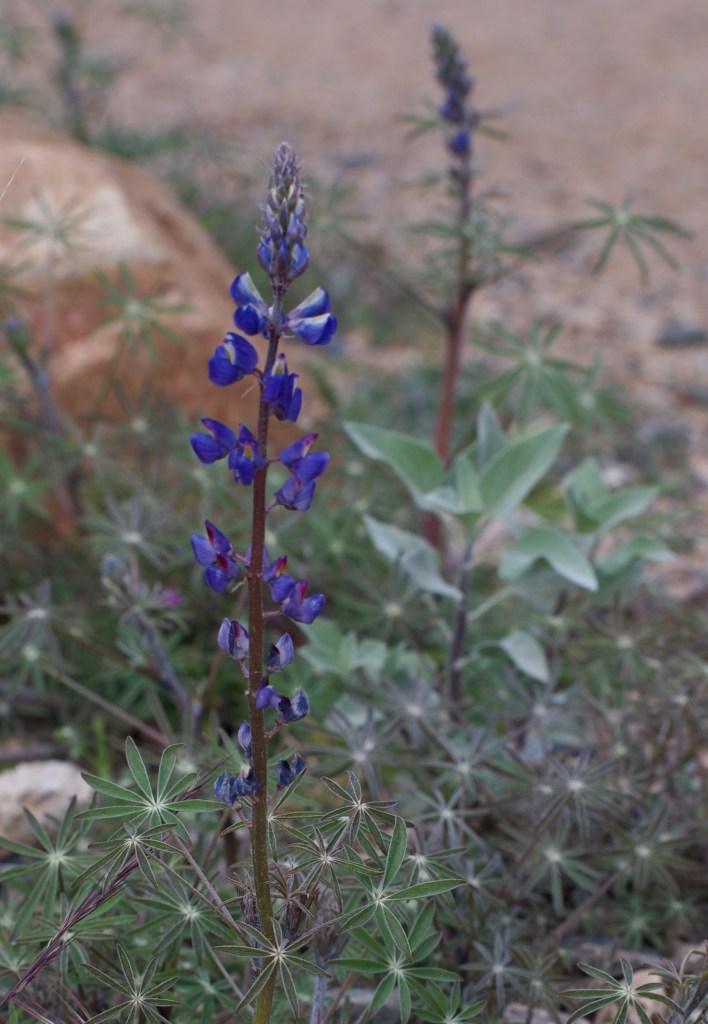

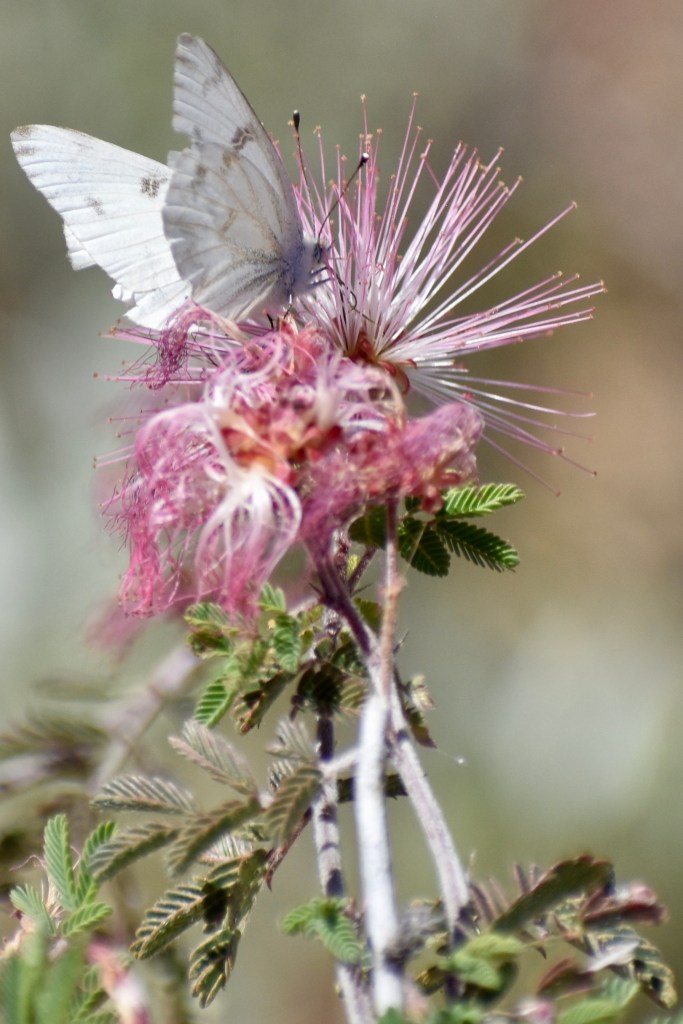









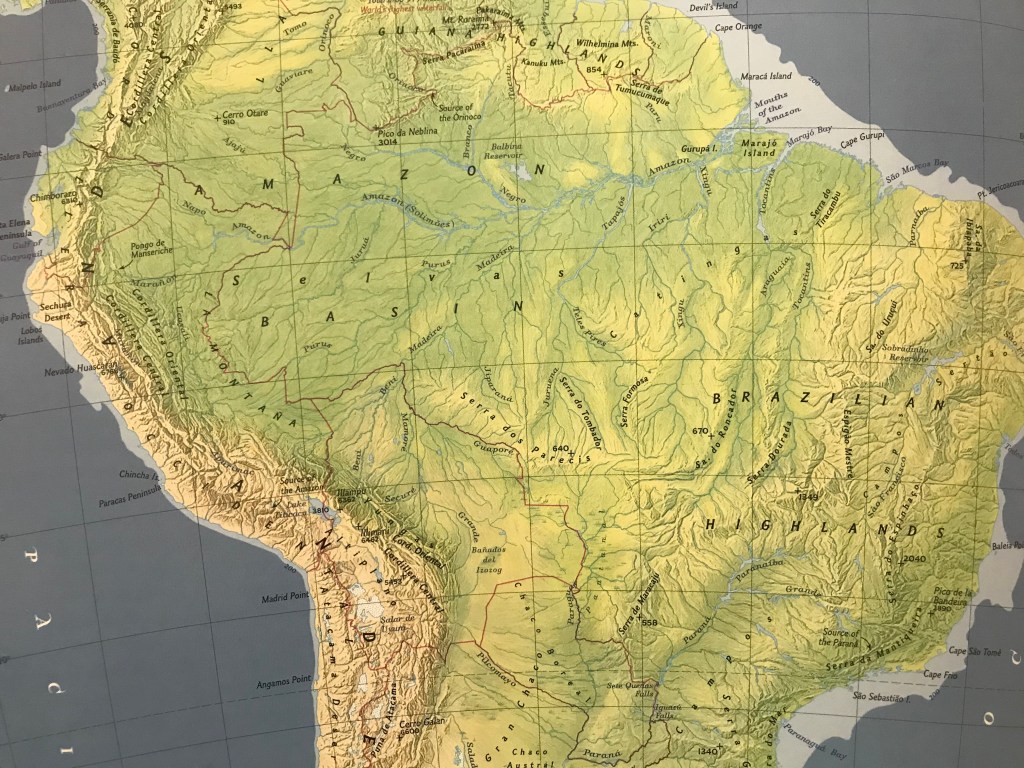




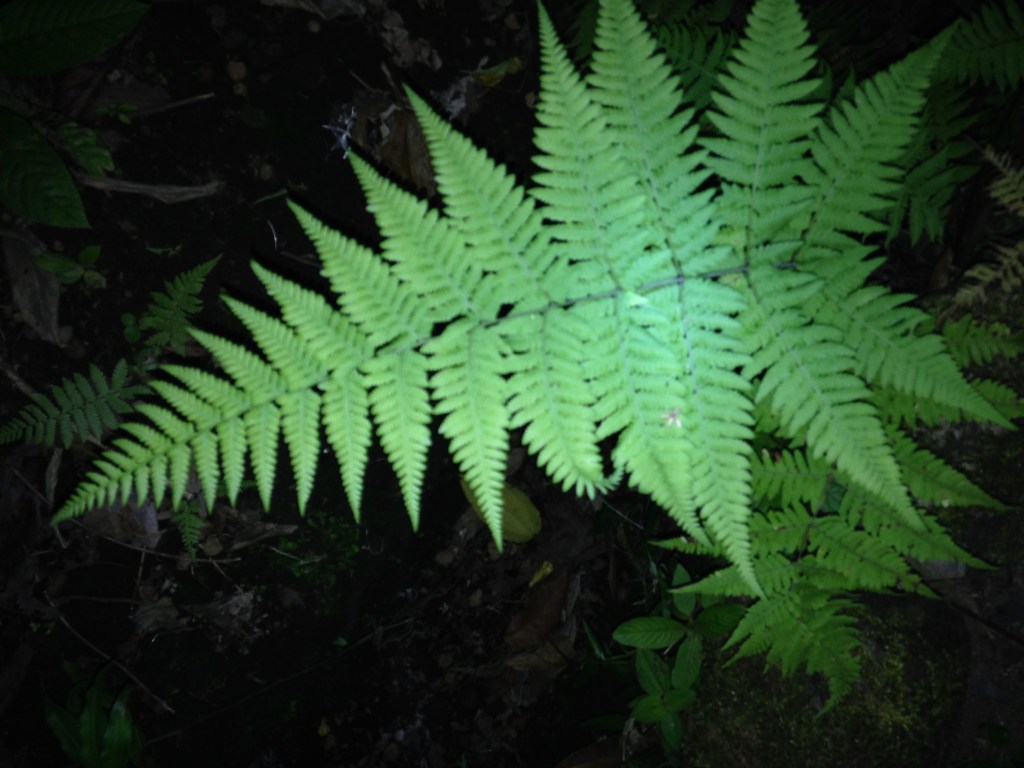


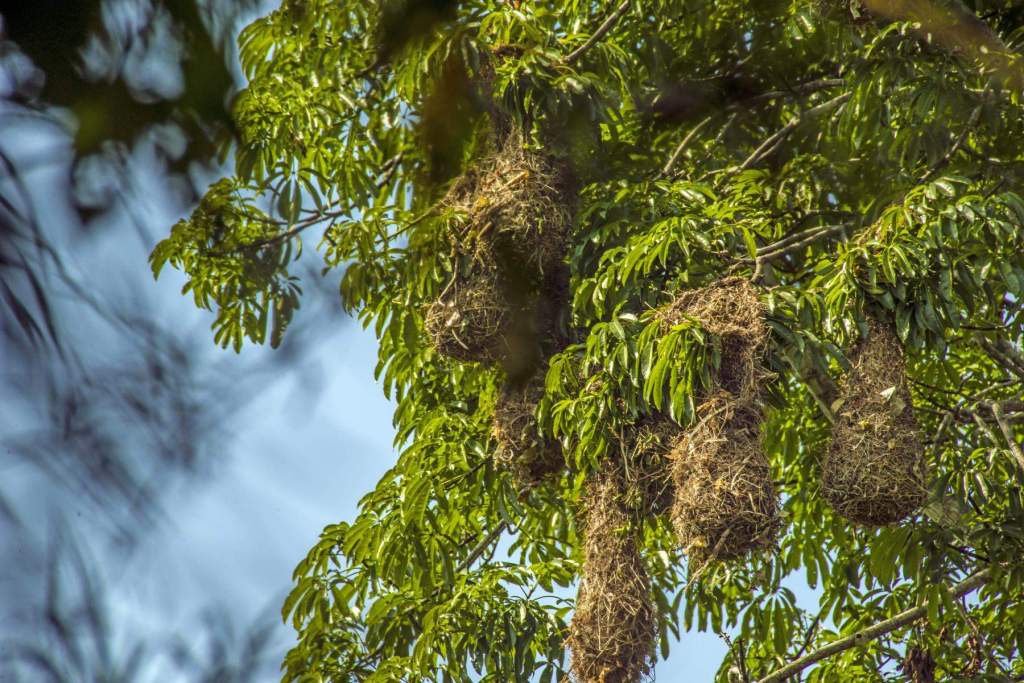
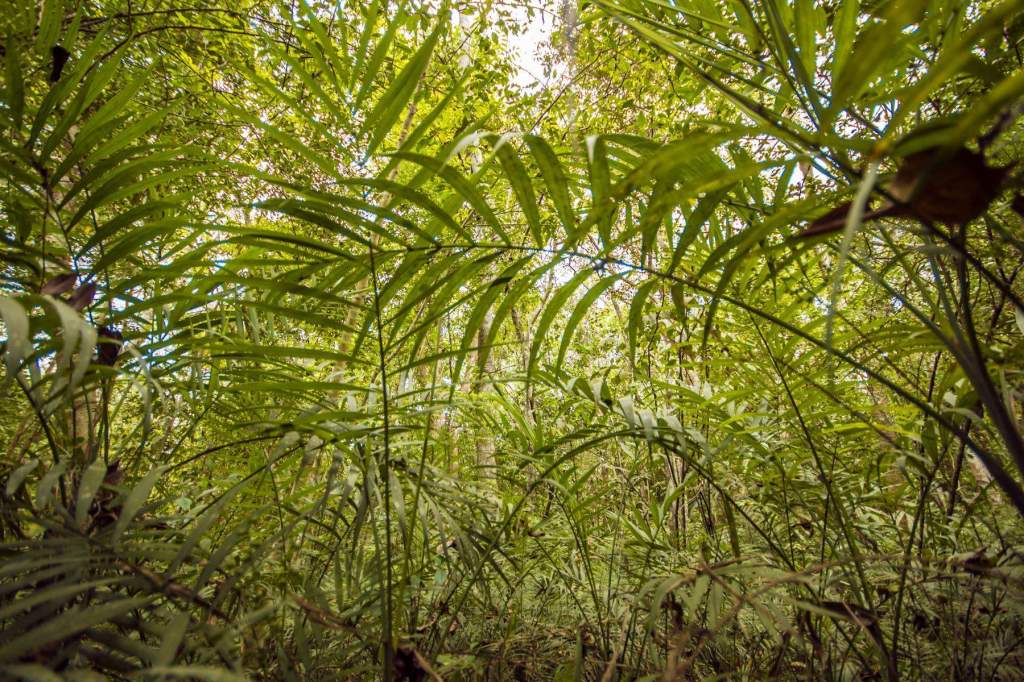
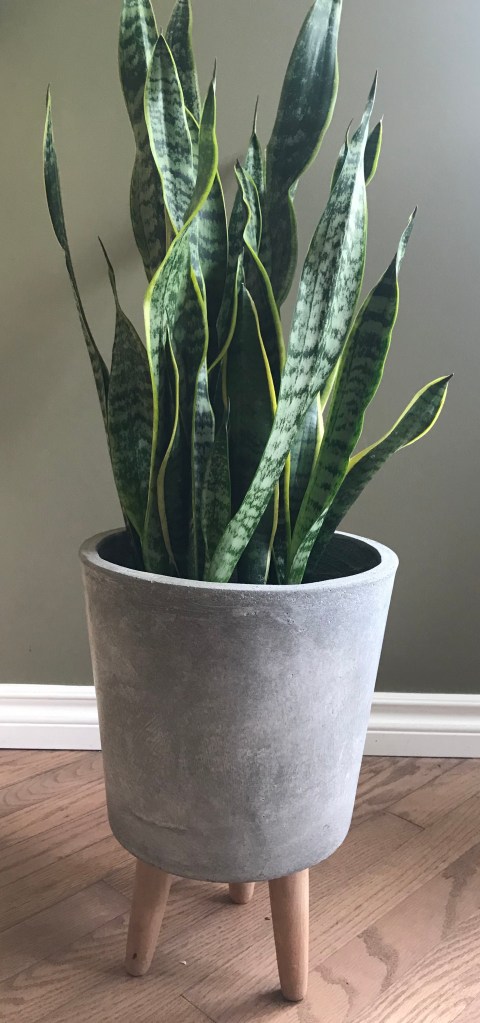


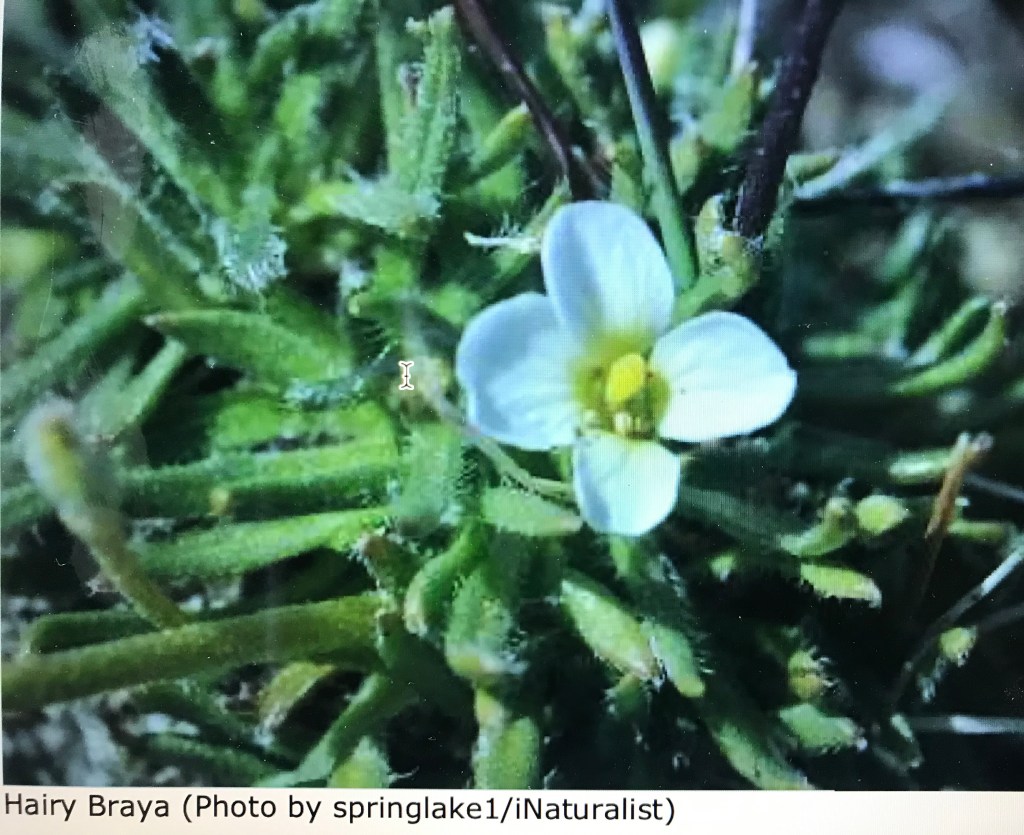
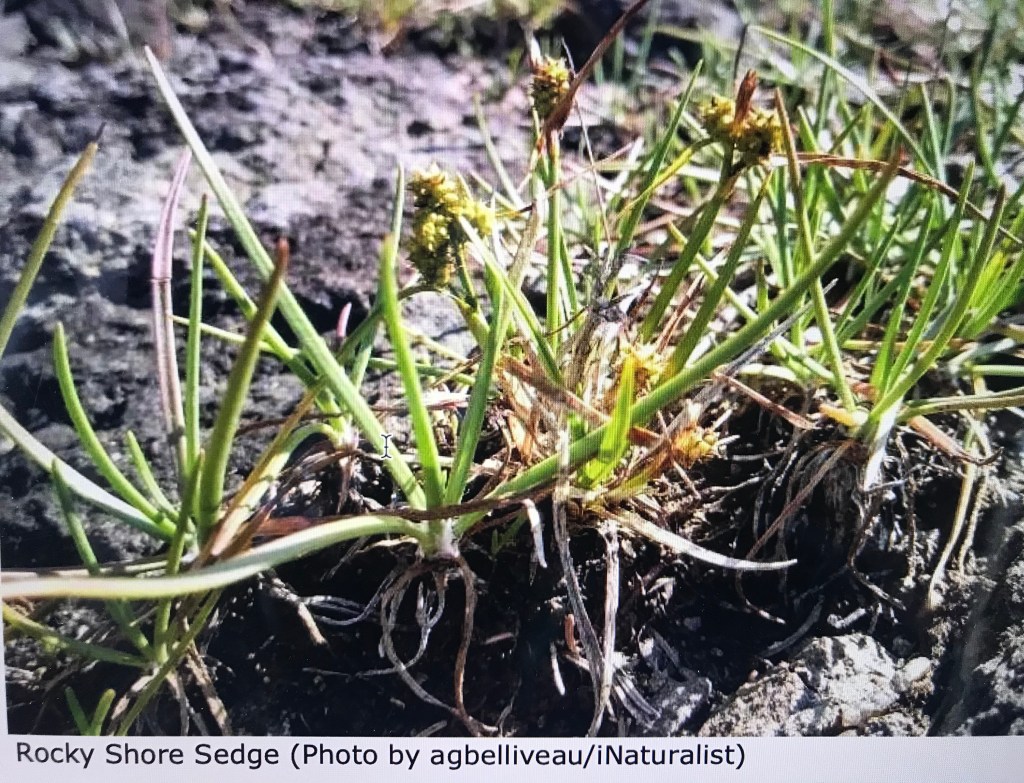
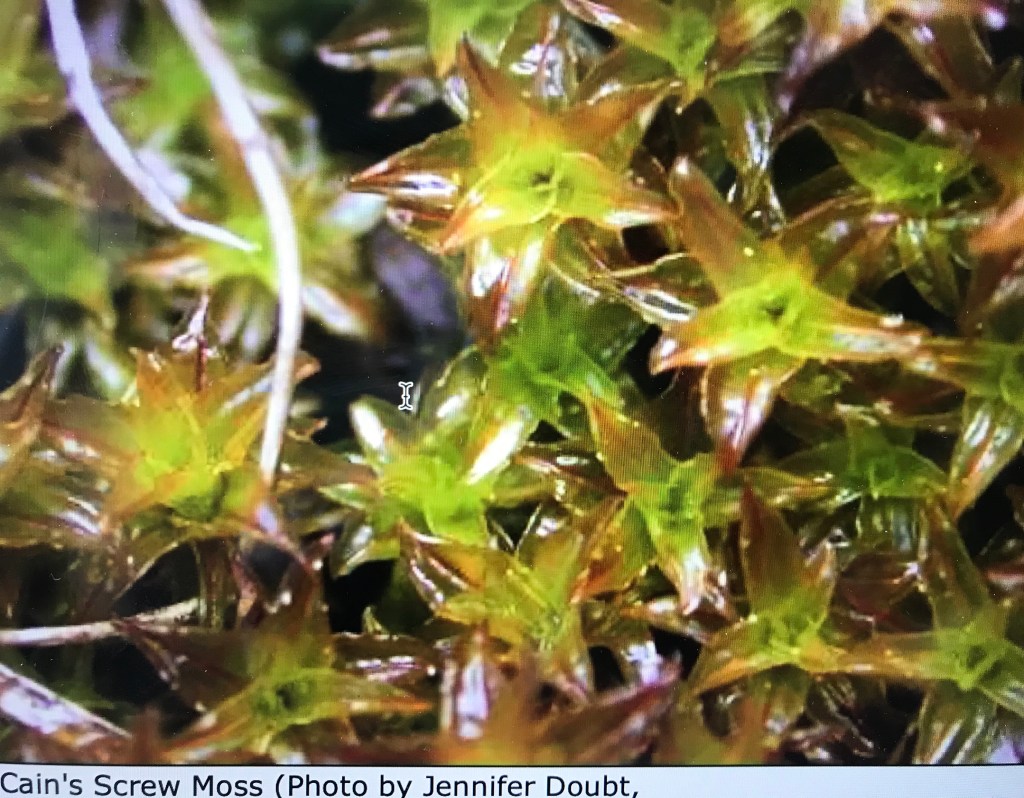


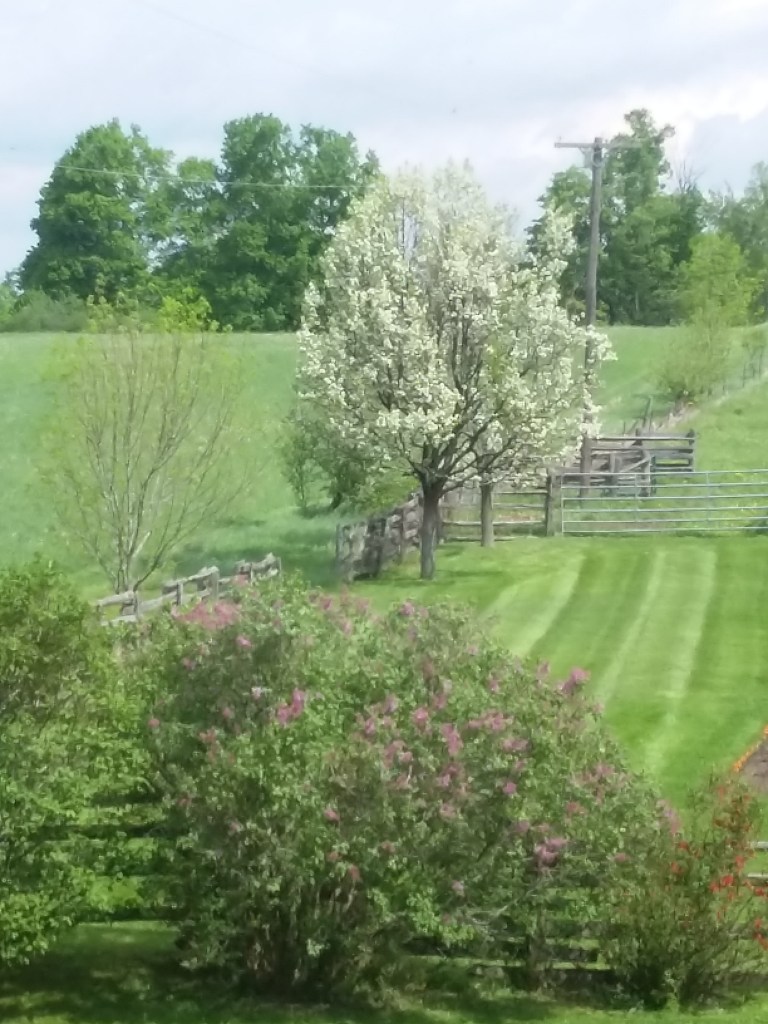


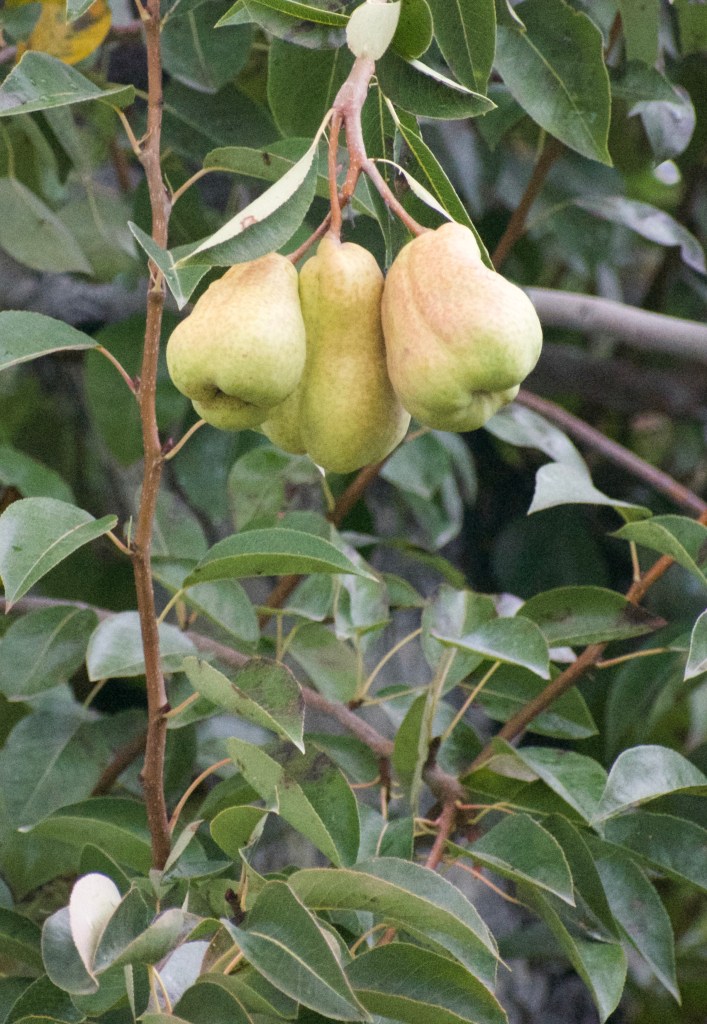

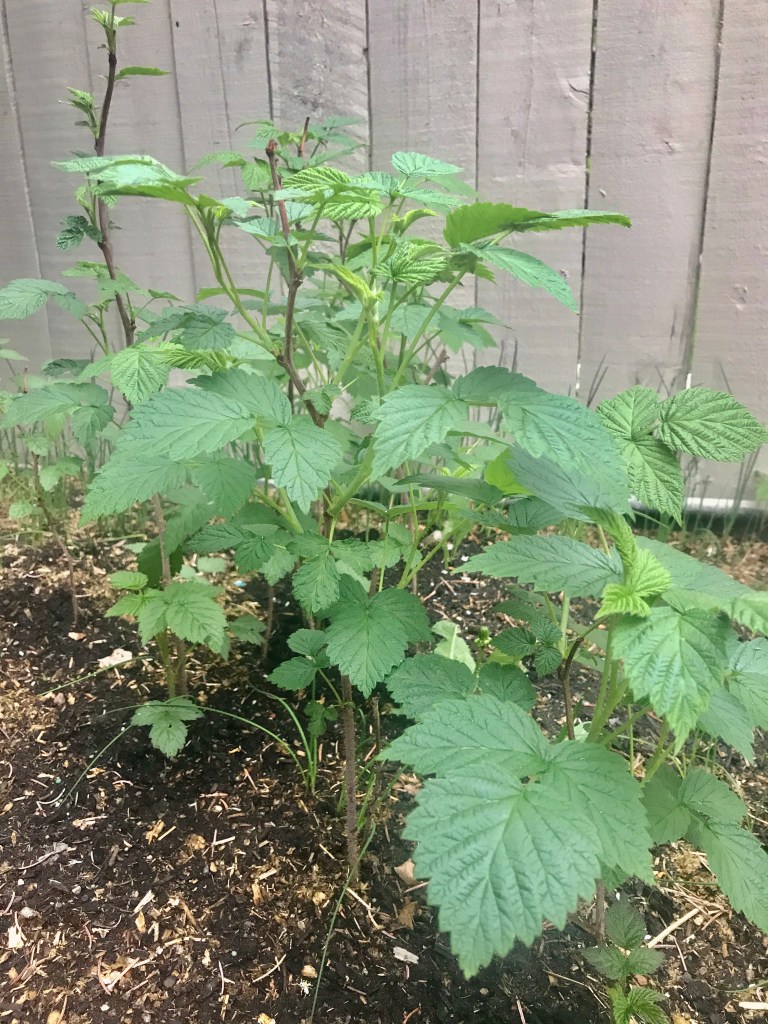
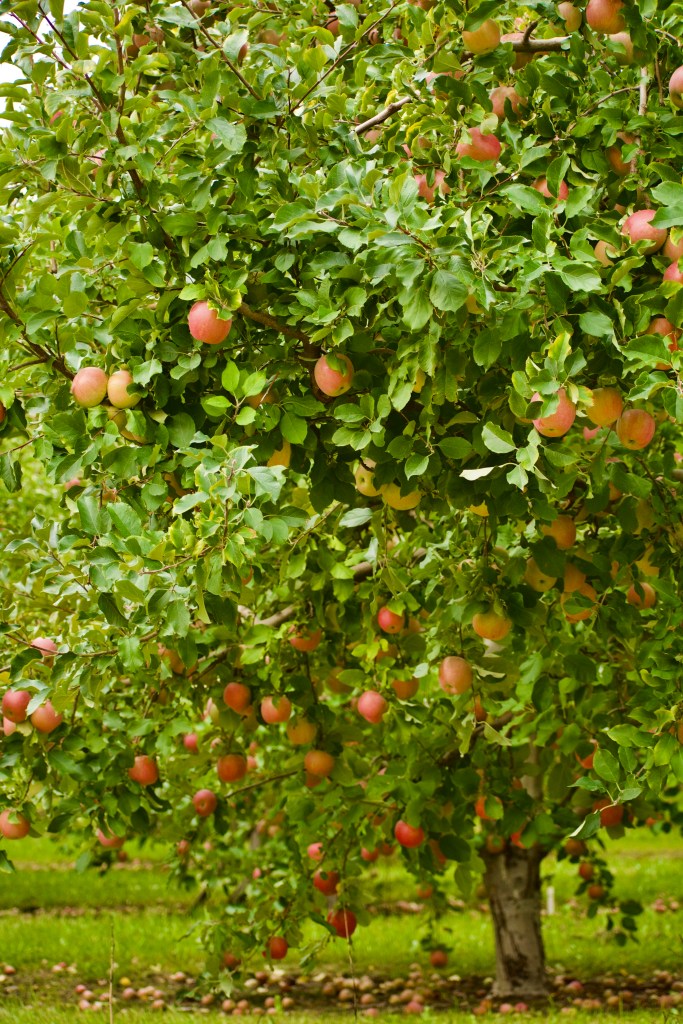
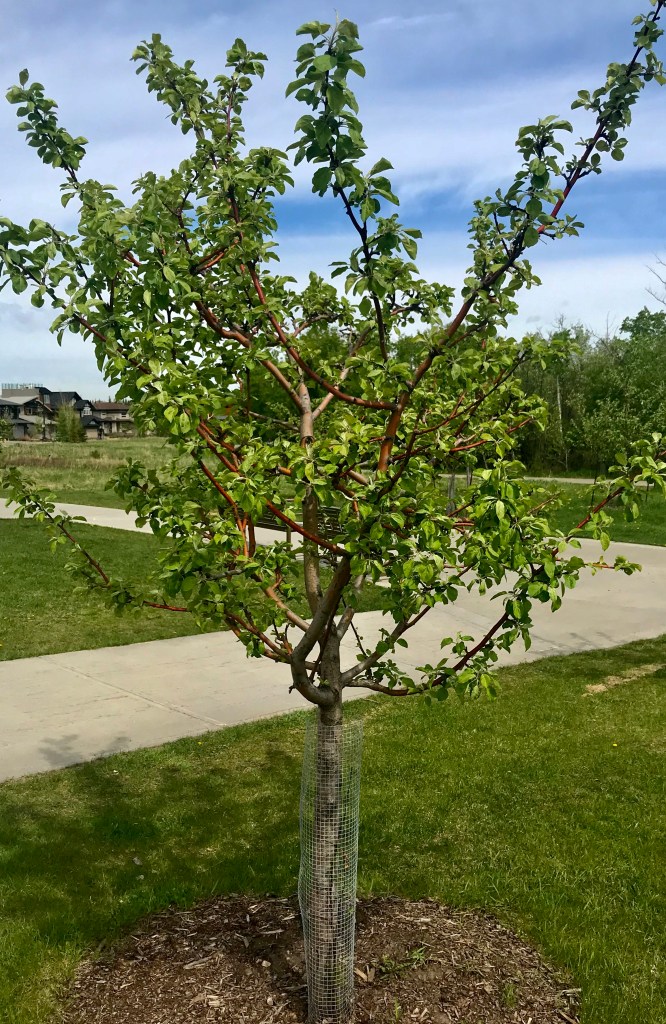


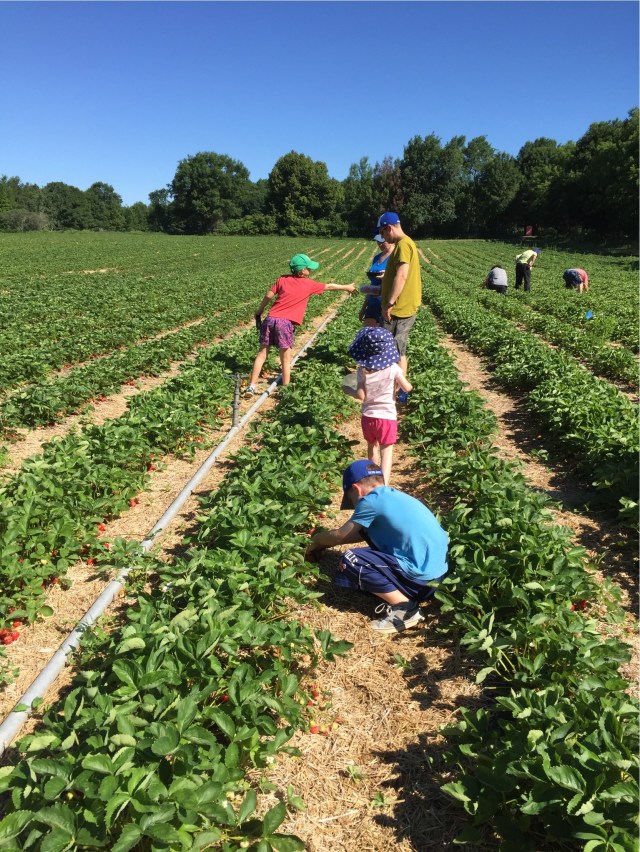

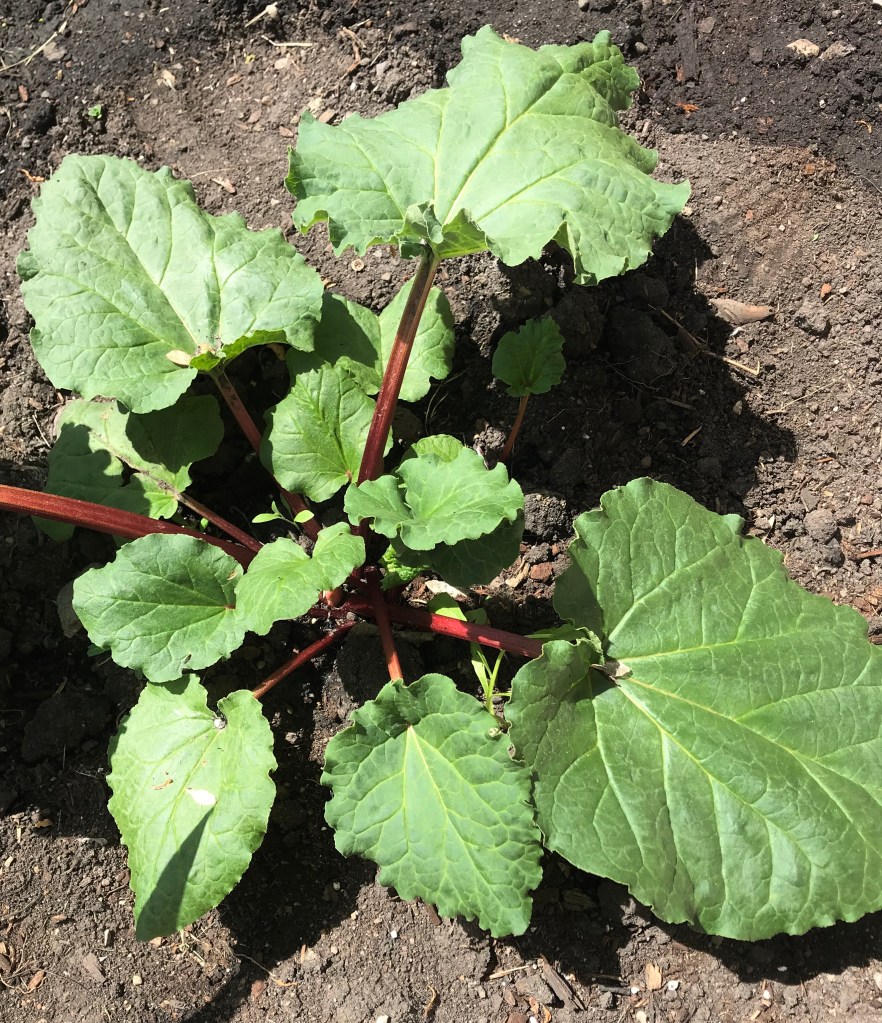


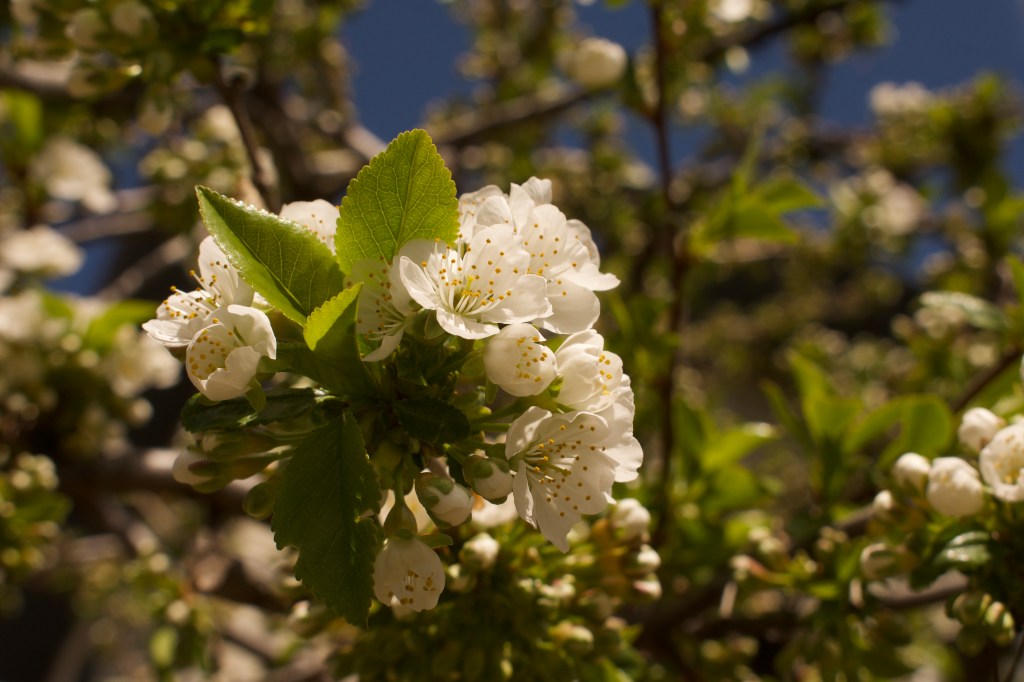

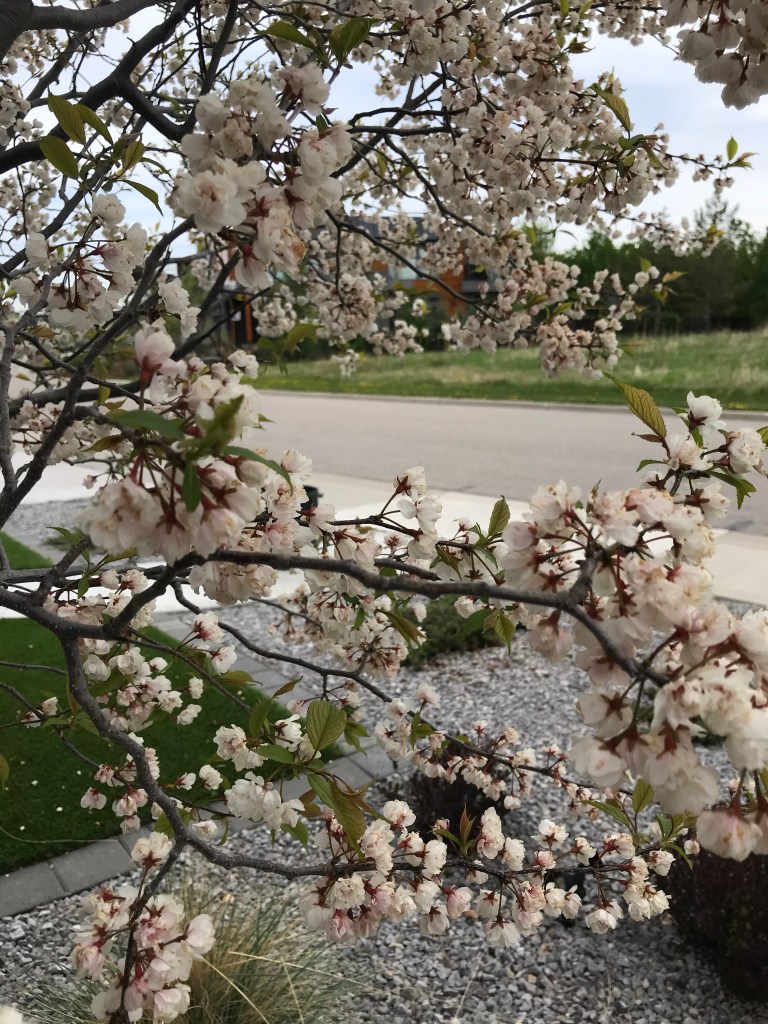

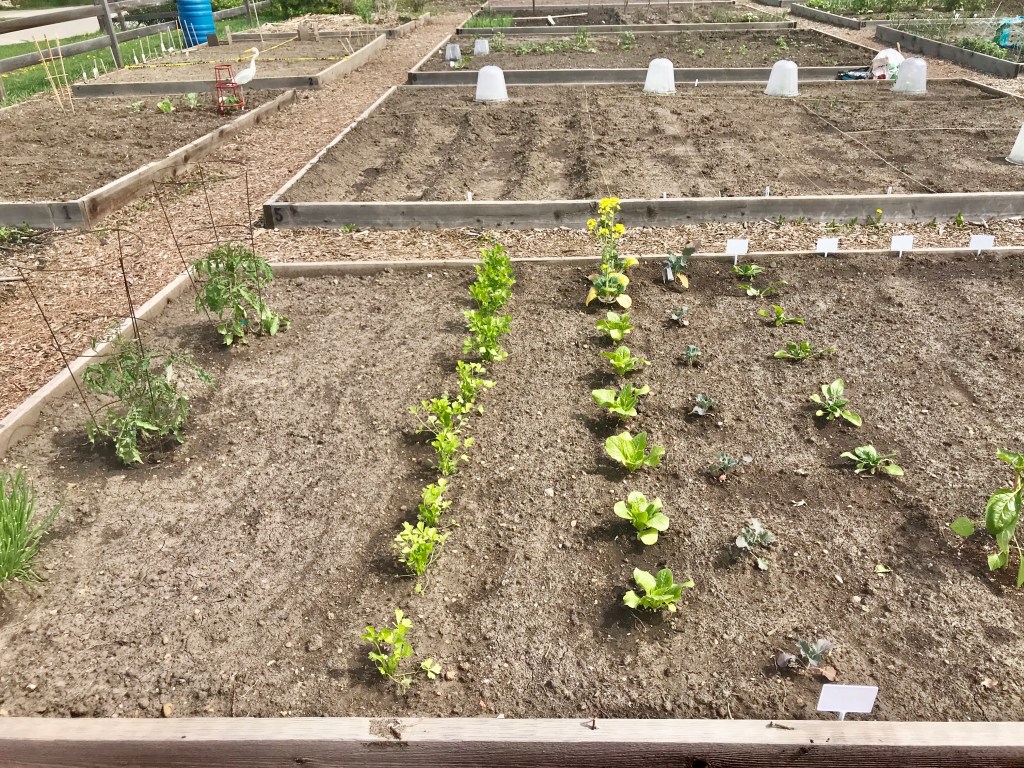


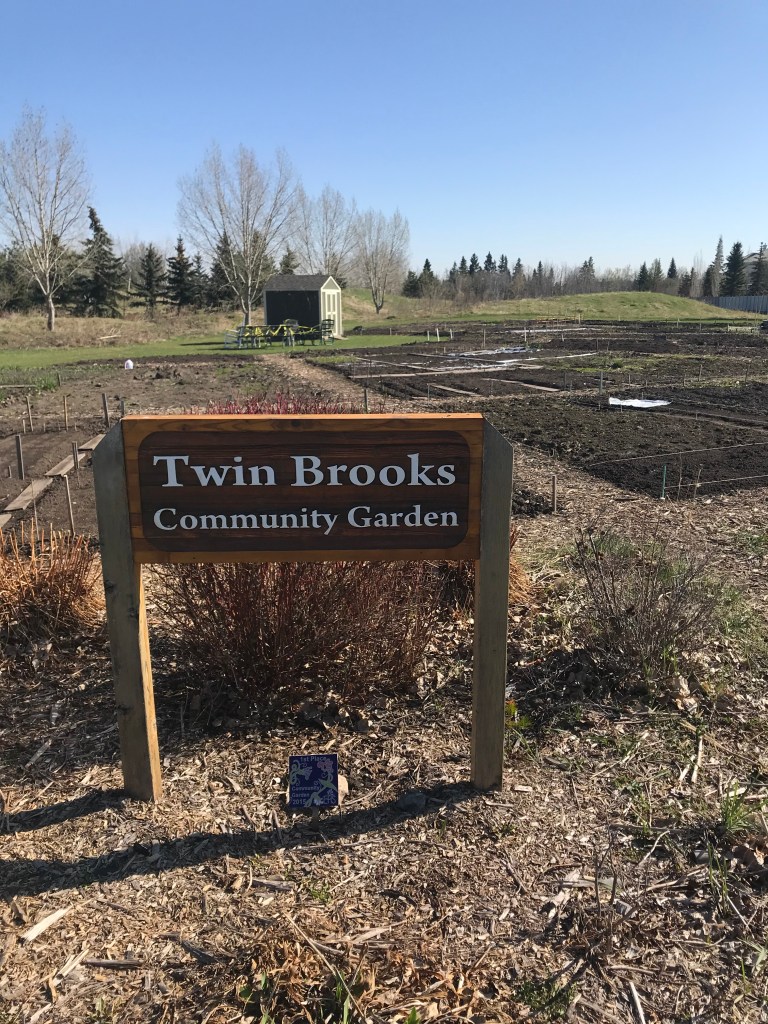


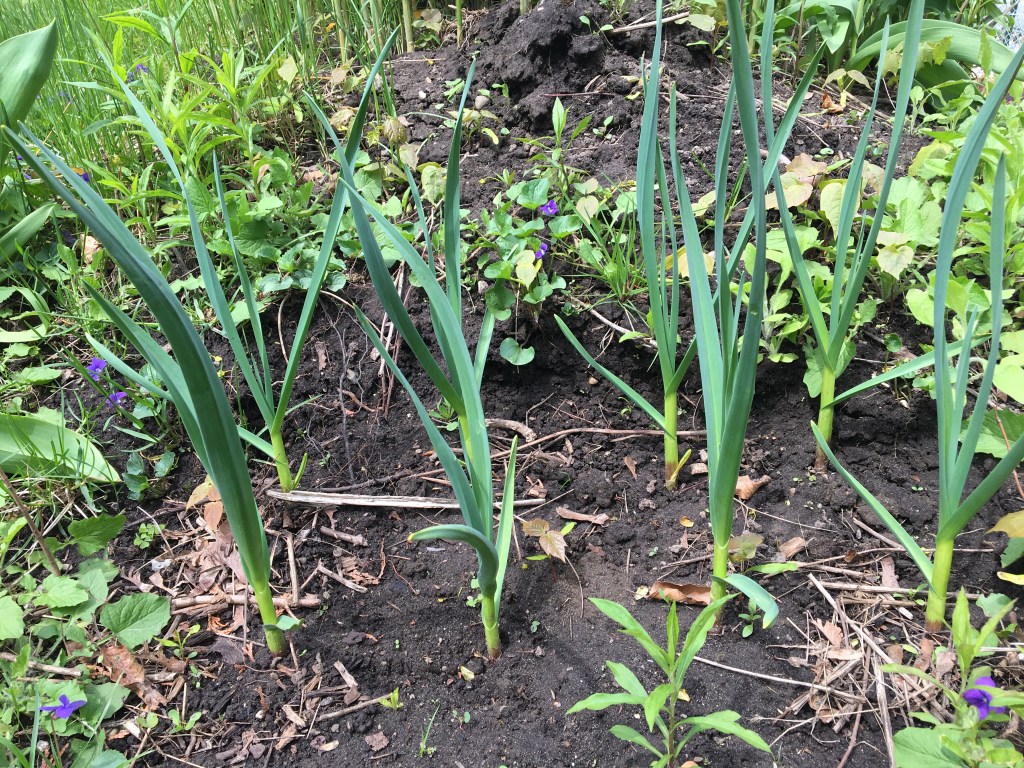


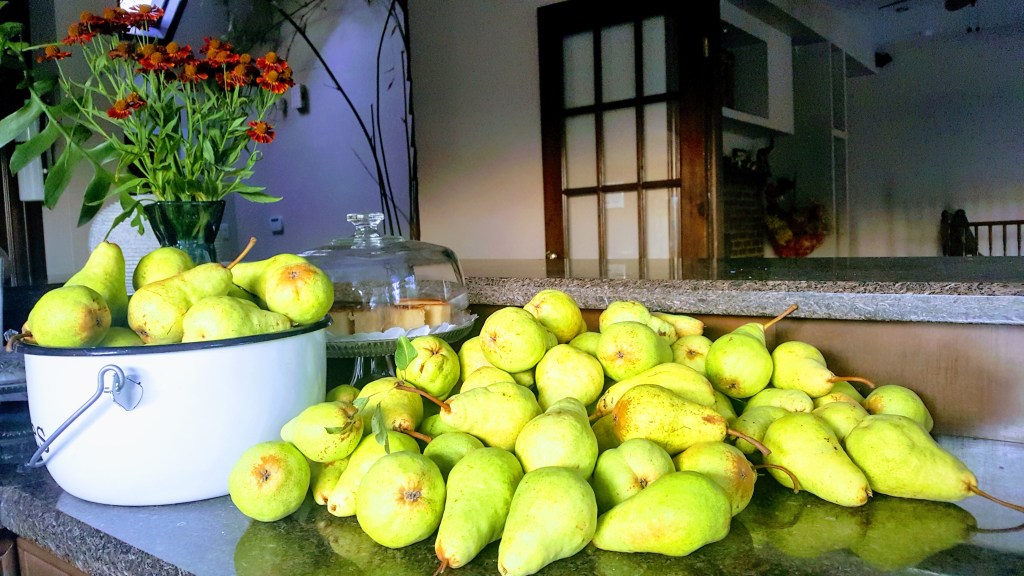
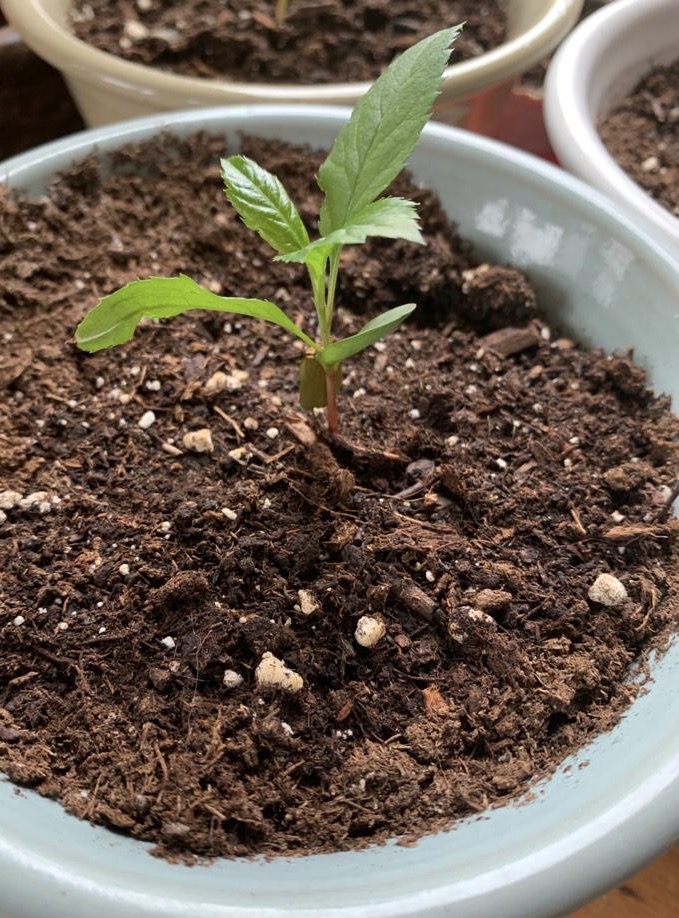


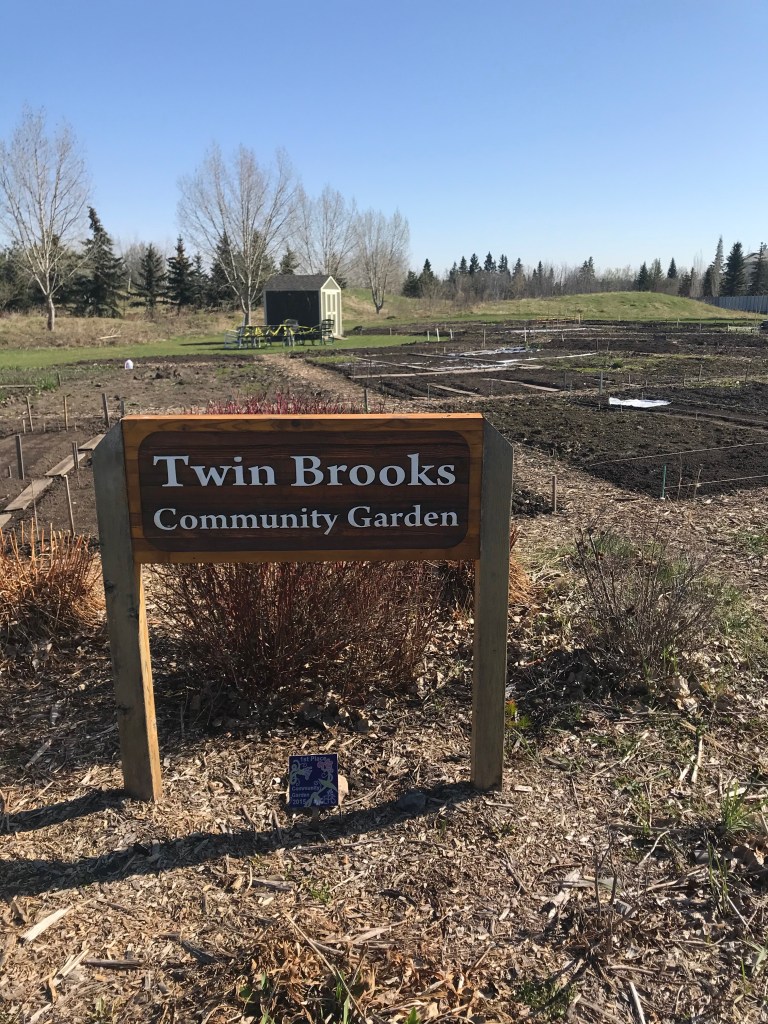
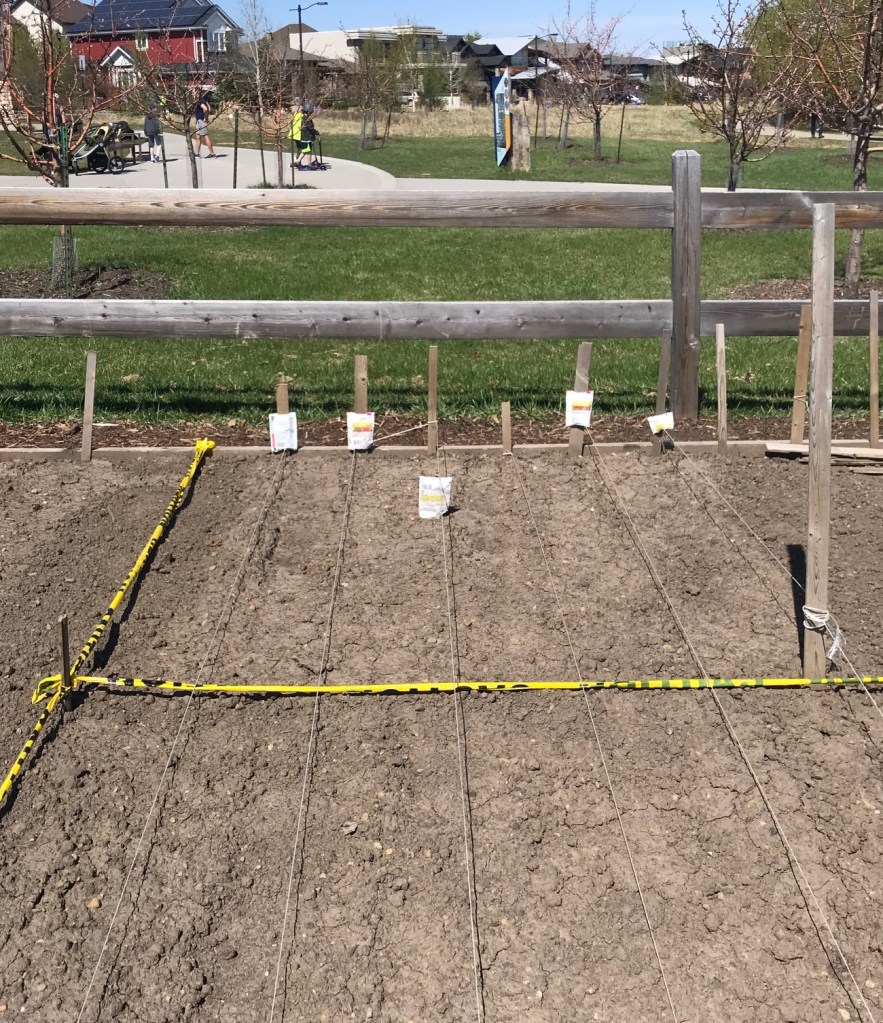
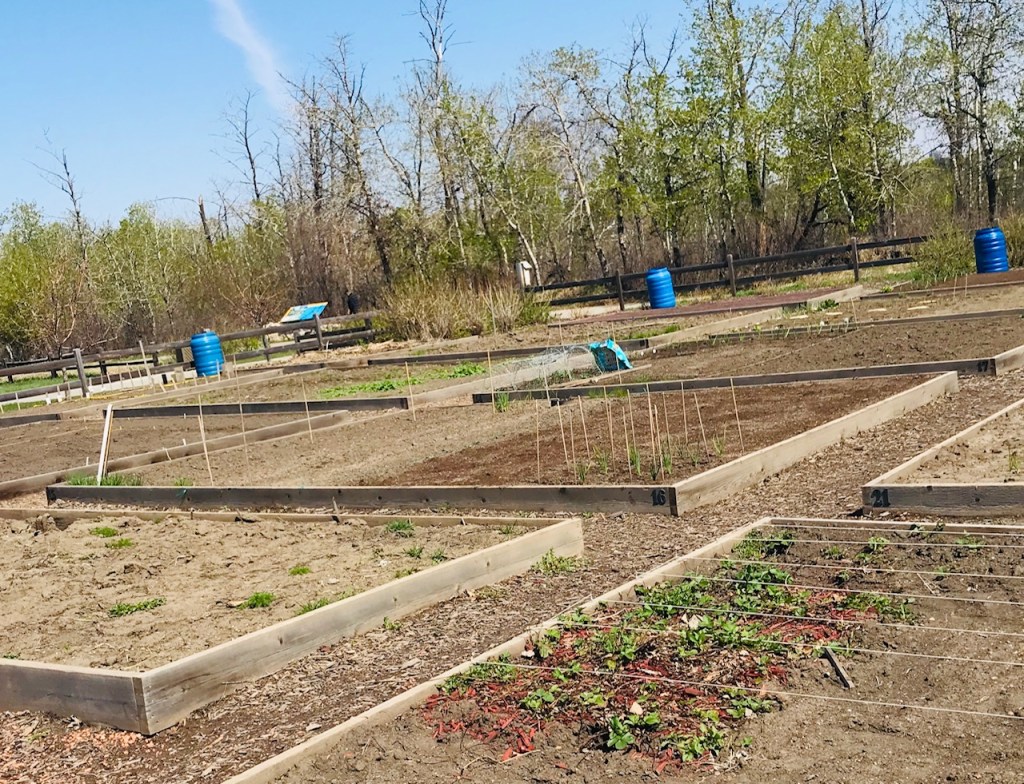

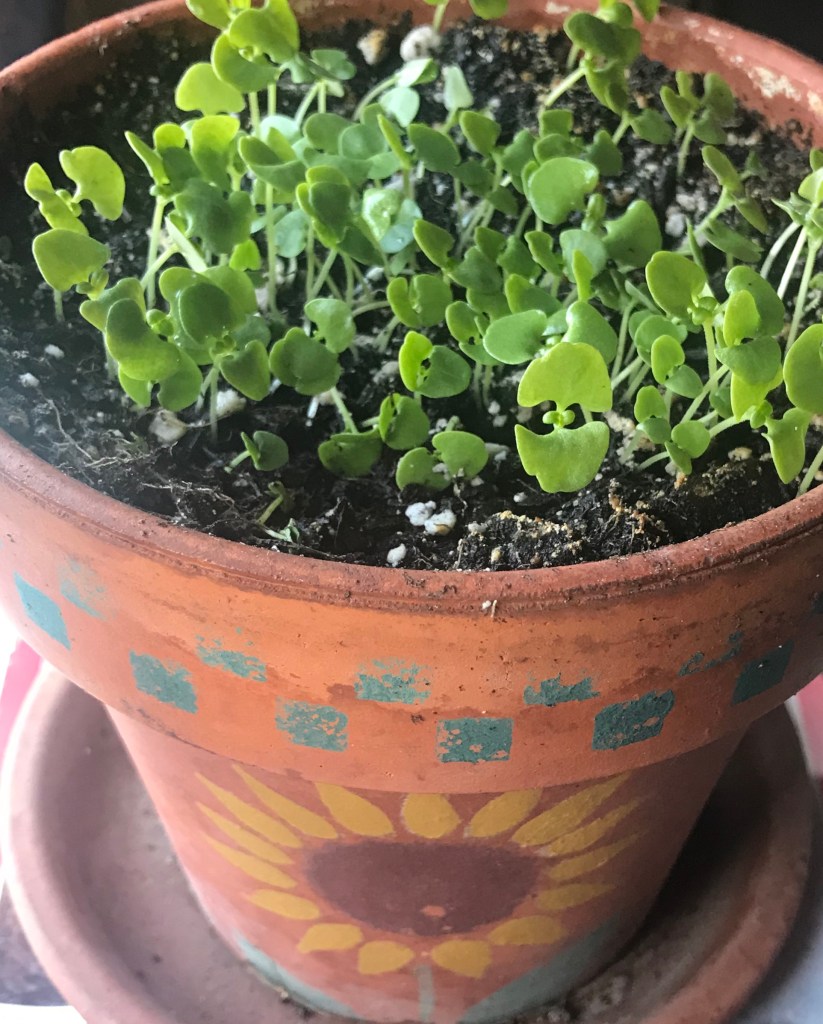


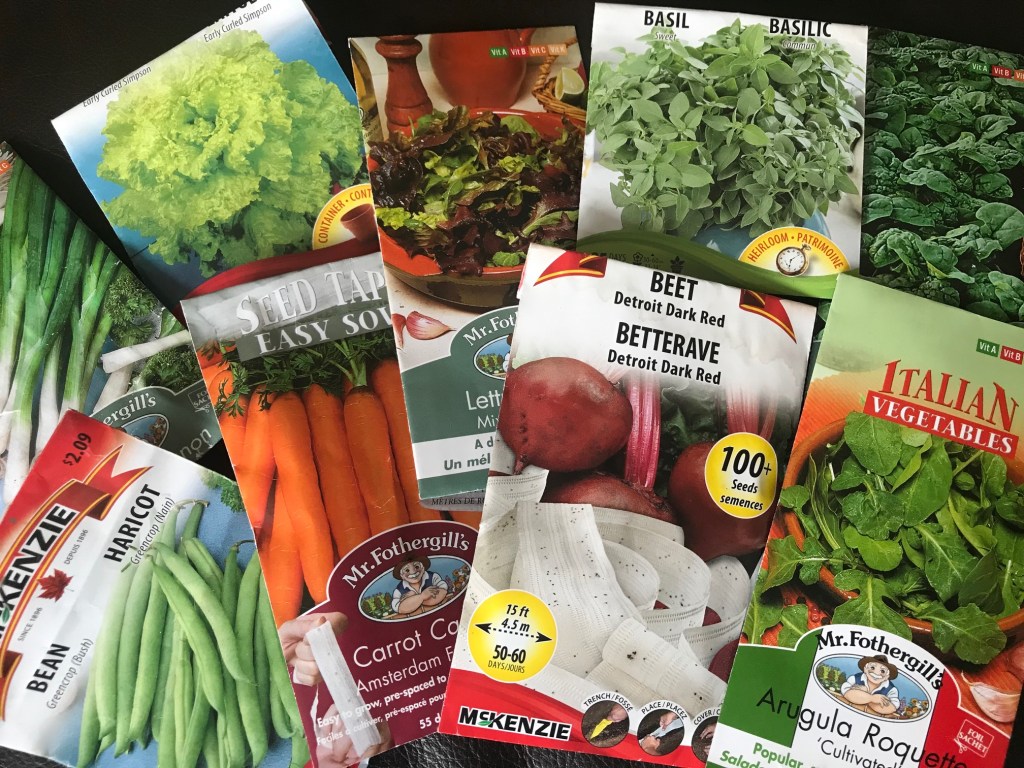





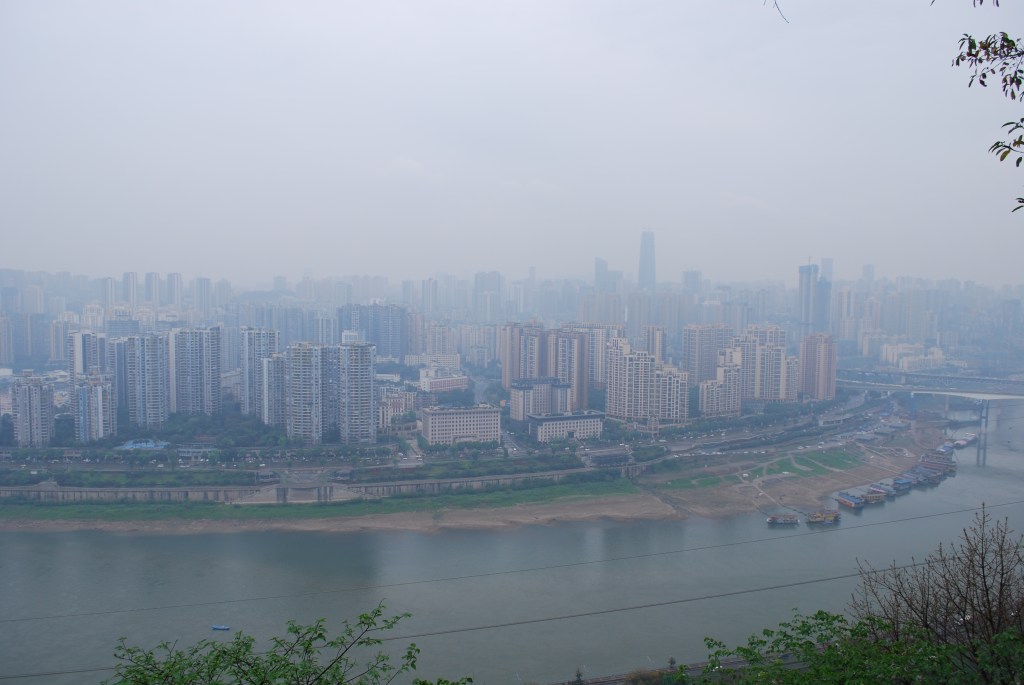








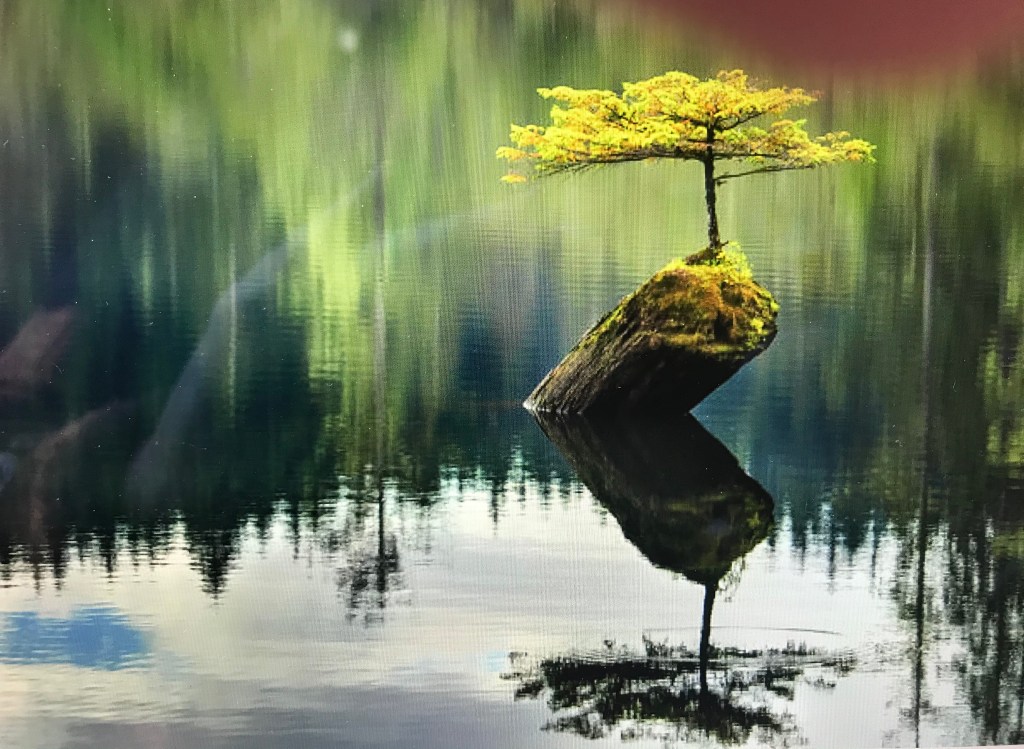

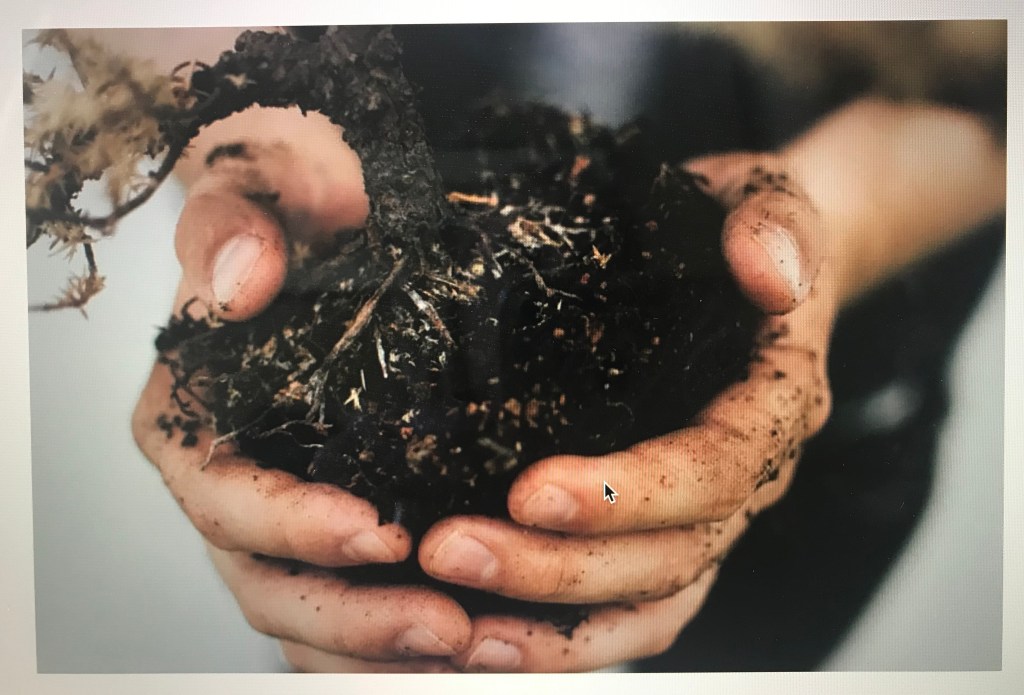
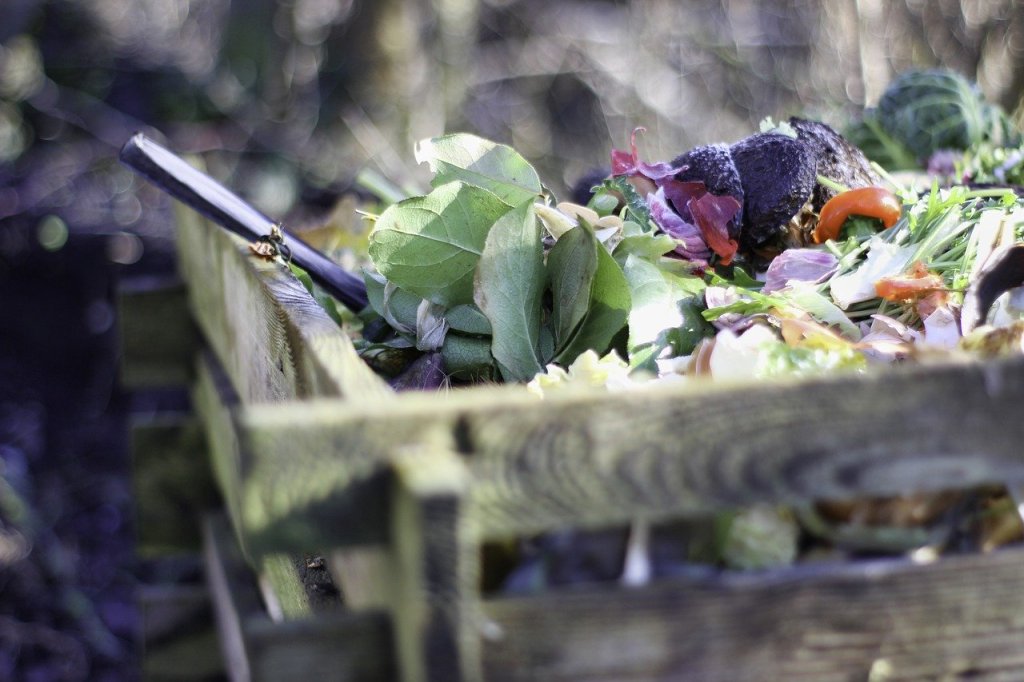
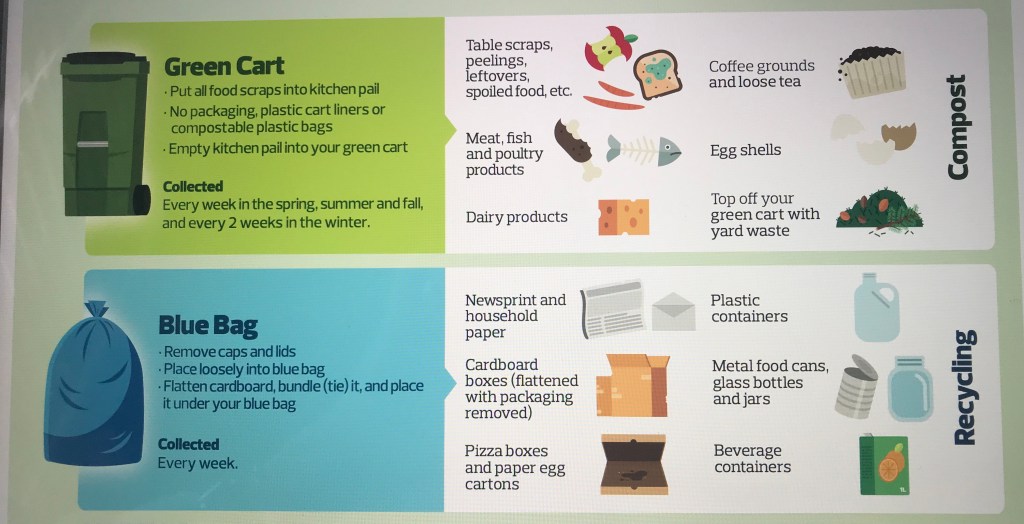



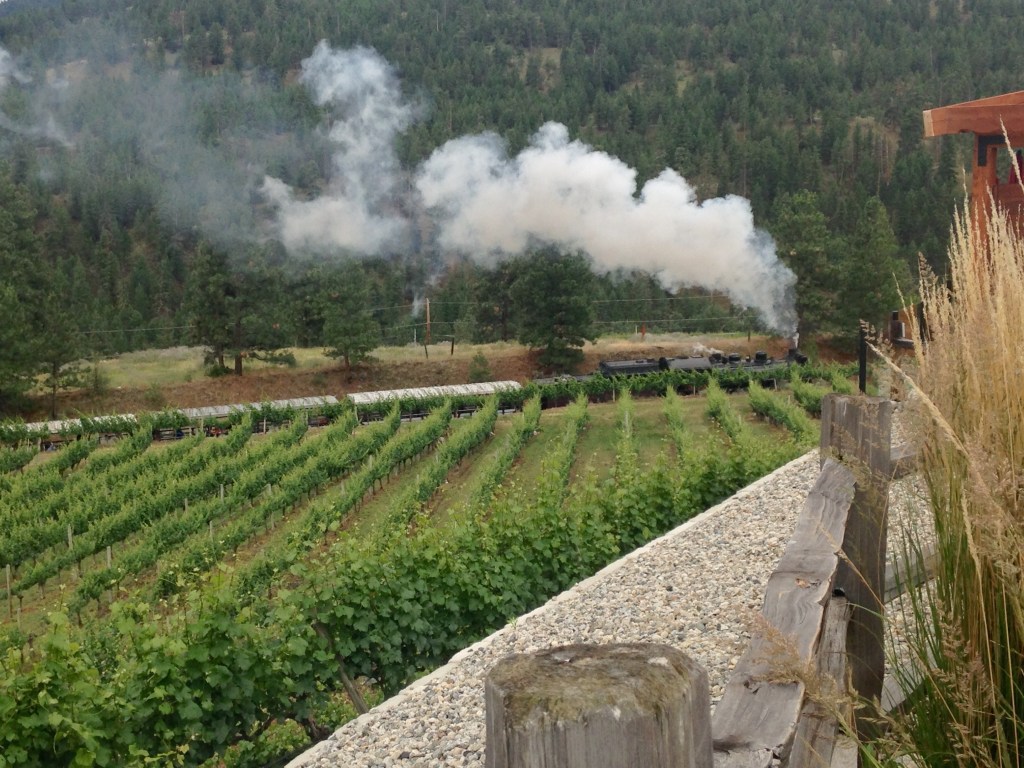


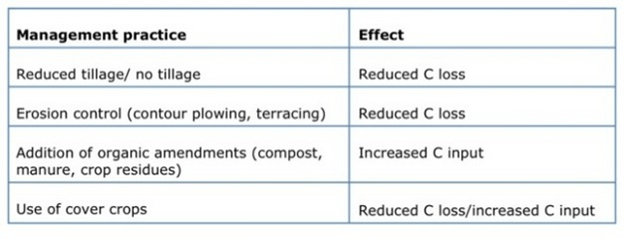













 FRIENDS4TREES4LIFE