

We are encouraged by what we are learning about the many tree planting initiatives that are underway in cities across Canada. Here are but a few examples.
Montreal is planting 22,000 trees by the end of this year using a $17M budget to increase their tree canopy from 20% to 25%. With the help of the David Suzuki Foundation, many trees will have a blue tag stating the type of tree, its increasing value over time, its environmental benefits, such as the tree’s CO2 offset, water absorption and energy reduction over a 40-year period, as described in this Global News piece at, https://bit.ly/2QruzAt. Tree Canada partners with the private sector to contribute to Montreal’s tree canopy goals through the Montreal Urban Canopy Project, which you can read more about here, https://bit.ly/2Xrs6HY.
The same MIT Treepedia ranking list that we cited in last week’s blog post on tree planting in BC, ranks Toronto’s tree canopy achievements at number five, after number one ranked Vancouver, but ahead of NYC, Paris and London, as discussed in this CBC article, at https://bit.ly/2prB9vT.
As the article states, MIT’s Treepedia methodology found that Toronto had 19.5% of land covered in trees, compared with top-ranking Vancouver’s 25.9% coverage. The city’s Live Green Toronto program runs initiatives and offers a number of grants toward its objectives of “engaging residents and businesses in greening our city and protecting our environment,” with accomplishments to-date and links to grant applications provided here, https://bit.ly/2D3rGy9.
Toronto’s Tree Planting Strategy is posted here, https://bit.ly/2QyASSK. It states that, “The City is investing in community-led tree planting and stewardship on private land to help reach our 40% tree canopy cover target,” and the site offers ideas for how citizens, businesses and groups may become active contributors toward this 40% target. Toronto residents may want to look into, e.g., the city’s “Neighbourhood Tree Giveaway Program”.
In Edmonton, plans are underway, through the Roots for Trees program (which started in 2012), to build upon the 37,000 trees planted last year, by planting an additional 45,000 trees in 2020, both an increase from the original 16,000 a year plan, and continuing with the city’s program of giving 15,000 trees to school children. We also learned in conversation with the city that all new homes are required to plant two trees in the front yard, which also contributes to growing Edmonton’s tree canopy. So far we have not seen any numbers for tree canopy percent in Edmonton, but because of the river valley Edmonton has the status of having the longest continuous green space in all North America. Businesses, individuals, and community groups can register, during the first week of March, for a 2020 planting event with Roots for Trees.

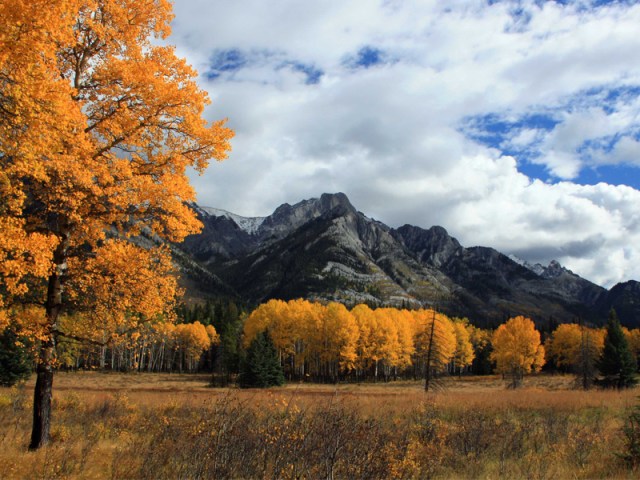

Vancouver’s ambitions are to grow its tree canopy by 150,000 trees by 2020, through its Urban Forest Strategy and vision “to protect, plant, and manage trees to create a diverse, resilient, and beautiful urban forest on public and private lands across the city.” Read more at, https://bit.ly/2XjOfYC.
We found this site which ranks Canada’s top 10 greenest cities in 2017 (the country’s sesquicentennial). Happily, this list affirms what we believe in our hearts, that Canadians and Canadian cities from coast-to-coast care about the environment and “get it” about the need for climate action and that trees play an important role in carbon sequestering in addition to the aesthetic, health and other ecosystem benefits they offer. The city honour roll goes to Moncton (10), St. John’s, Kelowna, Halifax, Calgary, Toronto, Vancouver, Montreal, Quebec City, and top spot Victoria – https://bit.ly/33Wn4FI.
That’s the good news on Tree Planting in cities across Canada.
Here’s the news from scientists worldwide about why we need to go broader, deeper, faster and more significantly to mitigate, reduce and avoid for harmful carbon emissions. This sobering piece by Global News reports on why over 11,000 scientists around the world signed an open letter on November 5, 2019, urging all to heed the calls and signs from Planet Earth that humanity and the environment are in a climate emergency that, within our lifetime, threatens our very existence, without urgent climate action now https://bit.ly/32OGuLm.


The open letter was published in the journal Bioscience, and signed by scientists from 153 countries, including 409 scientists from Canada. On the occasion of the 40th anniversary of the First World Climate Conference (in Geneva in 1979), these scientists assess unequivocally and in arresting terms with evidence that, in the ensuing 40 years since the initial conference, “…with few exceptions, we have generally conducted business as usual and have largely failed to address this predicament. The climate crisis has arrived and is accelerating faster than most scientists expected. It is more severe than anticipated, threatening natural ecosystems and the fate of humanity. Especially worrisome are potential irreversible climate tipping points and nature’s reinforcing feedbacks (atmospheric, marine, and terrestrial) that could lead to a catastrophic ‘hothouse Earth,’ well beyond the control of humans.”
This sobering open letter concludes with suggestions for “six critical and interrelated steps (in no particular order) that governments, businesses, and the rest of humanity can take to lessen the worst effects of climate change.” The action areas are: Energy, Short-lived Pollutants, Nature, Food, Economy, and Population. While very serious in nature and tone, the Alliance of World Scientists conclude by offering to assist decision-makers, and with this positive concluding view, “…The good news is that such transformative change, with social and economic justice for all, promises far greater human well-being than does business as usual. We believe that the prospects will be greatest if decision-makers and all of humanity promptly respond to this warning and declaration of a climate emergency and act to sustain life on planet Earth, our only home.” Click here to go to the journal of Bioscience website to access the free five-page letter, https://bit.ly/37mha2W (select PDF under the article’s citation).


Clearly, tree planting is very important to mitigate the harmful effects of carbon emissions through sequestration. Tree planting alone, however, won’t solve the global warming and climate change threat. We humans also need to do our part to reduce and change our carbon-intensive behaviours and lifestyles. The good news on this part of the challenge is that, just like with tree planting, we are learning that there are many other positive actions available to us on a personal level, even as we engage and advocate concurrently with government and businesses to take much needed climate actions on a wider scope, guided now by the six science-informed action areas set out by the Alliance of World Scientists. Plus, there are many positive leading examples at every level to help accelerate our learning and guide our individual and collective way forward. Here is what expert Frederick Vroom, Tree Canada has to say to encourage and guide us all on our personal learning journey and climate action plans, https://bit.ly/2QnWxNH.
Finally, we are so excited to end this blog by spotlighting the amazing journey of Eden Mills, Ontario, as a shining example of what is possible when a whole community of concerned citizens decides to take personal and collective climate action. Across the past decade, and starting first with one resident’s actions and slowly growing with personal actions of others, Eden Mills is now 75% of the way toward achieving the town’s shared goal of becoming the first carbon-neutral community in Canada. We are delighted to profile this Canadian first and success story, as told in this Macleans article at https://bit.ly/2Ks5YHR. Oh yes, about those trees — Eden Mills has a population of 350 citizens, and among many impressive actions taken, with the help of outside volunteers, this small community has managed to plant 40,000 trees to-date. Awesome!

We hope you will check back for next Thursday’s blog post where we start to profile some leading countries that are doing their part to meet international commitments on greenhouse gas emissions aimed at limiting overall global warming to 1.5C, as scientists advise. With the holiday season around the corner, we will also share what we have found about “living Christmas tree” and “Gifting tree sapling” options.






 FRIENDS4TREES4LIFE