Naturalization with Trees, Dandelions and Composting Using the New Cart Rollout

Volunteer Tree Planting with Root for Trees

At the start of our blog, back in the fall of 2019, Lucy had read about Root For Trees, and made a plan and registered to volunteer with them to plant trees in Edmonton. Finally, after a year of COVID restrictions, she received an email that small groups are again planting trees. Strong winds cancelled the original group outing planned with Janet, Brenna and Russ so Lucy grabbed the next available date for planting in the south area near the Blackmud Creek.

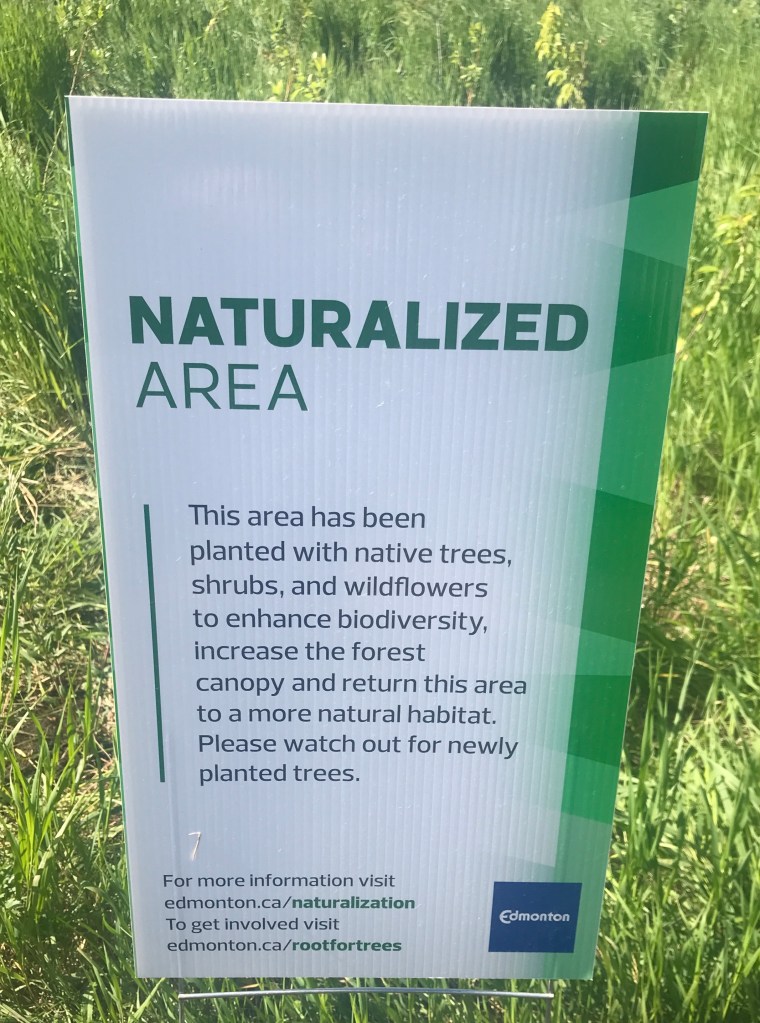
With Root for Trees the city is focused on naturalization, an ecologically-based landscape management approach, where highly-maintained land is transformed into a more natural condition.

The Roots for Trees program started in 2012 with a goal of planting 16,000 trees a year and now the new goal is to plant 45,000 trees each year. As well Edmonton will continue with the program of giving 15,000 trees to school children each year and mandates that all new homes plant two trees in the front yard, two other ways it is increasing the urban forest canopy. The river valley of Edmonton has the status of having the longest continuous green space in all North America. 

The Root for Trees program is very well organized. Businesses, individuals, and community groups can register online, during the first week of March. The only weakness we found was that on the website it is challenging to see at a glance all the possible planting dates and locations. There are opportunities to plant all summer and early fall, and more dates are being added including some Saturdays. As the province opens up, larger groups can meet, as the current limit is 10, but in past years they have had up to 200 planting at one time.

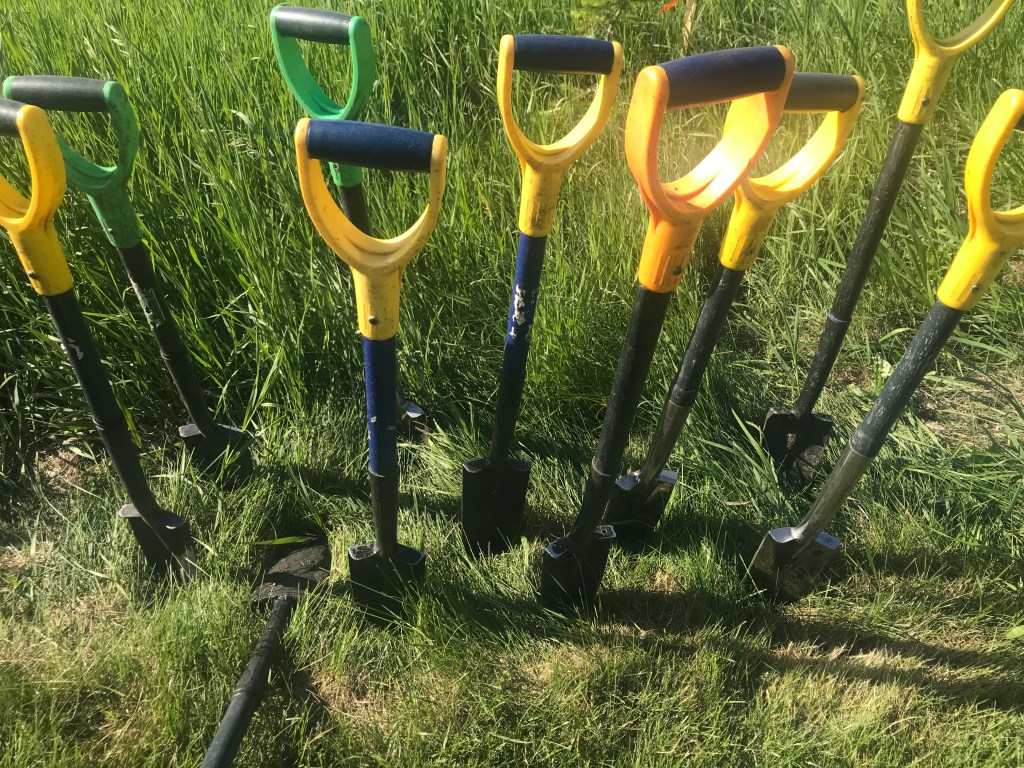
The organizers send out detailed information on how to dress (long pants and closed toe shoes), as well as specific directions on finding the “field” you are planting. It seems everyone found the site. We plant either in the morning or afternoon for two and a half hours. Luckily it was perfect weather on the day we planted, but we are sure it can get hot. A hat, sunscreen, bug repellent, water, are all a good idea. Root for Trees provides the fitted gloves, tiny spades and trees/bushes to plant. The site is already mapped out, with a perimeter, and each tree is planted a metre apart, pairing the birch trees, and bushes need to be half a metre apart.
After discussing safety issues, there is a complete demonstration on how best to plant the trees. These trees were 2-5 feet tall and have about a 9 inch root, so a narrow round hole that is deep enough for the plant must be dug. Next the root ball has to be well loosened so the roots are aiming down, and then the plant must be packed in with no air pockets, using the same dirt, un-crumbled in layers, packed down with the final test being, the tug to ensure it does not come out. Later that day a truck will come to water the trees. Prior to planting the area has let the grass grow long, and that is why the trees need to be large enough to compete and increase their survival rate. The survival rate of these trees is 80 percent. Not bad! We each planted about a dozen trees while there.
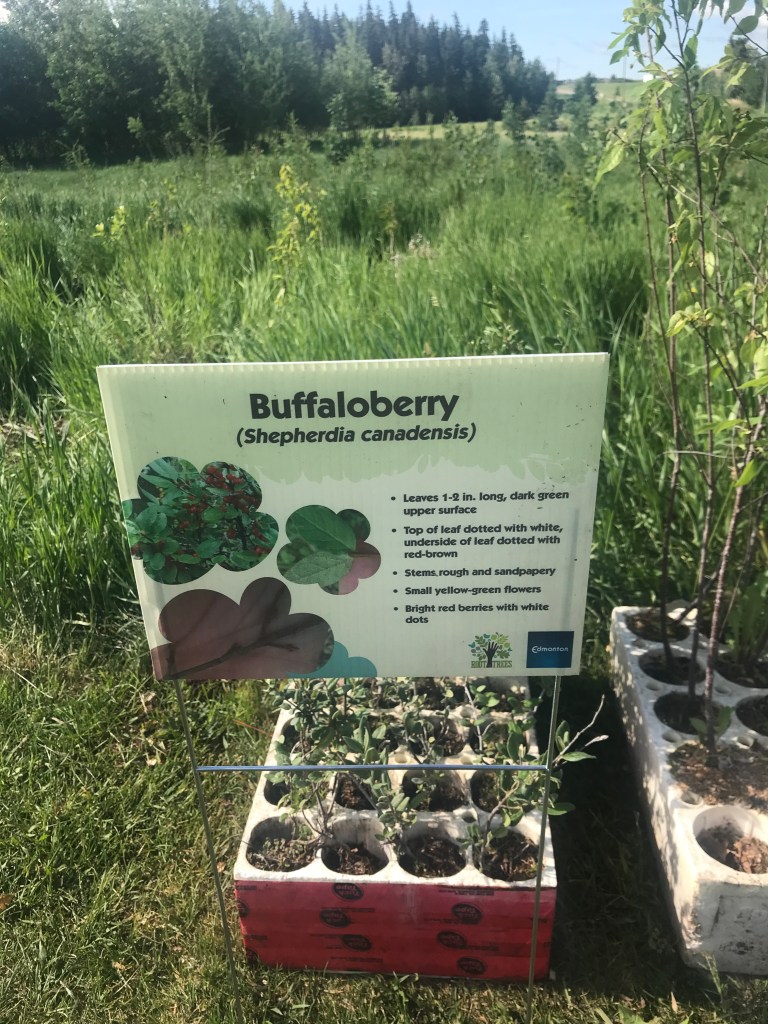
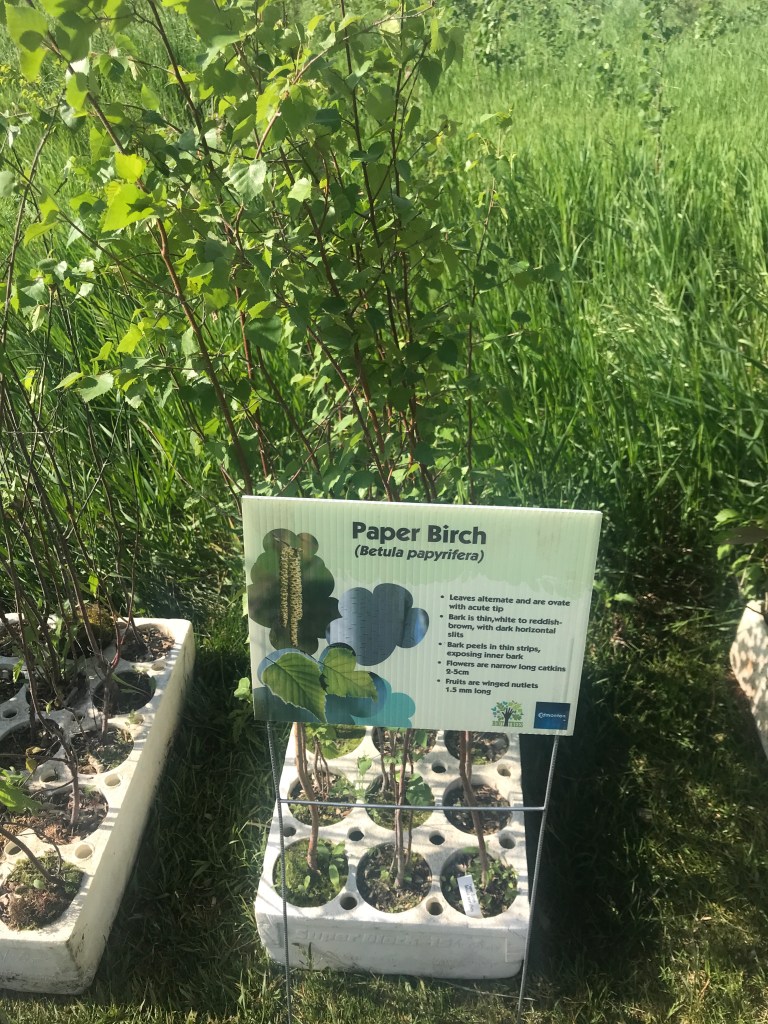
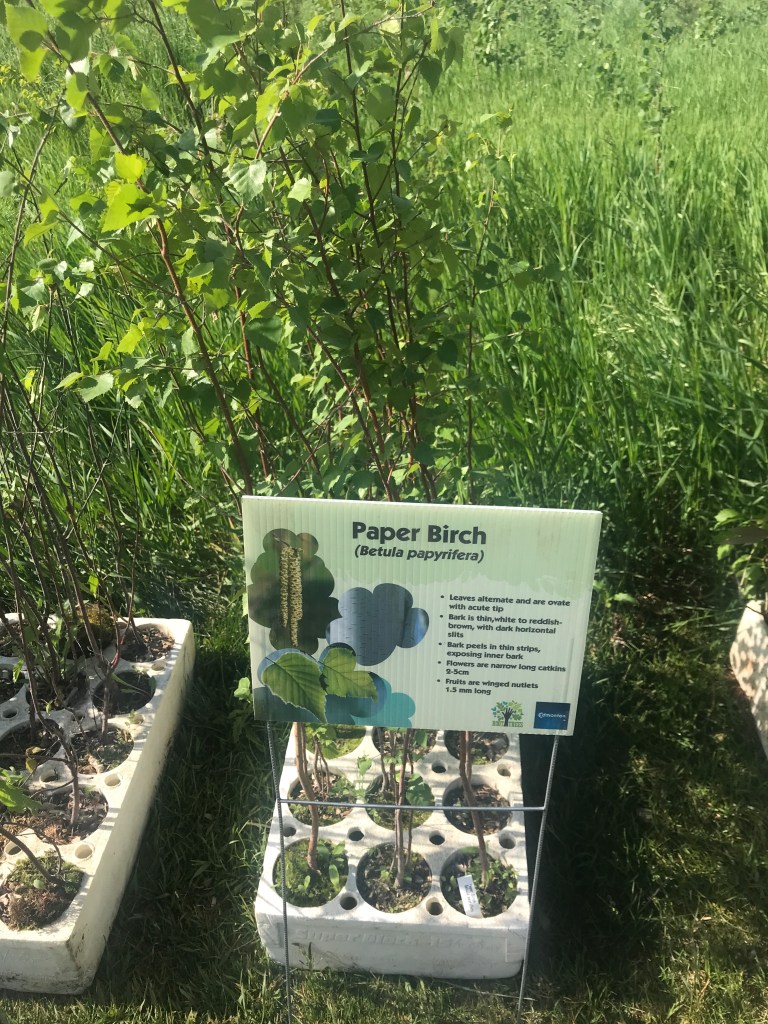
The coordinators took time to discuss the types of trees we were planting and photos of them are included here in this blog. As an unexpected bonus, when we were finished we each could bring one plant home and were given a Root For Trees t-shirt. Lucy was thrilled to plant in her back yard her chosen Highbush Cranberry which attracts birds.

So if you want to do a bit of volunteering in Edmonton that gives you a feeling of satisfaction, helps naturalize the city, gives you a little exercise and lots of fresh air as well, check it out. Lucy looks forward to more tree planting as well as going back over the years to look at how well these trees have grown over time.

Benefits of the Edmonton Cart Roll Out

Finally Edmonton has a new system for managing waste. It feels like most other cities are ahead of us in this regard, but hopefully it means this is well planned out. Last week we received our new garbage cart and food scrap cart (with food scrap pail). The city wants all citizens to participate in using these containers as intended to ensure a sustainable future for our city. If together we adjust our approach to waste processing the city can keep waste from going into the landfill with a goal of a near zero waste future. This is ambitious!

Our new Food Scrap Pail and Cart in Edmonton encourages composting and the waste will be sent to the new High Solids Anaerobic Digestion Facility where the methane produced (biofuel) from our waste will generate heat and electricity for the facility and is part of the plan for Edmonton to divert 90% of waste from landfills. It is a benefit that we can put paper napkins and paper towels into the scrap container now, rather than in the garbage. This is a bagless container so that removes the plastic from the garbage. We personally are going to use the food scrap pail to compost at home in the summer. For more information on composting please check out our April 30, 2020 blog. (Friends4Trees4Life: https://bit.ly/3wUIGAW)
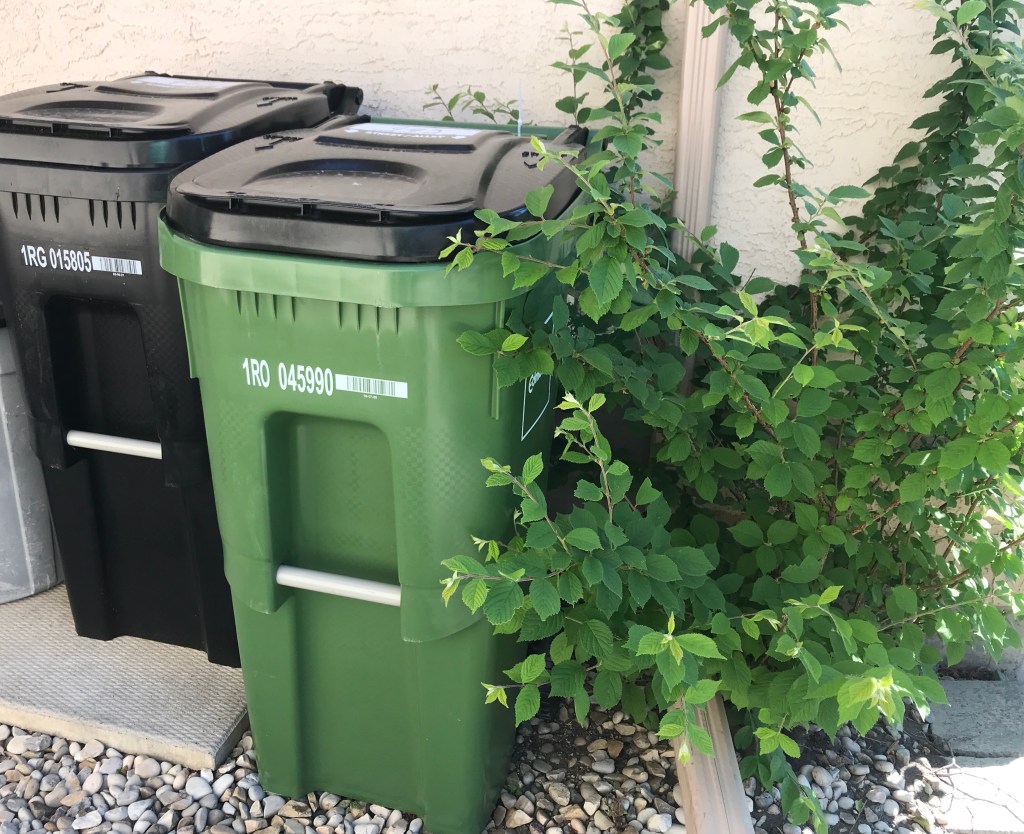
Photo credit Lucy

Citizens of Edmonton are receiving one of the two garbage container choices. The smaller 120L garbage container (shown above) is cheaper by $5.00 a month than the larger 240L one as an incentive to pay less if you put out less garbage. One can always request a different size bin over the next few months, by calling 311, so if you are not filling your large bin more than half, you might want to downsize. Maybe this is a welcome challenge to keep one’s garbage to a minimum. Packaging from products we buy is bulky so it might require assessing and changing the way we shop. We can try to purchase food with less packaging, and do less online shopping which has been shown to create more packaging waste.

With the new cart roll out the city of Edmonton will save on fuel as the trucks pick up the garbage only every other week. It is interesting that the blue bag recycling system has not changed but we did read that pizza boxes can be recycled now as they used to be considered garbage. You can download the Wastewise app onto your phone to help with sorting your waste.

Can We Learn to Love Dandelions?

If discussing changing our garbage habits is not distasteful enough, let’s discuss dandelions. First up, did you know a dandelion is a flower not a weed? As such, can we start to view them with a different lens, and maybe consider them to be pretty, just as children do? Did you know all parts of a dandelion are edible, including the root, and it is a good source of Vitamin A and Vitamin K. Unknowingly you may already be eating dandelion leaves as they are found in mesclun, a mix of tender, young salad green leaves sold in the grocery store.

When Did We Learn to Despise Dandelions?

“Paula Noel, the New Brunswick program director for the Nature Conservancy of Canada, is not sure when dandelions became the outcast of the landscaping world but figures it probably started in the 1950s. “During the Depression and war years, people ate dandelion greens because they were free and available and are in fact very nutritious,” she said. “After the Second World War, dandelions were associated with the poverty and hardship of those years, so this is part of the reason they became reviled. Campaigns by herbicide companies [in the 1950s and ’60s] probably played a big part, too.”At around the same time, the rise of suburban communities spawned a cultural tradition of having a well-kept front lawn, and peer pressure took it from there.”

“But in recent years, several factors have begun shifting that thinking. Mounting evidence of climate change has heightened our concern for the environment. Reports of an alarming decline in the world’s bee colonies — with disease, loss of habitat and pesticides all taking some of the blame — have put a laser focus on anything that can harm them. Meanwhile, anything that provides sustenance to bees is suddenly being encouraged, and that includes dandelions. “They’re one of the first foods of the season for pollinators,” Noël said. “They’re not damaging in any way to the environment, and the insect that we see most on them in May is the honeybee.””
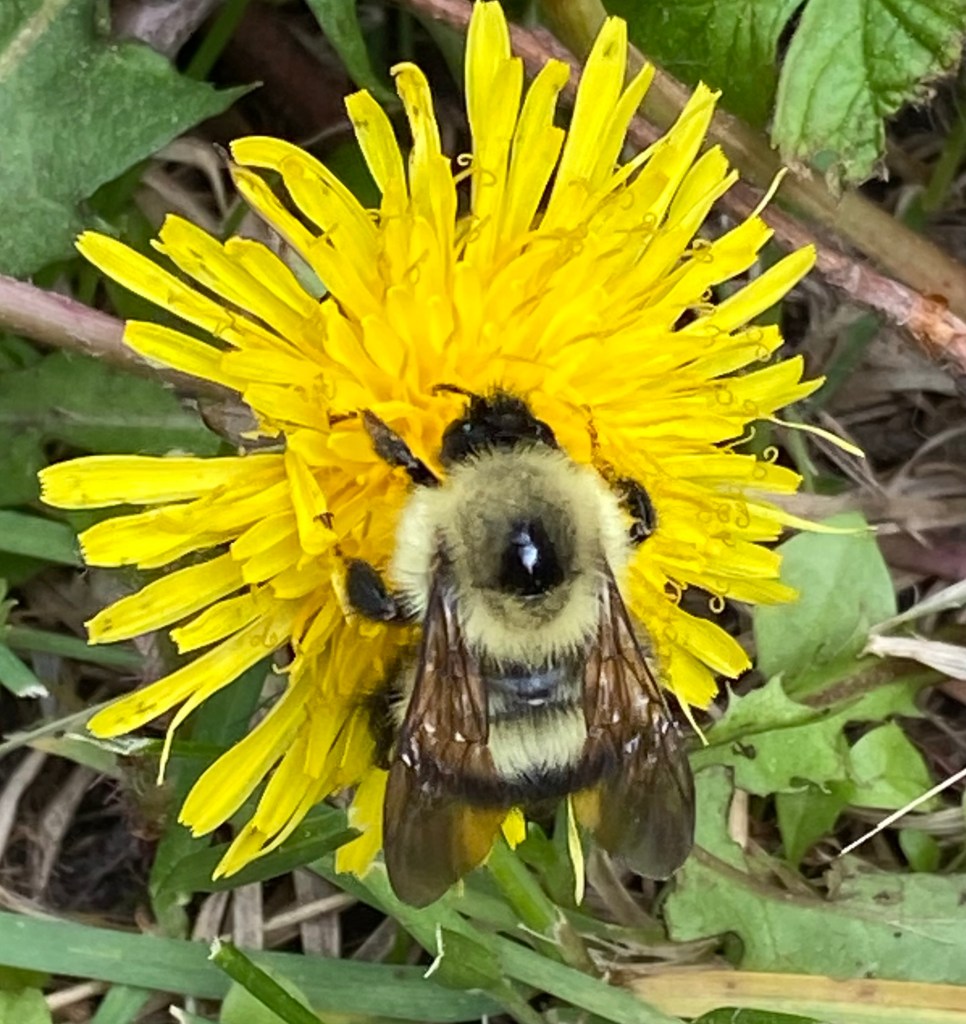
Photo credit Carrie

No Mow May

“And over the past few years, No Mow May, a campaign created by U.K.-based Plantlife and adopted by the Nature Conservancy of Canada, has sought to convince Canadians it’s OK to let their lawns grow wild. Residents are asked not to mow their lawns for the entire month in an effort to help pollinating insects, including butterflies and bees, whose food is in scarce supply in May. The general consensus is this-it’s gaining ground, and life is certainly a lot simpler when you don’t try to fight nature. “People are looking for things they can do to make a difference to protect wildlife, to protect the environment,” Noël said. “And this is an easy thing that people can [do] to help in their own little corner of the world. No Mow May is really about retraining our way of thinking,” Noël said. “I think it’s teaching people that it’s OK to have some of those yellow flowers adding some colour to the landscape.””

Being surrounded by untreated public spaces makes keeping your own residential patch of grass dandelion-free a lot more challenging, especially considering the dandelion’s prodigious seeding capacity. That fluffy white dandelion seed head can contain up to 172 seeds. But that’s just a start: The plant blooms repeatedly through summer, and each plant can produce as many as 5,000 seeds in a single year. Pulling dandelions the wrong way will turn one plant into a many-headed hydra. It fractures the root system underground, and each piece of those fractures will now turn into a dandelion — with multiple leaves and four or five different stems, all of them with flowers. This invasive nature of dandelions is what many despise.

Some Like it Green

People still want their lawns to look good. If you’re one of those people, here are some tips on how to get and keep your lawn (mostly) weed-free. The first and most important thing is to get that grass thick and healthy. If the dandelion seed can’t touch the soil, it can’t grow. That means applying fertilizer and lime liberally, overseeding often, watering frequently and using a blend of grasses. Once you’ve got your lawn thick and green, get ready to accept the fact that you will occasionally see a few dandelions and other weeds on your lawn.

Photo credit Lucy

Article by Marie Sutherland of CBC News based out of Saint John (CBC: https://bit.ly/2SjzpmI)

Reflection, Regeneration, Soil Food and Soul Food

We are of mixed emotions as we contemplate what lies ahead as the world, and we, begin to “re-enter” after such a long (never ending?) pandemic-imposed “pause” (upending?) from life as we once knew it.

On the one hand, we are giddy at the prospect of soon being able to put lockdowns behind us and to resume socializing and enjoying simply “being” together with others, in person. Oh joy!

Catherine is eager for Lucy’s summer visit to Toronto. Yippee!

It is when we turn our thoughts to the bigger picture and what does re-entry mean in terms of the health and well being of people and the planet that we become more circumspect and contemplative.

We wonder if the newfound connections with nature that many of us have embraced in our pandemic lockdown routines (e.g., daily walks/runs, hiking, biking, gardening, birding) will endure once life’s busyness and commuting return?

Will we continue to value and privilege time for slowing down, noticing and wondering? Being present. Receiving and appreciating nature’s generosity that is on offer if only we stop for a moment to take it in – sounds of birdsong and buzzing bees, gentle breezes carrying scents of forest pine needles or blossoming lilacs,  roses and herbs, fresh life-giving clean air and sheltering shade silently given by our tree canopies, sunshine, rainfall, moonlight, glistening dew drops on a spider’s web, the poetic motion of a gliding hawk or cloud floating by overhead, the might and majesty of a water fall, a gentle burbling brook, the rustle of wavy wheat, the marvel of no two snowflakes alike, nature’s riotous bounty of colour, transformational energy and nourishment to feed imaginations, stomachs, enterprises, to warm bodies, hearts and souls, to name but a few….

Will we make the time? Will we notice and be inspired, awed, humbled, energized, renewed? Will we “see” with appreciative eyes and keep bringing mindfulness to our daily life’s activities and choices, post-pandemic? We wonder…

There is lots of talk these days in the business and political news about ‘building back better,’ ‘clean/green renewal,’ and ‘carbon zero,’ and among individuals about the time given while alone with our thoughts during lockdown to reflecting on what’s important in life.  Are we in for an era of positive transformational change ahead? Might this be one silver lining from the pandemic – momentum at every level (personal, local, national, global) to take better care of our shared humanity and home on this beautiful planet earth? Let’s be optimistic, and inspired!

Soul Food

Friends4Trees4Life is a blog that is inspired by our commitment to take personal action on climate change, through tree planting.

As we have learned and grown, so too has the focus of our blogging expanded and evolved over time.

Trees, however, continue to be an important touchstone and central theme, in all aspects.

Photo credit Lucy

We take a moment to share a tree-inspired poem by Mary Oliver, as our ‘soul food’ first, before turning attention to the climate action topic of regeneration, the ‘soil food’ part of this blog post. Thank you to Audrey for sharing this poem and reminding us of the beauty of Mary Oliver’s poetry.

“When I am among the trees,

especially the willows and the honey locust,

equally the beech, the oaks and the pines,

they give off such hints of gladness.

I would almost say that they save me, and daily.

I am so distant from the hope of myself,

in which I have goodness, and discernment,

and never hurry through the world

but walk slowly, and bow often.

Around me the trees stir in their leaves

and call out, ‘Stay awhile.’

The light flows from their branches.

And they call again, ‘It’s simple,’ they say,

‘and you too have come

into the world to do this, to go easy, to be filled

with light, and to shine.’ ”

MARY OLIVER 

“To save the world, start with a potato”

Photo credit Shanthi

This catchy headline in the business section of the Toronto Star caught Catherine’s eye and drew her into reading a recent opinion piece by Max Koeune. She pursued a link mentioned and before she knew it, she was learning about Regeneration Canada, Potato News (a website dedicated to all things potato) and “Sport Spuds”! Who knew?.

Potato News is a self-described source for ‘a no frills, no nonsense daily account of breaking global potato news stories’. (That brought a smile) Its website profiled the Max Koeune piece as well, which spotlights McCain Foods and why it is making “a global commitment to the principles and practices of regenerative agriculture”. (Toronto Star: https://bit.ly/3pZnA1B)

In the article we learned more about the link between food growing and processing practices and carbon emissions, and why change needs to happen in terms of the long-term viability of farming as a career path for future generations, and in terms of climate action.

Koeune presents the compelling case for change, from his vantage point as president and chief executive officer of McCain Foods  – “Globally, more than a quarter of the carbon emissions that contribute to climate change come from the growing and processing of food – and a global population boom is only going to exacerbate that problem. If we don’t change the way we farm, feeding the world in 30 years will require an 87 per cent increase in carbon emissions.”

Even as the potato is a low-carbon crop, Koeune explains how more can be done and why, “[b]y the end of the decade, McCain is committed to implementing regenerative agricultural practices on every acre of farm that grows a potato for (its) French fries.” The focus is on changing practice in its considerable acreage world-wide in order to restore soil health, biodiversity and reduce carbon emissions.

(Potato News: https://bit.ly/3zsqmkl)

Photo credit Lucy

Regenerative Agriculture

A Globe and Mail piece added to our understanding of the complexities of regenerative agriculture and why it matters. In David Israelson’s piece on “Regenerative agriculture a game-changer for farmers,” a quote by Gabrielle Bastien, founder and co-director of Regeneration Canada gets to the heart of the change in practice. ‘In essence it means working with nature as opposed to working against it,’ she says. ‘It’s a set of farming principles and practices that regenerates the health of the soil.’ “ (Globe and Mail: https://tgam.ca/3zHJzP4)

Checking out the website for Regeneration Canada, “a national not-for-profit organization that champions regenerative farming practices,” we learned more details, including ‘why soil matters’.

“The term “regenerative” refers to a process – the process of improving one’s state. With regenerative agriculture, the journey improves the state of the soil, of the ecosystem overall, of the climate, and of human health.

Regenerative agriculture is based on principles of land management which reverse current trends of degradation in soil, water and air quality by enhancing the soil ecosystem and restoring its biology. Principles of regenerative agriculture aim to draw down atmospheric carbon into soil and the aboveground biomass, helping to reverse climate change.

At the same time, they increase climate resilience in the face of drought, floods, and extreme weather events. Rebuilding soil organic matter reduces dependence on chemicals and pesticides, results in more nutrient dense food, and generates greater economic viability for farmers.”

(Regeneration Canada https://regenerationcanada.org/en/about-us/)

From these articles and websites we learned that some of the farming practices that promote healthy soil and reduce carbon emissions are:

  • Reducing tillage
  • Cover cropping
  • Promoting crop diversity
  • Protecting watersheds
  • Minimizing pesticides
  • Agroforestry and perennials (planted in farmed areas)
  • Integrating livestock into farming operations rather than grazing them in separate fields.

To learn more details about regenerative agriculture, the importance of soil health and specific farming practices such as cover cropping, what farmers can do to enhance CO2 sinks, ways that farmers can reduce methane, see our May 13 blog post on Vertical Hydroponics and Regenerative Farms, Regeneration Canada’s website at https://regenerationcanada.org/en/about-us/ , and/or the Organic Council of Ontario’s (OCO’s) website, which also offers information on incentives for regenerative farming at: https://www.organiccouncil.ca/.

Why Trees (Still) Matter?

Photo credit Lucy

Our first blog post almost two years ago was on Why Trees Matter?

It is a question we continue to explore and return to in our blogging, even as we expand our learning horizons about climate action beyond the critical role trees play in carbon capture.

We end today’s post with some inspirational tree-themed quotes found on the tree planting/donation website clickatree.com (not an endorsement), and by encouraging our Readers to take two minutes to watch this informative and engaging BBC videoclip called, “What if Everyone in the World Planted a Tree?” (2020) –

https://www.bbc.co.uk/ideas/videos/what-if-everyone-in-the-world-planted-a-tree/p084ttpq

“People who will not sustain trees will soon live in a world that will not sustain people.” (Bryce Nelson)

“Ancient trees are precious. There is little else on Earth that plays host to such a rich community of life within a single living organism.” (Sir David Attenborough)

“The best time to plant a tree is twenty years ago. The second best time is now.”  (Chinese proverb)

“The true meaning of life is to plant trees, under whose shade you do not expect to sit.” (Nelson Henderson)

“We’re merely one tree with various types, shapes and sizes of leaves that all wave differently in the breeze.” (Rasheed Ogunlaru)  [https://clickatree.com/]

Photo credit Lucy

Three Solar Panel Innovations and Practical Considerations for “Going Solar”

Building-Integrated PhotoVoltaics (BIPV)

from Emily Chung, CBC News June 2, 2021

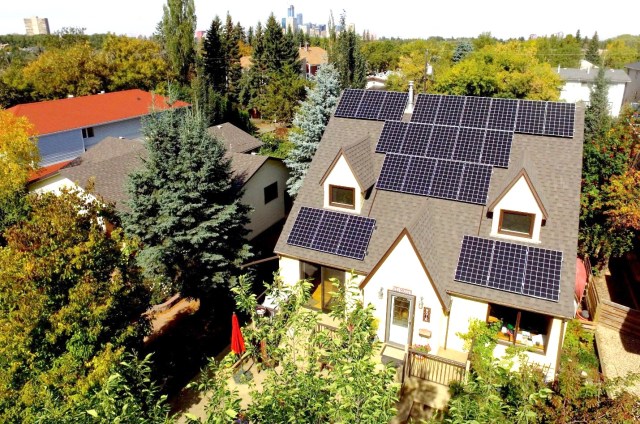
While traditional solar panels are attached to buildings, BIPVs are built into the exterior as key elements. They can be anything exposed to the sun: shingles, windows, cladding, skylights, pergolas, balcony railings. One company, Toronto-based Mitrex, is even planning to use them to build greenhouses and highway noise barriers.

“BIPV systems are like other solar panels in that they generate clean energy that can be used for backup power or sold to the grid. But they need to be designed differently in order to serve other functions, such as keeping out the wind and rain or letting natural light shine in. Because of that, BIPV panels come in a much wider variety of shapes, sizes, colours and transparencies.”

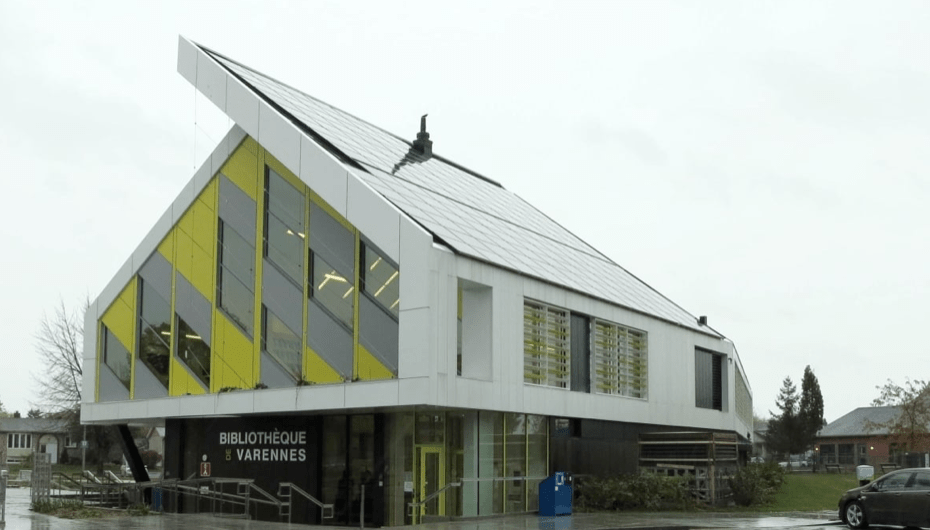
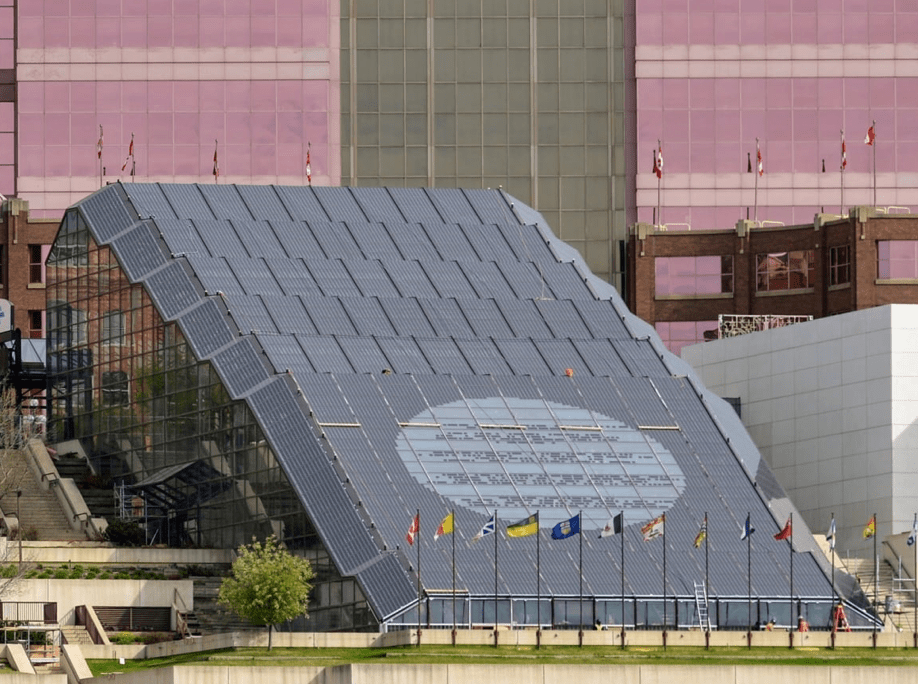
“Canadian companies are starting to make transparent, coloured panels designed to protect the building. The sun-filled atrium of the Edmonton Convention Centre and the dramatic sloped roof of the Varennes Library in suburban Montreal, are both buildings that  as they are made of solar panels (BIVP)are generating power. It’s a solution touted by Elon Musk, CEO of Tesla, which started selling solar roof tiles in the USA in 2017. Since then, a range of made-in-Canada options for different parts of buildings have hit the market — and installations have sprung up across the country showcasing what’s possible.”

BIPVs Can Be Heat Generating As Well

BIVPs can potentially generate heat as well as electricity. At the Varennes Library, outdoor air pulled into the ventilation system is preheated by the solar panels before entering the building (which also has a geothermal heating system). That also cools the panels, which don’t generate as much power when they’re too hot. A heat pump can potentially be added to increase the amount of space and water heating the panels can do, and the amount of energy per surface area that the system can provide overall.”

The Varennes Library, in a suburb of Montreal, is a net-zero building. The BIPV panels in its roof provide both power and some heating. (Concordia University)

Challenges to Overcome

There are still much to do in terms of regulating BIPVs and educating the trades people including architects who need to create unique building designs that can maximize benefits of the BIPVs so this becomes mainstream. As well the up front cost for BIPVs is quite high, so there needs to be ways to make them more affordable, with incentives, mass production and better understanding of their cost savings over time. Mitrex’s plan is to bring its products to the point that they can be offered at no up-front cost to customers — instead, customers would pay for the electricity generated over the panels’ lifetime, (similar to the way geothermal projects are often funded in condos). That sounds fantastic.

Some of the Canadian companies making BIPVs are:

  1. PV Technical Services-offers access to solar shingles

This Ontario house has solar shingles developed by PV Technical Services, based in St. George-Brant County, Ont. (PV Technical Services)

2. Mitrex-opening a factory in July in Toronto Mitrex makes solar windows, and roofing. It makes cladding and plans to make highway sound barriers. Those are two things that are often made of concrete, which has a higher carbon footprint than glass and silicon BIPV panels.

The company also worked on a five-storey residence at Red Deer College that’s covered with solar glass cladding on three sides — 545 panels in all.

3. Kuby Energy-created the glass skylights of the sun-filled atrium of the Edmonton Convention Centre, which represents the largest BIPV installation in Canada. (Kuby Renewable Energy); will sell Tesla solar roof and sells Tesla Powerwalls.

This is the unique Edmonton Convention Centre Atrium from the outside. (Kuby Renewable Energy)

“Building Integrated Photovolataics will definitely take off as more people realize it’s a viable technology,” said Yereniuk, Director of Operations for Kuby Renewable Energy. “The industry is changing very fast and technology is rapidly growing and advancing, and costs are rapidly coming down.”

https://www.cbc.ca/news/science/bipv-solar-1.6044485

Floating Solar Panels

Here is another way solar panels are becoming remarkably versatile. In locations that have little space to put solar panels, like Japan, panels can sit on the surface of bodies of water as floating panels. Once you get past the idea of water and electricity in close proximity, the concept has a number of added benefits, like blocking sunlight on the water to reduce algae blooms, reducing evaporation of water, and possibly even offsetting climate change. It is estimated that placing solar panels on 1% of Africa’s reservoirs could double the continent’s annual hydropower capacity. To date India, China and South Korea boast the biggest, most impressive, floating solar panel installations.

CBC What on Earth May 27, 2021

Peel and Stick Solar Panels

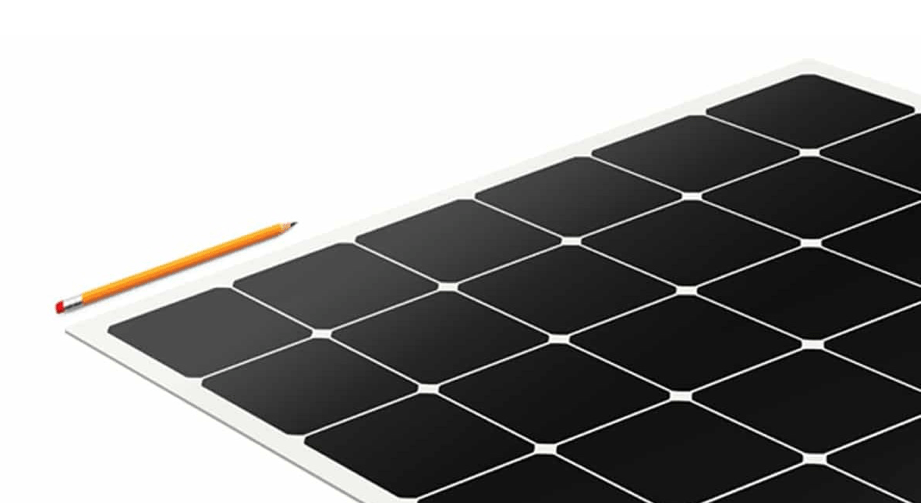
Singapore-based Maxeon Solar Technologies has announced that it will commercially release its MAXEON AIR SOLAR PANELS this summer. The company says these panels are frameless, thin, lightweight, and conformable, with efficiency and performance the same as standard solar panels.

“Basically, the Air is a solar panel sticker, or, as Maxeon describes it, “peel and stick,” so the panels can be installed directly on a roof’s surface without racking, anchors, or ballast and are engineered to conform to uneven roof surfaces. No metal frame or heavy glass are used in the panel. The installed weight is around 6 kg (13 pounds) per square meter, which is less than half of conventional systems. As well they are certified for fire resistance.”

“The cells within the panels include a solid metal foundation and stress-relieved cell interconnects. That protects against corrosion and enables fault-tolerant circuits that allow energy flow, even with cracked cells. The Air panels feature an efficiency rating of 20.9%, a low power-temperature coefficient, shade tolerance, wide spectral response, and hot-spot resistance. Maxeon Air panels will be used in selected projects in Europe in the second half of 2021 and general product availability is scheduled to begin in the first quarter of 2022.”

This article was by Michelle Lewis on May 19, 2021 – https://bit.ly/2TlJ3Wk.

We hope that reading about these options makes you excited about a future with solar panels in it.

Our Guest Blogger’s Practical Considerations for Going Solar

Thank you and welcome to Guest Blogger, Edmund, for these “insider” insights on practical considerations for going solar. While he does not have an installation of his own, we asked Edmund if he would be willing to share his expertise and insights with us, offered below, from the perspective of his background as an electrical engineer who now does communications work for a Canadian solar company. We thank him for his generosity and hope this informative and insightful piece will help many more of us ‘go solar,’ and with greater knowledge and confidence!


“Interest in solar is on the upswing, with the growing green energy movement and an
increased interest in relocating to remote areas. There’s also been a general downward
trend in the costs of solar systems over the years (2021 is an exception, however, as
prices of some basic materials like copper have increased, along with a general shortage
of silicon chips which has also increased prices).


If you are thinking about going solar, with many different ways to incorporate solar in
your home, cottage or cabin, trailer or even RV or boat, how do you choose from all of
the available solutions
?

Having a green source of energy may be foremost in your mind,
but there are other things to consider, such as how exactly do you want to use the power,
the up front costs, your need to have reliable power, your ultimate carbon footprint, and
the payback period (if any).


The following diagram shows the elements of a solar system. There are many things
beyond the basic solar panels to capture energy from the sun. Many are optional:

  • It may or may not have a grid connection.
  • A back-up power source is optional (such as a generator or wind turbine).
  • Having battery energy storage may be optional, and there are
    different types of batteries that you may use.
  • The number of solar panels you use is variable. And the circuitry (inverter) for converting your energy source(s) to 120 V AC for your devices depends on the energy sources employed.

Your options are tied mainly to whether or not a grid connection is available, as well as
what you want to do with your system. It’s easiest to break them down into three broad
categories:

On-Grid System


If you have a grid connection, your aim may be to replace some or all grid power with
solar power. The simplest configuration is a set of solar panels, plus circuitry that
enables you to sell your solar-generated power back to the grid. You don’t have to rewire
your home electrical panel (which in turn supplies your outlets) because you are
maintaining your grid connection to power it. The simplicity comes at the cost of
function: if the grid goes down, you lose power despite having solar panels, and
furthermore your circuitry must ensure that it stops delivering power back to the grid
during the outage. On-grid systems are among the earliest and most common; however
lately their limitations have become evident in areas affected by outages caused by the
increasing incidences of wildfires and/or floods.

Off-Grid System


There are times where a grid connection is not available – such as a new construction in a
remote location where getting power from the grid is difficult or costly. Or maybe you
simply want to become independent of the grid. In this case you would connect solar
panels to charging circuitry which transfers energy to a set of batteries; the batteries are
in turn connected to your home devices via inverter circuitry that transforms the battery
power to 120 V AC needed by your home devices. The addition of batteries, charger, and
inverter are significant extra components but they are necessary for an off-grid system.
You will have to calculate how much energy you require every day and match it with the
amount of energy your solar panels can supply and that your batteries can store. Plus,
you have to add additional battery capacity to keep your home running on days when
there is no sun. If you need sustained power during the winter months, then you will
need to further increase the number of solar panels so to capture sufficient energy from
the shortened daylight hours.


An off-grid system can be supplemented with a back-up energy source. This can be
replace the additional solar panels and/or battery capacity for providing energy during the
dark days. This is of course an additional expense; and typically this takes the form of a
generator which in addition burns diesel and creates noise. So while this may be a
necessity if you want to guarantee that you always have power when you need it, it may
not be something that you want to add to your system. Other options for back-up energy
include adding a wind turbine and dedicated charger to feed the batteries in parallel with
the solar panels, but this quite an expensive and not as common option.
If you are constructing a remote home from scratch, it’s a good idea to install your off-
grid system as soon as possible. This way you can use it to power-up some of the
equipment used to build the home itself!

Hybrid System


A hybrid system is a basic off-grid system (with solar panels and batteries), but with a
grid connection available to charge the batteries for the times when there isn’t sufficient
sunlight available to meet your energy needs. This is a relatively simple way to go off-
grid while still being backed up by the grid, so no need for a noisy back-up generator. Some
hybrid systems also give you the option of selling your solar power back to the grid.
A hybrid system is a good way to get started with solar energy and retrofit an existing
building – you can initially depend on the grid, but then gradually decrease that
dependence by adding panels and battery capacity as you wish. Just make sure that you
have a system which is expandable, and/or a plan in place for it.

These 3 configurations are a simplification – within each category there are further details
and variations, but hopefully this gives an overall view that you can use as a starting
point.

Once you’ve decided which configuration you want (off-grid, on-grid, hybrid) there are
more things to decide. Do you do it yourself (DIY) or not? These days, there are kits available
which can simplify the number of parts that you need to buy and which reduce the set-up
for the most part to plugging in panels and batteries (as well as mounting solar panels of
course). But, keep in mind that it is still a serious electrical installation where local laws, regulations and guidelines are followed: you may need official approval to do the work, and be required to use certified
components. Especially if you are altering your electrical panel and you are not a DIYer, it may be a
good idea to get help from a certified electrician.

When choosing solar panels, there’s a wide range of prices and capacities. You may want
to consider which ones have the best warranty (some go up to 20 years). There are
increasingly higher power panels available that allow you to generate more power in the
same area if you have limited roof or ground area for them, while also requiring less
racking/mounting equipment. For example 360 Watt panels are now available, whereas at
one time 300 Watts used to be closer to the norm a couple years ago. If you are using the
in a boat or RV, you may have no choice but to use flexible panels which not only fit the
shape of your vehicle but also withstand vibrations better.


If you are using batteries, the selection is a complex calculation. Traditional lead acid
batteries are much cheaper, but their life time can be significantly shorter – they may need
replacing in a few years depending on the number of charges/discharges they are subject
to. Lithium batteries last much longer with deeper charging/discharging cycles and
weight less. The warranties on the cells can go up to 8 years. So lithium is technically
superior in almost every respect, but the up front cost of lithium is at least double that of
lead acid; with the longer lifetime they usually cost less in the long term.

Another thing to calculate, somehow, is the environmental cost in the
mining/manufacturing/disposal of any batteries that you use. These costs are changing
all the time but it is something to be aware of.


So best of luck to you if you are wanting to go solar. While it is a major undertaking, the
positive is that there are more and more options available.”

Keep in mind, for solar roofing there is the potential for $5600 in Greener Home Grants available over the next seven years from the Canadian Government, and for more information on eligibility and applying see our blog post from last week – here’s a quick link to help get you going – https://bit.ly/354KL0P. Good luck!

Canada Greener Homes Grants, Nobel Prize Summit and More

If you are fortunate to be a homeowner, especially in these times of sheltering in place during successive waves of the pandemic, perhaps you have been looking a little more closely at the walls and windows that surround you, and have decided now is the time to show your home a little (reno) love.

If so, in Canada, the timing just got a boost for benefiting your home, your wallet and Planet Earth in one go. (Well actually, make that a five-step process, with paperwork….)

On May 27, the federal government launched the portal where eligible homeowners may begin registering to access the new Canada Greener Homes Grant.  The goal is to help make Canadian homes more energy-efficient, contributing to Canada’s climate action. “Buildings, including our homes, account for 18% of Canada’s greenhouse gas emissions.” (https://bit.ly/3fFlWyp)

Here are highlights of what we learned at the Natural Resources Canada website for the Canada Greener Homes Grant.

Eligible Property Types

  • Single and semi-detached houses
  • Row housing
  • Townhomes
  • All-season cottages
  • Mobile homes on a permanent foundation
  • Permanently-moored floating homes
  • Mixed use buildings (residential portion only)Footnote1
  • Small multi-unit residential building (three storeys or less with a footprint of 600m2 or less)Footnote1

Grants

‘Up to 700,000 grants of up to $5,000 to help homeowners make energy efficient retrofits to their homes, such as better insulation

EnerGuide evaluations (worth up to $600) and expert advice to homeowners so they can begin to plan their retrofits

Recruitment and training of EnerGuide energy advisors to meet the increased demand; this will create new jobs across Canada.

Participants are eligible for up to $5,600 total under the initiative.’

Five-Step Process

Step 1 – Learn about the initiative, including eligibility criteria (e.g., proof of ownership)

Step 2 – Register and book your pre-retrofit evaluation

Step 3 – Plan, document and complete your home retrofits

Step 4 – Book your post-retrofit evaluation and apply for re-imbursement

Step 5 – $ – Confirm your grant total in the portal, and receive your re-imbursement

Eligible Retrofits

Solar panels spring to mind when we think about Greener Homes.  It is interesting to see the full range of what is eligible for grants and the category limits:

Home insulation
Update your eligible attic/ceiling, exterior wall, exposed floor, basement or foundation, and crawlspaces. (up to $5,000)

Air-sealing
Perform air sealing to improve the air-tightness of your home to achieve the air-change rate target (up to $1,000)

Windows and doors
Replace your windows or glass doors with ENERGY STAR® certified models (up to $5,000)

Thermostats
Add a smart thermostat to help improve your comfort and save money on your energy bill (must be combined with another retrofit) (up to $50)

Heating
Make the switch to more energy-efficient heating equipment to save on your utility bill and reduce your carbon footprint (up to $5,000)

Renewable energy
Install photovoltaic solar panels to convert sunlight energy into electricity (up to $5,000)

Resiliency measures
Incentives to protect your home and your family from environmental damages (must be combined with another retrofit) (up to $2625)”

What qualifies as a resiliency measure we wondered? Answer: Batteries connected to Photovoltaic systems to provide standby power for homes ($1000); Roofing Membrane – self-adhering roofing underlayment applied to entire roof ($150); Foundation water-proofing ($850); and, Moisture proofing crawl space floors, walls and headers 100% ($600)”

Some Finer Points

Readers will want to review the NRC website in detail if considering this grant opportunity.  For example, some of the finer points that caught our eyes include:

  • New homes are not eligible
  • Certain types of retrofits must be installed by a licensed professional
  • All retrofits must be purchased in Canada
  • It is the homeowner’s (and contractor’s) responsibility to ensure necessary building and utility permits are secured and that building codes and standards are being met
  • Detailed documentation is required throughout the process, including e.g., keeping all invoices, receipts, attestations, proof of work, until March 31, 2028
  • Federal grants are not taxable and do not have to be declared as income.

CBC’s article about the Grant program – https://bit.ly/3uLKRVC

Global News’ coverage – https://bit.ly/3cb4NdR

See related 2020 Guest Blog on Solar Panels in February, generously contributed by Randy  https://bit.ly/2xkawMO

For a timely overview of recent developments in solar energy, see this CBC piece on “Solar windows, shingles and cladding. The building itself is now the solar panel” at -https://www.cbc.ca/news/science/bipv-solar-1.6044485

International Climate Action “Urgency and Agency”

Countries begin to meet virtually over the next three weeks, to try to build consensus and sustain momentum for global action on reducing Greenhouse Gas Emissions, in preparation for the all-important COP26 meeting in November 2021.

We found this Guardian piece offers a timely, compelling case for what’s at stake for the world. https://bit.ly/34BI3Q6

It includes memorable imagery (we thought) by eminent Earth Scientist, Johan Rockstrom, as he characterizes the momentum for change shown in 2021 as being like a ketchup bottle. Continuing causes for concern (including burning of the Amazon rainforests) are profiled in the Guardian interview with him, together with developments which give Rockstrom optimism, such as behind the scenes alignment by big economies (US, China, EU) on carbon zero; unexpected development for the net zero banking alliance; and, the race to decarbonize in the global car industry. He speaks about the importance of engagement and action by all sectors, not just governments, and a message that resonates with us both is that of “urgency and agency,” balancing the prevailing emphasis on risks (very real) with information and positive messages about solutions at hand.

The article and interview with Rockstrom also put on our radar a new series for Netflix by David Attenborough – Breaking Boundaries: The Science of Our Planet– in addition to Rockstrom’s latest book, Standing Up for a Sustainable World, both of which we will want to check out.

Johan Rockstrom’s Hothouse Earth discussion paper and videoclip (2018) https://bit.ly/3fZC0ds

Latest book (2020), Standing Up For A Sustainable World, Good Reads review – https://bit.ly/3yVO33U

10-minute TED talk (2020) – https://bit.ly/3yRZda6

David Attenborough Netflix series Breaking Boundaries: The Science of Our Planet – https://bit.ly/3vF2RC4

In sum, while there are reasons for hope, Johan Rockstrom provides clarity on what’s at stake for us all.

We have only ten years to cut GHG emissions by half.

Here’s hoping this helps keep everyone laser focused, energized and involved to achieve this milestone, which is so essential to ensuring a livable planet Earth in our lifetime and for generations to come.

It is heartening to know 126 Nobel laureates are lending their voices and championing change from across the disciplines.  (Interestingly, Rockstrom played an important role in spearheading this collaborative effort.) Here is the link to their April 2021 Nobel Prize Summit’s urgent call to action – Our Planet, Our Future https://bit.ly/3fAPNrP

Learn more about the Summit, presentations, papers, videoclips and how to get involved at the Nobel Prize Summit website –https://bit.ly/3ic9Iz0

We are inspired anew to double down on our personal climate action learning, and doing, paths. We hope our Friends4Trees4Life Blog encourages and supports you, our Readers, in your own journey.

How Trees Grow

It is all about the trees after all here at Friends4Trees4Life!

This timely two minute videoclip by One Tree Planted helped replace Catherine’s annoyance about the required daily sweeping of maple tree droppings at this time of the year, with a shift in perspective and renewed wonder and appreciation for the resilient life cycle of a tree….we hope you enjoy and feel uplifted by it too.  Happy spring!

c

Flowering Trees-Mother Trees-Tree Cities

The Tree Canada newsletter sent to my email on May 13, 2021 was filled with these interesting stories about trees in Canada and so you might want to go look up the newsletter in it’s entirety at https://www.arborday.org

Flowering Trees Across Canada

“Flowering trees or trees that start to show their leaves are some of the first and most striking signs of spring. They are a sign that nature is starting to ‘wake up’ and action is happening! Travel across the country with us and experience some examples of beautifully blooming trees commonly found in each province.”

British Colombia – Pacific Dogwood

“Found in coastal British Colombia, Pacific dogwood bloom white flowers in early spring and have red edible but bitter berries that ripen in early fall and are a common food source for many animals. Dogwood are often used as ornamental trees due to their small size and beautiful flowers. The trees are the host plant for summer and spring azure butterflies, one of the first butterflies to emerge from its pupa in the spring. The butterfly depends on the nectar of early flowering plants, such as the dogwood, as a food source.”

Alberta – Thinleaf Alder

“Often found along riverbanks, the thinleaf alder is a nitrogen fixer (i.e. it improves the fertility of the soil for other species) and their roots help prevent erosion. This tree blooms in early spring, or as early as March in some regions. The male flowers are long, soft catkins and the female flowers look like tiny pine cones. The catkins are known to be edible and are high in protein, although they are very bitter and not very tasty.”

Saskatchewan – Green Ash

Manitoba – Bur Oak

Ontario – Canada Plum

“Beautiful light pink-white flowers appear between April and May before the leaves bud. Plum blossoms are very fragrant with a very flowery smell. Canada plum is an important source of pollen and nectar for native pollinators. Many animals have been seen eating the fruit of this tree including black bears, squirrels, turtles and bats. The fruit is also edible to humans and can be made into jams and jellies or eaten straight off the tree.”

Quebec – American Sycamore

The fruit of the sycamore tree or the chinar is close-up. The side can be seen with ceno-like leaves.

“Small dense flowers appear in April and May at the same time the leaves appear. Each tree has both male and female flowers which are wind pollinated. The male flowers are red while the female flowers are yellow. Once pollinated, the female flowers mature into fruit consisting of a small brown fuzzy ball with many small seeds, which act as a food source for many birds and animals. Naturally occurring sycamore are often found in wetlands, however they were also widely planted in cities.”

New Brunswick – Ironwood

Nova Scotia – American Beech

“One of the most abundant and widespread trees in eastern North America, red maples are usually found in swamps and areas with moist soils and have been nicknamed swamp maples. Red maple is an important host for many native insects, mammals and birds in Canada, such as red squirrels, Downy woodpeckers and Canada warblers.

Flowers appear before leaves in early spring, usually in March or April. The red male flowers and yellowish green female flowers grow on the same tree but on separate branches with the blooms, sometimes producing a mild sweet cherry or almond scent, only lasting about a week. The flowers produce fruit, or samaras, in late spring.”

Prince Edward Island – American Elm

Yukon – Paper Birch

Photo credit Lucy

Nunavut – Trembling Aspen

Northwest Territories – Black spruce

Mother Trees

Written by Danielle St-Aubin, Chief Executive Officer, Tree Canada

“I recently came across some interesting information about  ‘Mother Trees”, a project which highlights research led by Professor of Forest Ecology and leader of the Mother Tree Project, Dr. Suzanne Simard. Her work outlines how some mature trees take on the role of nourishing and regenerating younger trees to help them survive.”

“I had already read about the scientific evidence around how trees create communities, talk to each other and warn each other of danger, and this new information (new to me anyway) has me contemplating the nurturing side of trees. Without wanting to seem too “out there” I have to say that I find comfort in the thought of mature trees taking on the role of ensuring the successful growth of their seedlings or “offspring”. It just seems good, and right.””

“May is the month we traditionally celebrate mothers, spring and renewal, and mental health. We celebrate their role in nurturing their children or offspring and in helping them become strong and healthy adults who thrive within their community. With that in mind, I would like to thank and acknowledge all the mother trees in our communities who are in turn nurturing all of us.”

Tree Cities of Canada

“Arbor Day foundation the USA recognizes 15 Canadian tree cities of the world out of 120 recognized. Now more than ever, trees and forests are a vital component of healthy, livable, and sustainable communities around the globe. The Tree Cities of the World programme is committed to inspiring cities and towns to care for and celebrate their urban tree canopy.”

“To be recognized as a Tree City, a community must meet five core standards that illustrate a commitment to caring for its trees and forest. Our goal is to connect cities around the world in a new network dedicated to sharing and adopting the most successful approaches to managing community trees and forests.”

STANDARD 1:

Establish Responsibility

The city has a written statement by city leaders delegating responsibility for the care of trees within the municipal boundary to a staff member, a city department, or a group of citizens—called a Tree Board.

STANDARD 2:

Set the Rules

The city has in place a law or an official policy that governs the management of forests and trees. These rules describe how work must be performed—often citing best practices or industry standards for tree care and worker safety—where and when they apply, and penalties for noncompliance.

STANDARD 3:

Know What You Have

The city has an updated inventory or assessment of the local tree resource so that an effective long-term plan for planting, care, and removal of city trees can be established.

STANDARD 4:

Allocate the Resources

The city has a dedicated annual budget for the routine implementation of the tree management plan.

STANDARD 5:

Celebrate Achievements

The city holds an annual celebration of trees to raise awareness among residents and to acknowledge citizens and staff members who carry out the city tree programme.”

Photo credit Lucy

The Canadian cities that are recognized as Tree Cities of the World are: 

  • Victoria
  • Surrey
  • Kelowna
  • Edmonton
  • St. Albert
  • Regina
  • Cambridge
  • Guelph
  • Mississauga
  • York
  • Richmond Hill
  • Toronto
  • Whitby
  • ThunderBay
  • Halifax

https://www.arborday.org

Photo credit Lucy

Climate Action on Plastics Waste

Photos: Donna Bratle Kendall, an Edmonton photographer, is sharing her soft florals this week in our blog, so we can offset the harsh reality of plastics with the beauty of the movement in her nature photos. Thank you Donna, you are such a talent.

One theme that keeps coming up in our past year of learning about how to make a difference on global warming and climate change is that of the need for change at the systems level, to boost and accelerate the positive actions by individual actors, whether individual people, companies, agencies, cities, or nations.

Where Do Ocean Plastics Come From?

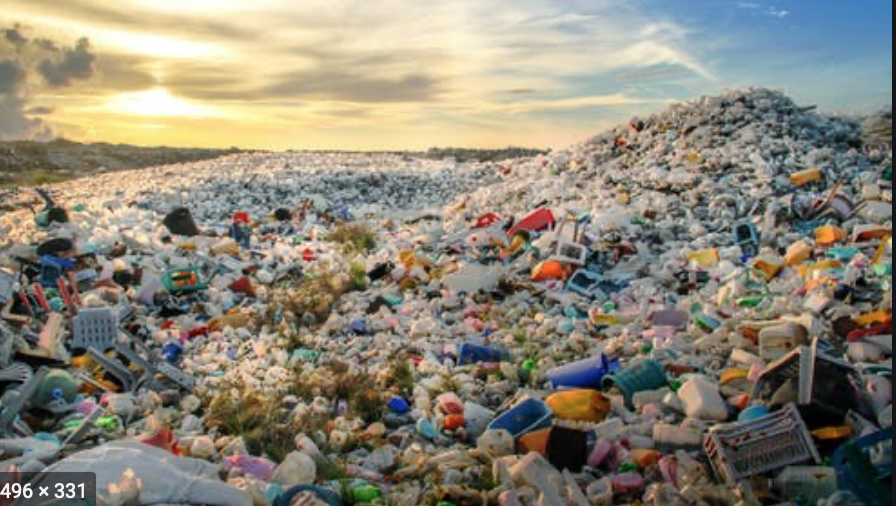
Images of once majestic rivers now clogged with plastics waste, and floating islands of ocean plastics waste are shocking to see. The message is clear that this sorry mess is one created by humans alone.

Where some might feel that the scale of the ocean plastics problem seems insurmountable, others, such as Boyan Slat, CEO of The Ocean Cleanup are actually quite optimistic that this is a solvable problem, and one that he and his colleagues are taking action on.

The bad news that research by The Ocean Cleanup is finding is that the size of the problem is much larger than previously thought – “about 1000 of the world’s rivers are the source of 80% of the global ocean plastic pollution according to new research.”  

Even though it was previously thought that 10 rivers accounted for the majority of global ocean plastic pollution, Boyan Slat and The Ocean Cleanup are undaunted by their new research findings.

Hear why not. We find this two-minute BBC video clip with Boyan Slat to be inspiring evidence of the positive difference that one person is making to show the way forward for tackling the systems level climate change problem of ocean plastics. (BBC – https://bbc.in/3f77PAE)

CPP

The “systems level” action message is echoed in the launch materials for the CPP, begun in January 2021. While Canadian, this CPP is not about pensions, rather, the Canada Plastics Pact.

It is focused on stakeholder collaboration to build a circular economy in Canada.

From its press release we learn that –

“An ambitious pre-competitive, multi-stakeholder platform, the CPP will enable companies across the Canadian plastics value chain to collaborate and innovate. It will build on significant work that has already been underway to reduce plastics waste, and will grow over time. Together, Partners will rethink the way they design, use, and reuse plastics, thereby charting a path toward a circular economy for plastic by 2025.” (Continue reading the press release here – EN/FR)

“Here are CPP’s actionable targets by 2025:

  • Define a list of plastic packaging that is to be designated as problematic or unnecessary and take measures to eliminate them 
  • Support efforts towards 100% of plastic packaging being designed to be reusable, recyclable or compostable 
  • Undertake ambitious actions to ensure that at least 50% of plastic packaging is effectively recycled or composted 
  • Ensure an average of at least 30% recycled content across all plastic packaging (by weight)”
Photo Credit Donna Bratle Kendall

CPP Founding Members List

We recognize many of the 30 companies listed as founding members of the CPP, and, together with their 25 implementation parnterns, want to give them a profile by listing them here.

We certainly feel better knowing that businesses we regularly shop at, such as, Canadian Tire for example, are members of such an organization, committed to real action on plastics, from eliminating plastic packaging where possible, to a longer-term goal of 100% of plastic packaging ultimately being ‘reusable, recyclable or compostable’.  https://plasticspact.ca/partners-list/

SIGNATORIES:


“The CPP considers Signatory Partners to be business organizations committed to achieving the CPP’s four targets.

  • Bimbo Canada
  • BOSK Bioproducts
  • Canadian Tire Corporation
  • Club Coffee
  • Coca-Cola Canada
  • Colgate-Palmolive Company
  • Danone Canada
  • EFS-plastics Inc.
  • Emterra Group
  • Fraser Plastics
  • GDI Packaging Solutions Inc.
  • General Mills
  • HypoIndustries Ltd.
  • Ice River Sustainable Solutions
  • Keurig Dr.Pepper Canada
  • Kraft Heinz Canada
  • Kruger Products L.P
  • Loblaw Companies Ltd.
  • Maple Leaf Foods
  • Mars Canada
  • Merlin Plastics
  • Mondelēz Canada Inc.
  • Nestlé Canada
  • Pyrowave
  • Ryse Solutions
  • Save-on-Foods
  • SPDU.ca
  • Tempo Plastics
  • Unilever Canada
  • Walmart Canada”

IMPLEMENTATION PARTNERS:

The CPP considers Implementation Partners to be organizations across the plastics packaging value chain supporting the CPP’s vision.

  • Alberta Beverage Container Recycling Corporation
  • Canadian Beverage Association
  • Canadian Beverage Container Recycling Association (Recycle Everywhere)
  • Canadian Produce Marketing Association
  • Canadian Stewardship Services Alliance Inc.
  • Circular Innovation Council (formerly Recycling Council of Ontario)
  • Circular Plastics Taskforce
  • City of Edmonton
  • Cleanfarms
  • Council of the Great Lakes Region
  • David Suzuki Foundation
  • Environment and Climate Change Canada
  • Food, Health & Consumer Products of Canada
  • International Institute for Sustainable Development
  • Metro Vancouver
  • Multi-Material Stewardship Manitoba
  • National Zero Waste Council
  • Ocean Wise
  • PAC Packaging Consortium
  • The Recycling Council of Alberta
  • Retail Council of Canada
  • Return-It
  • Smart Prosperity Institute
  • The Natural Step Canada
  • The Recycling Council of Alberta”

Global Plastics Pact Network

“The Canada Plastics Pact is part of the Ellen MacArthur Foundation’s global Plastics Pact network, joining other Plastics Pacts in Europe, Africa, North America and Latin America, in a network of national and regional initiatives working towards a common vision of a circular economy for plastics.”

Based on their own description of the plastics problem, these plastics pact groups are serious and ambitious about taking significant action —

“More clean-ups and better recycling won’t solve our plastic pollution problem. Achieving a world without plastic waste or pollution will take new levels of innovation and collaboration.”

For more on Global Plastics Pact Networkhttps://bit.ly/33uN7VK

Photo Credit Donna Bratle Kendall

A Circular Economy for Plastics

“Approximately 47% of plastic waste in Canada is due to plastic packaging. And although 32% of that plastic packaging is currently recycled, there is still significant progress to be made, which is why the CPP is focussing its immediate efforts on plastic packaging.” 

“Currently in Canada, approximately 9% of all plastic is recycled – the other 90% winds up in landfills, or the environment. If you could put a price tag on that plastic waste, it would be labelled a $7.8 billion “lost opportunity”¹

“Financial modelling done by Deloitte for the Government of Canada shows that by taking ambitious action, a circular economy for plastics in Canada by 2030 would — in addition to drastically reducing waste — save $500 million in costs every year; create tens of thousands of jobs; and be a substantial source of greenhouse gas emissions savings.”

“The Canada Plastics Pact believes Canada is uniquely positioned to build and realize a circular economy for plastics.”

For more on the CPP, its governance, and the Solutions it is targetting – https://bit.ly/2R8fKWn

Microplastics

In reading CBC What On Earth, April 22, 2021, Mark Crawley reports on a new study that has shown “large amounts of microplastic are floating into the atmosphere from roadways, oceans and farm fields. Once there, it can be carried by winds to the most remote places on Earth.”

“Airborne microplastic takes many forms and comes from many sources, but a key contributor is discarded plastic waste, according to the researchers, whose study was published in the Proceedings of the National Academy of Sciences.”

Plastic biodegrades very slowly, and fragments into smaller pieces that can be carried by air currents. A significant percentage of these fragments comes from synthetic textile fibres like in clothing and carpets. These microplastics are much smaller than what you could see with the naked eye.

In the Western USA there is reported to be about 1000 tonnes of microplastics, and it is estimated we inhale about a credit card worth of microplastics every single week. Researchers are investigating how this might affect cloud formation and the weather as well as how it could be affecting our lung health.

New Plastics Designers and Engineers

“Our plastics obsession is exacerbating the climate crisis. Annual emissions from plastic production and incineration could exceed 2.75 billion metric tons of CO2 equivalent by 2050, according to the Center for International Environmental Law.”

“To combat this, we need to eliminate as much unnecessary plastic as we can, and completely rethink the plastic products that we still need, according to the New Plastics Economy project, a collaboration between more than a 1,000 governments, NGOs, universities and businesses.” (TED Countdown, https://bit.ly/3rW93ni)

Vertical Hydroponics And Regenerative Farms

Last weeks blog mentioned research in New Zealand on how to reduce the methane cows create using diet supplements called “kowabucha” and we thought that was brilliant and funny. So this week we are looking into innovations in the farming industry in Canada such as vertical hydroponic farms as well as other unconventional or old-fashion agricultural techniques that can sequester carbon while improving soil, including cover crops and rotation of crops.

We read that 10% of Canada’s greenhouse gas emissions are from crop and livestock production, in the form of nitrous oxide, carbon dioxide, methane (CH4). It seems Canada is doing better at sinking the CO2 in the soil as we have been aware of erosion issues for decades. But knowing we can do even more to sink ghgs in the soil is great news. There is more research and action needed with sequestering the nitrous oxide and methane gas.

The federal agency Agriculture and Agri-Food Canada notes that earth’s existing farmland could absorb all of the world’s ghgs for the next 100 years at current rates if properly used.

Vertical Hydroponics

Vertical hydroponics is described as the leading-edge technology to the food sector to produce the extremely fresh, safe, pesticide free, sustainable, local, traceable and package free produce that makes for less food waste. The plants float on rafts while their roots dangle directly into nutrient-rich water, and grow indoors under various LED lights up to 13 layered levels high using elevator equipment to rotate. Growing conditions are consistent all year round, producing a reliable supply of healthy vegetables. There is a large amount of energy use in the lighting and temperature control, so using renewable sources of energy would be required to make this a favourable option. 

We had seen vertical farming being used in Europe and wondered about Canada so are glad to read there are several companies developing vertical hydroponics in Canada. ‘We The Roots’, ‘Local Leaf ‘(which is expanding across the country) and ‘Elevate Farms’ (with government contracts in the North) are just three of the larger scale ones, but smaller vertical farms are popping up supplying local grocers, markets and restaurants. When one googles hydroponic vertical farms one mostly finds sites to buy DIY equipment. Vertical farming can be scaled to all sizes of need,  and is clearly a budding industry.

“McGill University professor Mark Lefsrud, an expert in food security and urban agriculture, says that, while vertical farming currently accounts for less than 1 per cent of all farming in Canada, within 20 years, “I’d expect it to slowly creep up to around 20 per cent of the total market.””

“In a March report, Ontario’s Greenbelt Foundation identifies vertical farming as a priority to expand fruit and vegetable growth in the region and lists six vertical farms operating in Ontario (not including Elevate Farms): one in Kingsville, two in Guelph, and three in Toronto. All grow leafy greens, herbs, and microgreens (such as kale). The report notes that global investment in vertical farms is estimated at US$3.1 billion; about a third of that takes place in North America.”

“To Youbin Zheng, a professor and expert in controlled environment facilities at the University of Guelph, building more vertical farms in southern Ontario makes sense: “If you look at the Greenbelt and Golden Horseshoe, our land is limited, very limited, but our population has been increasing. If you grow vegetables in the field, there are only a few months in a year you can produce outside. If you grow inside with vertical farming, what you can get is just enormous.” The Greenbelt Foundation report states that, by building up, a vertical farm can produce the equivalent of more than 4,000 square metres of greenhouse space using just 185 square metres of floor space.” 

“Proponents also cite the significant benefits of vertical farming when it comes to food security and safety. The farms can be close to major population centres, reducing the need for transportation. In the case of Elevate Farms, Welland’s easy access to transportation routes means lower transportation costs and fresher, more nutrient-rich food for the consumer. Closer monitoring of produce and the fact that it stays within one country’s border may also reduce the risk of contamination. Before the pandemic, Kanellos says, “we had numerous outbreaks of E. coli and salmonella in different products across the supply chain”.”

https://www.tvo.org/article/vertical-farming-is-on-the-rise-in-ontario

Elevate Farms has contracts in the North of Canada where food insecurity is an issue. Although leafy greens cannot sustain the population, the intention is not to try and replace traditional agriculture but to supplement the existing market with what the farm produces. Labour is expensive, and energy costs are high: lighting accounting for about 40 per cent of capital costs so First Nations communities will have a hard time covering this costs without serious subsidies from the government. The start up cost alone is huge.

https://www.tvo.org/article/vertical-farming-is-on-the-rise-in-ontario

What can be grown in vertical hydroponics? So far romaine and other lettuces, arugula, kale, broccoli, strawberries, bok choy, baby spinach, dozens of herbs, including basil, cilantro and parsley are grown in these vertical farms, and there is research on growing other food like blueberries and legumes.

In Edmonton if you wish to purchase hydroponic vegetables for pick up or delivery check out: “Vertical Roots”.

Cover Cropping

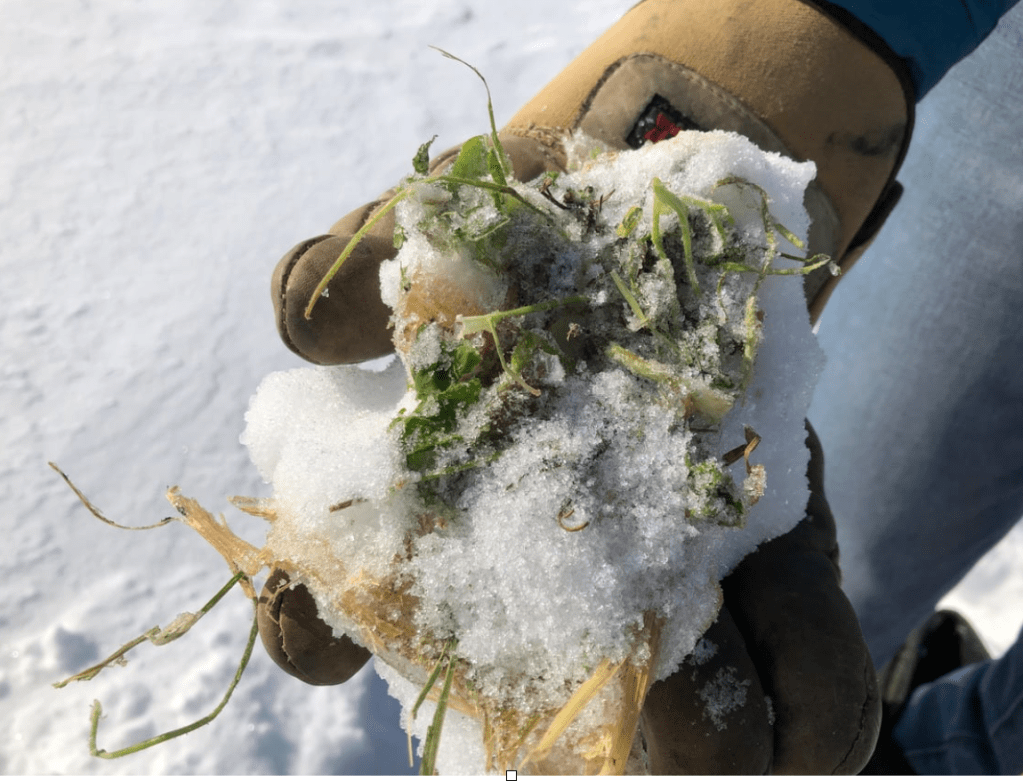
Canada’s farmland could increase its absorption of greenhouse gas emissions, experts say. Brent Preston, who run The New Farm in Creemore, Ont., belong to a group calling for new policies and a larger voice for farmers in addressing climate change. He is advocating for a practice known as cover cropping, an ancient but now uncommon technique in which crops are planted during the off season to keep soil healthy and active. Under the snow, the ground is unexpectedly green, with a medley of peas, sunflowers, clover and oats alive and thriving in the dead of winter. The more diversity you have, the healthier the soil is going to be.” While the plants are alive, Preston has no intention of ever harvesting them. When the growing season arrives, he will plow them back into the soil, making way for the salad greens, spinach and cucumbers he produces at his organic farm. “There’s never any bare soil in nature,” Preston says. Cover cropping is a very helpful way to sequester nitrous oxide.

Nick Boisvert, CBC News Feb 20, 2021

How Regenerative Farming Could Help Canada Meet Its New Carbon Emission Targets

Written by Mia Sheldon · CBC News · Posted: May 01, 2021

“Claudia Wagner-Riddle, an agro-meteorologist at the University of Guelph, says cover cropping, integrating livestock and increased diversity are key components to using agriculture to fight climate change through improved soil health.” 

Planting crops like alfalfa, oats or winter wheat throughout the year instead of leaving the ground bare over the winter — cover cropping — makes soil healthier. The cover crop might not be feeding physical livestock or feeding people, but it’s feeding the biology below our ground right now. It helps feed microbes below ground that keep the soil healthy and productive. 

Brett Israel’s family farm in Wallenstein, Ont., rotates through 20 different types of crops and has reduced tillage to help keep the soil healthy.

Also rotational grazing with livestock encourages plant regrowth, naturally distributing nutrients and allowing roots to grow deeper.

“It can take up to a decade to see the benefits of regenerative farming and carbon sequestration, and the practice has remained a relatively fringe approach to agriculture until recently. But a growing body of research is showing its effectiveness in reducing agricultural emissions and improving the soil.”

“A big hurdle is persuading farmers of the benefits. It’s extra work for the farmers; basically they have to plant the cover crop by the seed without getting an income, because they’re not selling it to feed people or animals. They’re using it to feed the soil.”

“Another issue hampering wider adoption has been the difficulty of quantifying the economic and environmental impact of regenerative farming, because hard data has been scarce. This is being researched now. General Mills began working with farmers across North America in 2019 to advance regenerative agriculture over about 400,000 hectares, a project that includes 45 oat farmers in Saskatchewan. The company offers soil testing and coaching to participating farmers, to help offset its own carbon footprint.”

https://www.cbc.ca/news/canada/agriculture-emissions-reduction-strategy-1.5993201

Barriers to Change in Farming Practises

The federal agency Agriculture and Agri-Food Canada notes that earth’s existing farmland could absorb all of the world’s ghgs for the next 100 years at current rates if properly used. But according to Farmers for Climate Solutions, the existing system of industrial agriculture makes it impossible to realize the carbon fighting potential of Canada’s 160 million acres of farmland. The group points to soil tilling, chemical products, fossil fuel usage and low biodiversity on farms as key areas that must be improved upon. Failing to do so, they argue, will prevent the nation’s farmland from reducing carbon and make farms more vulnerable to the effects of climate change. “It’s really impacting our ability to grow food,” said Flies, pointing to the longer droughts and unpredictable weather making it harder for Canadian farmers to operate.”

“While Geitmann, a professor at McGill University’s plant sciences program, hailed the coalition’s “ambitious” plan to tackle climate change, she noted that several major obstacles could make it hard to achieve its goals. Chiefly, she pointed to potentially higher costs and the challenges of implementing new practices that have been in place for decades. Moving away from soil tilling, for example, may require a more laborious system of removing weeds from soil that could be challenging to some farmers.”

“Bringing those changes to life will likely require new federal incentives to help farmers, Geitmann said. The Canadian Federation of Agriculture also called the plan to become carbon neutral “prohibitively costly” without policy changes such as exempting farmers from the federal carbon tax. Farmers for Climate Solutions also acknowledge that the powerful chemical and fertilizer industry will likely resist widespread change that points farmers away from its products.”

“Paul Slomp, who raises beef cattle in Saint-André-Avellin, Que., said his farm has already moved away from chemicals and artificial feeds. His 200 cows now graze exclusively on grass, which he manages with the goal of maximizing the land’s ability to capture carbon. He questioned the worries around higher costs, and said he’s now making more money than he did before the changes. “Because we’re reducing the amount of input that we need to purchase, we’re actually able to generate a much better profit margin,” said Slomp, who is not a member of Farmers for Climate Solutions. “The cows are meant to do this; they thrive in a system like ours, and it can be quite profitable.””

https://www.cbc.ca/news/canada/toronto/farmers-for-climate-solutions-launch-1.5458676

What Information is Available on the Canadian Government Web Site

(We collected information in this next section from the site https://cutt.ly/kbUKw7S, which is a very informative Government of Canada-Agriculture and the Environment site.)

Ways to Reduce Nitrous Oxide

Cover cropping is just one way to reduce NO2.

Since N2O is produced mostly from excess available nitrogen in soils, another way to suppress emissions of this gas is to apply fertilizer judiciously: adding just enough, at the right place and time, to meet crop demands, but avoiding excess amounts left over. This can reduce fertilizer costs to producers and reduce the amount of nitrogen lost through excess fertilizer application.

Fertilizer can be used more efficiently by:

  • adjusting fertilizer rates to coincide with plant needs
  • placing fertilizer near plant roots (but not too deep in the soil)
  • applying fertilizer several times each year, rather than only once
  • using slow-release forms

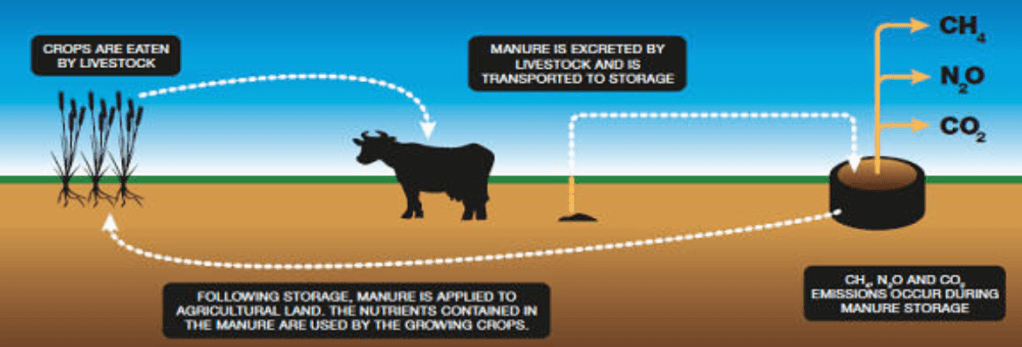
Similarly, using manure efficiently can also help limit N2O emissions-not only because less is released from the manure, but also because less fertilizer now needs to be used. Perhaps the most fundamental way of reducing N2O from manures is to alter feeding rations so that less nitrogen is excreted in urine and feces in the first place. (Should we warn the cows that they are about to go on a new diet?)

Other practices that can sometimes reduce N2O emissions from farms include:

  • greater use of legumes as a nitrogen source
  • use of cover crops (sown between successive crops) to remove excess available nitrogen
  • avoiding use of summer fallow (leaving the land unplanted, with no crop nitrogen uptake, for a season)
  • adjusting tillage intensity (sometimes, but not always, no-till practices can reduce emissions)

Despite much progress, the nitrogen cycle on farms still results in the leakage of N2O and reducing these leaks remains a research priority.

What Farmers Can Do To Enhance The CO2 Sink

To reduce CO2 farmers must basically consider three things: 

  1. increase plant yield (photosynthesis);
  2. increase the proportion of fixed carbon added to soil; or
  3. slow the rate of organic matter decomposition.

Here is a list of things that can be done:

  • Reduce in tillage
  • Restore degraded land
  • Improve pasture management
  • Reduce fallow periods
  • Add animal manures to the soil
  • Crop residue management
  • Use legumes and/or grasses in crop rotations
  • Convert marginal crop land to perennial grass or trees
  • Use rotational grazing and high-intensity/short duration grazing
  • Plant shrubs and trees as shelterbelts
  • Restore wetlands

In addition to sequestering carbon in the soil, these practices also increase soil productivity, enhance the quality of water running off or draining from agricultural land, and provide a more hospitable environment for wildlife inhabiting agricultural lands.These practices can also help improve profitability. For example, minimum tillage increases energy efficiency by reducing machinery use. Improved crop varieties and crop fertilization can increase yields and soil carbon.

Good news, Canadian croplands have been a net sink for CO2 starting in about 1990. However, until recently the removals on croplands were offset by carbon losses from forests and grasslands recently converted to cropland. It is only since about 2000 that agricultural lands have been a net sink for CO2 when land use change is taken into account.The annual total GHG emissions from farms in Canada have increased from 1990 to 2009 with the main driver is the increase in the beef and swine populations, although they have stabilized in recent years. 

Ways Farmers Can Reduce Methane

Beyond altering the diet of cows, methane emissions can be reduced indirectly by choosing management practices that enhance productivity:

  • extending lactation periods of dairy cows
  • using more efficient breeds
  • improving reproductive performance
  • increasing rates of gain in beef animals so they reach the market sooner

While these practices may not reduce emissions per animal per day, they can lower the amount of CH4 emitted per kilogram of milk or meat produced. Research has also shown that CH4 from manures can be reduced. Management practices that can be effective include: 

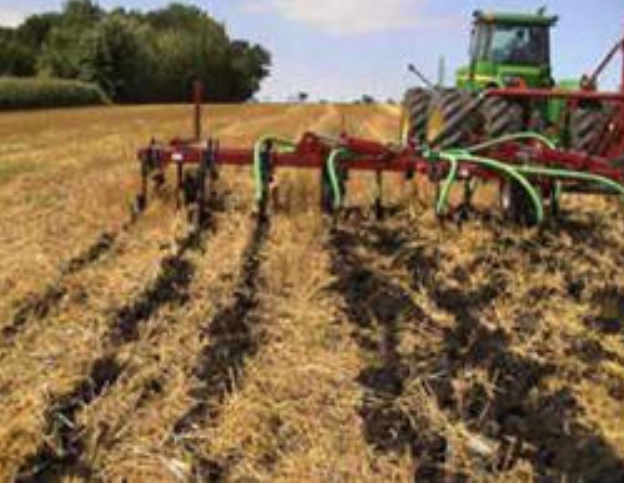
  • aerating manure 
  • storing manure at low temperatures (below ground)
  • removing manure from storage more frequently
  • using bedding material to improve aeration 
  • composting manure 
  • using biological filters
  • trapping the CH4 (methane) and burn it as fuel

https://cutt.ly/kbUKw7S

Edmonton Root For Trees: Deadline for Volunteers to Register

Edmonton Root for Trees is accepting volunteers to plant trees in the city. There will be a sign up online on May 25 so mark your calendar. I see they will be planting trees in Blackmud Ravine area, which is the closest area for me to volunteer, but there are various locations around the city. Check out their website.

Climate Change Canada – WWW.Canada.ca

Canadian Photos credit Lucy

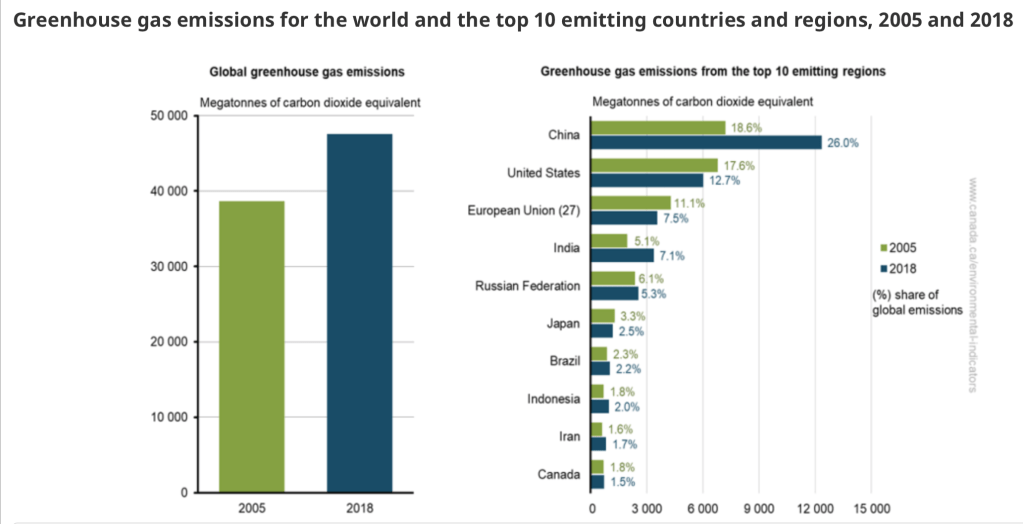
Recent news (and last week’s Blog post) have reported highlights of Canada’s climate plan, including new commitments for greater, faster reductions in greenhouse gas (GHG) emissions by 2030, enroute to carbon net zero by 2050.

We decided to dig a little deeper at the source – the federal government’s official website on climate change for “Canada’s action, climate future, partnerships, adaptation, health, science, emissions reporting,” at:  https://bit.ly/3xGvjoM

Here we found the following list of topics –

  • Causes and effects of climate change
  • Canada’s international action on climate change
  • Climate change funding programs
  • Take climate action
  • Climate change: Indigenous and Northern communities
  • Climate action map
  • Climate science 2050
  • Canada’s climate plan
  • Results of Canada’s climate change action
  • Climate change science, research and data
  • Women and climate change
  • Canadian Centre for Climate Services
  • Canada’s Changing Climate Report

Canada’s international action on climate change section, and the environmental indicators section, for example, while quite technical, provide useful details on calculating methodology and the data behind Canada’s regular reports on progress as a signatory to the UNFCCC (United Nations Framework Convention on Climate Change).

Setting Newfoundland Photo credit Lucy

Many charts and long descriptions break down the sources and trends in Canada’s greenhouse gas emissions, by economic sector, province/territory, and by seven gas types – “carbon dioxide (CO2), methane (CH4), nitrous oxide (N2O), perfluorocarbons (PFCs), hydrofluorocarbons (HFCs), sulphur hexafluoride (SF6) and nitrogen trifluoride (NF3)”.  (https://bit.ly/338uya0)

While the top five emitting provinces are identified as Alberta, Ontario, Quebec, Saskatchewan and British Columbia, “Figure ES–8: Greenhouse gas emissions by province and territory in 2005, 2010 and 2019,” provides more nuanced detail, showing for example, an overall downward trend in emissions by Ontario for example, in contrast to Alberta’s and Saskatchewan’s upward trend in emissions and Quebec’s holding pattern over time. The accompanying long descriptions explain the drivers for these and other trends.

“Figure ES–7: Breakdown of Canada’s greenhouse gas emissions by economic sector (2019),” underscores the need for contributing climate action by all sectors of our economy if Canada is to achieve its GHG reduction targets and carbon net zero goal —

Agriculture – 10%

Buildings – 12%

Heavy Industry – 11%

Waste and Others –  7%

Oil and Gas – 26%

Electricity – 8.4%

Transport – 25%.

(Canada’s Climate Change Environmental Indicators –https://bit.ly/338uya0)

Setting Newfoundland photo credit Lucy

“Cow cocktail joins battle to reach net zero”

In terms of the agriculture sector, Canada may want to keep track of experiments underway in New Zealand as a potential source for how the sector might further reduce harmful methane emissions.

In this article in the Sydney Morning Herald, with the eye catching title of “Cow cocktail joins battle to reach net zero,” we learn that the UN’s Intergovernmental Panel on Climate Change “estimates a global methane reduction of 40 per cent to 45 per cent by 2030 is needed to limit global warming to 1.5C as cheaply as possible. Moreover, because methane stays in the atmosphere for only a decade, reducing its output can deliver a relatively quick win compared with CO2, which lingers for centuries.”

Methane is where the cows come in.

The New Zealand experiments in “Kowbucha” (we did not make this up!) supplements are testing whether cultures for making yogurts and cheeses can “reduce the amount of methane cows burp when they digest grass and feed.”.. “Kowbucha is one of the possible candidates for the (Fonterra) co-operative, which is looking at other options including seaweed.”

“The company, which has an annual $72 million (U.S.) research budget, has also worked on developing ‘climate-smart’ cows whose stomachs emit less methane, as well as vaccines.” For the full Sydney Morning Herald article, see: https://bit.ly/3gQn4jU

Photo credit Lucy

Canada’s Changing Climate

Headline statements found in this section paint a worrisome set of climate change patterns, ending with projections for two very different kinds of scenarios for our future  (https://bit.ly/3vybVs0).

  • “Scenarios with limited warming will only occur if Canada and the rest of the world reduce carbon emissions to near zero early in the second half of the century and reduce emissions of other greenhouse gases substantially.”   We are pleased that Canada’s climate action plan commits to the scenario we want – limited warming – for the sake of our children, grandchildren and future generations. We are committed to doing our part to realizing this better, livable future, and to holding our governments and businesses to account for striving forward on Canada’s goal to be carbon net zero by 2050.
  • “Canada’s climate has warmed and will warm further in the future, driven by human influence. Global emissions of carbon dioxide from human activity will largely determine how much warming Canada and the world will experience in the future, and this warming is effectively irreversible. {2.3, 3.3, 3.4, 4.2} “
  • “Both past and future warming in Canada is, on average, about double the magnitude of global warming. Northern Canada has warmed and will continue to warm at more than double the global rate. {2.2, 3.3, 4.2}”
  • “Oceans surrounding Canada have warmed, become more acidic, and less oxygenated, consistent with observed global ocean changes over the past century. Ocean warming and loss of oxygen will intensify with further emissions of all greenhouse gases, whereas ocean acidification will increase in response to additional carbon dioxide emissions. These changes threaten the health of marine ecosystems. {2.2, 7.2, 7.6}”
  • “The effects of widespread warming are evident in many parts of Canada and are projected to intensify in the future. In Canada, these effects include more extreme heat, less extreme cold, longer growing seasons, shorter snow and ice cover seasons, earlier spring peak streamflow, thinning glaciers, thawing permafrost, and rising sea level. Because some further warming is unavoidable, these trends will continue. {4.2, 5.2, 5.3, 5.4, 5.5, 5.6, 6.2, 7.5}”
  • “Precipitation is projected to increase for most of Canada, on average, although summer rainfall may decrease in some areas. Precipitation has increased in many parts of Canada, and there has been a shift toward less snowfall and more rainfall. Annual and winter precipitation is projected to increase everywhere in Canada over the 21st century. However, reductions in summer rainfall are projected for parts of southern Canada under a high emission scenario toward the late century. {4.3} “
  • “The seasonal availability of freshwater is changing, with an increased risk of water supply shortages in summer. Warmer winters and earlier snowmelt will combine to produce higher winter streamflows, while smaller snowpacks and loss of glacier ice during this century will combine to produce lower summer streamflows. Warmer summers will increase evaporation of surface water and contribute to reduced summer water availability in the future despite more precipitation in some places. {4.2, 4.3, 5.2, 5.4, 6.2, 6.3, 6.4}”
  • “A warmer climate will intensify some weather extremes in the future. Extreme hot temperatures will become more frequent and more intense. This will increase the severity of heatwaves, and contribute to increased drought and wildfire risks. While inland flooding results from multiple factors, more intense rainfalls will increase urban flood risks. It is uncertain how warmer temperatures and smaller snowpacks will combine to affect the frequency and magnitude of snowmelt-related flooding. {4.2, 4.3, 4.4, 5.2, 6.2}”
  • “Canadian areas of the Arctic and Atlantic Oceans have experienced longer and more widespread sea-ice-free conditions. Canadian Arctic marine areas, including the Beaufort Sea and Baffin Bay, are projected to have extensive ice-free periods during summer by mid-century. The last area in the entire Arctic with summer sea ice is projected to be north of the Canadian Arctic Archipelago. This area will be an important refuge for ice-dependent species and an ongoing source of potentially hazardous ice, which will drift into Canadian waters. {5.3} “
  • “Coastal flooding is expected to increase in many areas of Canada due to local sea level rise. Changes in local sea-level are a combination of global sea level rise and local land subsidence or uplift. Local sea level is projected to rise, and increase flooding, along most of the Atlantic and Pacific coasts of Canada and the Beaufort coast in the Arctic where the land is subsiding or slowly uplifting. “
  • “The loss of sea ice in Arctic and Atlantic Canada further increases the risk of damage to coastal infrastructure and ecosystem as a result of larger storm surges and waves. {7.5}”
  • “The rate and magnitude of climate change under high versus low emission scenarios project two very different futures for Canada. Scenarios with large and rapid warming illustrate the profound effects on Canadian climate of continued growth in greenhouse gas emissions. Scenarios with limited warming will only occur if Canada and the rest of the world reduce carbon emissions to near zero early in the second half of the century and reduce emissions of other greenhouse gases substantially.”

Canada’s Changing Climate Headline Statements – https://bit.ly/3vybVs0

Canada’s Changing Climate Full Report, Digital Interactive Version –https://changingclimate.ca/CCCR2019/

“Force of Nature”

We recommend Justin Worland’s Time magazine article, “Climate is Everything: How the Pandemic Can Lead Us to a Better, Greener World,” Some more sobering food for thought about the tipping point humans have arrived at, and the choices at hand for charting our future path, written from an American perspective but relevant broadly.

“Whether it leads to a more resilient world or exacerbates the worst elements of our society depends on whether we adjust or just stumble through,” contends Worland.

He quotes climate leader Rachel Kyte, dean of the Fletcher School at Tufts University, “We are at the point where climate change means systems change – and almost every system will change….That understanding is long overdue, but I don’t think we know exactly what it means yet. It’s a moment of maximum hope; it’s also a moment of high risk.” (https://time.com/5953374/climate-is-everything/)

Cover Photo of Time Magazine by Red Hong Yi

Canada Unveils New Emissions Targets

Twice in April 2021, Canada has increased its level of commitment to fight climate change. First was with the Federal Budget, and immediately after at the Leaders Summit on Climate on Earth Day.

Federal Budget 2021

The new budget two weeks ago detailed additional measures so Canada has concrete plans in place to decrease greenhouse gas emissions to 36%  of 2005 levels by 2030. Prior to this budget the goal had been to reach a 30% reduction. This budget pledged $5B over 7 years to Net Zero Accelerator, 50% tax cut for manufacturers of net zero technologies, and $4.4B over 5 years as a loan for home retrofits. Finance Minister, Chrystia Freeland, committed these billions of dollars in new spending to help private sector companies, including those in emissions-intensive industries like steel and concrete, to develop and adopt cleaner technology. The government is also supporting measures to make natural gas less caron-intesnive.

2021 Earth Day Leaders Summit on Climate Hosted by Joe Biden

Here is a summary of what was reported on the CBC News Network with Suhana Meharchand April 21, 2021

On Earth Day last week, ‘climate warrior’ Joe Biden pledged to double the USA’s efforts and cut GHG emissions by 52% of its 2005 levels by 2030. As well, under the pressure of the global community at this virtual climate summit, Trudeau pledged Canada will slash carbon emissions by 40-45% of the 2005 levels by 2030.  For Canada this equates to lowering emissions from 732 megatons to 439. This will blow past the December targets for 30% reduction in emissions by 2030, and the recent federal budget of a 35% reduction. It means that 2021 would be the last year Canada sees an increase in emissions. As it stands now emissions are down 1.1% compared  to that of 2005 baseline.  

On Earth Day Environment Minister Wilkinson stated that over the next 9 years there is ambition to find 4-9% more reduction in green house gas emissions. This part is not mapped out yet, but will come thru working with the USA on vehicle efficiency and EV plans, thru building retrofits, as well as by reducing methane gas up to 75%.  Wilkinson said he has spoken to the co-chairs of the government’s new Net-zero Advisory Panel to review the Canadian economy, sector by sector, to determine where additional reductions can be made. He also says this plan will be put into a federal bill after it goes through a second reading. For the first time, when Canada goes to the UN Climate Change conference in November, it will arrive with a set plan in place.

Trudeau says “As a major energy producer, it is tough to cut so deeply in Canada but climate science tells us we face an existential threat. This new ambition is to keep the earth below a 1.5 degree increase, and to leave for our children a working and more sustainable world.”

The over 720 megatons of greenhouse gases we produced in 2015 (and still today) is a lot of gas. It is 1,587,600,000,000 pounds of it, or as much as 120,000 fully loaded freight trains. http://praieiclimatecentre.ca

These new emissions targets were announced at a virtual climate summit of 40 leaders hosted by the USA, Joe Biden. The goal  for most countries is to reach net zero carbon emissions by 2050. China still plans to  increase its emissions until 2030. Like Canada it is pricing carbon and renewables and promises to have net zero GHG emissions by 2060. If it is a competition, China is winning now in terms of jobs and volume with making wind turbines and solar panels and North America wants to compete in ‘saving the world’. In his 100 Day Speech Biden said “By addressing issues like green energy production, the US is staying competitive with the rest of the world.” Biden also said on Earth Day “There is a moral and economic imperative to act. It is a moment of peril and possibility. The USA is back. When I think of climate change I think of jobs”. His Build Back Better plan focuses on jobs especially in the hardest hit areas of the country.

Overseas Boris Johnson calls Biden’s plan ‘a game changer’. The UK itself is also promising 78% reduction in carbon emissions by 2035. The UK Prime Minister says ‘We are the Saudi Arabia of wind’. Johnson says the change he envisions includes eating differently, making air travel more expensive for frequent flyers, increasing the number of electric vehicles on the road and improving house insulation. He also states “This is not about what we are going to give up or about ‘bunny hugging’, this is about growth and jobs. We can build back better by building back greener”. The UN Climate Change Conference in 2026 will be in UK.

Japan, South Korea, India and Europe also pledged on Earth Day 2021 to set more ambitious targets.

Canada’s Progress Since Paris Accord 2015

Canada has great ambition and sees itself as a role model for climate action, but is still mostly in the planning phase of change. Canada is moving in the right direction in some sectors, but it needs to pick up speed.

Utilities Sector In Canada Making Progress

“Emissions in 2019 were lower than 2005 emissions, with a decrease of 8.5 Mt CO2 eq or 1.1%. Emissions from public electricity and heat production by utilities showed a large decrease in emissions, 56 Mt CO2 eq. or 45%, and was a contributor to the emissions reduction.” (Canadian government website – https://bit.ly/2S7hJKx)

Transportation Sector In Canada Needs Change

“While vehicles have become much more efficient, transportation GHG emissions have increased 27% from 2000 to 2018. Emissions from passenger light trucks and freight trucks have continued to rise due to an increased number of vehicles (especially light trucks and SUVs). Freight emissions have increased due to many factors including increasing trade and globalization, and online shopping.” So our transportation sector is moving in the wrong direction.

“To ensure continued uptake in EVs, the federal government is undertaking a series of measures. It includes a $300 million investment in the creation of a new federal purchase incentive to buy zero-emission vehicles, a $130 million investment in new zero-emission vehicle infrastructure deployment, and a $5 million fund to work with automakers to secure ZEV sale targets.” (NRC – https://bit.ly/2SezKH1)

As individuals and a society we are driving the market for larger vehicles and online shopping. That means as individuals we can also can make different personal choices to affect this vehicle growth sector, even if it means driving the car you own less, and walking, riding a bike or using public transit. The growth in online shopping, especially during the pandemic has created greater freight emissions, and packaging, so we are also reminded to shop local as much as possible. It is disturbing that when ordering online from Lulu Lemon or Walmart or anywhere, that if you purchase more than one item they often arrive separately. Collectively, we can decrease our reliance on fossil fuels, it is not just the government’s responsibility.

One thing for sure the leaders of the world have decided this April-there will be significant changes in how the world operates over the next 8 1/2 years! It is wonderful that goals are being set for 2030, and not just for 2050. Time is of the essence. We love our planet. We want our children and grandchildren and great grandchildren to see it thriving and green and blue with an abundance of fresh air, nature, trees, and wildlife.

Celebrating Earth Day 2021

Happy Earth Day to all! The theme for this 51st anniversary of Earth Day is, aptly we think, Restore Our Earth.

We dedicate this Blog to children everywhere.

It is children and youth who have motivated us to engage in our own learning and growth, including the creation of our Friends4Trees4Life Blog last year, as we both take personal climate action in order to be active contributors toward creating a healthy, resilient Planet Earth, for future generations to come.

Tree and Flowers by Charlie age 4

Welcome back to guest artists ranging in age from 4-12, Charlie, Hannah, Connor, Emily, Claire, Brady, Elizabeth, and Karis, who share their stunning Earth Day artwork with us once again. Thank you for inspiring us to take care of our beautiful earth.

Why Trees?

As we take a moment on this Earth Day to reflect on what we have learned in our past year as co-bloggers before turning thoughts to the future, we look back on our very first posts explaining our purpose and chosen focus on trees.

October 20, 2019 Why Trees? [https://wordpress.com/post/friends4trees4life.com/3]

October 31, 2019 Why Trees? (continued) [https://wordpress.com/post/friends4trees4life.com/270]

Hurry Up Clean Up by Emily age 7

This is Your Brain on Trees

It continues to be all about the trees for us!

To those earlier learnings about the importance of trees for carbon capture, we have become aware of the health benefits of spending time among trees. See for example, our recent post on Forest Therapy in Wishing Us All More Calm (April 8, 2021) – https://bit.ly/3emNN4C.

Thank you to Reader Jim (Toronto) for putting this on our radar, a recent Globe and Mail article with the cool title of “This is Your Brain on Trees” (by Hannah Hoag, April 17, 2021) – (Globe and Mail – https://tgam.ca/3v9DRm0).

Fish by Brady age 11

Earth Day 2021 – Official Website

As the official website for EarthDay states, “As the world returns to normal, we can’t go back to business-as-usual.”

A Tree by Claire age 8

FIVE PILLARS OF RESTORE OUR EARTH™:

To learn more about the Earth Day organizers’ Five Pillars of Restore Our Earth, follow the links to:

(It is all about trees!)
Flowers by Karis age 8

(New readers also may be interested to see what we had posted last March 2020 on this topic in our “Food Waste and Climate Action” Blog post, at https://bit.ly/3nbdUjc)

The Great Global Cleanup

https://cleanup.earthday.org/

Global Earth Challenge – A Citizen Science Initiative

Learn about how to contribute to an Earth Day Citizen Science Initiative at https://globalearthchallenge.earthday.org/.

To learn more about the history of Earth Day and reflect on how we marked last year’s 50th anniversary theme of Climate Action, Reader’s may want to review our 2020 blog post, at https://bit.ly/3dD6RfZ.

A Moment of Gratitude

A Bird by Connor age 6

We invite ourselves and our Readers to take a moment today to reflect on what brings meaning and joy in our lives, what we are grateful for, and our aspirations and personal visions for doubling down to create a better world.

Some Other Earth Day Climate Action Ideas

If Readers feel inclined and inspired to do more, we offer these action ideas as possibilities for consideration:

Read the Official Earth Day Organizers’ Challenge https://bit.ly/2RLjoSZ

Learn more about and watch this short video clip on the History of Earth Day https://www.earthday.org/history/

Calculate Your Carbon Footprint https://bit.ly/2VehSLk

Learn about Canada’s Climate Plan, https://bit.ly/3dBeFPi

Learn about the Paris Agreement (Paris Accord), including which countries are signatories currently, and about science research informing the UN’s global effort to slow global warming and dramatically reduce green house gas emissions, to save lives, species and the home we all share, called Planet Earth, https://bit.ly/3ejhQu0

Check out CBC’s website dedicated to climate change information, science and news, at https://bit.ly/3dFPHyj. Listen to What on Earth with Laura Lynch, a CBC series of podcasts that explores Canadians’ experiences, challenges, questions and potential solutions for climate change – https://bit.ly/2QgXcTw

Take a moment, perhaps together with a young person in your household, to watch Google’s Earth Day animation

Donate a Tree – For example, we have made donations with OneTreePlanted and Tree Canada

Refuse Plastic by Hannah age 5

Be inspired by Hannah’s art piece to watch the Earth Day episode on reducing plastics on tonight’s TVO’s The Agenda

Plant some seeds or bulbs

Participate in your Individual or Group Earth Day Cleanup Project (one of the 5 pillars of Restore our Earth identified earlier). For runners, we also learned about “Plogging” in last week’s Blog post, at https://bit.ly/3xbV8wD

Watch an episode or two of David Attenborough’s Blue Planet Parts 1 and 2 Collections of videos on BBC at https://www.bbcearth.com/shows/blue-planet. Always informative, thought provoking and inspiring we find

Take a walk outside and take a moment to wonder at the sights and sounds and bountiful gifts on offer from Nature – birdsong, soft breezes, warm sunshine, budding flowers and trees, earth worms aerating the earth, pollinators busily buzzing as they go about their essential work in bringing life to the crops we eat, forests (land based trees and ocean based kelp forests) capturing and sinking harmful carbon and offering life giving oxygen in return….perhaps encounter some of the estimated 8.7 million species of plants and animals on Earth, of which human beings are but one, all of us sharing this one and only planet Earth we call home….

Koala by Elizabeth age 12

Review of Documentary My Octopus Teacher

Want to watch a Netflix video that makes you want to do everything you can to keep our precious Earth vibrant and healthy while at the same time melting your heart? My Octopus Teacher is nominated for an Oscar in the documentary category. It has already won 2 awards, The BAFTA award for Best Documentary 2021, and the Producers Guild of America Awards -Outstanding Producer for a Documentary to Craig Foster who is also the main actor in the film. Rotten Tomatoes gives it a score of 100. My Octopus Teacher teaches us about the extraordinary intelligence of an octopus, showcases the underwater beauty of the Kelp Forest in South Africa, and reveals the incredible healing powers for Craig Foster spending a year in this cold ocean water tracking the lifespan of this octopus. Lucy feels this is a film worth seeing over and over and you will want to recommend it to your friends. It is expected that more films produced by Pippa Ehrlich and James Reed will come out of their observation and filming of the abundant animal life in this healthy kelp forest around South Africa.