The 2021 Earth Day Plan:Three Days of Climate Action
APRIL 20
“Earth Day 2021 begins with a global youth climate summit led by Earth Uprising, in collaboration with My Future My Voice, OneMillionOfUs and hundreds of youth climate activists.
The global youth summit will consist of panels, speeches, discussions, and special messages with today’s youth climate activists including Greta Thunberg, Alexandria Villaseñor, and Licypriya Kangujam.
In the evening on April 20, the Hip Hop Caucus and its partners will present the “We Shall Breathe” virtual summit. This digital event will examine climate and environmental justice, connecting the climate crisis to issues of pollution, poverty, police brutality, and the pandemic, all within a racial justice framework.”
We love this emphasis on youth, and we invite any children’s art with an Earth Day theme for our blog next week, submitted to Lucy or Catherine by April 20, 2021.
APRIL 21
“Education International will lead the “Teach for the Planet: Global Education Summit.”
The multilingual virtual summit will span several time zones and feature prominent activists from every continent, focused on the crucial role that educators play in combating climate change and why we need transformative climate education now. ”
APRIL 22 | EARTH DAY
“Parallel to the Biden Administration’s global climate summit, EARTHDAY.ORG will have its second Earth Day Live digital event, right here. The global show begins at 12 PM Eastern Time.
Workshops, panel discussions, and special performances will focus on Restore Our Earth™ — we’ll cover natural processes, emerging green technologies, and innovative thinking that can restore the world’s ecosystems.
More topics will include:
Climate and environmental literacy
Climate restoration technologies
Reforestation efforts
Regenerative agriculture
Equity and environmental justice
Citizen science
Cleanups, and more.
World climate leaders, grassroots activists, nonprofit innovators, thought leaders, industry leaders, artists, musicians, influencers, and the leaders of tomorrow will come to push us towards a better world.”
Go to Earthday.org to see what is happening in your neighbourhood or maybe try plogging (see below)
Maybe you might want to research what you can do on a local level. Check out David Suzuki’s recent article titled “What You Can Do-Your Voice at the Table Guide to Mobilizing Local Government Climate Action.”
Maybe writing a letter to your member of congress is something you might want to consider. We have drafted a letter in our blog A Letter to the Minister of the Environment and Climate Change January 14, 2021. Another consideration is receiving regular emails from the David Suzuki Foundation as they frequently have letters drafted that simply need a signature. Suzuki states that having only 3.5% of the population supporting an action on climate change is enough to make a political difference.
Bill Gates Youtube Interview Virtually at University Of Toronto
Catherine and Lucy both learned a great deal listening to this hour long YouTube interview with Bill Gates about his book “How To Avoid a Climate Disaster: The Solutions We Have and the Breakthroughs We Need”. Here is the link.
14 People Mapping Canada’s Path to Net-Zero Emissions-Can They Do It?
“It’s a tall order, to say the least: take 14 people and ask them to figure out how Canada can meet its net-zero emissions targets by 2050. That’s the job of the new Net-Zero Advisory Body, which was established as part of Bill C-12, the Canadian Net-Zero Emissions Accountability Act. It includes leaders from environmental organizations, the Assembly of First Nations, cleantech, finance, climate science, industry, labour and more.”
“Some of the people on the body are Dan Wicklum, CEO of the Transition Accelerator; Catherine Abreu, executive director of Climate Action Network Canada; Assembly of First Nations Yukon regional Chief Kluane Adamek; and Hassan Yussuff, president of the Canadian Labour Congress.”
“According to the Government of Canada website, the group “will provide advice to the government and consult with Canadians on the most efficient and effective ways to reach this goal.””
“But not everyone is confident the panel can succeed. That includes Corinne Le Quéré, a Canadian climate scientist and member of the U.K.’s Climate Change Committee, which has played a pivotal role in reducing Great Britain’s emissions by almost half since 1990 and now roughly three per cent a year. In an interview with CBC Radio’s WHAT ON EARTH, Le Quéré points out that Canada has repeatedly failed to meet its climate targets, and remains one of the few wealthy countries where emissions continue to rise.”
“Advisory committees are essential, she argues, because policymakers are so focused on the near term that more distant goals end up on the back burner. For example, if we want to decarbonize transport by 2030, she said, we need to immediately start producing cars differently, installing infrastructure and planning for the increased electric demand.”
“The problem is, Canada’s new advisory body doesn’t have those kinds of near-term targets, she said. “It’s too slow. There are a lot of good mechanisms, but the urgency of the action is just not there,” said La Quéré. What’s more, she said, the panel is too closely tied to the government. “In order for these committees to have a real voice in society, they need to be far enough from government to not be enmeshed in the day-to-day decisions, but close enough to actually understand what can work in the Canadian policy process.””
“Dan Wicklum, co-chair of the Net-Zero Advisory Body, said its objectives are clear and that the transparency of the work they do will mean that Canadians can hold the government to account. “I think what we do want is to put in place strong, independent, transparent structures that are well resourced to give the best advice possible to the government so that they can make decisions,” he said. “And we feel we’ve got that body in place.””
“Le Quéré is calling on the government and Parliament to revisit the law that sparked the advisory panel in order to “strengthen the independence of this committee, give it resources, make sure it’s there for its expertise and inject a sense of urgency in it.” She said, “Unless you do that, we could wait another 10 years — and Canada’s track record is not very good.”” (See article by Rachel Sanders and Jennifer Van Evra at CBC – https://bit.ly/3dleXcW)
Canadian Companies Pledging Net Zero Carbon Emissions and By When
Blackberry 2021
CIBC 2024
Canada Goose 2025
Stantec 2030
Telus 2030
Indigo Books and Music 2035
Air Canada 2030 (absolute targets of 20% GHG net reductions from flights and 30% from ground operations)
A recent article we read indicates that not all businesses use the same parameters to calculate how they will get to net zero carbon emissions, and this is a topic to be discussed at the next Global Climate conference in November. Also it will be interesting to see what happens to the Air Canada pledge now that it is owned 20% by the Canadian Government.
What is Plogging?
Lucy learned a new word this week. She came across it twice in her research- plogging. Plogging is the act of picking up garbage while jogging. It gives you a full workout while cleaning up Mother Earth. Maybe if you like to jog, or even walk, you might bring along a garbage bag and gloves and consider cleaning up the garbage along the way, even if just once on or around Earth Day. It seems that there is more garbage along the road this spring than usual! When Lucy was in elementary school in the 1960s she recalls two pollution concerns, garbage along the road and acid rain in the Great Lakes. It is encouraging to see that acid rain in the Great Lakes is not longer the issue it once was because we removed phosphorous from our laundry detergent, and as a result citizens are now swimming in Lake Ontario, proof that we can make lasting improvements to our world. We have to continue to closely monitor what happens around those lakes because there are a lot of industries and farms around them.
We appreciate recent features in the CBC reminding us of the research evidence on the calming and healing benefits offered by Nature, in the form of Shinrin-yoku – ‘forest bathing’ / ‘forest therapy’. In these ongoing unsettling times, especially, we welcome having a wide range of strategies for buoying positive energy, spirits and health, for ourselves and for you, our Readers.
From CBC Sudbury we learn in the piece “Forest therapy viable option to deal with pandemic stress,” that “After a year of spending more time than usual cooped up indoors, some doctors are writing nature prescriptions. They aim to get their patients to experience a range of mental and physical benefits that come from spending time outdoors.”
“Andrea Prazmowski, Ottawa’s first certified forest therapy guide, said that doctors are looking at evidence and seeing just how powerful an antidote a few hours in nature can be. The effects, Prazmowski said, can last for weeks.” Researchers “found that our stress hormones decrease, the levels of cortisol and our blood pressure drops, our heart rate functioning is supported, and even our immune systems gets a boost.” (CBC – https://bit.ly/3sYjBTv)
CBC PEI expands in the piece “How forest bathing can help you deal with pandemic stress,” adding re-assurance that the positive benefits are available to all, rural and urban, with and without the forest!
Photo credit Lucy
“A lot of the stress of the pandemic is in your head, and forest bathing can help you escape that.”
“And the best part, certified forest therapy guide Julietta Sorensen Kass told Island Morning host Mitch Cormier, is you don’t even need a forest to do it.”
” ‘Many of us can’t go there, and it’s not necessary, because as long as you’re engaging with green living things you’re going to get a benefit,’ said Kass.”
” ‘It doesn’t even have to be a natural space. You can experience healing and a lot of the positive responses subconsciously by spending time with a little jade plant in your office.’ “
Photo credit Lucy
“The ideas behind forest therapy are based on the Japanese practice of shinrin’yoku, which was developed by the Japanese government when it found the health of its people declining when they moved out of farm fields and into factories. The essential part, said Kass, is to get out of your head and use your senses to experience the moment you are living in right now.”
“The purpose of forest therapy is to take time to escape your thoughts.”
” ‘Try to find things that you can connect with physically. Touch bark, touch the moss, feel the air on your skin, look for different scents that might be interesting. Listen, how far away can you hear things?’ said Kass.”
“Kass recommends taking just 10 minutes to connect with living things around you, whether that is in a forest, on a beach or with a house plant.”
“And if you find it hard to focus for 10 minutes, that’s a sign you really need it. But don’t worry, she said. It will get easier with practice.” (CBC – https://bit.ly/31SaKXG)
World Expertin Forest Medicine
Intrigued and want to learn more? Dr. Qing Li is considered “the world’s foremost expert in forest medicine,” according to this description about his book, “Forest Bathing: How Trees Can Help You Find Health and Happiness,” published in 2018. “The definitive guide to the therapeutic Japanese practice of shinrin-yoku, or the art and science of how trees can promote health and happiness.” (Amazon – https://amzn.to/3s06Eal)
Forest Therapists
Curious to learn more about what a Forest Therapist does and what training is required for certification?
We learned from this CBC piece (https://bit.ly/3rWMQF5) that Ronna Schneberger, a Canmore-based forest therapyguide is certified by the Association of Nature and Forest Therapy (https://bit.ly/2PI4vmP).
Positive Energy From Nature
Thank you to Jim MacQuarrie for these beautiful photos to remind us of Nature’s bounteous offer of calming, positive experiences and energy….if we only make space to notice and take time to “escape our thoughts”.
Catherine and Lucy urge you to read the gentle piece in the Globe and Mail tilted -I’m Ready to Restart My Garden (and Escape the News of the World) by Angela Jouris Saxe. She journals about how she threw herself into the garden with gusto last year, sharing what she tackled by the month. She quotes Minnie Aumonier “When the world wearies and society fails to satisfy, there is always the garden”. Angela says, “I am grateful for the lessons gardening continues to teach me: one must have patience and hope. We will be vaccinated when the time is right, and just like the forest’s gypsy-moth infestation, this pandemic will pass leaving us more resilient, wiser and hopefully better prepared”.
Gardening Successes
It is fun to reflect on the unexpected successes in the garden over the years. Lucy recalls her first house in Saskatoon and the old washing machine in the yard full of dirt where she planted her first tomatoes, and how amazingly successful they were. Little did she know they would still be her most successful tomatoes 40 years later. In her first home in Edmonton she had the most lovely bleeding heart bush and rich, abundant compost. The year she had a condo she grew a massive amount of basil on the balcony which her friend Liane turned into pesto. Then there were the hollyhocks and raspberries that naturally came up every year in her Aspen Gardens home, along with the Evans Cherry tree that could feed the neighbouhood. Last summer Lucy was thrilled with the bumper leafy greens of lettuce and arugula that produced all summer, with four harvests in her Riverbend home. Clearly being stuck at home all summer allowed her to keep it well watered. She loved the yellow and purple theme of flowers in her planters, mimicking the wild flowers seen all thru the desert of Joshua Tree National Park in California. Lucy always looks forward to the fragrant blossoms on the cherry, apple and lilac trees that bloom in her yard for the May long weekend, and the birds love these trees too. As winter leaves us we always feel hopeful for what sure and unexpected successes our planters and garden will bring.
Germinating Seeds
Lucy learned a lot about germinating seeds indoors from reading a gardening article “Growing Your Own” by Gerald Filipski, member of the Garden Writers Association of America. Gerald explains all the steps in great detail so there is no room for error. You can start sowing your seeds indoors 6-8 weeks before the last frost which in Edmonton and Toronto is May 15.
The key take away about germinating the seed, is the soil must remain moist all through its growth indoors, so check the soil daily and mist it. To help keep it moist during germination make sure the container is covered with a lid or plastic bag (with an opening underneath to allow air in). If you are improvising, Gerald suggests using the kind of plastic clam containers that you get at the grocery store used for bakery goods such as cookies. Use sterilized soilless potting mix. Pack the moist soil hard enough so there are no air pockets, but not too hard! Put the container in a bright warm room but not in direct sunlight. Once the seeds have sprouted the cover can come off and a light source like a south or west facing window is required. Turn the plants daily. Again the plants should never dry out or be sopping wet. Once the plants have a second set of leaves it is time to carefully transplant them into individual containers. Loosen the soil around the plant before grabbing it. You can use cut down 15 cm paper milk containers with holes poked in the bottom for drainage. Once the danger of frost has passed you can begin hardening off the plants by exposing them to the sun outdoors for a few hours a day. Gradually expose them to more and more sun and eventually leave them outdoors all night as well.
Milk Jug Winter Sowing
Lucy’s neighbour is trying out the milk jug sowing of seeds, and this week she sees some plants are already emerging. The semi transparent milk jug (or strawberry or rotisserie chicken containers) becomes a mini greenhouse that allows one to sow seeds outdoors earlier and, like all ways we sow our own seeds, it’s a great way to save money gardening. There is no need for grow lights or hardening of plants. One needs to rinse the jug well, punch 4 drainage holes in the bottom and cut the jug horizontally at the bottom of the handle leaving an inch or so attached to act as a hinge at the handle. Use soilless starting mix (potting mix that is well sifted to remove large chunks) and be sure it has no fertilizer which can burn the seedlings. Put in 2 inches of damp medium, plant the seeds according to the package instructions, replace the top of the jug and seal it with packing tape. Place the containers in an area of sun outdoors. If the temperature dips at night cover the jugs with a blanket, but this system seems to be forgiving and tolerates some frost. Water the seedlings lightly if they dry out. When the temperature reaches 10-16 degrees Celsius undo the tape and open the tops of the jugs so the seedlings won’t fry. Close up again in the evening. When the seedlings have 2 sets of true leaves it is time to transplant them into individual containers to allow the roots to grow. Don’t forget to label the jugs clearly with a waterproof ink, and find a second way to label them since even waterproof ink can come off.
What to sow in Milk Jug Seed Pots?
Seeds that require cold stratification, hardy perennials, cold hardy annuals, many native plants, wild flowers that require short periods of stratification and many herbs can be started early in jugs. For more tender perennials and annuals, start the process a month later. You can experiment and try to plant the same seeds in jugs but a month apart to see what works best. Keep notes so you can tweek the process next year. Tomatoes and peppers and other heat loving vegetables will not do well with this method in cold winter temperatures as they need warm soil to germinate. (GardeningKnowHow.com – https://bit.ly/2QUFTHL)
Facebook Gardening Group
There is a very helpful Facebook group called “Winter Sowing and Planting, Alberta, Saskatchewan and Manitoba” for the zone Lucy lives in. From following this group my neighbour Eva planted 25 jugs and they have been outdoors all of March. She planted: poppies, hollyhocks, lupines, penstemon, delphinium, sweet william, malva, butterfly milkweed, foxglove, pansies, gaillardia, coneflower, bachelor buttons, sweet pea, dianthus, cornflower, zinnia, bergamot, columbine, datura, calendula, 2 kinds of lettuce and kale. We will likely be having more bees and butterflies and hopefully a few hummingbirds this year with all these colourful fragrant flowers in the yard!
Insta-Pot Sowing of Vegetables Hurries Up Mother Nature
On CBC TV News was an item about an Ottawa scientist who used her one pot on the yogurt setting to get germination in 2-4 days of many vegetables including difficult to germinate vegetables like red peppers. She put seeds between damp paper towels inside a ziplock bag in the Insta-pot and now has more plants than she knows what to do with, all ready for outdoors, even though it it too early to plant. So if you want to give this a try you can likely wait until May to do it. Move over mushroom risotto!! Here is the link to learn more! (CBC – https://bit.ly/3wh7cMn)
Edmonton Pop-up Community Gardens to Return this Year
The pop up community gardens were so popular they had a wait list last year, so this year the City of Edmonton will continue with this venture with a slight change. “Considerations to social vulnerability in the proposed garden location and higher priority to those disproportionately impacted by COVID-19 will be considered.” The deadline for application will be April 4. Last year the city delivered 350 pop up plots to 29 sites in a variety of locations from fields to parking lots to existing community gardens. Up to 30 gardens will be funded this year with the city providing containers, soil and in some cases, water. Applicants are to provide tools and seeds. The city started the project to mitigate COVID-19’s impact on food security.
From advice of last year’s guest blogger Shanthi, who wrote about Growing Cut Flowers on August 13, 2020, Lucy has bought some spring flower bulbs, dahlias and gladiolas. They have yet to arrive, but are much anticipated. She ordered them online from Victoria BC ‘Wildwood Outdoor Living Centre’, and wished she placed her order in early February because many of the color choices were already sold out by the end of February.
“Spring-planted bulbs produce some of the most dramatic garden color with minimal effort. Tuck them among your perennials to create a fuller looking bed, or create a special ‘patterned’ bulb garden to wow your neighbors. Many of these bulbs are ideal in containers; use them to liven up your porch or deck. And don’t forget to plant extras for cut-flower bouquets!”
It is so exciting to think about growing flowers and vegetables and watching the world green up in spring. Lucy plans to plant a large hydrangea bush out front in honour of her Mother, and a second small vegetable garden at the front side of the house, which means clearing the space of stones and building a 2 level planter. The new fountain she purchased last summer will be moved out front too. This and planting the flowers, vegetables and herbs should keep her busy until we all can get vaccinated for COVID-19. Right now she is just fixing up the mess in the lawn left by the voles over the winter….likely caused by the seeds falling from the bird feeders!
Like Lucy, Catherine is excited and impatient to “triple the fun” this gardening season, her second as a fledgling veg gardener. Plans include adding a second raised bed in the backyard, plus planting in her new Vegepod, received as a special surprise Valentine’s Day gift. The goal is to grow lettuces and asparagus in the Vegepod, protecting tender shoots under cover from uninvited nocturnal nibblers…that’s the theory anyway!
Learning from season one, she will let go of carrots and peas which were pretty limited-shows. Instead, she is taking guest blogger Audrey’s advice and looking to enjoy early rewards by planting radishes for the first time this season. Other first time additions and expeirments will include beets, leeks and onions. Returning “stars” (hopefully) will be the inspiring “squash-on-steroids” that brought so much joy, wonder and entertainment last season, plus plans for added rows of beans and garlic, building on last year’s successes, together with the odd pepper plant. There will also be container pot herbs to look forward to once again – such a joy to pick herbs fresh from the garden as part of meal prep. Herbs of choice include parsley, oregano, rosemary, basil, thyme, mint and chives. Exciting to see the chives already starting a new season of their own accord!
Catherine also is inspired by the passionate “tomato whisperer,” 15-year old Emma Biggs, who shared her tips and enthusiasm for all-things-tomato recently on a Leaside Garden Society Zoom lecture, and is keen to try her hand at germinating Emma’s recommended “best ever beefsteak tomato” – the Pantano Romanesco, and the beautiful Sunrise Bumblebee. (To learn more about Toronto’s Leaside Garden Society, founded in 1986 – https://gardenontario.org/society-listing/entry/320/ ; to check out Emma Biggs’ website and podcast: https://www.emmabiggs.ca/ or read about her in this recent Toronto Star profile https://bit.ly/3cBO2Jm).
We hope you also have fun getting outdoors and getting your hands dirty even if you are just planning and planting some pots. Happy spring!
We continue the focus started last week on careers in a green (clean) economy.
A report by the Conference Board of Canada starts its analysis of Canada’s prospects in a clean energy economy by asking first, “What is a clean energy growth economy and how do we measure it?”
Answer: “We define a clean energy growth economy as one that will sustain our environment, create wealth, and enhance our standard of living. Getting there will require a long-term transformation of all aspects of life in Canada, and a clear and actionable road map to get us there.”
Document Highlights from this 16-page brief include:
“Guided by the UN’s Sustainable Development Goals, we focus on three key themes and a set of strategic goals to measure progress: economy, environment, and society.”
“We have developed a sustainability framework to track key indicators. An energy-system lens is applied to this framework (i.e., we include the entire energy supply chain), given energy’s ubiquity, its role in GHG emissions levels, and the potential disruptive impacts of climate change.”
“These indicators provide an energy-system perspective on sustainability in Canada that can be viewed historically, for the most current period, and for the coming decades.”
The full brief, “Measuring What Matters: An Energy-System Perspective on Sustainability, (2020)” can be accessed here, offering further context to our blog posts on career prospects in a green (clean) economy: https://bit.ly/3rUAKNg
More recently, the Conference Board of Canada issued, “The Path Forward: Job Transitions in Canada (2021),” with this very positive assessment for job hunters planning a career shift:
“Most Canadians who want to make a career transition have viable and desirable options, especially if they possess, or are willing to learn, the skills, abilities, tools, and technologies required for their destination occupation.”
The 19-page impact paper includes charts that provide at-a-glance overviews of which jobs are well-positioned to support transitions, and which job categories may not have viable or desirable transition options.
It notes that in terms of skills, “…the top 10 jobs with the most transitions typically require high proficiency in active listening and critical thinking.”
“An emphasis on speaking, reading comprehension, monitoring, judgement, and decision-making are also a key part of the essential skills base for eight of the top 10 jobs. Other research by The Conference Board of Canada similarly finds that social and emotional skills are becoming more important as labourmarket demand for knowledge workers grows.”
Other findings include, “Sales and service occupations have greater ability to move between different types of roles,” whereas some “Highly paid jobs and those with unique skills sets may have no transitions.” Among the jobs categorized in the latter group and listed in Table 3 are, for example, actors and comedians, judges, athletes, dentists, real estate agents, lawyers, optometrists.
Examples of the kinds of jobs with more transition options are, landscape and horticulture technicians and specialists, managers in social, community and correctional services, other wood products assemblers and inspectors, recreation, sports and fitness policy researchers, assistants and program officers.
This Conference Board of Canada paper makes the case for a “National Energy System Strategy”.
“Canada is an energy bank. We need to treat it like one. We require an energy system strategy that would allow Canada to lead (not follow) market opportunities and leverage our capital to transition to a low carbon future. An energy system strategy will allow us to better monitor and achieve our transition.”
“Energy is more than developing energy products like oil, natural gas, hydro, nuclear, wind, solar, tidal, biofuel, hydrogen, wood, coal, and geothermal. Energy is also about users. Transportation, housing, businesses, affordability, urban and rural centres, and financial markets all contribute to consumption. Combined, producers and consumers make up Canada’s energy system, and it is undergoing a dramatic evolution, often in a discordant way.”
“The Canadian Energy Strategy of 2015 is not up to date with the times and is in need of a reset…..”
“The Centre for a Clean Energy Growth Economy (CEGE) at the Conference Board of Canada has created an interactive dashboard monitoring the energy system’s progress towards achieving a clean energy growth economy. By aggregating findings from 14 indicators we define how far the energy system has progressed across three themes of economy, environment, and society. Each theme and indicator can be filtered between producers and consumers, and by reference period.”
“The good news is Canada is moving in the right direction. We have experienced an average 18 per cent improvement across the indicators since 2010. Pricing carbon emissions, adopting tough regulation and investing in innovative technology have all helped drive sustainable outcomes. Weak economic performance for energy producers, while slowing their overall transition, has not stopped their contribution to improvement.”
“Indicators tracking value add, investments in capacity, global reach, operating environment, and growth prospects comprise our economic performance theme. Since 2010, in aggregate, this theme has seen an improvement of 31 per cent despite challenges in the energy sector. GHG emissions and economic value add are decoupling rather than marching in tandem. As technology and environmental practices improve, firms are increasing output and decreasing associated emissions and impacts. Sustaining this trend is essential to achieving balanced, inclusive growth.”
To learn more on why and how the Conference Board of Canada is calling for such a reset of the Green Energy Strategy, access the full report, “The Power Behind Transition – A National Energy System Strategy,” : https://bit.ly/30QQ2Xw
The Conference Board reports challenge us to see clean energy from a systems perspective, one that includes a wide spectrum of active participants from energy producers through to us as energy consumers, sometimes energy workers, and hopefully, increasingly, citizens as energy conservers in how we lead our daily lives whether making choices about transportation to work, where to live, how to renovate and retrofit our work and/or living spaces, and more.
Green Retrofitters
Last week’s Blog post included the good news piece from TED Countdown on expanding job opportunities in the Green (Clean) Economy. One of the growth jobs identified was that of the Green Retrofitter.
We wanted to dig a little deeper to learn more about what that looks like in action presently, here in Canada, and in the U.K., where it is seemingly more well-established, propelled by government policy.
Starting with the U.K., here’s what we found from TrustMark, a key player in the area of “Whole House Retrofit”.
“Under the Climate Change Act 2008 the UK needs to reduce greenhouse gas emissions to 80% of 1990 levels by 2050.”
“To meet the UK’s government climate change targets, we must retrofit all homes to an EPC band C standard by 2035. Therefore, one of the key considerations for any homeowner is; How energy efficient is my home?” Housing efficiency is one of the major ways to reduce carbon and give us the best possible chance of meeting targets to help us reduce fuel poverty and make healthier homes. We are working with the government and industry through new legislation and standards in order that quality improvements are made to UK housing stock. Energy Company Obligation (ECO3) is the government’s programme to make UK homes more energy-efficient and is focused exclusively on these households with low incomes or living in fuel poverty.” (TrustMark: https://bit.ly/3lnAGTK)
U.K.’s TrustMark
TrustMark explains its role in meeting the U.K. government’s commitment to a zero carbon world:
“Encouraging and enabling households to improve the energy efficiency of their home will not only stand them in good stead if they decide to sell their house but is essential if we are going to meet the UK Government’s target to be zero carbon.”
“To achieve energy efficient homes across the UK, we must retrofit existing properties. TrustMark, the Government Endorsed Quality Scheme, is at the forefront of new legislation to enable the delivery of retrofit for energy improvements to UK homes. Energy Company Obligation (ECO3) is the government’s programme to make UK homes more energy efficient and is focused exclusively on those households with low incomes or living in fuel poverty. In total, 6.5 households are eligible. The most common energy efficiency measures available through ECO include loft insulation, cavity wall insulation, solid wall insulation and boiler replacement or repair.”
“…ECO3 is designed to improve quality standards across the energy sector and give consumers higher level of confidence and protection when having work carried out in and around their home.”
“ECO3 requires that tradespeople completing the energy efficiency improvements must be registered with TrustMark and all work must be lodged in the TrustMark Data Warehouse.”
“Whole House Retrofit is a complete approach to making homes more energy-efficient, focusing on the fabric of the house first including the walls, roof, floors, windows and doors, to strategies for ventilation, heating efficiency and cooling in the summer months.”
By considering the whole house, these improvements will start a journey to healthier and more comfortable homes. Approximately 24 million homes across the UK need retrofitting, made low carbon, low-energy and help address climate change.”
“Possible Renovations include, but are not limited to:
Insulation
Airtightness
Ventilation
Heating and cooling systems
Renewable technologies
Water heating systems
Efficient lighting
Energy monitoring systems
Using locally generated power that uses zero-carbon technologies”
“Green retrofitters might be experienced contractors, or qualified independent professionals. In the UK, such qualified professionals are known as retrofit coordinators and are architects, building asset managers, building services engineers, building surveyors, construction managers, energy assessors and consultants or site supervisors — all with extra training.” (TrustMark: https://bit.ly/3lnAGTK)
U.K. Training
At the Retrofit Academy site we learned about training for Retrofit Coordinator role, which will be important for standards and compliance for approved projects under TrustMark:
“The role of Retrofit Coordinator is pivotal to the industry delivering the UK’s 2050 carbon neutral obligations. We offer online, blended and expert-led in-house courses to suit your budget and schedule. We work closely with key organisations to help transform the industry.”
“The ECO industry will have to adopt PAS 2035 shortly – at present the transition period runs to 31st July 2021. Any company wanting to deliver projects under the TrustMark, the recognised Quality Mark for the industry, will have to adopt a PAS 2035-compliant approach. A Retrofit Coordinator is a mandatory professional role on all projects under the PAS, responsible for compliance and project management from cradle to grave. As such, Retrofit Coordinators must come from suitable built environment backgrounds, must hold the ‘Level 5 Diploma in Retrofit Coordination and Risk Management’ certification and then be a member of a TrustMark approved Retrofit Coordinator Accreditation Scheme.” (Retrofitacademy.org: https://bit.ly/3s5uy5v)
Urban Climate Action in Canada
The U.K.’s scale of housing retrofitting is impressive indeed.
We wondered about Canada.
Catherine was pleasantly surprised to learn about a well-established agency – TAF – that positions the Greater Toronto and Hamilton Area well to become carbon neutral by 2050, including initiatives that focus on retrofitting buildings as a key component of moving to low-carbon scenarios here in Canada.
We learned that TAF was created by the City of Toronto Council in 1991 “to finance local initiatives to combat climate change and improve air quality in Toronto” (now there’s a positive example of forward thinking!).
According to information on its website, it is a registered non-profit corporation with a Board of Directors made up of city councellors and citizens. It is funded by endowments ($17 million from Ontario in 2016 and $40 million from the Government of Canada in 2019) and draws no funds from City, Provincial or Federal tax bases. (Taf.ca : https://taf.ca/tag/green-jobs/)
TAF
We’re helping the GTHA become carbon neutral by 2050
“We’re a regional climate agency that invests in low-carbon solutions for the Greater Toronto and Hamilton Area and helps scale them up for broad implementation. We are experienced leaders and collaborate with stakeholders in the private, public and non-profit sectors who have ideas and opportunities for reducing carbon emissions. We advance the most promising concepts by investing, providing grants, influencing policies and running programs. We’re particularly interested in ideas that offer benefits beyond carbon reduction such as improving people’s health, creating new green jobs, boosting urban resiliency, and contributing to a fair society.”
Scaling low-carbon solutions
“For the GTHA to be carbon neutral by 2050, much needs to be done, and quickly. TAF is focused on enabling the acceleration and scale-up of low-carbon solutions so that we reach that goal.” (Taf.ca : https://taf.ca/tag/green-jobs/)
Canada’s Climate Plan and TAF
Julie Leach writes this for TAF:
“Canada’s new climate plan is historic because it is the first to follow the science and chart a clear path to the 2030 target. A high and rising price on carbon is the cornerstone of the plan, sending a strong and predictable market signal that will drive investment in climate solutions.”
“We’re picking up what the government is laying down, and we’re ready to support the work and address the gaps. Here is our breakdown and analysis of the best opportunities for two of the biggest emitters:
Buildings
“13% of Canada’s carbon emissions come just from the fossil gas used to heat buildings (add 9% from electricity). The government has got the message: We need to retrofit all of Canada’s buildings, and doing so has many benefits.”
“The carbon price per tonne will increase $15 per year up to $170 by 2030. This will double the consumer cost of natural gas, which immediately improves the business case for building retrofits. The plan protects affordability by rebating Canadians on a quarterly basis.”
“$6.1 billion in total funding (including previously announced Canada Infrastructure Bank funding) will provide a boost for the retrofit market, help to attract private capital, develop the workforce needed, and make retrofits more affordable for home and commercial building owners.”
“Vital new standards and targets for reducing fugitive methane will reduce significant emissions from the full life cycle of natural gas (fossil gas).”
Transportation
“26% of Canada’s emissions come from transportation and the zero-emissions vehicle market is an opportunity for Canada’s resource and industrial sectors.”
“The Clean Fuel Standard (the liquid stream focused on gasoline and diesel for vehicles) is on track for implementation. This regulation will reduce about 20 megatonnes of carbon a year by 2030”
“$1.5 billion is committed to fund the production and use of low-carbon fuels, including hydrogen. This will support cleantech innovation in both the building and transportation sectors”
“$1.5 billion in financing for zero-emission transit and school buses will help cities reach their targets for transportation”
“Incentives to spur the electric vehicle market and make them more affordable”
Advancing the climate agenda in the GTHA
“The big federal climate plan is here, just as TAF is setting up for our own ambitious 2021. Our sights are set on:
Partnering with housing providers to initiate deep retrofits in 3,000 housing units this year, mobilizing $150 million in investment to leverage public funding and attract more capital into low-carbon activity
Supporting municipalities to adopt green development standards for new buildings and performance standards for existing ones
Providing grants and investment capital to enable even more low-carbon activity like workforce development (clean jobs!), and EV charger installations
Publishing new research on growing challenges like fugitive methane emissions and embodied carbon in new construction
Addressing the gaps”
A backdrop for success
“At the close of an unpredictable year, you can count on TAF to stay the course, follow the carbon, and focus on action. For the first time we have a federal climate plan before us with many key pieces in place. The transition from fossil fuels has a role for everyone to play, including cities and provinces, industry, and the wider community.”
3000 deep housing retrofits in the GTHA – that’s positive action toward a low carbon future and one tangible source for job growth in the green economy locally in Ontario. (Taf.ca : https://taf.ca/tag/green-jobs/)
Job Ads
We looked for further signs of actual job opportunities in the Green Economy. Using the search term “green retrofit jobs,” on Indeed.com for example, we found job listings for a Green Infrastructure Project Manager, a Green Building Climate Fellowship, and a Green Buildings Senior Energy Engineer.
Canada – Green Building Council
We learned there is a Green Building Council in Canada.
Mission:
“Lead and accelerate the transformation to high-performing, healthy green buildings, homes and communities throughout Canada“
Vision
“A transformed built environment leading to a sustainable future“
The Council will work to:
change industry standards,
develop best design practices and guidelines,
advocate for green buildings, and
develop educational tools to support its members in implementing sustainable design and construction practices.
“Carbon emissions represent the true climatic impact of buildings. Only by focusing on emissions during design, and assessing emissions once in operation, can we ensure the low-carbon outcomes Canada needs.”
“The ZCB Standard provides pathways for both new and existing buildings to reach zero carbon, and certification offers recognition for industry leaders. With ZCB Standard v2, focus is on the carbon balance of a building across its life-cycle, including construction and operation. It is applicable to all buildings except homes and small multi-family residential buildings.” (CaGBC – https://bit.ly/39aIUKa )
To learn more about the ZCB Standard for Performance (40 pages) : https://bit.ly/3rlfQFY
The Council is also involved in promoting and implementing LEED –
“LEED®, or Leadership in Energy and Environmental Design, is the most widely-used green building rating system in the world, available for virtually all building, community, and home-project types.”
“In Canada and around the world, LEED is a proven and holistic path to addressing climate change, and to creating buildings that are more resource-efficient, healthy and resilient. Continuous improvement is a hallmark of LEED, as it constantly improves ahead of evolving government policy.”
Why LEED?
“Buildings generate nearly 30 per cent of all greenhouse gases, 35 per cent of landfill waste comes from construction and demolition activities, and up to 70 per cent of municipal water is consumed in and around buildings. It’s clear that buildings can have a substantial impact on Canada’s environmental goals.”
“Since 2005 LEED Canada has led to:
Energy savings “Energy savings of 20.7 million eMWh which is enough to power 700,000 homes in Canada for a full year.”
Water savings “Water savings totalling over 37 billion litres, enough to fill almost 15,000 Olympic swimming pools.”
Recycling “Recycling over 3.82 million tonnes of construction/ demolition waste, which is enough to fill the entire Roger’s Centre in Toronto 15 times.”
GHG reduction “A 4.04 million CO2e tonne reduction in greenhouse gas emissions which equates to taking 860,000 cars off the roads for a year.”
Green roofs “390,000 sq. metres of green roofs, enough to cover 257 hockey arenas..” (https://bit.ly/3snYERy)
The Ca-GBC Resources are extensive, including a database of LEEDS Projects, and Green Building case studies to promote further learning and innovation, including for example, case studies for King Street Elementary Schools (N.B.), ManuLife LEEDS Gold, AmPED Sports Lab and Ice Complex (Ottawa) and evolv1 (Canada’s first ZCB-Design certified project to now achieve dual ZCB certification), accessible at: https://leed.cagbc.org/LEED/projectprofile_EN.aspx
The Education Services tab lists training opportunities to support companies in up-skilling their workforce to transition to a new low-carbon, retrofit economy, including customized training and access to experts. (Education Services: https://bit.ly/3cfFgke)
Building an Ontario Green Jobs Strategy
This 2017 report was issued by the Environmental Defense, Blue Green Canada, and Clean Economy Alliance — “Building An Ontario Green Jobs Strategy looks at the job creation opportunities that will arise from retrofitting Ontario’s buildings and making them more energy efficient. It offers a series of recommendations to the province to ensure it creates good jobs and career opportunities for people who face employment barriers or are otherwise disadvantaged and need these jobs the most. ” https://bit.ly/3vvljh2
We will be looking with a close eye to Ontario’s budget, tabled March 24, 2021, and Canada’s forthcoming budget on April 19, 2021, for signs of investments in a Green (Clean) Economy.
Education and Training in Canada for Green Building
For anyone curious about what it might take to transition to a green building job, here is an example of a diploma program related to Green Building and Retrofitting currently on offer in Canada by Humber College (Ontario):
Sustainable Energy and Building Technology – Advanced Diploma (Humber College) https://bit.ly/2Nmr3Iy
Length: 6 semesters starting in September
“Sustainability is one of the most important issues facing the building, energy and infrastructure sectors today, and individuals with the skills to design, implement and support renewable energy technologies are in high demand. Emerging opportunities for employment in this growing industry include:
building automation technician
business operator/entrepreneur
energy auditor/analyst/modeler
government energy policy analyst
project manager, energy performance
sustainable building analyst
sustainable building technologist
sustainable energy project manager”
“Our unique program prepares graduates to understand, improve and manage energy use and building resilience in new and existing structures, helping the renewable energy sector modernize the way we construct and live in our built environments. Students have the unique advantage to learn in our Leadership in Energy and Environmental Design (LEED) Gold Centre for Urban Ecology.”
“This program offers a co-op option. Co-op work terms enable you to apply your skills and knowledge in a work environment and gain valuable, practical experience related to your program of study. You will learn new skills, learn about the world of work and meet people in your profession.”
“For students who are accepted into the program, three co-op work terms will take place. Two four-month work terms occur consecutively after four semesters of study, and the third work term occurs between Semesters 5 and 6. There are limited spaces in the co-op option, therefore, during Semester 3, you will be provided information about the application process and will be able to apply to the co-op stream at that time. While co-op work opportunities are not guaranteed, as students are in a competitive job placement market, participating students will receive a wide range of services to help them find a co-op opportunity.”
Canada’s Green Building Engine
Last word on the projected opportunities for this exciting sector goes to the Green Building Council of Canada (Ca-GBC) in its latest market report – “Canada’s Green Building Engine” (2020) :
“Green buildings create transformative change IN our cities and communities. They increase health and wellbeing, lower energy demands and emissions, and are a significant engine for job creation and GDP.”
“In 2018, the green building industry boasted 462,150 jobs – a 55 per cent increase over 2014. Over the same period, green building’s contribution to Canada’s GDP grew from $23.4 billion to approximately $47.9 billion.”
“These insights come from our latest market report, Canada’s Green Building Engine, which shows the transformation of green building industry into a mature sector of the Canadian economy, now generating more jobs than oil and gas extraction, mining, and forestry combined.”
“Embodied Carbon, Smart Buildings, Energy Storage, Sustainable Materials”
“Canada’s Green Building Engine captures the growth of the green building industry across Canada and by province and territory. It also looks ahead with sophisticated modelling to predict what the industry could look like in 2030. These models also weigh the COVID-19 pandemic – and the coming economic stimulus governments are planning to reignite Canada’s economy.”
“The “Climate Forward” scenario presents the outcome of a green recovery plan that prioritizes green building and progressive policies. Under the climate forward plan, Canada’s green building industry would flourish, with 1.5 million direct green building jobs and $150 billion in GDP by 2030.“
We are happy to share more signs of momentum and urgency building for action on the Paris Climate Agreement’s 2050 carbon neutrality target. Here is news from two auto makers – Ford Motor Company and General Motors.
Ford Motor Company
Ford Motor Company outlines how it “intends to achieve carbon neutrality globally by 2050,”…. “doing its part to reduce CO2 emissions in line with the Paris Climate Agreement and working with California for stronger greenhouse gas standards”.
“To achieve its goal, Ford will focus on three areas that account for about 95 percent of its CO2 emissions – vehicle use, supply base and company’s facilities. To date, Ford is investing more than $11.5 billion in electric vehicles through 2022, including forthcoming zero-emission Mustang Mach-E, Transit Commercial and fully electric F-150. The company is on track to power all its manufacturing plants with 100 percent locally sourced renewable energy by 2035”
Here’s a sound bite and good example that the way forward can embrace win-win thinking, rather than either-or visions of a livable future –“We can develop and make great vehicles, sustain and grow a strong business and protect our planet at the same time – in fact, those ideals complement each other,” said Bob Holycross, vice president, chief sustainability, environment and safety officer.” (https://ford.to/3lwCwBZ)
And, how about that cool job title for a senior executive of an auto manufacturing company – VP, Chief Sustainability, Environment and Safety Officer? (More on emerging careers for the future later in this Blog post.)
Related news from the investment section of the Globe and Mail reporting on Ford Motor Company’s new membership in IRMA. https://bit.ly/3eJtwrS
From the IRMA website we learn that, “The Initiative for Responsible Mining Assurance (IRMA) is the answer to a global demand for more socially and environmentally responsible mining. IRMA offers true independent third-party verification and certification against a comprehensive standard for all mined materials that provides ‘one-stop coverage’ of the full range of issues related to the impacts of industrial-scale mines.”
“IRMA brings together downstream purchasers of mined materials with industrial scale mines of all types and sizes working towards responsible practices. These companies are leading the way in driving shared value for responsible mining globally.”
In the Globe and Mail investment piece, “Ford states: ‘The (IRMA) membership is another step towards the company’s human rights aspiration to responsibly source all raw materials used within vehicles globally – a journey Ford has been taking steps toward for over 20 years.’ Ford noted this initiative will increase the company’s reliance on mined material, particularly related to production of electric vehicle batteries.” (https://bit.ly/3eJtwrS)
Clean Economy & Electric Vehicle Batteries
This CBC opinion piece by Helen Mountford and Richard Florizone, offers insight into the strategic importance of electric vehicle batteries, including whether Canada will be able to keep pace with the US on national domestic climate policy, given the author’s view that the “Biden-Harris administration’s proposed climate investments could dwarf Canada’s actions at home and abroad”.
“In addition to more aggressive targets on emissions, the roadmap calls for the two countries to align efforts to create jobs in the clean economy, including measures aimed at taking global leadership in battery development and production.”
“Other opportunities waiting to be seized include:
Boosting Canada’s clean energy sector, which grew 25 per cent faster than the broader energy sector from 2007-2017 and is a major job creator;
Modernizing and enhancing the productivity of key industries, such as steel and cement, to remain globally competitive;
Pivoting to new products, as Canada’s auto manufacturing sector is doing for ZEVs, and capitalizing on the country’s mineral resources in new ways.”
Setting an even more aggressive timeline than Ford Motor Company, we learn in this recent Globe and Mail article that General Motors, “the Largest US Automaker, Plans to be Carbon Neutral by 2040 in its global products and operations.” Like Ford Motor Company, the GM plan also links its actions directly to the Paris Climate Agreement (goals for 1.5C), in stating that:
“GM aspires to eliminate tailpipe emissions from new light-duty vehicles by 2035
GM has committed to the Business Ambition Pledge for 1.5⁰C” (a call to action from a global coalition of UN agencies, business and industry leaders)
“General Motors is joining governments and companies around the globe working to establish a safer, greener and better world,” said Mary Barra, GM Chairman and CEO. “We encourage others to follow suit and make a significant impact on our industry and on the economy as a whole.”
TED COUNTDOWN offers some positive news for young career planners –
“As more nations pledge to eliminate their carbon emissions, green jobs are projected to grow significantly.”
In this TED Countdown piece https://bit.ly/3rW93ni, it profiles “eight green jobs that can help us achieve a zero-carbon future.”
We will start by listing the eight here, elaborate a bit on each from TED COUNTDOWN, and return for more in-depth examinations of some in future Blog posts.
Wind Turbine Technicians
Solar Panel Installers
Electric Vehicle Workers
New Plastics Designers and Engineers
Forest Fire Inspectors and Prevention Specialists
Urban Farmers
Green Building Retrofitters
Wind Turbine Technicians
“Wind projects will need to increase almost 10-fold globally by 2050 to stay within the Paris goal, according to the International Renewable Energy Agency.”
“Hydropower is currently the largest source of renewable energy, but solar is expected to be the main driver of renewable energy growth through 2040 if the world complies with the Paris Agreement, according to the International Energy Agency (IEA). ‘Solar [photovoltaics] is consistently cheaper than new coal- or gas-fired power plants in most countries, and solar projects now offer some of the lowest cost electricity ever seen,’ according to IEA’s 2020 World Energy Outlook Report.” (TED Countdown, https://bit.ly/3rW93ni)
We find this last statement to be really exciting!
As the saying goes, “money talks”. Momentum for a significant shift toward clean energy sources just got a super-charged boost, in our view. It seems just a matter of time for the business case to prevail when clean energy is now “the lowest cost electricity” option of all. Awesome news.
Electric Vehicle Workers
“Transportation creates more than 15 percent of global emissions. In some major economies, the sector’s emissions exceed those of electricity generation, says Energy Innovation.”
“To meet the Paris goal, electric vehicle (EV) use would need to increase rapidly, from fewer than 10 million EVs today to more than 1.5 billion by 2050, according to an analysis of global climate policies by Morgan Bazilian and Dolf Gielen in The Conversation.” (TED Countdown, https://bit.ly/3rW93ni)
Let’s pause for a moment to think about the implications of that staggering rate of growth – from 10 million to over 1.5 billion electric vehicles by 2050. Wow!
Hopefully consumers will benefit in multiple ways, including clean air and transportation, and lower price points for EVs given those production volumes….
New Plastics Designers and Engineers
“Our plastics obsession is exacerbating the climate crisis. Annual emissions from plastic production and incineration could exceed 2.75 billion metric tons of CO2 equivalent by 2050, according to the Center for International Environmental Law.”
“To combat this, we need to eliminate as much unnecessary plastic as we can, and completely rethink the plastic products that we still need, according to the New Plastics Economy project, a collaboration between more than a 1,000 governments, NGOs, universities and businesses.” (TED Countdown, https://bit.ly/3rW93ni)
Forest Fire Inspectors and Prevention Specialists
“In order to meet the Paris Agreement goals, we don’t only need to transition to clean energy, we also have to limit other sources of Earth-warming emissions. In the last 40 years, the wildfire season has lengthened across more than a quarter of the world. In some regions such as California, wildfires now occur nearly year-round.”
“In addition to ravaging homes and releasing toxic air pollution, wildfires release greenhouse gases into the air. That’s because trees and vegetation store carbon from the atmosphere, and when they burn, CO2, methane and nitrous oxide are released.” (TED Countdown, https://bit.ly/3rW93ni)
Urban Farmers
“At least 55 percent of the world’s population already lives in cities and 80 percent of all food produced globally is destined for urban consumption. Urban farms — whether on roofs, empty lots or in warehouses — can help reduce emissions with locally grown produce, while increasing food security and nutrition in the neediest areas. They also convert CO2 where people live, reduce ambient temperature and improve livability. In addition, green roofs can provide insulation and manage storm runoff.”
“Innovative vertical farms are needed to grow plants in a controlled environment in cities while using fewer resources. In Copenhagen’s new 14-story Nordic Harvest vertical farm, organic herbs, lettuces and kale are being grown in water under LED lighting backed by 100 percent wind power. The farm uses 95 percent less water and 100 times less space than if the plants were grown in fields, according to the project start-up.” (TED Countdown, https://bit.ly/3rW93ni)
Closer to home, here is a link to a 14-minute TVO video interview with Chelmsford, Ontario vertical farmer and owner Stephane Lanteigne – https://bit.ly/3tAKWLD
Green Building Retrofitters
“Globally, the buildings and construction sector released 39 percent of CO2 emissions in 2018. In some dense cities such as New York, existing buildings account for 70 percent of emissions because of heating, cooling and electricity use. To meet the Paris Agreement goals, climate emissions from buildings must be eliminated by 2040, according to the sustainability think tank, Architecture 2030.”
“Retrofitting old leaky buildings will be key, with some two-thirds of the buildings that have currently been constructed still existing in 2050. Green retrofitters improve buildings in many ways — such as by adding insulation or making the best use of natural light — and will be in high demand. In New York City alone, a 2019 law to cut carbon emissions in big buildings is expected to create 26,700 green jobs by 2030.”
“Green retrofitters might be experienced contractors, or qualified independent professionals. In the UK, such qualified professionals are known as retrofit coordinators and are architects, building asset managers, building services engineers, building surveyors, construction managers, energy assessors and consultants or site supervisors — all with extra training.” (TED Countdown, https://bit.ly/3rW93ni)
Readers may be interested in a related past Blog post on, “Buildings: Retrofits and Innovations (July 30, 2020)” — https://bit.ly/30OpbLM.
More to come on green building retrofitting and urban farming in next week’s Blog.
Monty Don and Gardeners’ World
Thank you to Leslie for putting this piece in the New York Times on “How a British Gardening Show Got People Through the Pandemic,” about BBC’s Gardeners’ World show on our radar.
How have we not known about it for 53 seasons (running since 1968) ?! Well, never too late to begin, as they say, and now we know just in time to catch the first episode of a new season on Friday March 19th.
As countries race against the clock to find ways to become carbon neutral by 2050, all possible solutions are on the table. One piece of the puzzle is the development of Small Modular Nuclear Reactors which are described in Canada as the “next wave of innovation in nuclear energy technology.” SMRs can help Canada meet its goal to reduce greenhouse gas emissions 30 per cent below 2005 levels by 2030.
In Canada these SMRs can have many roles. They can replace larger nuclear reactors as they are decommissioned (since they are modular, and can be combined), can replace coal plants, can provide energy and heat to remote Indigenous communities, can be used to desalinate water, can play a role in the production of hydrogen, and in industry can provide energy for projects that rely on diesel such as heat for oil sands production. The technology is still in the early phases in Canada.
“SMRs are basically smaller-than-usual nuclear reactors that are sometimes considered safer due to their size. They generate less than 300 megawatts of electricity (MWe) per reactor, and can be small enough to fit in a gymnasium, so they can operate in areas where less power is required. An SMR could even provide power to off-grid locations where power needs are only between two and 30 MWe. Canada’s current nuclear reactors supply between 515 and 881 MWe. SMRs are called “modular” because they can operate individually, or collectively as part of a larger nuclear complex. Multiple SMRs can be set up at a single nuclear plant to supply a similar level of power as larger generators, which means a nuclear power plant could be expanded gradually, as demand increases.”
“SMRs are intended to be constructed in part or in whole in a factory and then shipped to the site. This could allow for cheaper construction and shorter construction times, according to the World Nuclear Association. Many of them are also designed to reside underground, making them less susceptible to natural disasters or terrorist attacks. They are also inherently safer, according to the World Nuclear Association, thanks to their higher surface area to volume ratio, when compared to larger reactors. Basically, they don’t get as hot, so there is less need to manufacture a heat-removal system and other advanced safety features. They also require a smaller emergency planning zone.”
There are two main concerns about these SMRs. First is cost, as it is yet to be determined if they will be cost effective. Secondly, as with reactors of any size, nuclear waste can remain radioactive for as long as 100,000 years.
“The International Atomic Energy Agency estimates that there are around 50 SMR designs at different stages of development around the world, with Argentina, China and Russia ahead of other countries.”
“The provinces hope that the technology can be developed and built within seven years. The Canadian Nuclear Safety commission is reviewing the designs of about a dozen companies, as part of the pre-licensing process, but none are actually close to being able to build an SMR. Still, the Canadian Small Modular Reactor Roadmap published by the federal government last year predicted that the country’s nuclear industry is poised to capture a significant share of the emerging global market by 2040.”
In December 2020 Natural Resources Minister Seamus O’Regan unveiled the federal government’s action plan for the development of small modular nuclear reactors that he said have the potential to produce enough reliable electricity to help Canada achieve its transition to net-zero emissions by 2050.
Nuclear power is essential to meeting Canada’s climate-change goals, and developing portable mini nuclear reactors is a key part of that strategy”, the federal energy minister said on Friday. In announcing an “action plan” for developing small modular reactors, Seamus O’Regan said “I believe in the development of this technology. You’ve got to lay the groundwork for that now.” First steps in the plan is developing prototypes and demonstration models. O’Regan insisted Canada, as a leader in nuclear technology, can’t afford to ignore the potential benefits of the new reactors.
Proponents, such as the Provinces of Alberta, Ontario, Saskatchewan and New Brunswick, see SMRs as potentially part of the regular electricity grid as well as for use in remote locations, including industrial sites and isolated northern communities. As well, the federal government estimates the global market for SMRs will be worth between $150 billion and $300 billion a year by 2040 but critics question the validity of the estimate as they wonder who exactly might want one.
Dozens of groups, including opposition parties, some Indigenous organizations and environmentalists, want the government to fight climate change by investing more in renewable energy and energy efficiency rather than in the new reactors. They argue nuclear energy costs far too much money and is far from clean given the growing mound of radioactive waste it generates.
The more Lucy reads about the best strategies in the race against time to reach carbon neutrality in the world, the more she recognizes that there is a need to use all of the available strategies together, including less ideal ones such as nuclear energy. She never in a million years thought she would support nuclear energy!
We both are looking forward excitedly to a new, second gardening season ahead, having both caught the vegetable gardening bug last year for the first time.
We were fortunate to be guided last year by our friends and guest bloggers who shared generously of their time, knowledge and tips for success. Their gardening scope and knowledge was vast – from flowers to trees to vegetables to fruit trees and bushes.
Links to Our Gardening Blogs of 2020
Here are quick links to these past blogs for anyone who wants a quick refresher and/or inspiration for the upcoming planting season. Shout outs and our thanks again to guest bloggers Wanda, Shanthi, Audrey, Leslie and Ross.
Catherine is thinking about adding a raspberry patch to her garden this year, and found the June 4, 2020 blog to be a timely reminder and review of tips for success. This will include patience and taking the long view, as it would be 2022 before any berries are produced for harvesting by plants that are planted in the 2021 season.
Shanthi’s Moon Garden
As a fledgling gardener, Catherine was intrigued when she learned about her friend and veteran gardener, Shanthi’s plans for a moon garden. All the more so, upon learning that Shanthi had not set out to plant a moon garden….”It just happened…”
We are excited to bring you a narrated walk through Shanthi’s Moon Garden in this 7-minute videoclip – we find it so inspiring to witness her creative process in action and see her multi-year vision begin to take shape so quickly already in one growing season. She began planting and creating it last summer, and at our request she took this video walk through her garden in Fall 2020, in order to share generously once again with our Readers. Thank you as well to her son, Iniyan, who so thoughtfully added a slide show at the end to help us identify and name all these many, many plants with white flowers and silver foliage. We can just imagine their beautiful shimmer, fragrant blossoms and magical, calming spell cast under a bright moon light! Enjoy!
Catherine especially loves the name of the “Magical Avalanche Coralberry” plant shown in Iniyan’s slide show. For gardening season 2021 she plans on sticking to vegetables and perhaps branching out to add a fruit. But the moon garden ‘seed’ has been planted in her imagination and you just never know where it may lead in seasons to come…..We look forward to learning more and watching Shanthi’s Moon Garden in bloom later this year.
What a magical space Shanthi has created in her home in Ontario, and we look forward to seeing photos or another video of this amazing garden when it is established and in full bloom both in the daylight and under the light of the full moon. Here is a list of the flowers she used:
Artmisia
Garlic Chives
Bamboo Green Panda
Variegated Bishop’s Weed
Variegated Hosta
Magical Avalanche Coralberry
White Creeping Thyme
Creeping Baby’s Breath
Butterfly Bush (White Profusion)
Variegated Ground Ivy
Bridal Wreath Spirea
White Drift Rose
For those curious to read and learn more about Moon Gardens as a ‘thing,’ thanks go to Nora for sharing this informative article on ‘Silver Herbs,’ by Sandra Henry in The Magazine Rack. Sandra starts her piece with a poem and then goes on to share her plant knowledge for creating what she describes as – “A moon garden is a romantic and enchanted place that has been planted with silver and grey herbs, utilized for their light reflecting qualities.” https://bit.ly/3kBolLr
Happy garden dreaming, planning and planting to all!
Women for Forests: A Special Initiative
March 8 is International Women’s Day. One Tree Planted writes, “Women play a vital role in mitigating climate change. Especially when it comes to reforestation!”
“In celebration of International Women’s Day on March 8th, One Tree Planted and Planet Women are uniting with female smallholder farmers to plant trees, support healthy communities, and restore the environment.”
“When women are empowered with resources for forest restoration and management, the resulting benefits are more productive farms, healthier families, greater biodiversity and carbon sequestration potential, cleaner water resources, and more resilient communities.” To learn more about the Women for Forests initiative, including how you might donate (one tree planted for every dollar donated), go to https://women-forests.raisely.com/.
The February 23, 2021 virtual meeting of Biden and Trudeau was the first bilateral one-on-one for US President Biden since taking office. Six priorities were set, one focusing on accelerating climate ambitions. There are plans for a high-level climate ministerial meeting to coordinate and align policy in efforts to reach net-zero carbon emissions by 2050. “In real terms the roadmap for a renewed US-Canada partnership speaks of working together to boost battery production, and cross-border electricity transmission, reduce methane emissions and coordinate a transportation policy. More broadly, Biden’s presidency should accelerate momentum toward a cleaner economy and that might clear further political space for Trudeau to act.”
Biden wants North America to demonstrate climate change leadership in order to spur other countries to raise their own ambitions, and it seems Australia is one lagging country Biden wants to influence. Biden immediately rejoined the Paris Climate Accord when he became President last month and plans a 2 trillion clean energy package with 40% of investments aimed at disadvantaged communities. Some say Canada will have to work hard to keep up, but we have in place the foundation for the changes that are coming. One uncertain factor that can hinder this doubling down plan is the ‘Buy American’ policy that is still in place in the USA.
Joe Biden’s Ambitious Climate Agenda is Canada’s Opportunity
An upbeat opinion piece in the Toronto Star a month ago by Stewart Elgie and Brian Murray states Canada and the USA can mutually benefit in three ways from Biden’s bold climate agenda. First Canada could export some of its surplus emissions-free hydroelectricity to the USA, where they are still more reliant on fossil fuels resulting in a win-win scenario. Secondly, Biden’s big push for more electric vehicles will complement Canada’s existing efforts to grow EV use and manufacturing, and can incentivize each other further in this pursuit since our auto industries are strongly linked. Thirdly, “Canada has built a world-class array of clean technology companies, which can help the U.S.’s efforts to drive low carbon growth across its economy, provided the ‘Buy American’ barriers can be avoided, which will require diplomatic agility.”
“Other areas where the two climate agendas can align include agriculture and forestry, high-emitting industries like cement and steel, clean fuels, and fostering a just transition for vulnerable workers and communities. The countries also have mutual interest in co-developing emerging technologies like small nuclear reactors or capturing and utilizing waste carbon.”
“While Biden’s agenda will cause friction from time to time, like with the Keystone XL pipeline, the two countries share a vision and direction on climate change for virtually the first time in 12 years (other than a brief overlap with Trudeau and Obama), which can form the basis for building a cleaner, stronger North American economy.”
Merran Smith, Executive director of Clean Energy Canada says Canada can benefit now from Biden’s Climate plan. Canada has and can deliver a lot of green clean energies and low carbon products that the USA now wants under Biden’s new plan. She says now is a time for Canada to “send a clear signal” about the direction we are moving in. Trudeau has already put in place a carbon price, coal phase out and a clean fuel standard. What he still needs to do is pick up the pace on transitioning to the clean energy economy by developing policy and investing in green energy.
In listening to a podcast about the impact on Canada of the Biden new green deal, Dan Balaban, President and CEO of Greengate Power, a leading Canadian renewable energy company based in Calgary, says that Canada can benefit from the synergy, shared knowledge and amplifications that come from being aligned with the USA on green energy. We can also contribute/export resources needed by the USA for green energy such as lithium, nickel and cobalt.
In researching Biden’s “Build Back Better” plan and it’s affect on Canada we were thrilled to read that Boeing Co. will begin delivering commercial airplanes capable of flying on 100-per-cent-biofuel by the end of the decade. This is great news from the Globe and Mail.
Canada is Uniquely Positioned to Hit Net Zero Emissions by 2050
Canada will have to enact increasingly strict policies to support proven climate technology, while investing in riskier research proposals to hit its climate goals, a new report suggests. ( Go Ultra Low/Getty Images)
Sarah Rieger of the CBC reports on February 8, 2021 that Canada is in an advantageous position to reach its goal of net-zero greenhouse gas emissions by 2050, a new report suggests, if governments capitalize on the right opportunities today.
“Uncertainty can either paralyze or propel us,” said Jason Dion, research director for the Canadian Institute for Climate Choices, the publicly funded, independent institute behind the report. “On the one hand, there’s enough that we know that we can act on based on what we know … On the other hand, we are going to have to make calculated risk decisions … and if we’re placing those bets smartly and we’re hedging those bets, I think Canada has enough advantages that there’s a real win for us here.”
“The report, titled Canada’s Net Zero Future, looks at more than 60 modelling scenarios, as well as consulting with experts and a review of existing research to chart multiple pathways the country could take to hit its goal — looking at different combinations of possibilities to see what drivers are consistent factors in pushing a transition.”
“It separates those solutions into two categories that will both require investment, Dion said: safe bets and wild cards. Safe bets, like smart grids or electric cars, will need to be scaled up through increasingly strict policies to generate the majority of needed emissions reductions. Wild cards are described as bets on more high-risk, high-reward technologies like hydrogen fuel cells — technologies that could play a big role, but are significantly more uncertain.”
“We find that there are things that we can and should move forward with with confidence starting today, because no matter how the transition plays out, they’re always there,” Dion said. “We need to be working on both, to get the wild cards ready for when we need them … so we need to do pilot projects, research and development, even public investment to get these things off the ground. But that can’t distract us from the work that we have to do on safe bets.”
Liberals Unveil Net-zero Emissions Plan
“Major economies, businesses and investors are already moving in this direction because they understand that taking action on climate change is good for economic growth. It’s vital to start thinking about climate change, not just for the serious environmental and health impacts it poses, but for economic risks that could come from market responses — for example rising demand for electric vehicles or lower global demand for oil — which he said can arise on a larger scale independent of any domestic policy choices,” Dion said.
Oil and Gas Knowledge An Asset
“He said Canada could have an edge in delivering green tech, with assets like its landmass, resources and top energy minds at its disposal. “I think often we assume, Canadians assume, that their oil and gas sector makes a net zero transition a challenge for Canada. And certainly it does come with some challenges. But, also, the same expertise and capacity that exists in that sector also creates a lot of opportunities,” he said. He described how technologies like biofuel, geothermal energy production or carbon capture often rely on the same types of engineering expertise that’s used in the oil industry. “There’s certainly some alignment there … and so, there’s some advantages. That’s not to say that this is sort of a simple slam dunk in terms of a transition. We have to think about the match of skill sets that might exist.”
“Some major geothermal projects are already in the works in Alberta, while other oil companies say they’ve reached net-negative emissions by capturing more carbon than their operations produce.”
There is both urgency and building momentum for climate action.
Foundational Qs and As on Ted Talks
These one-minute clips on TED Talks answer five key questions about climate change. “In the scope of Countdown, TED’s initiative to accelerate solutions to climate change, the TED team collaborated with scientists and the creative studio Giant Ant to prepare five short animations explaining concepts and answering important questions related to the climate. They are narrated by Kristen Bell.” https://bit.ly/3ubNGjI (Learn more about Countdown at countdown.ted.com.)
It is such a big and multi-faceted challenge. Where do the solutions lie for accelerating the most impactful ways to tackle climate change with the scale and speed that scientists tell us is needed to keep global warming to 1.5 degrees? Let’s focus here on the energy-climate change connection, part of both the problem and the solution.
Innovating to Zero!
This TED Talk by Bill Gates continues to be as relevant and informative today as it was when presented in 2010. We find it helpful in framing the energy-climate change connection, its implications for the global community (in particular the world’s poorest two billion citizens who are central to the Gates Foundation mission and mandate, and intertwined with any approach to solving climate change), and, for offering hope about available solutions for making traction on what can feel sometimes like such an overwhelming and seemingly intractable problem. Many call it humanity’s biggest threat of all times….
Photos by Jim
But, back to the part about ‘hope’ and solutions…
In this 27-minute talk called ‘Innovating to Zero!’, Gates explains the importance of clean energy, the scope, scale and essential nature of the net zero challenge, and outlines promising innovations – CCS, nuclear, wind, solar PVI and Solar Thermal—that can contribute significantly as available solutions for the world’s nations, businesses and citizens to meet the net zero challenge and begin tackling climate change with the pace, urgency and impact needed to succeed. https://bit.ly/3bacBeE
“Electrify as Much Human Activity as Possible“
Fast forward from 2010 to 2021. The case for urgent climate action is ever heightened and ever more present. Fortunately, as we have written about in past blogs, there are important signs of momentum building and commitment to action growing among global leaders. (See, for example, our September 2020 blog on Climate Action Momentum is Building at: https://bit.ly/2NCizwQ)
This month, Bill Gates has published a timely book on solving climate change, titled, “HOW TO AVOID A CLIMATE DISASTER: The Solutions We Have and the Breakthroughs We Need”.
It is addressed primarily at actions that government (policy makers) can/should/must take, although there is a chapter that speaks to actions that consumers/citizens may consider taking (more on this later). As reviewer, Bob Ward, for the Guardian writes, Gates “…presents a complelling explanation of how the world can stop global warming by reducing greenhouse gas emissions effectively to zero.” https://bit.ly/3auCFCc
New York Times’ reviewer, Bill McGibben, while critical of a perceived absence of political activism in the book, concurs with Ward’s assessment above, writing that “Gates correctly understands the basic challenge is to ‘get to zero’ as soon as we can. ‘Humans need to stop adding greenhouse gases to the atmosphere,’ he writes, which is as useful a sentence as the English language admits. And he understands that the key to doing this is to electrify as much human activity as possible: from powering our computers to turning the wheels of our cars and buses to producing steel.” (https://nyti.ms/2Nfobx6)
Both reviewers, while generally favourable toward the book, also offer helpful insight via their critique, further adding to our understanding of what’s required to solve the complex challenge of climate change. Our take away insight from the New York Times’ reviewer’s critique is that it is important not to lose focus on, and to hold global leaders accountable for, urgency and accelerated efforts to reduce greenhouse gas emissions by 2030, while enroute to the Paris Accord’s 2050 longer-term target. The Gates book points to credible, evidence-based solutions, but perhaps as these reviewers analyze, does not shine enough light on what needs to be done, and can be done, in the next decade.
As McGibbens puts it, “…One wishes Gates had talked, for instance, with Stanford’s Mark Jacobson, whose team has calculated how almost every country on earth could go to 80 percent renewable energy by 2030…. the key work will be done (or not) over the next decade, and it will be done by sun and wind.”
Still, the Gates book is one that is now high on our reading list—in our view it is helpful, and hopeful, to be able to learn more about climate change as a solvable problem, along with a seven step strategy that is offered for doing so.
Now, however, we will read with a more discerning eye thanks to these two insightful reviews. We encourage readers to check out the full reviews at:
For Canadian perspectives, here are links to a CBC piece on the book, published on February 14, 2021 at: https://bit.ly/37rfHtw and a review, by Jeff Rowe, published in The Toronto Star on February 17, 2021: https://bit.ly/37p9SwS.
For readers interested immediately in a quick preview of the seven action strategy, here is a link to an opinion piece by Bill Gates himself, published in the Globe and Mail on February 13, 2021 https://tgam.ca/2ZnFoa2.
Finally, fyi, Gates is promoting his book with a virtual book tour, which includes a Toronto event on March 10https://bit.ly/3avu6Hm
For Consumers and Citizens
On his website, Gatesnotes.com, Bill Gates posts an excerpt from the chapter in his new book, in answer to a question he is often asked – “What can I do to help?”
He prefaces the piece with, “…The good news is that there are things everyone can do. Although the most impactful steps we can take to avoid a climate disaster must happen at the governmental level, you have power to effect change as a citizen, a consumer, and an employee or employer.” Interestingly, he says this when encouraging citizens to use our voices– “It may sound old-fashioned, but letters and phone calls to your elected officials can have a real impact.”
Ontario consumers have an exciting new opportunity to send a signal to the marketplace that they (we) expect and support retailers in doing more to make reusable packaging an increasing part of the (new) way of doing business. Read more in this CBC article about the Loop and Loblaws pilot test of whether “Canadian consumers are ready to change their habits” and join up with transformations in reusable packaging already underway in the U.K. and France.
Buying ice cream is about to get a whole new ‘cool factor’!
Catherine is entreating her fellow Ontarians–let’s show we are ready to move beyond green veggies, to rally behind this pilot of new “green ways” to consume!! https://bit.ly/3awRSmh (Sorry for the bad puns)
Every week CBC What on Earth sends an emailed newsletter and it always timely, interesting and digestible. They usually cover 3 topics a week, so here is one from each date- January 7, 14 and 21.
January 7/21
Flexitarianism, Buying Used and More Green Habits on the Rise
Flexitarian eating
“Citing United Nations data, Bloomberg News reported that per capita, meat consumption was expected to fall three percent globally in 2020— the biggest decline since 2000 — as a result of pandemic-related factors such as restaurant closures and COVID-19 outbreaks at meat-packing plants.”
“But even before COVID-19, Canadians were eating less meat, Univ. of Guelph researchers reported, and suggested it was as a result of health and environmental reasons. “It is relatively clear that ‘meat minimizers’ or flexitarians — those who still eat meat, but are eating less of it — are driving changes in meat consumption,” the Guelph researchers wrote.”
Buying Used
“Manufacturing a new product typically uses up resources and generates emissions and waste, so reducing, reusing and recycling are key to sustainability. For those reasons, more and more environmentally conscious consumers are buying goods second-hand. ThredUP, an online marketplace for used clothing that expanded to Canada last year, reported that the U.S. market for previously worn fashions has doubled to $24 billion US since the company was founded in 2009.”
“More and more retailers are also launching programs to make it easier to resell their products, including Patagonia, Levi Strauss and Ikea. Again, this is part of a broader trend.” Studies have shown that the “second hand economy” is growing in Canada and that the most active participants are those under 45 years of age.
Active Transportation
Photo credit Lucy
“Amid the coronavirus pandemic and the transmission risks on public transit, many cities in Canada and around the world have expanded cycling lanes and other infrastructure and the number of Canadians walking or biking to work has been increasing.” Studies have shown that since 1996 the trend toward active commuting has been on the rise. Those taking public transit, however, have recently seen a reduction in numbers, largely due to the pandemic.
— Emily Chung
January 14/21
Broader Implications of the Introduction of Water Futures
“Just before Christmas, the CME Group, the New York-based market operator that takes its name from the Chicago Mercantile Exchange, began trading water futures. For the first time, Wall Street traders are now able to take a stake in the future value of water the way they have with other agricultural and mineral commodities. But the intent of the new water futures market is to share the risk of unexpected price swings for farmers and other water users.”
“Water has always been seen by economists as a special case. Like the air we breathe, it is more valuable to human life than gold or oil or even, in the short term, food. But because of its relative abundance, water’s traditional price in Canada has been close to zero.”
Photo credit Lucy
“Roy Brouwer, executive director of the Water Institute at the University of Waterloo, said that introducing various market price systems might fix that. Of course, in the past, leaving speculators in charge of the price of essential goods — such as when Enron helped bid up the price of gas and electricity in the early 2000s — has sometimes worked out badly for end users. “If you leave it completely to the market, you might end up with some of these extreme situations,” said Brouwer. “Somewhere in between considering water a human right and the commodification of water through these water markets is probably where you want to be.”
— Don Pittis , Business Comumnist
January 21/21
Indigenous Peoples and 7th Generation Philosophy
“Indigenous Peoples around the world use 7th GENERATION PHILOSOPHY, so when they make decisions they always have many generations ahead in mind. Unlike most other animals, humans have the ability to think in the long term. We plan not only for the coming days but also for years down the road: careers, children, homes and retirement. However, when it comes to considering the very long term — say, generations ahead — we often fall short.”
Photo credit Lucy
“Some believe that when it comes to climate action, this short-sightedness neglects to take into account how our actions today — such as continuing to burn fossil fuels or cutting down forests — will affect our grandchildren, great-grandchildren and so on.”
“Philosopher Roman Krznaric notes that Jonas Salk, who developed the first polio vaccine back in the 1950s and later warned about nuclear proliferation, asked the question, “Are we being good ancestors? In other words, how are we going to be remembered by the generations to come?” said Krznaric, who recently published the book The Good Ancestor: A Radical Prescription for Long-Term Thinking. This question becomes even more relevant in an era of climate change, which promises to alter life on Earth for hundreds of millions of people in the decades to come.”
“This type of long-term thinking isn’t new to many Indigenous groups, who are used to what is termed “seventh-generation decision-making,” where people make choices based on how it will affect their community decades, if not hundreds of years, into the future. “Seventh-generation thinking says you have enough: Earth already provides everything you need to be happy and healthy, so take care of it well,” said Rick Hill, a member of the Tuscarora Six Nations in southern Ontario.”
Photo credit Lucy
“But in contemporary times, “we’re stuck with this idea that growth is necessary in order to be modern, to be competitive in the world.” Hill said that such a forward-thinking process doesn’t provide quick answers. If the government asked his community for a response on a matter of importance, for example, “we would then sit down and talk to our elders, talk to our women or talk to the children [and ask]: ‘What do we think about this? Arriving at a joint decision,” Hill said, “could take days, weeks, may take a year. Because you’re cautious, you’re careful and thoughtful.” As Hill put it: “We’re out of step with modern society. But we say modern society is out of step with the Earth.”
“Some cities around the world are taking a longer view, such as North Vancouver, which has a 100 year sustainability plan and Amsterdam, which is aiming to have a completely circular (basically no-waste) economy by 2050. It’s more proof that modern science can learn from Indigenous knowledge. While the steps may seem small thus far, Krznaric said that environmental organizations such as Greta Thunberg’s Fridays for Future show that longer-term thinking may be taking hold in broader society. “I think these movements add up to something, which is about a recognition of the need to extend our time horizons,” he said.”
— Nicole Mortillaro
Photo by Lucy
Also great news, in last week’s What On Earth newsletter: Electric Vehicle batteries co-produced in Isreal and China are able to be charged in 5 minutes.

















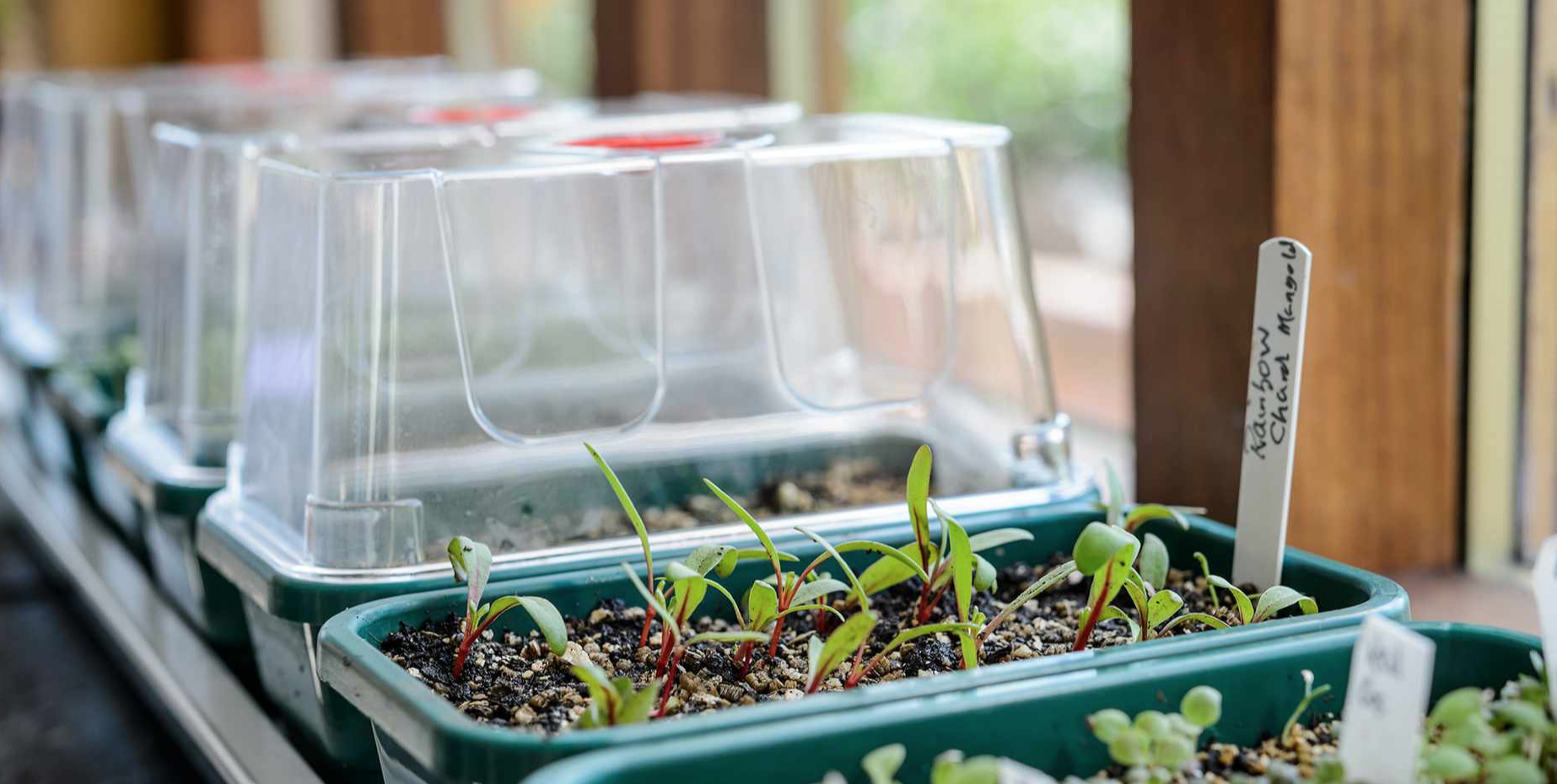
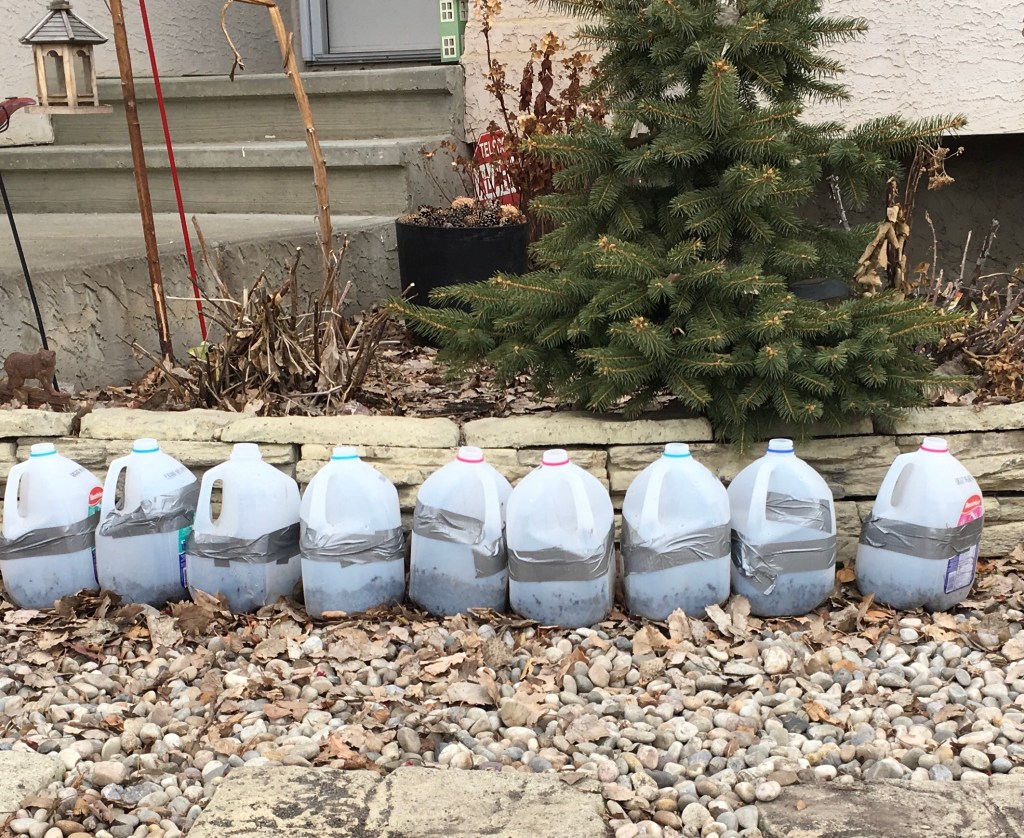





























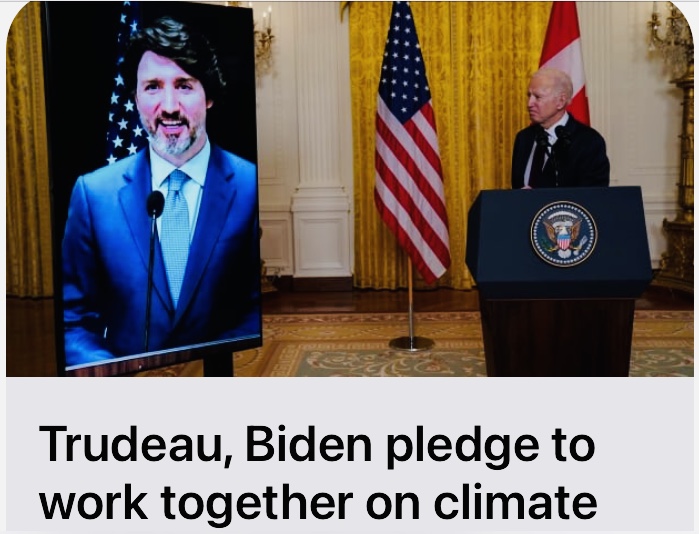


















 FRIENDS4TREES4LIFE