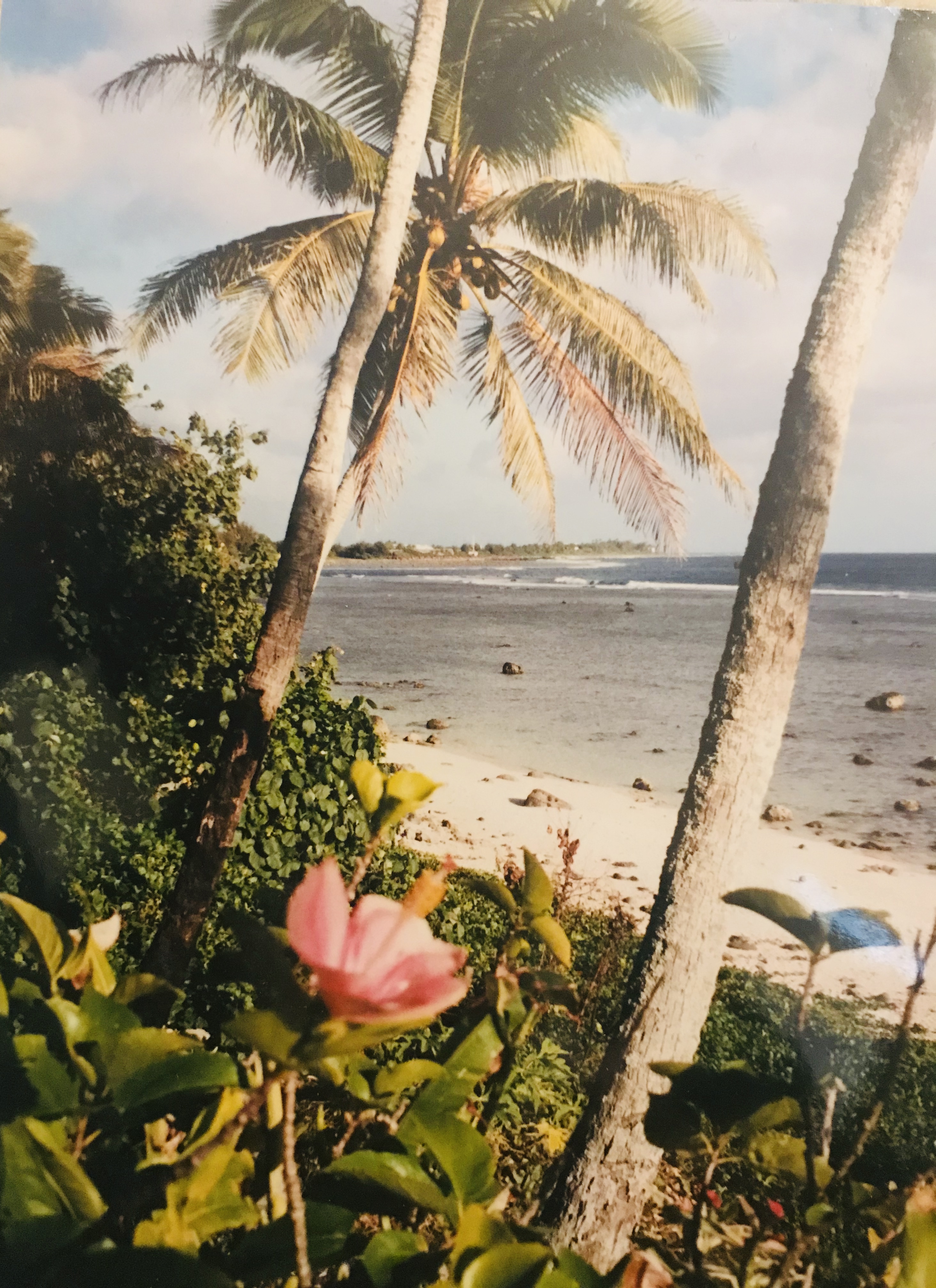
Oceans Need Kindness

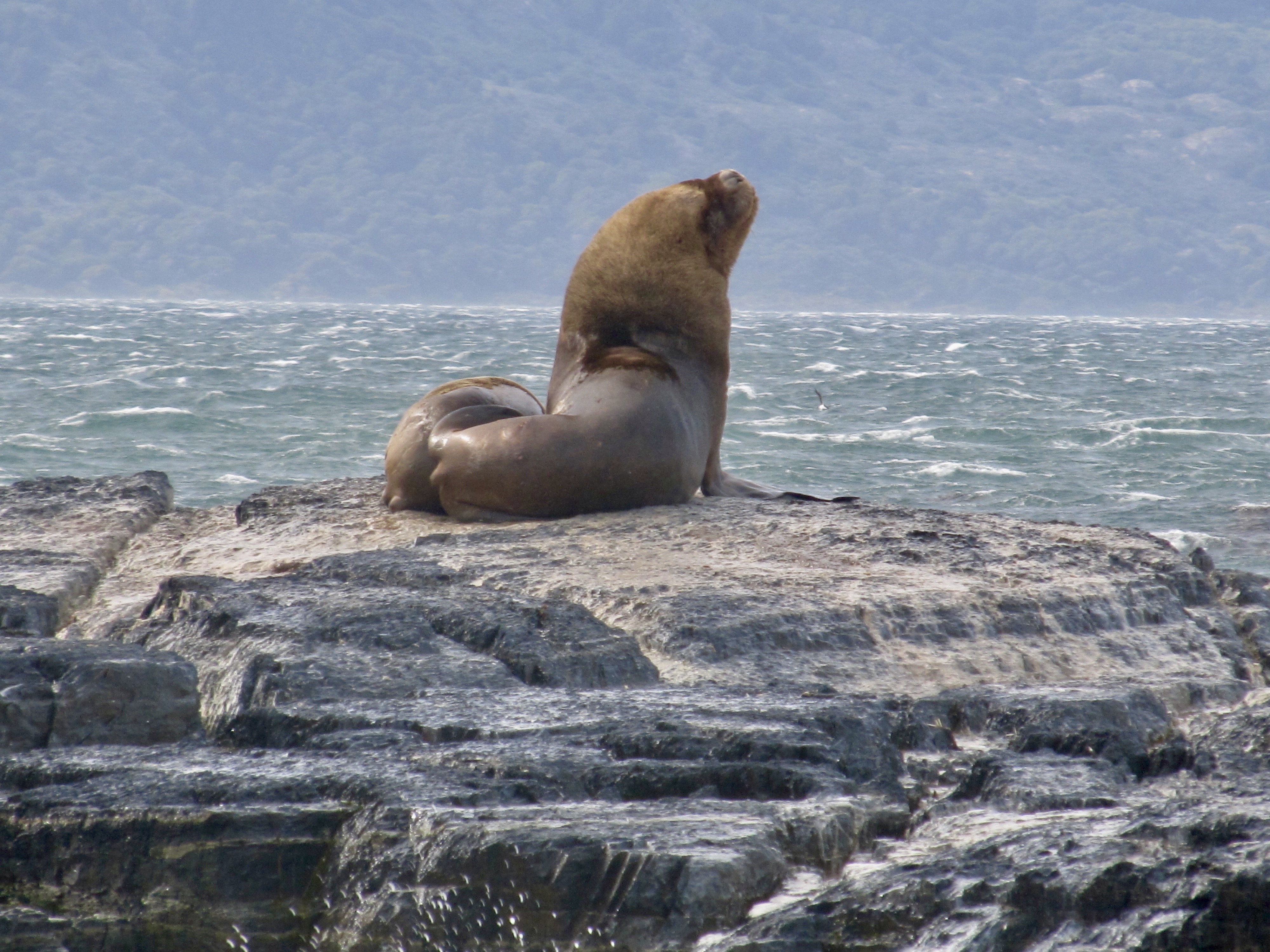
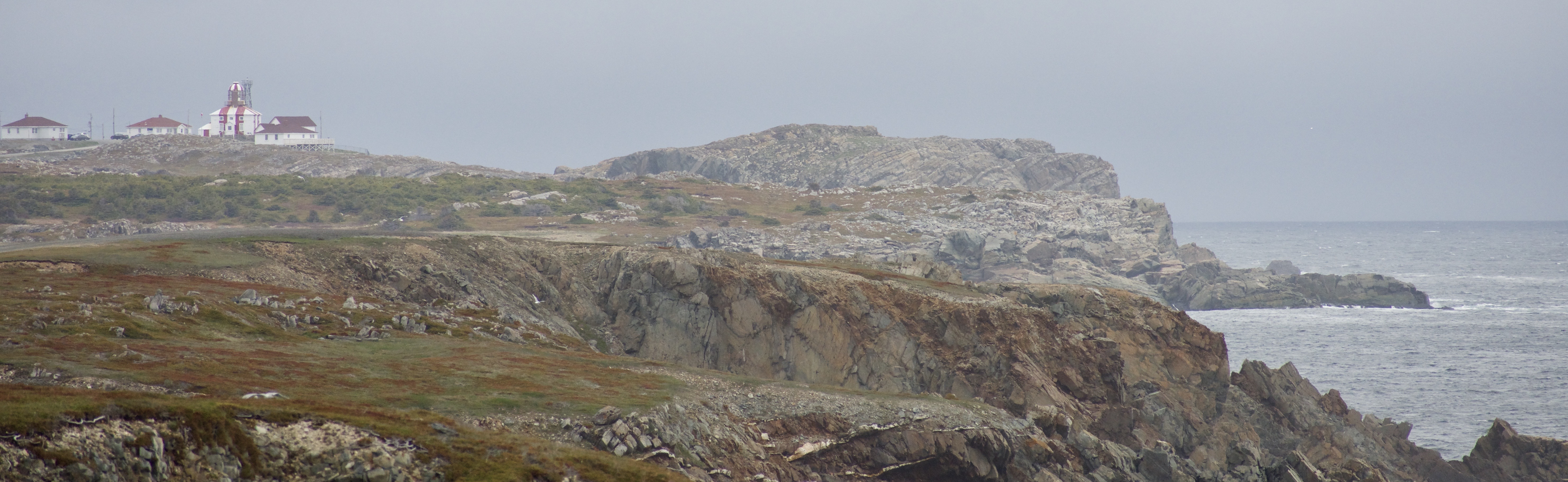
Ushuaia Argentina, Long Beach BC, Newfoundland, Costa Rica, Cook Islands

There is no denying the beauty, wonder, power, and mystery of the oceans on planet Earth. Living in landlocked provinces, we are always in awe when we have a chance to visit the ocean to feel the spray and put our toes into the cool water, listen to the rhythm of the waves and smell the salt water. We all appreciate the beauty of the oceans, and their calming aura, but as humans, over the years, unfortunately, we have not been kind to our five oceans.

“For an amazing ecosystem that covers 70 percent of the planet, oceans get no respect”, according to Jessica Pink, who was an editorial intern for Conservation International. “All they’ve done is feed us, provide most of the oxygen we breathe, and protect us from ourselves: Were it not for the oceans, climate change would have already made Earth uninhabitable”.

“How? The oceans have gamely absorbed more than 90 percent of the warming created by humans since the 1970s, a 2016 report found. Had that heat gone into the atmosphere, global average temperatures would have jumped by almost 56 degrees Celsius (100 degrees Fahrenheit). But as vast as the seas are, there is a limit to how much they can absorb, and they are beginning to show it.” 
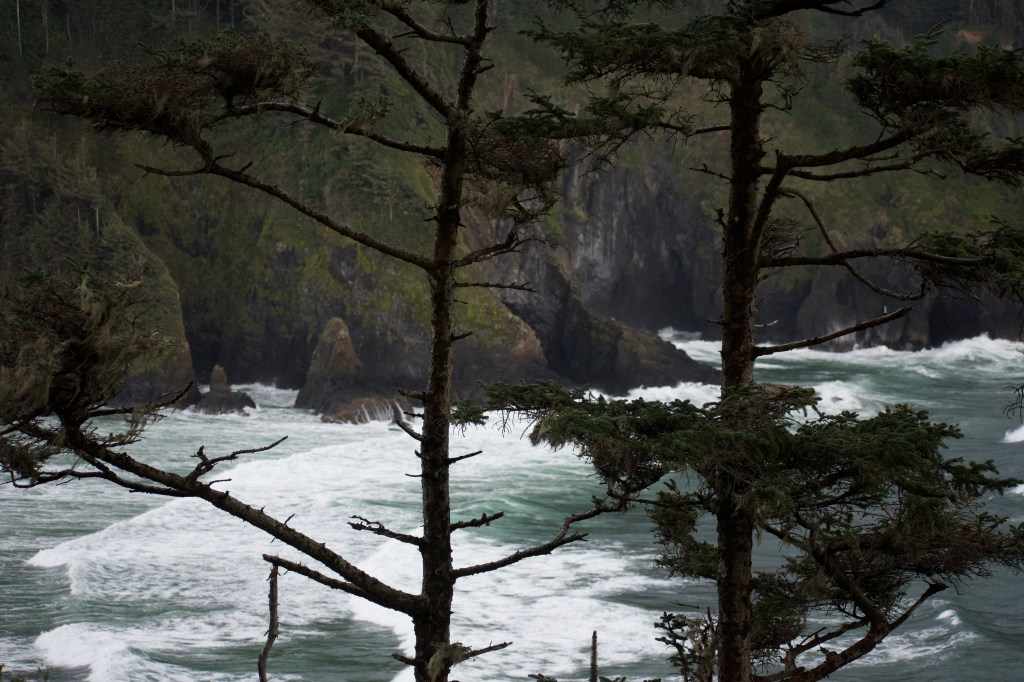
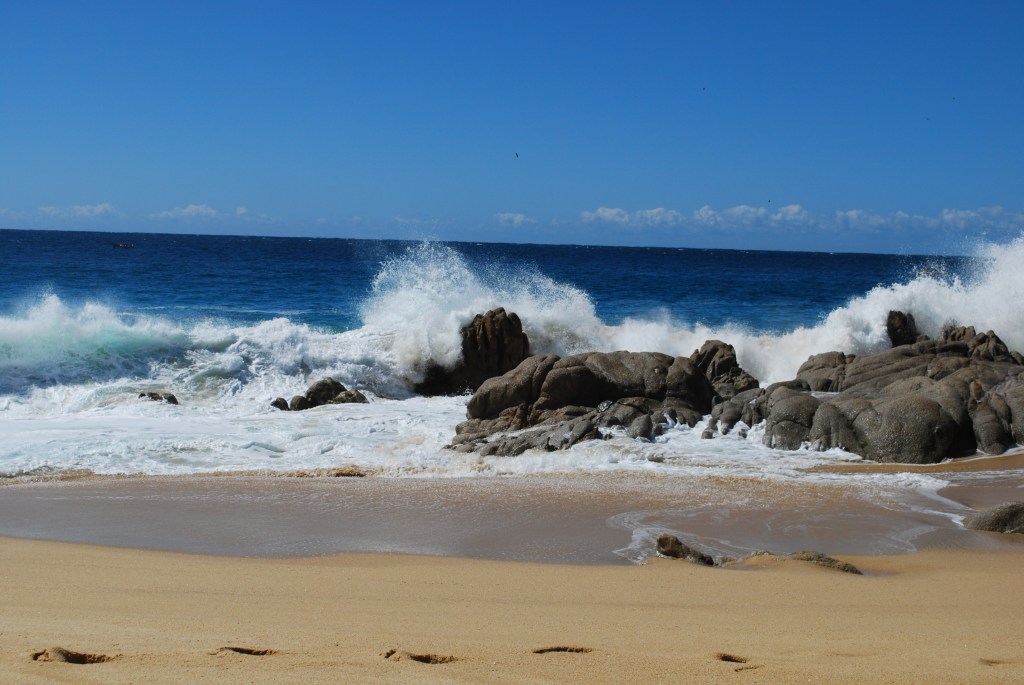
Oregon Coast

Human’s have affected the ocean through pollution such as plastics, over fishing, and destroying habitats such as removing mangrove forests, but most notably we have harmed the ocean as a result of reliance on fossil fuels causing climate change. Here are the 5 main ways that climate change is affecting the ocean:

Higher temperatures are bad for fish

“Persistently rising temperatures are having a cavalcade of effects on marine life. Consider:

  • Warmer waters cause coral bleaching, which in turn impacts of coral reef systems that are home to most of the ocean’s biodiversity — and provide crucial sources of food for people.
  • Warmer waters threaten to cause mass migration of marine species in search of the right conditions for feeding and spawning.
  • Change in water temperatures can directly affect the development and growth of most fish and cephalopods (such as octopus and squid).

For the 3 billion people worldwide who rely on fish as their chief source of protein, the prospect of fewer and smaller fish in the sea is bad news.”

Polar ice is melting

“In what has become a dismal annual ritual, wintertime Arctic sea ice continues to dip to new lows as the oceans warm. Meanwhile, Antarctica is shrinking from underneath, as submerged ice is rapidly melting, according to recent studies.”

“The effects of this warming on iconic species such as polar bears are well documented. Under the surface, though, the problem is no less urgent. Consider:

  • The production of algae — the foundation of the Arctic food web — depends on the presence of sea ice. As sea ice diminishes, algae diminishes, which has ripple effects on species from Arctic cod to seals, whales and bears.
  • Diminished sea ice results in the loss of vital habitat for seals, walruses, penguins, whales and other megafauna.
  • Sea ice is a critical habitat for Antarctic krill, the food source for many seabirds and mammals in the Southern Ocean. In recent years, as sea ice has diminished, Antarctic krill populations have declined, resulting in declines in the species dependent on the krill.
Toronto Zoo

What does this mean for us? Impacts to the Arctic cod fishery is having cascading effects, culminating in human-wildlife conflict, for one. A dramatic decrease in sea ice — and seafood — pushes polar bears toward coastal communities and hunting camps to find food, a nuisance and danger to people living there.”

Rising sea levels represent a slow, seemingly unstoppable threat

“Climate change poses a dual threat for sea levels.”

“For one, when land-based polar ice melts, it finds its way to the sea. (Ice that forms in polar seas, on the other hand, doesn’t affect sea levels when it melts.) Second, when water warms, it expands to take up more space — a major yet unheralded cause of sea-level rise.”

“With sea-level rise accelerating at a rate of about one eighth of an inch per year, the effects on humanity are plain:
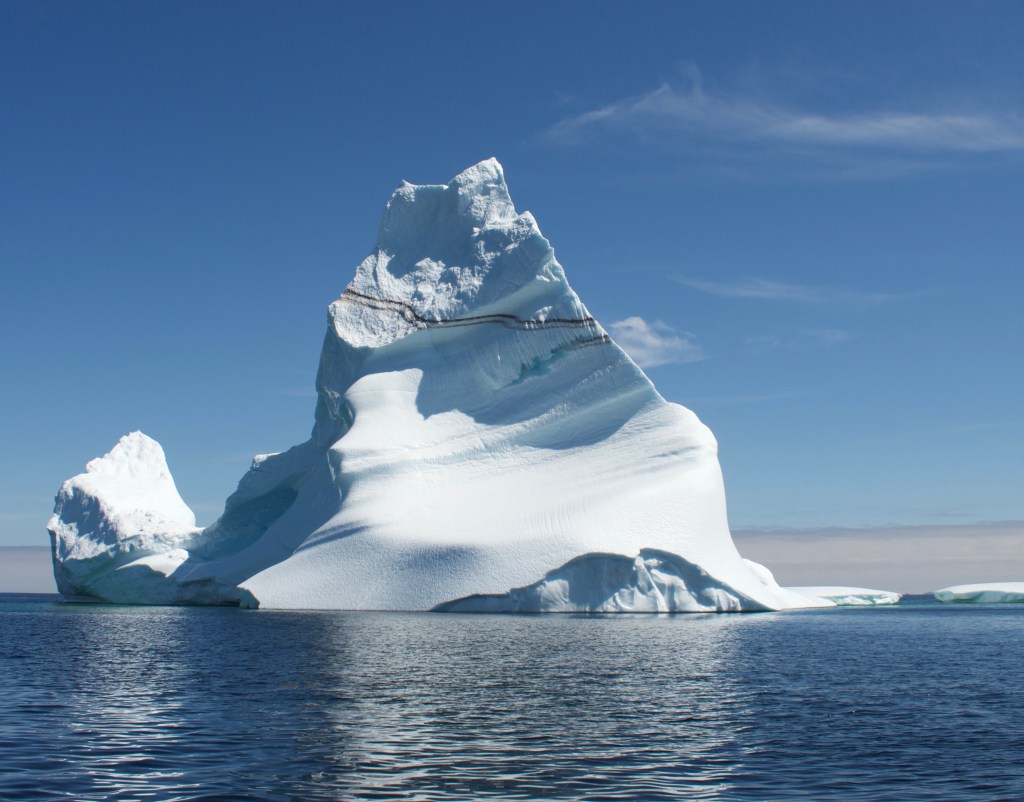
Newfoundland Iceberg from Greenland-beautiful but a sad loss to the polar ice cap.
  • Though only 2 percent of the world’s land lies at or below 10 meters (32 feet) above sea level, these areas contain 10 percent of the world’s human population, all directly threatened by sea-level rise.
  • Small island nations such as those in the Pacific Ocean stand to be wiped off the map. The people of Kiribati, for example, are among the world’s first refugees of sea-level rise, and two of the nation’s islands have all but disappeared into the ocean.”

“The effects of sea-level rise on wildlife is less explored but no less important:

  • The survival of coral reefs, mangroves, sea grasses and other critical habitat-forming species hinges on their ability to move into shallower waters. Slow-growing species are most unlikely to be able to keep pace with the rising sea level.
  • Critical coastal habitats — for instance, sea turtle nesting beaches -are lost as sea levels rise. Natural and man-made barriers such as cliffs, sea walls, and coastal developments stand in the way of migrating further inland.”

Warming oceans alter currents

“Climate change impacts ocean temperatures as well as wind patterns — taken together, these can alter oceanic currents. In the Caribbean Sea this year alone, there have been over 25 hurricanes, a record number, with unmeasurable amount of damage to people living in their path.”

“How does this affect wildlife? As mentioned earlier, many marine species’ migratory patterns can change as the currents they follow are altered. And many species that depend on ocean currents for reproduction and nutrients will be affected. For example, many reef-building coral and reef fish species rely on dispersal of their larvae by currents.”
“The impacts of changes in ocean currents on humanity could be severe, as currents play a major role in maintaining Earth’s climate. For example, Europe’s relatively mild climate is maintained in part by the large Atlantic current called the Gulf Stream, which is experiencing an “unprecedented slowdown.” Changing these currents will have major implications for the climate across the globe, including changes in rainfall — with more rain in some areas and much less in others — and to air temperatures. These changes have drastic implications for countless species, including humans.”

Climate change is affecting the chemistry of seawater
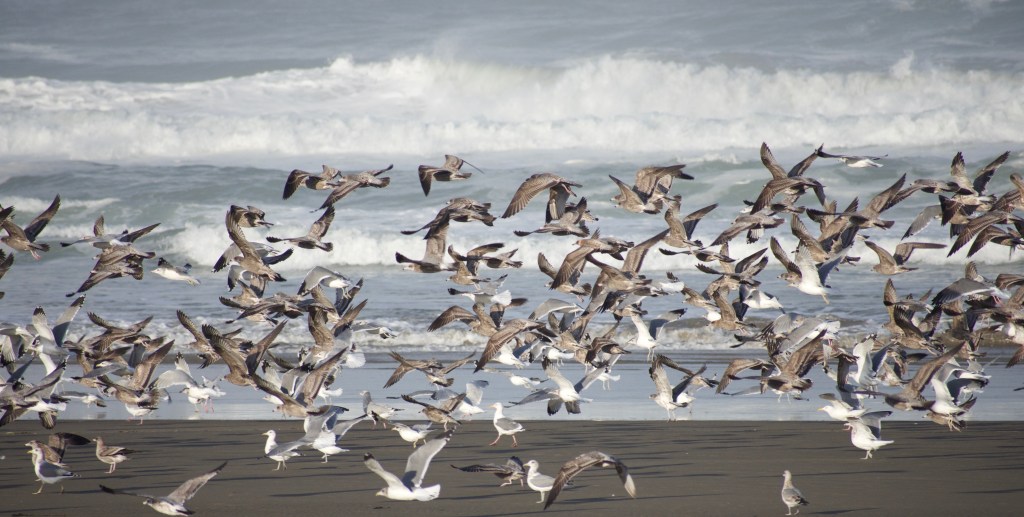
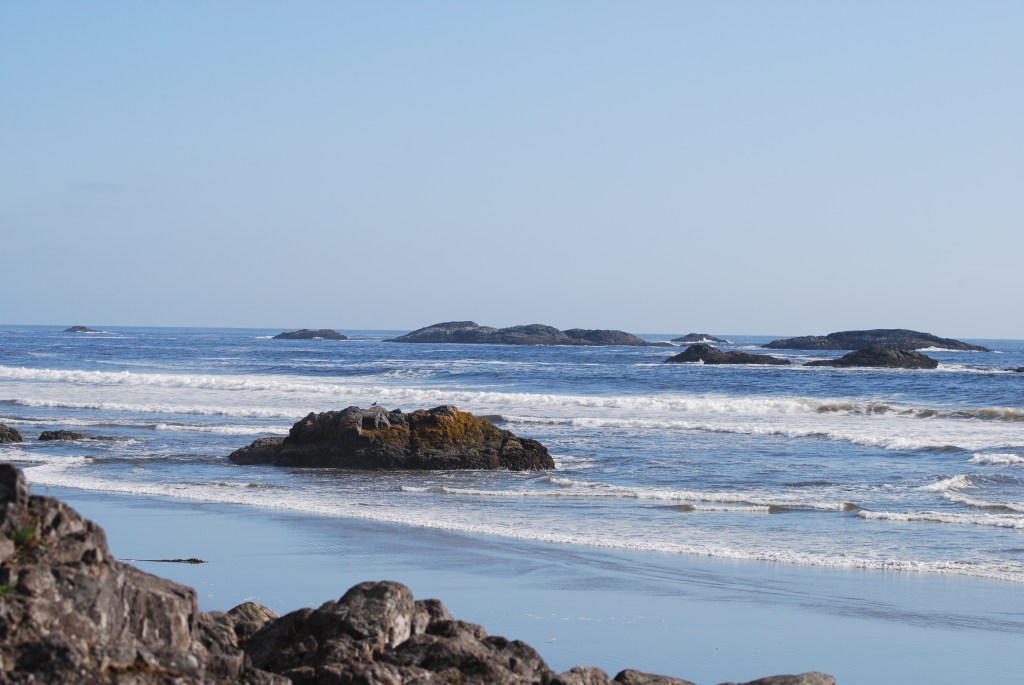
Oregon Coast

“The same burning of fossil fuels that increases greenhouse gas levels in the atmosphere, is also altering the chemical composition of seawater, making it more acidic. The ocean absorbs 30 percent of the carbon dioxide in the atmosphere; when that carbon dissolves into the water, it forms carbonic acid.”

“How does this affect marine life? A lot. Acidification directly affects ocean life that build shells of calcium carbonate such as corals, scallops, lobsters and crabs, and some microscopic plankton that are a foundation of the food web throughout the ocean. These shell-forming organisms provide critical habitats and food sources for other organisms. Increased acidification can also limit the ability of certain fish to detect predators, disrupting the food chain.”

“The disruption and destruction of coral reefs and shellfish will have profound effects on humanity, chiefly in the form of less food for people who rely on the ocean for it.”

rb.gy/ccuukl https://www.conservation.org/blog/5-ways-that-climate-change-affects-the-ocean?
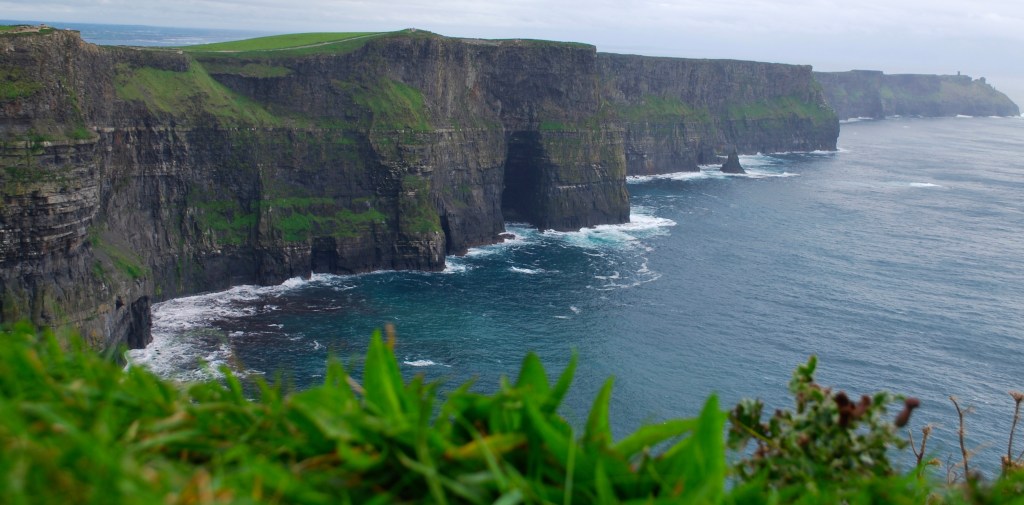
Cliffs of Mohr, Ireland

Actions We Take for our Oceans

Reducing Carbon Emissions is the Most Meaningful Thing We Can Do

Meeting the targets of the 2016 Paris Agreement and preventing the warming to the planet by more than 1.5 degrees will require action at international, national, local, community and personal levels around the world but simply is the most meaningful thing we can do for our oceans.

GOOD NEWS: A recent article in CBC What on Earth October 29, 2020 states: “Reducing carbon emissions is key to fighting climate change, and in recent years, countries have been taking steps to lessen their greenhouse gases (with varying degrees of sincerity and success). The COVID-19 pandemic, however, appears to have hastened the trend. By forcing the world into a collective quarantine (more or less), some have estimated the pandemic could cut this year’s projected global emissions by seven per cent, including a whopping 40 percent in ground transportation (largely the result of work-from-home requirements). As a result of a significant drop in fossil fuel demand, particularly coal, Bloomberg New Energy Finance reckons that we may have reached peak emissions in 2019. If this proves to be true, it doesn’t mean that the planet won’t continue to warm in the coming years. But it gives environmentalists and people in the green energy sector hope that the transition to a low-carbon economy is well underway.”

Blue Carbon Offset Calculator

“ “Blue Carbon’ is the carbon dioxide captured by the world’s ocean and coastal ecosystems. This carbon is stored in the form of biomass and sediments from mangroves, tidal marshes, and seagrass meadows. Like trees on the land, blue carbon may provide a method for the long-term sequestration and storage of carbon.”

The Ocean Foundation has created the “SeaGrass Grow Carbon Calculator” which helps an individual or organization calculate its annual CO2 emissions to, in turn, determine the amount of blue carbon necessary to offset them (acres of seagrass to be restored or the equivalent). The revenue from the blue carbon credit mechanism can be used to fund restoration efforts, which in turn generate more credits. Such programs allow for two wins: creation of a quantifiable cost to global systems of CO2-emitting activities and, second, restoration of seagrass meadows that form a critical component of coastal ecosystems and are in sore need of recovery.”

Here is the link to the SeaGrass Grow Carbon Calculator: https://oceanfdn.org/calculator/

Eat Sustainable Seafood
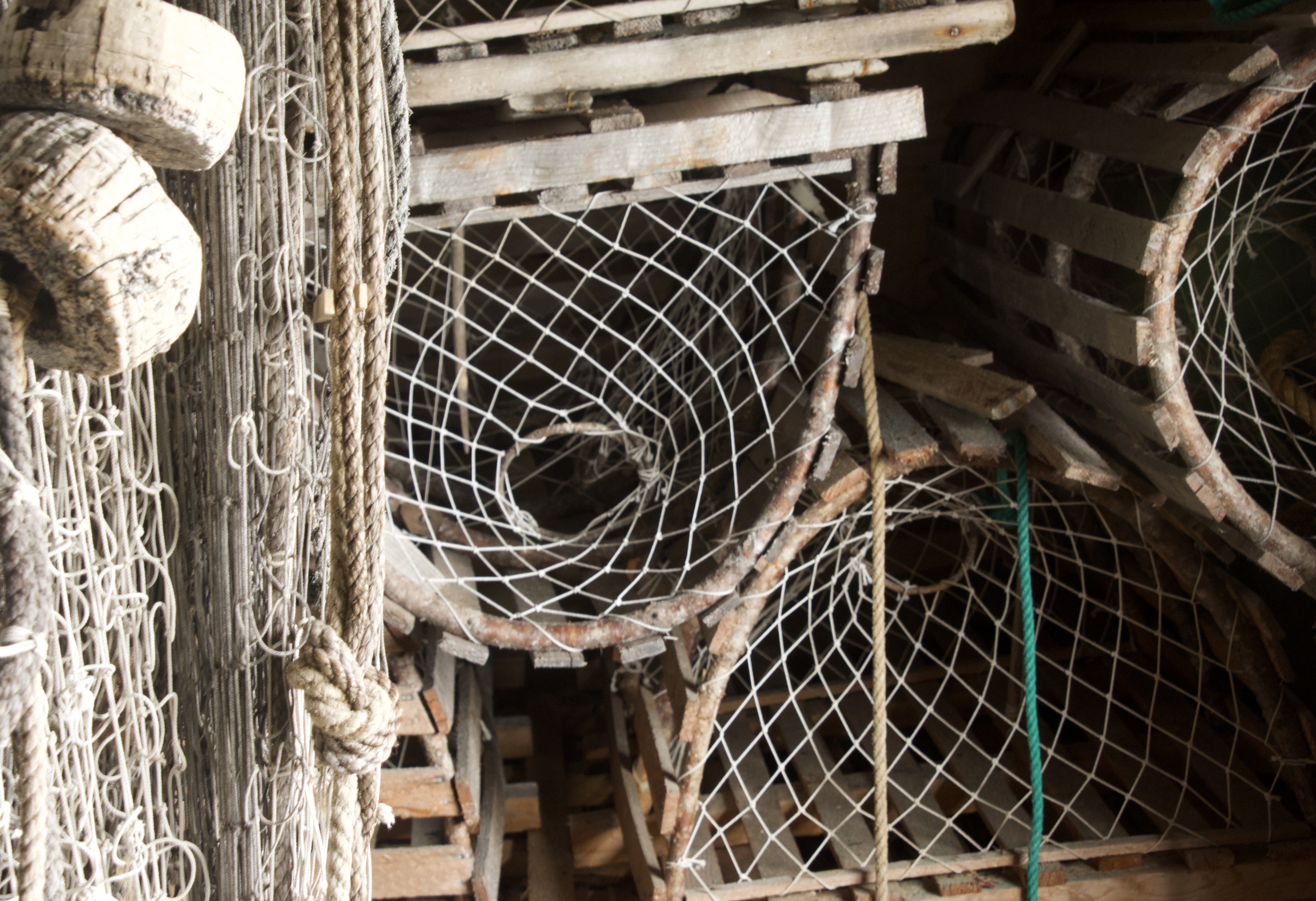
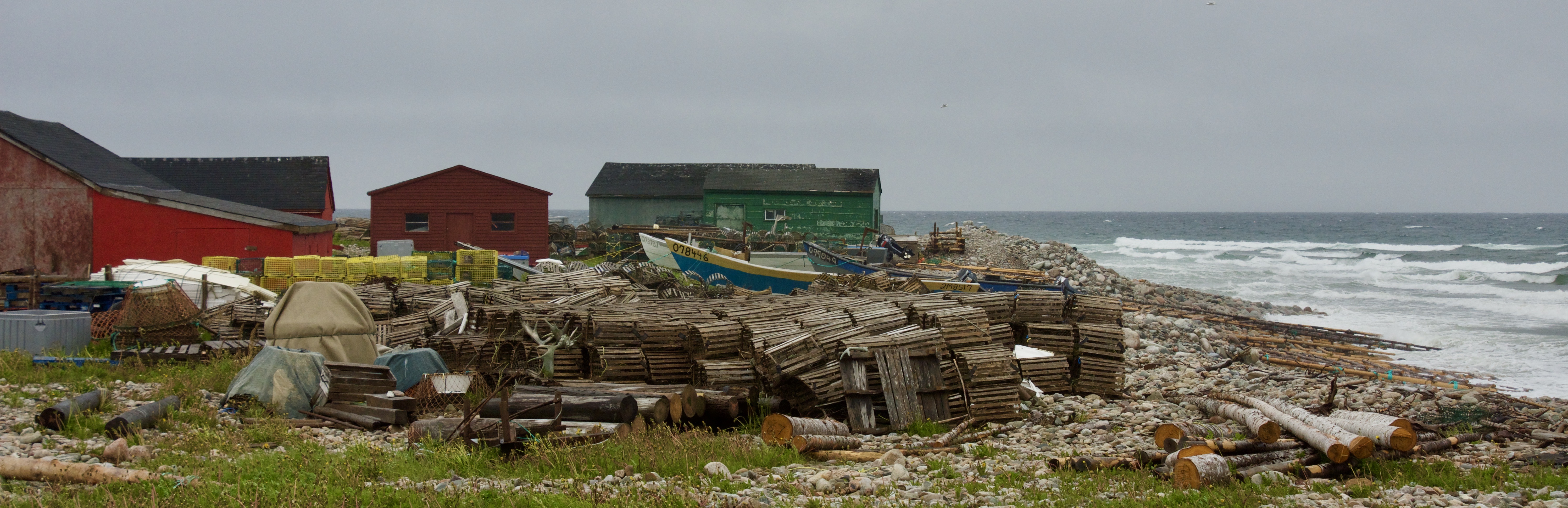
Images from Newfoundland

“We can choose to eat sustainable seafood and help protect the ocean food web. The way some seafood products are caught or farmed can harm the ocean — both wildlife and the ecosystems they call home. In Canada, SeaChoice is the organization that monitors sustainability and labeling of sustainability of the fish and seafood for sale. This organization is made up of 3 groups: The David Suzuki Foundation, The Ecology Action Centre and Living Oceans Society. SeaChoice found just 11 percent of seafood available in Canada in 2016 was rated as a “best choice. They are calling on the federal government to require far more detailed information and third-party verification to justify the use of “sustainable” or “responsible” in seafood labelling. SeaChoice wants labelling like those in the European Union which states: scientific name, where it was caught or farmed, the production method and gear type or farming method. When you buy fish at your local store, ask where it is from and how it is caught.”
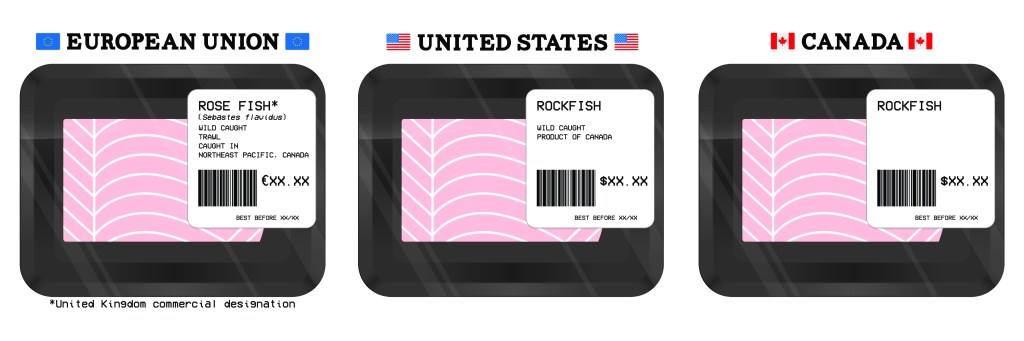
“There is progress being make in the selling of sustainable products in Canada as a result of demands being put on the retailers. Unfortunately some sustainability labelling cannot be verified, especially as it applies to canned tuna.”

https://www.cbc.ca/news/canada/nova-scotia/canadian-seafood-sustainability-labels-trust-1.5723510

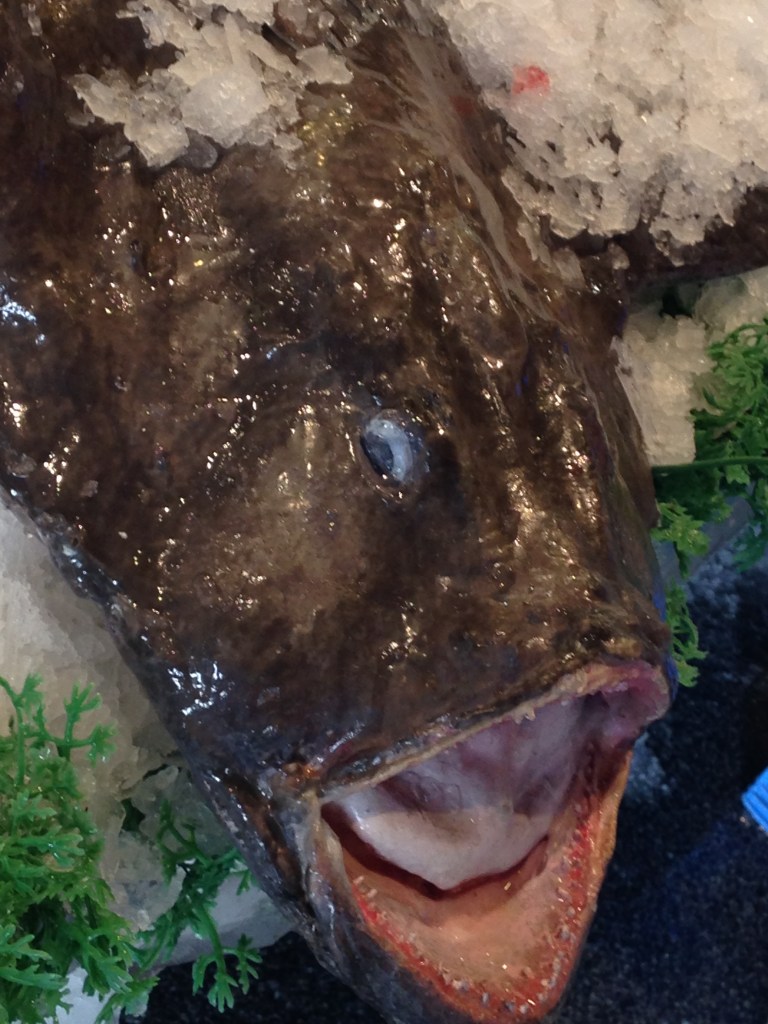
Shrimp Shopping

The good news is that all the products in Canada with eco-certification were proven sustainably harvested. So, note to self, look for the certification. On a package of frozen shrimp at home I looked and found the labels: Ocean Friendly/Sustainability/ Seafood Forever Responsibly Sourced. It is really important to buy shrimp with a green label on the package as many shrimp are grown in areas of the world where mangrove trees have been cut down, and so the environmental impact of eating such shrimp is considered 10 times worse than eating beef!!!!! Uggg!!!! So much to know!!! And according to a Chatelaine article listed below, “Seafood export is a huge industry in southeast Asia, but human-rights problems are rampant, including chattel slavery (forced labour) and child labour. And because of Canada’s lax labelling, something may be labelled as “product of Canada” but that could just mean the last place of processing. There are a few sustainable Canadian shrimp farms out there, however, including Ontario’s Planet Shrimp and British Columbia’s Berezan Shrimp, which sell their products mostly at fishmongers and high-end grocers. And avoid the cheap shrimp rings!

Don’t Assume Wild is Superior to Farmed.

In Chatelaine “How To Shop For Fish And Seafood Without Wrecking The Planet-–(Buying fish can feel like an ethical land mine. Here’s what to look for at the grocery store.)” by Matthew HallidayUpdated August 1, 2019

“We need farmed seafood if we’re going to feed the planet,” says Langley, and properly farmed seafood is far better than unsustainably harvested wild food. Fish farming’s bad rap is due in large part to offshore, open-net pens, which allow waste, chemicals, pesticides and parasites like sea lice to become concentrated in one area, or enter the wild. They also create the potential for farmed fish to pass disease to wild populations nearby, or even escape.

In the past few years, technological advances have made land-based aquaculture—which eliminates the risk of escapes and interaction with wild populations—much more cost-effective. The most sustainable are recirculating systems, which filter and recirculate water in a tank, making them not only ocean-friendly, but far less water-intensive. Land-based aquaculture, as a rule, is a much better choice offshore farms. When in doubt, look for an ASC certification.

Tuna Choices

Greepeace Canada grades and ranks different brands of tuna based on whether they:

  • Have a sustainability policy.
  • Avoid using tuna from threatened stocks and those caught using “destructive” fishing methods.
  • Are able to trace the tuna they use to its source.
  • Promote marine reserves and domestic, coastal fisheries.
  • Use comprehensive and clear labelling.
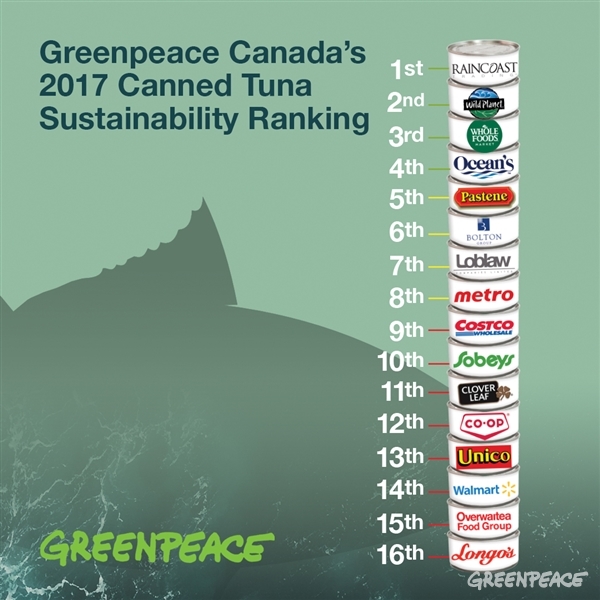
Top grade goes to two brands: Raincoast Trading and Wild Planet but Greenpeace also reports that more brands are becoming sustainable such as: Gold Seal, Ocean’s and Our Compliments from Safeway.”

https://www.cbc.ca/news/technology/many-canned-tuna-brands-getting-more-sustainable-1.1178922

Consider a Donation to Organizations such as The Ocean Foundation

While doing this research for this blog we were impressed to learn about this organization and all they do. We are not endorsing them, just letting you learn about the scope of all they do. “The Ocean Foundation (T.O.F.) and its current staff have been working on oceans and climate change issues since 1990; on Ocean Acidification since 2003; and on related “blue carbon” issues since 2007. As mentioned above, The Ocean Foundation hosts the Blue Resilience Initiative that seeks to advance policy that promotes the roles coastal and ocean ecosystems play as natural carbon sinks, i.e. blue carbon.”

“The Ocean Foundation staff serve on the advisory board for the Collaborative Institute for Oceans, Climate and Security, and The Ocean Foundation is a member of the Ocean and Climate Platform. Since 2014, T.O.F. has provided ongoing technical advice on the Global Environment Facility (GEF) International Waters focal area that enabled the GEF Blue Forests Project to provide the first global-scale assessment of the values associated with coastal carbon and ecosystem services. T.O.F. is currently leading a seagrass and mangrove restoration project at the Jobos Bay National Estuarine Research Reserve in close partnership with the Puerto Rico Department of Natural and Environmental Resources.” 
Reduce Additional Threats to the Ocean

Simultaneously, it is important to the health of the ocean—and us—that additional threats are avoided, and that our marine ecosystems are managed thoughtfully. Some examples of additional threats are: the garbage heap of plastics (as was blogged about last week), lost and discarded fishing nets that lethally snare fish, seabirds and marine mammals as they drift, or ships that spill oil and garbage, and the transporting of critters to alien habitats unprepared for their arrival, turning them into invasive species, and fertilizer runoff from farms that turn vast swaths of ocean into dead zones.

“It is also clear that by reducing the immediate stresses from excess human activities, we can increase the resilience of ocean species and ecosystems. In this way, we can invest in ocean health and its “immune system” by eliminating or reducing the myriad of smaller ills from which it suffers.

Support the Planting of Kelp, Seaweed, Coral, and Mangroves (just like we do with trees!!!)

Restoring abundance of ocean species—of mangroves, of seagrass meadows, of corals, of kelp forests, of fisheries, of all ocean life—will help the ocean continue to provide the services on which all life depends.”

Recently we saw a documentary showing environmentalists working to restore the Great Barrier Reef, by planting new coral, something we never imagined was possible. As well, the World Economic Forum is launching an aquaculture drive off the coast of B.C. where there is strong potential for the development of commercial shellfish and seaweed aquaculture that can help salmon farmers. (SeaWestNews).

https://www.nationalgeographic.com/environment/habitats/ocean/

Ocean and Climate Change

National Geographic Doc: THE LAST ICE
Also follow OCEAN WISE at Ocean.org. This Canadian Company’s mission is “to protect and restore the world’s oceans, and to inspire the global community to become Ocean Wise by increasing its understanding, wonder and appreciation for our oceans”

Let’s Say Goodbye to Plastics

Millions of tons of plastic trash litter our coastlines and ocean, from the surface to the deep sea. Our landfills are overflowing with plastic too. We are creating and using plastic at a much faster rate than we can sustainably manage it as waste.

Personal Commitment

This will be a new project on our house as we have a bit of extra time at home with COVID. We have found some ways to reduce plastic, such as with reusable grocery and vegetable bags, metal water bottles, box laundry detergent, reusable seals to avoid saran wrap, tetra pack juice and cardboard milk containers, but we still get some of our fruit in plastic, like berries, and some drinks, salad dressings, margarine and yogurt in plastic. Plastic is everywhere! We thought as a family we could just track the amount and type of plastics we bring into the house and see if we can find ways to decrease them over the next several months. It is a regular conversation we are having. Again it means not always purchasing the cheapest or most convenient item. And in this regard, we plan to make a field trip to Bulk Barn and try to set some new habits. We will report back!! Care to join us? We hope you will share your plastic reducing ideas with us in the comments.

Canada to ban single-use plastics such as bags, straws by end of 2021

“According to Ottawa, Canadians throw away three million tonnes of plastic waste each year — including 15 billion bags annually, and 57 million straws daily.”

“The Canadian Government, in collaboration with the provincial governments has set a goal to ban plastics by 2030. Plastic is polluting our rivers, lakes, and oceans, harming wildlife, and generating microplastics in the water we use and drink. Every year, Canadians throw away 3 million tonnes of plastic waste, only 9% of which is recycled, meaning the vast majority of plastics end up in landfills and about 29,000 tonnes finds its way into our natural environment.In this effort they have set a ban on the following single use plastics that are often not recycled and have readily available alternatives: plastic check out bags, straws, stir sticks, six-pack rings, cutlery and food ware made from hard to recycle plastics. Comments back to the government are welcome until December 9, 2020. (Maybe you can write in and let your feelings be known. I want them to ban plastic that raspberries, blueberries and strawberries come in so I do not have to feel bad eating these healthy fruits.) As well the government is emphasizing new and innovative solutions to prevent, capture and remove plastic pollution from the environment. This can reduce 1.8 million tonnes of greenhouse gas emissions per year and create approximately 42,000 jobs across the country.” https://bit.ly/3jZeBZG

The Ocean Foundation Redesigning Plastics Initiative

“The Ocean Foundation will pursue science-informed national legislation in plastic-producing countries to require reengineering of the chemistry of plastic itself, redesigning of plastic products, and limiting what is made from plastic. The Initiative will move this industry from Complex, Customized and Contaminating to make plastic Safe, Simple and Standardized.” https://bit.ly/32gmdRu

4oceans: Pull a Pound of Trash and Plastics From the Ocean and Coastlines by Buying a Bracelet

Bluefin tuna are top ocean predators so they are uniquely vulnerable to both plastic and chemical pollution, but are a prize catch for fishermen. When you purchase a Bluefin Tuna Bracelet, for about $20-$30 you funds got to pull a pound of trash from the ocean and help raise awareness about the ocean plastic crisis. These bracelets are made with recycled materials recovered by 4oceans employees, and the cord is made with recycled PET plastic bottles, while the beads are made with recycled glass bottles. They are hand assembled by Balinese artisans and adjust to fit from 2″ to 5″ diameter, are unisex in design, and 100% waterproof. They sell other items as well. Check out this sale!!

https://www.4ocean.com

Clean Up of the Great Pacific Garbage Patch

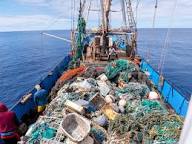
In researching on Wikipedia about the Great Pacific Garbage Patch, we were encouraged that in the summer of 2019 and 2020 Ocean Voyages Institute conducted a cleanup of 425,000 pounds of polymer nets and consumer plastic trash using customized GPS satellite trackers.

“The clean-up mission of the Great Pacific Garbage Patch (located between California and Hawaii) this year began on 4 May at the Hawaiian port of Hilo, following a three-week quarantine period for all crew members, and ended in Honolulu 48 days later. Sailing on Ocean Voyages Institute’s marine plastic recovery vessel, the crew successfully removed 103 tons (206,000 lbs) of fishing nets and plastic from the area known as the Great Pacific Garbage Patch, completing the “largest open ocean clean-up in history.”

“In Honolulu, Ocean Voyages Institute crew returned with a cargo hold full of ghost fishing nets and toxic plastic debris for the second time this summer. While docked in Honolulu, the ship’s crew will sort the debris into various types of plastics for upcycling and recycling with help from local volunteer groups.”

“Founder Crowley says “Now I feel like we are on a roll, and the support from around the world has been so encouraging, I know we will reach our million pound goal and keep going cleaning our oceans and encouraging major changes in the use of plastics.””

“Ocean Voyages Institute has received numerous awards, including United Nations (UNEP)’s “Climate Hero Award,” and Google Inc.’s “Earth Hero Award.” https://bit.ly/350WDS7

This might be a great non-profit organization to consider supporting.

We will be following up on this topic with a blog on Oceans, and how to show kindness to our Oceans. Thanks for being here and we hope you will continue to read along.

One Year Reflections on Friends4Trees4Life

One Year Ago

Global warming and climate change are such enormous and complex issues. What action could one individual on their own possibly take that would actually make a difference and be part of solving the existential threat that is facing all of humankind?  How does our generation show younger generations that we care about this planet that we, and they, call home? How do we promote optimism about the future?

One year ago, we shared a conversation about these questions. We had a particular young adult in mind and were troubled by knowing that the overwhelming sense of helplessness about climate change and hopelessness about the future that he was experiencing, were contributing factors in his state of depression. We wondered what we might do to demonstrate that the actions of everyday citizens do matter and make a difference in a very real, tangible way. And, that there were reasons for optimism about the future of Planet Earth for generations to come.

So first we set about to become better informed citizens ourselves. We learned much in those early days. The research of Thomas Crowthers brought clarity to our sense of purposeful action. We would put our energies toward mounting a tree-planting campaign, and share what we were learning.

We wrote up a newsletter about Why Trees Matter, and emailed it out to our friends and relatives. At the beginning, we were thinking more in terms of event planning, something with a beginning and an end. It soon became clear, however, that what we really needed was some kind of ongoing online platform to enable us to engage with others and update what we were learning over time. We were mindful that we did not want to bombard people with a steady stream of e-mails! Our approach was and continues to be, invitational and respectful (we hope), sharing what we are learning about ways to make an impact on climate change, and leaving it to readers to decide what makes sense in their own lives.

And that is how our “idea and goal of taking concrete action” evolved rapidly from a campaign, to a newsletter, to starting our own Blog. About which we knew virtually nothing last year!

The Steep Learning Curve in Creating a Blog and Becoming Bloggers

Our experience with blogs at the time was pretty limited; neither of us really followed any bloggers regularly per se. So we just jumped into blogging with both feet, literally acting on the advice we read not to overthink or over plan and just learn by doing! It was a steep learning curve, but since Lucy joined Catherine in the world of retirement we figured we had time on our side. We decided to use wordpress.com because we knew a few people happily using this host, and now we too love this host. We decided to pay for a “personal package” to avoid having ads run through our blog. Lucy thought, “How hard can this be?” Very naive.

We chose the simplest format, since we are simply blogging and not selling anything. We tossed names around and bit by bit we created Friends4Trees4Life, since we are life long friends and we are blogging about trees. We thank Brenna, Lucy’s daughter, who created our logo. We thank Edmund, Catherine’s brother, for initial support with technology. With much trial and error Lucy created a home page. She even figured out how to get people to follow us and/or get our blog sent to their email. It was really hard to figure out the links and buttons that allow people to navigate the site, and the problem is, you cannot really know until you post the blog how and if the buttons work, but you do not want to post it until you have it right. So we set it up as best we could and populated a number of the sections, loaded up a post, and did a trial with family and that helped us work out a few kinks. Some things we still find a mystery, and sometimes we experience “gremlins” in our blog, but  there is always someone to chat with to solve issues. For Catherine, diving into the world of social media and overcoming reservations around being a private person were HUGE, so we chose to start by inviting friends and relatives to follow us and any new followers are finding us on their own. Lucy has since linked Friends4Trees4Life to her JustLucyJewelry Facebook page. There is no denying we are proud we put this together independently!

Catherine started off as the writer of the blog, and Lucy worked more on the  technical side, adding photos, and making the blog look good. Then we got into sharing blogs, and writing different sections. As you can imagine, that just made our posts longer. Sometimes life gets busy all at once, and it can be hard to write each and every week. So lately we have evolved into a system of alternating weeks, and choosing our own topics to write about. We are always sharing ideas and newsy topics with each other, so we text all the time. Bonus!!!

Recently we were wondering if we might run out of topics, but just as we said that, the world started to take more action on climate change, and the topics started finding us. We have a list of ideas, but our writing is more organic, choosing topics for which we feel passionate about and always keeping a positive and hopeful mindset, even while tackling some very serious topics. We try to emphasize research over personal opinion, although this is not meant to be an academic project, and we do have our own views on issues, to be sure. We certainly enjoy having fun and the lighter side of exploring topics too!

Catherine learned to create Bitlys so our sources are not so cumbersome, and we worked through issues of properly crediting sources, and crediting photos, and knowing where to add tags. We did learn the hard way that if you write the blog in the blog site, you are at great danger of losing it, so best to write it and then copy and upload it. Also, photos have to be entered separately for best results. The Blog looks best on devices with larger screens (e.g., iPads and laptops), although still works for viewing on smartphones, with more limited functionality. The site administrator functions let us control which comments we post, to avoid spammers. Happily, we can report that we have had very few spam comments. These details may be too much and a bit boring, but the bottom line is, in case you are thinking of blogging, if we can do it, you can do it!

We read that the best way to get followers is to blog consistently, so at the outset we chose to post every Thursday. This “writing to deadline” each week has had an unanticipated grounding sense of purpose and pride of accomplishment for us.  It has been especially beneficial during the COVID pandemic lockdown(s) for countering feelings of being un-moored, or bored. And 52 blogs later, we have a year under our belt!!!!

Learning, By The Numbers

As we reflect on the past year, some astonishing tree and environment numbers that we have learned include:

  • I tree = 40lbs. of carbon absorbed per year
  • 1.5C = Global Ceiling for Overall Temperature Rise to Avoid Climate Change Catastrophe
  • 5 = Even 5 minutes around trees may improve health
  • 33% = Carbon Emissions Via Food Wastes that Consumers Can Alter
  • 40% = City of Toronto’s Plan for Tree Canopy Coverage
  • 30 countries = Countries to-date Committing to be Carbon Net Neutral (including Canada and China)
  • 45% = Extent of Global Carbon Emissions Now the Focus by the above 30 countries
  • 50 Years Young = Earth Day Anniversary Held on April 22, 2020
  • 60= Electric Vehicle Fleet Size for the Toronto Transit Commission in 2020
  • 67% = Carbon Emissions via Food Waste that Food Production Can Alter
  • 100% = TTC’s Target for Electric Vehicles by 2040
  • $1700 = Average Annual Savings Potential for Canadian Households via Food Waste Reduction
  • 1000 to 4000 years old = age of oldest living trees in Canada’s Rain Forest
  • 2 million trees = Highway of Heroes tree tribute target (one for every Canadian fallen soldier)
  • 1.7 billion trees = Trees planted by Ethiopa since 2006 
  • 2 billion trees = Canada’s target to plant by 2030
  • 2.8  billion trees = Trees planted to-date by top tree planting nation, China
  • 7.8 billion trees = Earth Day 2020 tree planting target (one tree for each human alive)
  • 3 trillion trees = total number of trees on Earth
  • 1 trillion trees = Earth’s capacity for more trees
  • One Trillion Trees = Global Tree Planting Campaign, started in 2006
  • Zero = Zero-emissions Target for Project Arrow’s Concept Car, entirely desigend and made in Canada
  • All = We All Make a Difference on Climate Action, Each and Every Individual
  • Every = Every Action Counts, Small and Big

Wonder and AweWhy Trees Matter

Through learning and writing for Friends4Trees4Life, we are opening our eyes, minds and hearts in newfound respect and reverance for the healing power, magnificence and generosity of Nature, especially Trees.

We are learning that even five minutes around trees may improve health. Research shows the benefits for our immune systems of essential oils called phytoncides that  trees emit while doing their ‘tree thing’ and to protect themselves from harmful species.

Since the 1980s, Japanese government programs and the Japanese cultural practice of shinrin-yoku (“forest bathing”) have recognized the health benefits of simply being in the presence of trees, letting go of worries and distractions in the quietude of nature, taking time to relax and calm the nervous system. The benefits are available to us wherever we are, whether among trees in urban or rural settings alike.

Humans breathe and need the life-giving oxygen that trees produce through the process of photosynthesis, for our very survival.

Trees offer nourishment through the fruit and nuts they produce. Two-thirds of agricultural crops produced for human consumption depend on pollination by pollinators such as bees and butterflies while gathering nectar from tree, shrub and flower blossoms.

Below ground, networks of tree roots enrich the soil ecosystem, provide flood protection, and cycle nutrients from and back into rivers and streams, thereby feeding acquatic ecosystems too.

Biodiversity in forest trees acts as a fire retardant as slow burning trees such as aspen help to slow and sometimes contain the spread of wild fires.

Trees play a significant role in the complex array of solutions and behaviour shifts that are required by humans to reduce harmful greenhouse gas pollution to combat global warming and climate change.

In fact, the research that launched us into our blogging adventure makes the compelling case that planting trees is currently the fastest and most cost effective way to sequester carbon, and one of the most impactful actions any individual, organization and government can do to combat climate change.

This tree fact has inspired individual concerned citizens, entrepreneurs and governments alike to act.

We admire and are in awe of, the singular pursuit of Jadev Payeng, who since 1979 has single-handedly planted one tree sapling at a time over a span of many years, resulting in a new forest grove larger than Central Park that now serves as flood protection for his community on Majuli Island, India. His inspiring story is captured on this award-winning 7-minute YouTube video, called Forest Man.

We admire and are proud of the ingenuity of Canadian entrepreneurs Flash Forest https://flashforest.ca/. They too found the case of tree planting to combat climate change to be compelling. How to make labour-intensive tree planting faster, less arduous and more cost-effective? This kickstarter video clip shows their new tree-planting drone technology hard at work.

We, too, find the research evidence compelling and inspiring. In particular, we find cause for optimism in the research computations by Swiss scientist Thomas Crowthers and his colleagues, which answered the research questions, How many trees are there on Planet Earth? How many more trees could be planted on available land?

And, importantly, the study computed what would be the impact for global warming and climate change of planting trees on such a scale? In a nutshell, trees matter significantly. Humankind cannot realize the goal of holding global warming to a 1.5C temperature rise without trees.

Crowthers and his colleagues mapped tree density at a global scale for the first time, in their ground-breaking 2019 study. It calculated that the total number of trees on Earth is three trillion, with capacity for one trillion more trees to be planted on available land.

Tree planting alone won’t solve the climate crisis; dramatic changes in human behaviour to drastically reduce greenhouse gas emissions are key. Tree-planting will make a HUGE difference, however. The findings of Crowthers and his colleagues helps to quantify the potential positive impact that trees may have when part of a climate action plan. As a CBC article notes, “The study calculated that over the decades, those new trees could suck up nearly 750 billion tonnes of heat-trapping carbon dioxide from the atmosphere–about as much carbon pollution as humans have spewed in the past 25 years.” https://bit.ly/34lo2em. We find this compelling, awe-inspiring and cause for hope. And tree-planting action!

We also find inspiration in the more “garden-variety”, hands-on (literally) encounters with Nature, in our own backyards. To our surprise and delight, we both became avid, first time vegetable gardeners this spring and summer. We were supported and encouraged in our fledgling efforts by our more experienced friends and family members. Several extended this generosity of spirit to include taking the time and effort to be guest bloggers, sharing their knowledge, experience, passions, tips, and, harvest photos, online with Friends4Trees4Life. It has been energizing, fun and such an unexpected pleasure to belong to this wider community of hobby gardeners. Thank you!

Special shout out in appreciation to Catherine’s ‘squash on steroids,’ which brought such delight, amazement and joy all season, as it exuberantly grew and grew to inhabit the yard, and gave and gave non-stop of its bountiful produce, even sprouting more new blossoms optimistically right through to October harvest time. We admire and are uplifted by its spunk, generosity and will to thrive. A welcome distraction and good inspiration for these strange times.

Inspiration also came from learning about carbon calculators that can help each of us understand our own personal carbon footprint. After using the calculator, we were able to find ways to decrease our footprint. In our new year’s blogs we shared how we were able to set new goals for ourselves like using a clothes rack to dry clothes, or turning down the thermostat to 19 degrees, or buying more local food, or driving less, or starting a compost, or buying and planting trees to offset the carbon from flights. We look forward to reviewing our goals again in the new year.

Thanks to our Reader Terry for bringing the work and writing of Diana Beresford-Kroeger to our attention for our Blog. We are the richer for now learning about, and finding inspiration from, the unique life and life’s work of this Canadian treasure and world-recognized author, medical chemist and botanist.

The Blogs that Resonated Most with Our Readers and Ourselves

We did notice we got more feedback on certain blogs, so we feel they must have resonated with our Readers. Here they are: Tree Joys and Benefits, The Delicate Ecosystem of Jasper National Park, Vegetable Gardening 101 and Garden Therapy and Suggestions for Yard Trees.

If you would like to go back and read any of these blogs, go onto our site, and in the side bar look for “Quick Links”. Please continue to comment and offer suggestions on our blogs so we know what interests you. 

As well we were each passionate in our writing on certain topics. 

Lucy especially loved writing about:

  • New Year’s Resolutions and Carbon Calculators,
  • A Greener Canada,
  • The Wonders of the Amazon Rain Forest, and
  • The Delicate Ecosystem of Jasper National Par

Catherine especially loved writing about:

  • Innovations – Canadian Made,
  • Tree Joys and Benefits,
  • Food Waste and Climate Change,
  • Holiday Blog, and
  • Momentum is Building for Climate Action

Thank Yous And Gratitude

In a year like no other, we are incredibly grateful to each other to have shared in this learning journey and creative exploration together. We could not have anticipated how uplifting, joyful, rewarding and FUN it would be to nurture “baby blog” together, buoying our spirits in these challenging pandemic times with positive energy, the joy of learning, creating (52 blog posts!) and doing (tree planting) and discovering and sharing ever more reasons for optimism about human ingenuity, the healing power of Nature, and evidence of momentum finally building for climate action to assure the future of our beautiful home, Planet Earth, for generations to come.

We are both amazed to have become bloggers. Neither of us would be doing this if not for the other, and this experience is all the richer and better for being a shared enterprise. It is fun to make messes, solve problems and be serious and playful together, and our lifetime friendship is only deepening with every new laugh wrinkle we add while blogging “together,” from afar. We are both SO glad that our original idea to run one tree-planting event evolved into a year-long blogging adventure instead.

We are grateful for and humbled by the continued interest, engagement, and feedback we receive from you, our Readers. Many have provided topic and book suggestions, articles of interest, and requests that have helped shape our blog’s focus and design (e.g., Resource section with Qs and As, Carbon Calculators, and Quick Links to Old Posts). We hope each of you sees your contribution reflected in our posts.

As we write this section, we are starting to get a taste of what Acceptance speeches at Awards shows must feel like….Indeed, we feel grateful to our spouses for their encouragement and support, especially on those deadline days when “blogging rules!”.

It has been our great pleasure to share this space with so many wonderful people we feel so privileged to have in our lives as friends and family, and now in the role of guest bloggers.

Guest Bloggers

Thank you, thank you to all our guest bloggers. Each and every one of you inspires us. We appreciate your many talents and passions, and your generosity of spirit in making the time to share your knowledge, experience, tips and photos with us and our Readers. We learned so much! You also gave us a week’s  break and welcome “mini holiday” from writing! Three cheers of gratitude to our guest bloggers, in chronological order:

  • Tree Planting in Victoria B.C.-Wanda 
  • Tu BiShevat Festival -Eileen 
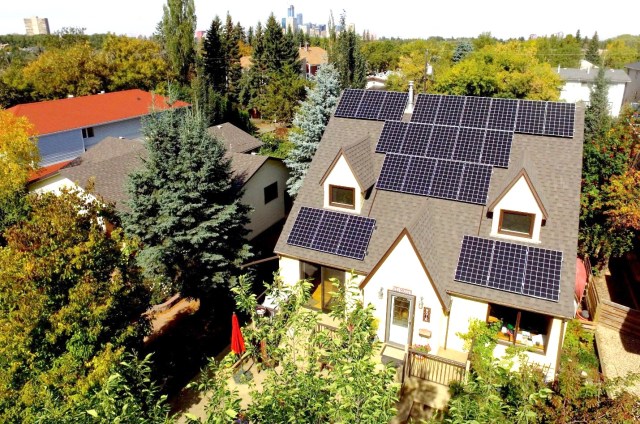
  • Solar Panels- Randy
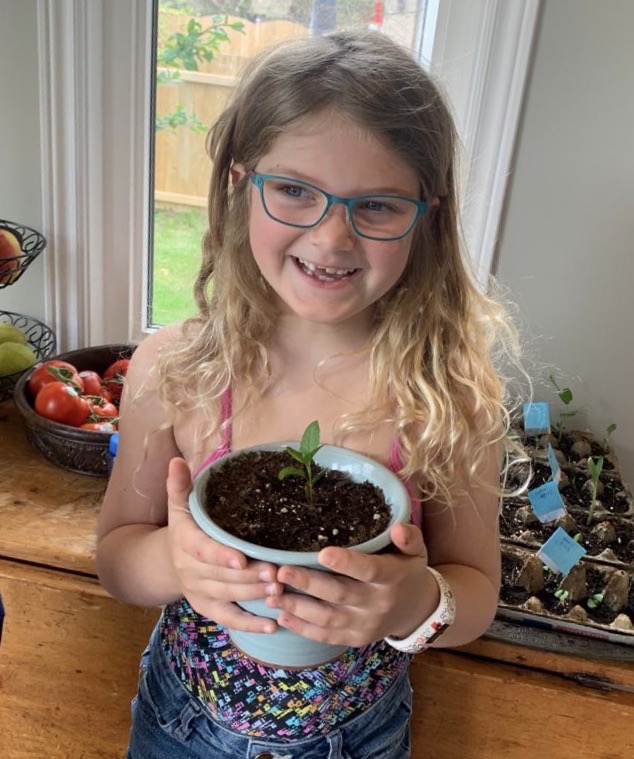
  • Ready for Earth Day- Mary Ann, Elizabeth and Brady
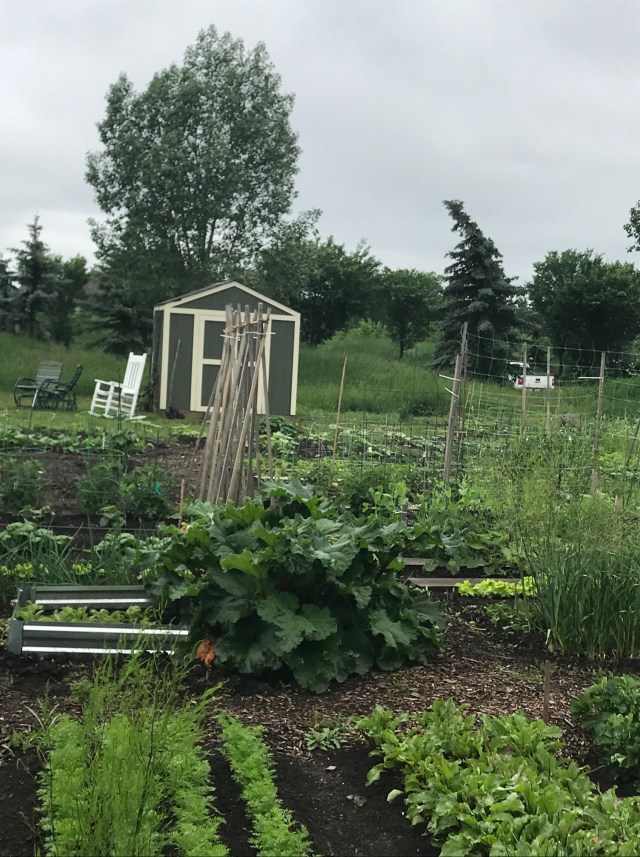
  • Community Gardening -Shanthi and Audrey
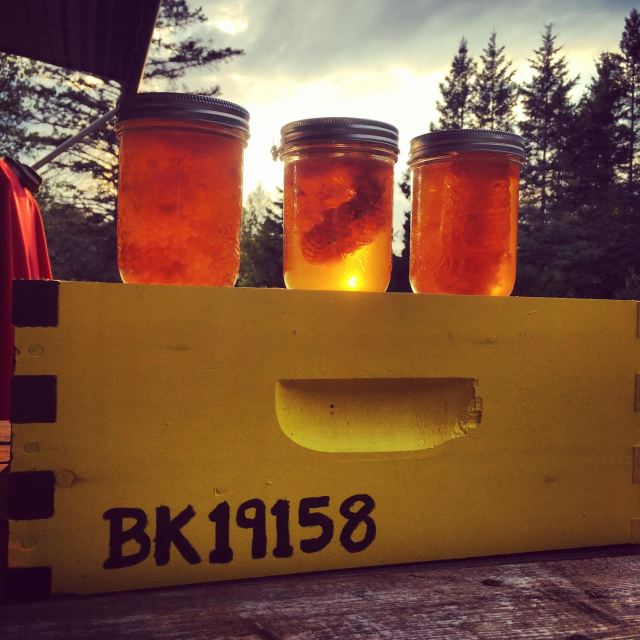
  • Being a Bee Keeper- Brian
  • Gardening Therapy, Community and Climate Change and Vegetable Gardening-  Shanthi, Audrey, Leslie and Ross
  • Growing Cut Flowers- Shanthi
  • I Shall Never See a Poem as Lovely as a Tree- Liane
  • Movie Night: A Life on this Planet – Allan

Guest Artists and Photographers

Thank you to all the youth who created stunning original art for our Earth Day Blog -Elizabeth, Brady, Emily, Hannah, Karis, Claire, Connor, Charlie.

Thank you to our amazing photographers: Jim, MaryAnn, Shanthi, Wanda, Audrey, Alex, Janet, Andrew, Randy, and Brian. You all inspire Lucy to be a better photographer. Lucy has enjoyed taking photos of trees everywhere she goes, and other than having periodic storage issues on her computer, she loves the 20,000 photos she keeps categorized and edited on her computer and is thrilled to share them in this blog. 

A Look Ahead into Our Second Year

Well we are thrilled to be continuing Friends4Trees4Life, or “baby blog”, as we often call it affectionately, but we may need a new nickname. We are thinking we will post every second Thursday instead of every Thursday, this year, but we may throw more posts in, if we feel the urge. We will try to be more concise, and we continue to value your feedback to guide our writing. Of course we always welcome guest bloggers, whether you write only a section of the blog or the whole thing.

There are some goals we had in the first year that got stymied because of the COVID-19 pandemic. We had wanted to focus more on young people’s voices and empowerment. Lucy had hoped to join in with Edmonton Root for Trees and actually go out to plant trees but that was not available. We hope this will be something that will happen in 2021.  We had hoped to create a friendly competition around Earth Day 2020 that would encourage people to plant trees. Do any of you have any suggestions in this regard for Earth Day 2021? We could not figure out how to track this within the Blog. 

We always have more topics lined up like: profiles of favourite trees, cities and climate action; book profiles such as “Solved,” by David Miller and his related interview on TVO’s The Agenda, progress with the Paris Accord, lessons to be learned from other jurisdictions, clarity with the Canadian Government’s green recovery plan, innovations, and guest videographers Shanthi and Iniyan’s Moon Garden video.

We will keep revisiting favourite topics like:  vegetable gardening, choosing yard trees and health benefits of trees.

We have received a  Reader’s request for more information on forest management practices

Most importantly, we will continue to encourage each other to take more steps towards decreasing our carbon footprint and rewilding our planet . 

Last Words Go to the Trees

We are often asked, which trees are best to plant?

Short answer is, any young tree that is native to the locale.

Pressed to name names, here is the list of trees that the entrepreneurs behind the Canadian tree-planting drone innovation have given priority to, based on their research:

  • White Spruce
  • White Pine
  • Blue Spruce
  • Red Maple
  • White Birch
  • Sugar Maple
  • Douglas Fir
  • Balsam Fir.

Think Like A Tree

We find the poem, Think Like A Tree, by Karen I. Shragg, to be uplifting and wise in its message.

We did not have enough lead time to seek copyright permission to present the poem in this Blog.

However, the website SpiritofTrees does have the author’s permission, and Readers may find the full poem here: https://spiritoftrees.org/poetry/think-like-a-tree.

Interestingly, and relevant to our Friends4Trees4Life Blog, “Spirit of Trees, [is] a resource for therapists, educators, environmentalists, storytellers and tree lovers! You will find here an abundance of resources, in particular a varied collection of multicultural folktales and myths.”

“This website was originally conceived of as an educational resource for the DC Memorial Tree Groves Project, a Washington, DC-based national memorial to the victims of 9/11. But the project has grown beyond its original intention and is now offered as an independent resource for a world-wide community of tree-lovers of all ages.”

Inspirational Quotes about Trees

OneTreePlanted’s website includes a set of inspirational quotes about trees. We end this anniversary Blog post by sharing a few that resonated with us in particular.

Thank you for your support and for being engaged with our Friends4Trees4Life Blog this past year. We LOVE hearing from our Readers, and welcome your feedback. If the spirit should move you, we are always delighted to share this space with our guest bloggers.

It is very meaningful to us when we learn from our Readers that something they read in the Blog made them think or has been useful in their lives. This inspires us to keep on learning, growing and sharing what we are learning…we’ve renewed our contract for the Blog platform for 2021, so stay tuned please! We hope you will return often to read our Blog and to keep connected with us.

“Trees do not preach learning and precepts. They preach, undeterred by particulars, the ancient law of life.”

― Herman Hesse

“In a forest of a hundred thousand trees, no two leaves are alike. And no two journeys along the same path are alike.”

― Paulo Coelho

“Trees are as close to immortality as the rest of us ever come.”

― Karen Joy Fowler 

“The true meaning of life is to plant trees, under whose shade you do not expect to sit.”

― Nelson Henderson

“You know me, I think there ought to be a big old tree right there. And let’s give him a friend. Everybody needs a friend.”

― Bob Ross

“This oak tree and me, we’re made of the same stuff.”

― Carl Sagan

Movie Night….

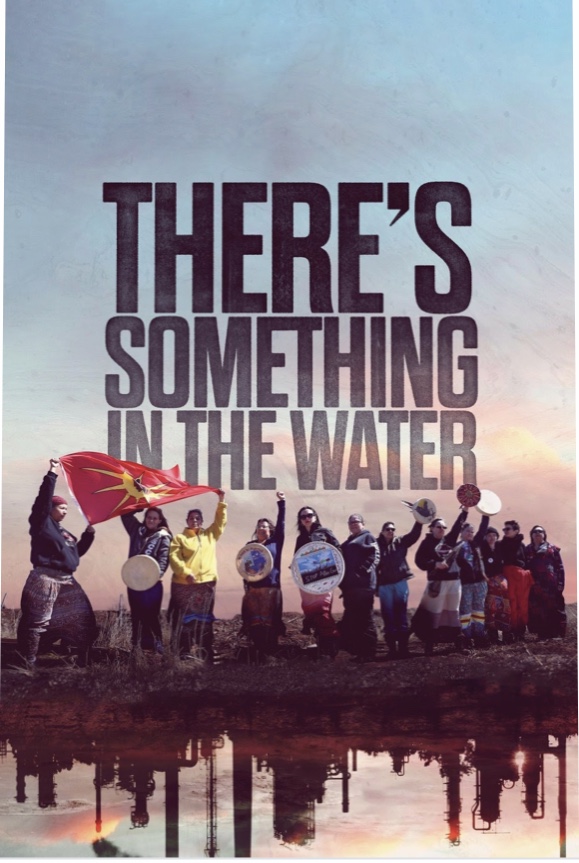
We are pleased to welcome Allan Terplawy, this week’s guest blogger and thank him for his thorough review of a documentary called A Life On Our Planet. Following this Lucy will review There’s Something in the Water. Both of these documentaries can currently be found on Netflix. Lucy will also link you to One Tree Planted summary of The State of California.

A REVIEW OF DAVID ATTENBOROUGH’S “A LIFE ON OUR PLANET” by Allan Terplawy

David Attenborough is 93 years old. We all should hope to be as articulate, wise, and fit when reach that age. If this is his final message, it is one to which all of us should listen.

You have likely heard David Attenborough’s voice on many nature-related documentaries such as Planet Earth, Blue Planet, Frozen Planet, etc., but his contribution to the subject of nature and its preservation goes far beyond narration. In this documentary, he takes us through his life experiences and simultaneously shows how the earth has “progressed” in terms of population, carbon in the atmosphere, and the %’age of wilderness remaining over the years. The story is both interesting and alarming. The planet is losing its bio-diversity. As he puts it, “As (man’s) understanding of how the living world works., our behaviour becomes more and more damaging”. Ironically, this is driven by our intelligence as a species.

The documentary highlights and compares some key statistics through his life:

  • World population
  • % Carbon in the atmosphere
  • % of wilderness remaining

When Sir David was a teenager, around 1937, the planet had 2.3 billion people, 66% of the planet was in wilderness there was 280 ppm carbon in the atmosphere. Now in 2020 Sir David is 93 and there are 7.8 billion people, 35% of the planet is in wilderness, and there is 415 ppm carbon in the atmosphere. It is effective how Sir David updates these facts as he goes along in the documentary.

Sir David also highlights other facts such as the amount of deforestation and the increase and effects of large scale commercial fishing. As we would expect, the cinematography is unparalleled.What I found encouraging is that the documentary is not just all doom and gloom. Yes, the planet is at a tipping point, but there are actions we can take to correct its course, and indeed many places (Morocco, Holland, Japan, and Costa Rica to name a few) are making progress and have shown that corrections can be made and our standard of living can still improve. The Netherlands has taken commercial greenhouses to the next level, actually exporting vegetables to the rest of Europe (no small feat considering its land area). Morocco boasts huge solar energy generation, exporting it to Europe. Japan has both controlled its population growth and improved its standard of living. And Costa Rica is an example of how we can reverse the effects of excessive deforestation.The ocean is a vast food source for humans but, if left unchecked, large scale commercial fishing can, and has, unbalanced the equilibrium. Over-fishing large predators (tuna is included in this category – large, ugly and tasty all at the same time) causes the oceanic nutrient cycle to stutter. Predators help to keep oceanic nutrients in the waters, recycling them, so that they can be used again and again by plankton. Without predators, the nutrients are lost and the ocean starts to die.

Another interesting fact is that the ocean is a huge heat sink for the earth. As our polar ice caps slowly deteriorate, the amount of snow cover is reduced, hence reducing the earth’s ability to reflect that heat back into space. The oceans, however, are able to absorb much of this heat but even they are experiencing distress. The ocean temperature is rising (1 centigrade degree on average during Sir David’s lifetime) and this is causing coral reefs to die.

The documentary stresses that forests are the best technology for locking away carbon. But you already know that. We don’t deforest without reason – we benefit from the tress and materials we harvest and subsequently use the land for farming. But better use of the land will allow us to reduce or halt deforestation and “re-wild” the earth.

Costa Rica Photo credit Lucy

The tone of the documentary, I thought, was not one of admonishing the human race for doing bad things – we as humans did what we thought we had to, to supply the population with its seemingly insatiable demand. Our use of the land, however, was not optimal. So let’s change our focus – grow more vegetables, thus not over-stressing the land. What struck me, though is that he did not say “STOP EATING MEAT”, or “SHUT DOWN THE DAIRY AND CATTLE FARMS”. Certainly, we need to move in the direction of eating significantly less meat and limiting our dairy consumption – this type of farming is a very inefficient use of land and can be inhumane in its treatment of animals. We need to reduce our consumption. But these are conclusions that Sir David leads you to arrive at through an eloquently narrated and brilliantly photographed documentary.

Sir David summarizes: “This is my witness statement. A story of global decline during a single lifetime.” But he goes on to say that “Nature is our biggest ally and our greatest inspiration.” We are urged to embrace it, support it, and care for it. Plant a tree and enjoy the benefits.

https://www.netflix.com/ca/title/80216393

Thank you Allan for such a great review. We agree with everything you have said. This film is a visual representation of what we attempt to do with our blog. We consciously try to offer information about how Mother Earth is doing, under the strain of 7.7 billion people, while maintaining a positive, encouraging and hopeful attitude about the future, since we all want our subsequent generations of family to enjoy the earth’s beauty and live fulfilling lives. We are aware through all the scientific information we receive, and thru the wisdom on Sir David Attenborough, that we need to make conscious decisions today to ensure this will happen.

A Review of Ellen Page’s “There is Something in the Water” by Lucy MacQuarrie

Another movie to watch on Netflix is There Is Something in the Water. “Based on Ingrid Waldron’s incendiary study, the film follows actress and activist Ellen Page as she travels to rural areas of Nova Scotia that are plagued by toxic fallout from industrial development. As did Waldron, the filmmakers discover that these catastrophes have been precisely placed, all in remote, low income — and very often Indigenous or Black — communities. As the filmmakers observe, your postal code determines your health.”

“As a result of the resurgence of the Black Lives Matter movement, long overdue conversations about environmental racism and the intersection of racism and environmental justice are actively taking place throughout Canada. ” according to the Suzuki Foundation.

Lucy and Allan both found this documentary engaging, as the 3 rural areas of Nova Scotia plagued by toxic fallout are very clear, and the spokeswomen are all passionate, articulate and deeply committed to creating a change. And there is a happy ending!

A Review of One Tree Planted series “The State of California” by Lucy MacQuarrie

One Tree Planted has created a 6 part series called “The State of California”. Each episode is only about 5-7 minutes long. I watched a few of them and they surprisingly carry an optimistic outlook for the future of California’s forests. These are far less engaging and professional than the other documentaries mentioned above, but you may be interested in the topic.

  1. One Tree Planted
  2. How Did We Get Here?
  3. On the Line
  4. Fighting Fire With Fire
  5. The Need for Seed
  6. Where Do We Go From Here?
stock photo

According to One Tree Planted, “California is one of 35 biodiversity hotspots around the world. Its wide range of endemic species and varied climate make it a unique place. In this series we try to understand what makes California so special. We look into the many challenges facing the forest, population, and environment, and the solutions being employed to help the state avoid and recover from catastrophic wildfires.” 

“Throughout this series we meet the people dedicated to ensuring California’s forests are healthy and safe. From policymakers to academics, to the tree planters and firefighters, these people are on the frontlines of the collective effort to restore California’s landscape and instill hope for future generations.”

This series can be accessed thru One Tree Planted and also thru their Youtube Channel.

https://onetreeplanted.org/pages/state-of-california

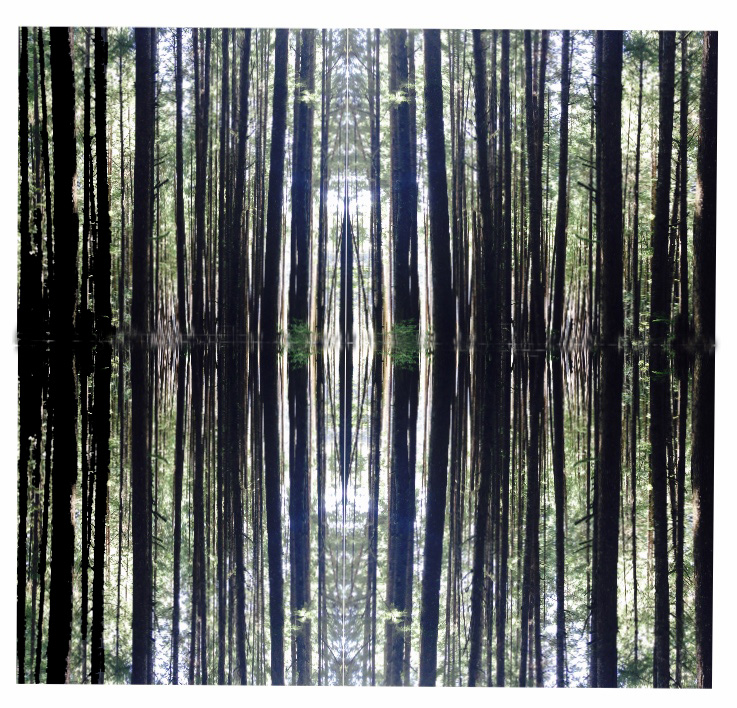
My photo from the Juan de Fuca Trail has been photo-shopped to create a horizontal and vertical mirror image. This idea is stolen from a photo seen at the Jasper Park Lodge. Thanks to my sister MaryAnn for walking me patiently thru the steps in photoshop. Photo credit Lucy

Much Climate Change News

photo credit Lucy

There is much to share from the past week’s news articles on climate action.

Some topics point the way forward, such as hydrogen cars, Canada’s announcement banning certain plastics, socially responsible investing, and new net zero housing pilot projects. Others, call for more attention and concerted efforts to reduce harmful greenhouse gas emissions – nitrous oxide this time.

Of course, we will close by giving the last word to “the trees”.

Momentum is Building

We thought we would start by building on our cautiously optimistic post from two weeks ago. Here is the link to a BBC article which offers a similar appraisal on the significance of China’s new resolve to become carbon net-zero by 2060, titled, “Is the world starting to take climate change seriously now?” https://bbc.in/376d0yc

Canada Announces Ban on Certain Single-Use Plastics

Prime Minister Trudeau’s announcement last week banning certain single-use plastics in Canada is a ‘good place to start, but the easy part,’ says this Globe and Mail editorial. In it, we learned that the decision acts on the recommendations of a report called, “Canada-wide Strategy on Zero Plastic Waste,” which was agreed to by the Canadian Council of Ministers of the Environment. Specifically, a recommendation in it that Canada find a solution by the end of 2021 for “single use items that are most likely to be released into the environment.”

Among the list of single use plastics to be banned in Canada are: plastic stir sticks, straws, checkout bags, cutlery, plastic rings on beer six-packs, and certain hard to recycle plastic takeout food containers.

This list of single use items fit the bill acording to the editorial, given their ubiquity as pollutants that have many viable alternatives and the fact that they don’t get recycled much thus ending up in landfill.

One challenge ahead identified for the near-term relates to the timing of the announcement on the heels of Alberta’s just announced economic plans to become a “plastics recycling hub for North America”.

The long-term heavy lifting remains in setting the price for production of necessary plastic products in a way that reflects the true, full costs associated with recycling them.

“Plastics are an essential part of modern life. They have uses from food protection to medicine to automaking. We need plastics, but we also need the responsible manufacture and disposal of plastics, so that their price represents their true cost. In the long run, that will benefit the economy, the environment and the petrochemical and plastics industries, as the Alberta government justifiably hopes.”

Globe and Mail editorial: https://tgam.ca/3jZtCLP

Canada wide action plan on zero plastics waste report: https://bit.ly/3lMBYHe.

This BBC article adds insights on Canada’s announcement within an international context, noting that Canada recycles just 10% of our plastics, and that similar legisltation was passed by the European Union last year. Promisingly, it also reports that in May, 180 countries agreed to a UN goal to reduce harmful ocean plastics worldwide. https://bbc.in/3iYMKrY

Hydrogen Powered Cars

photo credit Lucy

We were excited to share the news last week about federal and provincial funding investments to support Ford auto’s commitment to produce electric vehicles at its Oakville Ontario plant as of 2025.

Learn more about the next wave of e-vehicles – hydrogen-powered cars –  in this CBC article and videoclip: https://bit.ly/3j1Oq3Q

Apparently, in Burnaby BC at least, the emissions-free, hydrogen powered Toyota Mirai is already on the market, supported by the availabilty of three charging systems so far. The future we aspire to is emerging!

New Net-Zero Housing

Carbon-zero countries. Emissions-free hydrogen-powered cars. What else does the future hold to take us toward a more sustainable world?

We learned about Canada’s new net-zero energy housing standards at the Natural Resources website and its news release about pilot project investments: https://bit.ly/375ALXm

photo credit MaryAnn

“The funding will support a project led by the Canadian Home Builders’ Association (CHBA) that will enable seven housing builders to construct net-zero energy and net-zero energy ready residential buildings in British Columbia, Alberta, Saskatchewan and Ontario.”

“Buildings and homes contribute approximately 17 percent of Canada’s greenhouse gas emissions. Net-zero energy buildings are designed and constructed to produce at least as much energy as they consume on an annual basis.”

“R-2000 is an established national standard with the training, certification, house-testing, inspections and overall quality assurance that are the essential basis to ensuring the integrity of net zero energy housing.” https://bit.ly/34WNrNt

This Eco-Home site presents images of the net-zero pilot homes, and pilot project results. It identifies the participating home building companies as “Under the pilot program, 23 individual Net Zero Energy Houses were built by six different builders (two from the RFP and four under the ecoEII project): Construction Voyer, Habitat Studio & Workshop Ltd., Mattamy Homes, Minto Communities Canada, Reid’s Heritage Homes, and Sloot Construction Ltd.” https://bit.ly/3nPh4sy

This Construction Executive site describes related, complimentary Green Building trends in the construction industry, including the third-party LEED certification program.

“The trend toward sustainable construction is changing the way projects are designed and built. The demand for green buildings continues to rise driven by increasing concerns over global warming, tighter environmental regulations and a growing focus on occupant health. In response to this demand, the construction sector is embracing green practices including delivering LEED-certified commercial projects.” https://bit.ly/33Y4Fec

photo credit Lucy

Greenhouse Gas Challenge – Nitrous Oxide

While trends in reducing, eliminating or neutralizing greenhouse gas emissions for house building and cars look promising, this CBC article explains why challenges remain in agricultural production.

It profiles a new study published in the journal Nature which suggests that “nitrous oxide — a gas that is 300 times more harmful to the climate than carbon dioxide — is steadily increasing in the atmosphere.”

“While nitrous oxide is produced in different ways, the study found  the largest contributor is agriculture, where it is produced as a by-product of nitrogen, largely used in agriculture as a fertilizer.”

Add nitrous oxide to methane and carbon in our growing awareness about harmful greenhouse gases.

As the TVOntario tag line says – Always Learning!

To read the full CBC article: https://bit.ly/311Mjaf

To access a Complimentary share file on the report itself: https://go.nature.com/2T0sWK1

Socially Responsible Investments

The World Economic Forum recently released 22 “ESG” metrics to help guide investment decisions that promote a green recovery from the pandemic. https://bit.ly/33V0VtU

“New York, USA, 22 September 2020 – The World Economic Forum today released a set of universal environmental, social and governance (ESG) metrics and disclosures to measure stakeholder capitalism that companies can report on regardless of their industry or region. Organized around the pillars of principles of governance, planet, people and prosperity, the identified metrics and disclosures align existing standards, enabling companies to collectively report non-financial disclosures.”

“The report, “Measuring Stakeholder Capitalism: Toward Common Metrics and Consistent Reporting of Sustainable Value Creation”, comes at a pivotal moment. The social unrest, economic inequalities and racial injustice exacerbated by the COVID-19 pandemic has accelerated demand from business, governments, standards bodies and NGOs for a comprehensive, globally accepted corporate reporting system.”

photo credit Lucy

“ ‘This is a unique moment in history to walk the talk and to make stakeholder capitalism measurable,” says Klaus Schwab, Founder and Executive Chairman, World Economic Forum. “Having companies accepting, not only to measure but also to report on, their environmental and social responsibility will represent a sea change in economic history.’ ”

“…Companies see the importance of social, climate and other non-financial factors as critical for their long-term viability and success. Some 86% of executives surveyed by the Forum agreed that reporting on a set of universal ESG disclosures is important and would be useful for financial markets and the economy.”

Canada’s former Bank of Canada head, Mark Carney, is now the United Nations’ Special Envoy for Climate Action and Finance. In the artcle, he is quoted on the World Economic Forum’s ESG work, “Through this work you are demonstrating to shareholders, stakeholders and society at large that the private sector is committed to measuring and improving its impacts on the environment as part of the transition to a low carbon future. I encourage governments, regulators, the official accounting community and voluntary standard setters to work with the IBC towards creating a globally accepted system of sustainability reporting based on this project’s groundbreaking work.”

To learn more about “ethical” and “socially responsible” investments and the call for improved transparency in corporate reporting, we offer our Readers a few more articles as a place to start: https://bit.ly/376eJ6E, and, https://tgam.ca/3dreB2J.

Protectors of the Planet

We appreciate opportunities to learn about and celebrate our own local heroes.

Jamie Bastedo is a Yellowknife author, and is profiled in this CBC article, on the release of his new book, “Protectors of the Planet: Environmental Trailblazers from 7 to 97”.

” ‘It’s a book about real-life stories about a dozen daring eco-heroes from across Canada doing extraordinary things to protect our troubled planet,’ Bastedo said.” https://bit.ly/3lPtDT9

photo credit Lucy

Last Word Goes to the Trees

We were fascinated to learn from the BBC about ‘the tree that changed the world map,” and how it became the national tree of Peru and Ecuador. Catherine owes a special debt of gratitude to the now endangered “cinchona officianalis” tree, since its bark is the source of the world’s first anti-malarial drug, quinine, which did indeed save her father, twice, when he fell ill to malaria during WWII with the British army. https://bbc.in/33XNzwP.
For Readers with the itch to go on a road trip to a unique “tree-focused” travel destination, this CBC article about a new Yukon hotel  may be of interest: https://bit.ly/3kaVPiA
In addition to enjoying the photos of magnificent fall foliage, Readers may learn more about what fall colours can teach us about trees: https://bit.ly/379vKgj.

photo credit MaryAnn

The Delicate Ecosystem of Jasper National Park

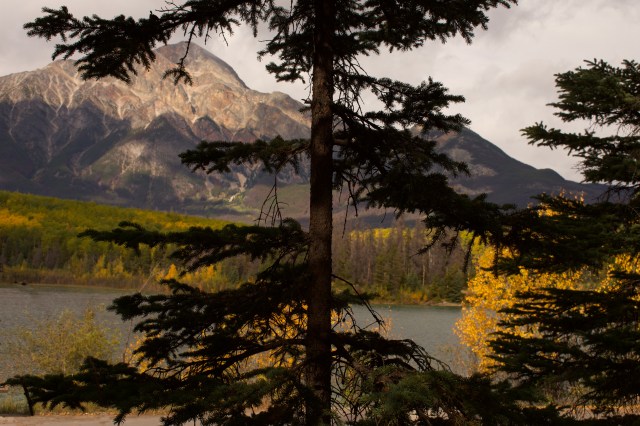
Patricia Lake

Lucy had a wonderful holiday recently in Jasper National Park. It was so invigorating, all the beauty, and autumn colors seen from the car and on hikes. So we decided to dedicate a blog to the ecosystem of Jasper National Park. We recall as young students in elementary school, many years ago, that teachers talked about not interfering with ecosystems, because you can never get it back to it’s natural state. That is a foreign concept in our world today when we often interfere with natural ecosystems. It helps that JNP is a UNESCO World Heritage site, so it is protected. (All the photos in this article have been taken by Lucy)

According to the Canadian Encyclopedia, “Jasper National Park is a protected area located in the Rocky Mountains, about 370 km west of Edmonton, Alberta. Established in 1907, it was the fifth national park created in Canada. It’s also one of seven parks in the Rocky Mountains that make up the Canadian Rocky Mountain Parks UNESCO World Heritage site (the others are Yoho, Banff and Kootenay national parks, and Mount Robson, Mount Assiniboine and Hamber provincial parks). Among the reasons for the UNESCO designation are the parks’ mountain landscapes, complete with waterfalls, canyons and glaciers, including those found in the Columbia Icefield.”

https://www.thecanadianencyclopedia.ca/en/article/jasper-national-park

Maligne Canyon

Ecosystems of Jasper National Park

“Climate, geology, soil, plants, animals – and humans all interact in one large complex web of life. In Jasper this web is especially fragile. Here existence depends on the intricate relationships between flora and fauna, weather and landscape. These relationships, called ecosystems, can be upset by the smallest of changes, affecting even the largest of animals, including Jasper’s monarch, the grizzly.

Jasper National Park is located on the eastern slopes of the Rocky Mountains of west-central Alberta, east of the continental divide. This location strongly influences its climate, geology, plants and animals, and also has affected its human history. The mountain landscape has been formed by a variety of geological events over millions of years. This has resulted in a rugged topography with a large range in altitude from about 985 metres in the Athabasca Valley to nearly 3800 metres at the top of Mt. Columbia.

These altitudinal differences influence the climate, with higher altitudes being colder and generally wetter, while lower altitudes are warmer and drier. As well, Jasper National Park’s location east of the continental divide also affects the climate. The eastern slopes of the Rocky Mountains are drier than the western slopes in adjacent British Columbia due to a rain shadow effect. This occurs when storms moving eastward from the Pacific Ocean drop much of their moisture on the western slopes as the clouds are forced higher by the mountains. The eastern slopes are also more frequently subjected to Arctic air plunging southward, especially in the winter. As a result of these two influences, Jasper is generally colder and drier than areas to the west.

Ecologically, plants and animals are not independent of their environment or of each other. All of these components – climate, geology, soil, plants, animals, and so on – influence one another in a complex web of components and interactions called an ecosystem. In the sections that follow, each of these ecosystem components will be described in greater detail.”

Bridge to Island on Pyramid Lake

Life Zones

“Jasper National Park is divided into three life zones – montane, subalpine, alpine – which are broad landscape units with characteristic species, communities and physical environments. Climatic differences associated with changes in altitude are the main determinants of these differences in biodiversity. Higher elevations are generally colder and wetter, while lower elevations are warmer and drier. Local differences in slope angle and direction can create local microclimates. Steeper slopes are generally better drained and drier than moderately sloping or flat areas. South-facing slopes are drier and warmer than north-facing ones at the same altitude.

The ranges of plants and animals across this altitudinal range are related largely to their tolerances to cold, heat and drought. Other factors that influence distributions include food species, competition with other species, and soil conditions. The wettest areas are occupied by lakes, ponds, marshes and fens. Grasslands occur in the warmest, driest portions of the park and forests in moderate environments. Trees can’t grow in the cold conditions of high altitudes above about 2200 metres and so forests are absent, replaced by low shrub and wildflower communities.”

Montane

“The montane life zone is warm, dry and found only on the very bottoms of the Athabasca and Miette Valleys in Jasper. Here Douglas Fir stands hug south facing slopes, the furthest north in Alberta this species grows. Warm chinook winds sweep through the valleys in winter, melting snow and making forage in the extensive grasslands easy for elk, moose, deer and sheep. Bears, waking in spring, roam in and out of the montane, feasting on the red-and-orange buffalo berries for weeks at a time in the fall. Wolves and cougars move through the valleys in search of food while bald eagles and osprey nest near the rivers, close to the pike and mountain white fish they feed their young.

The montane is also where humans live. The community of Jasper, the Canadian National Railway, the Jasper Park Lodge, the Yellowhead Highway, 2 large campgrounds, a power station, pipeline, garbage transfer station, sewage waste plant, and a number of chalets and lodges all dot the montane landscape. Almost 2 million people stop to visit the montane every year, while another 1 million drive through it on the Yellowhead Highway.

Wildlife, like humans, use the valley bottoms as transportation corridors and rely on the montane for food and shelter. There is concern that human use in the valleys is adversely impacting wildlife corridors, fragmenting the ecosystem and giving animals less and less room to live. Parks Canada is actively studying these wildlife corridors using cameras with infrared triggers to better understand where wildlife roams in Jasper and how human use, especially the creation and use of unofficial trails, is affecting them.

Parks Canada is committed to maintaining a high quality trail system in Jasper for everyone’s enjoyment. The use and creation of unofficial trails is however displacing wildlife from their natural habitat. They recommend to only use officially designated trails while hiking, horse-back riding, mountain biking or cross country skiing in Jasper’s montane.”

Subalpine

The subalpine is a great sweeping forest that curls around mountainsides, fringed at treeline by grotesquely stunted trees called krumholtz. Dark and wet, the mostly spruce mixed with pine and sub-alpine fir forest that stretches up from the montane is habitat for a limited number of animals. Pine martins, large cat-like weasels, and their larger cousin the wolverine roam the subalpine. In the winter, lynx, moose and caribou frequent the life zone, using their large paws and hooves to maneuver through the deep snow. Clark’s nutcrackers, the boreal chickadee, winter wren, golden-crowned kinglet, varied thrush, yellow-rumped warbler and the dark-eyed junco also call the subalpine home.

In the past, great forest fires have been known to engulf nearly all of Jasper’s subalpine forests in a season or two. The last such fire was 1888-89 when almost 40% of the park’s forests burned over the course of two summers. For years Parks Canada has prevented forest fires from starting in Jasper. New research and a greater understanding of forest fire ecology has however changed attitudes and management styles. Seen as a process of rejuvenation rather than of destruction, forest fires are now carefully managed in some parts of the park. These ‘prescribed burns’ return nutrients to the soil, helping to ensure a healthy ecosystem of diverse plant and animal species in Jasper.

They recommend you be careful with your camp fire – While fire is a natural part of the ecosystem, a poorly extinguished camp fire can quickly turn into a forest fire that puts lives and property at risk. Ensure your fire is completely out before leaving it.”

Alpine

“Characterized by howling winds that scour the rocky earth, the alpine is the most intricate of Jasper’s three life zones. Flowers that survive in the alpine do so using subtle techniques. Large, cup-shaped pedals act like mirrors, focusing sunlight on the centre of the flower, where pollen is produced. This creates a warm, mini-environment, attracting small insects that spread the pollen to other plants, procreating the species. Reddish pigments in flowers also help convert light into heat and act as a kind of antifreeze for the plants.

Whistling marmots and pikas are the most often seen inhabitants of the alpine. These small mammals live in dens under the rocks making high-pitched whistles or squeaks when danger appears. The hardy ptarmigan is the only bird to frequent the alpine year-round. Turning white in the winter, it is perfectly camouflaged and burrows deep into snowdrifts to survive the cold temperatures.

The alpine life zone is the most fragile life zone in Jasper. While difficult to reach, some alpine areas in the park are relatively accessible. The Whistlers tramway and certain trails, especially in the Columbia Icefield and Maligne Lake areas, allow visitors to discover the alpine with only a minimal amount of effort. Wild plants and flowers will not reproduce if trampled or picked, and even something as simple as moving a stone can decrease a plant’s chance of survival.”

https://www.pc.gc.ca/en/pn-np/ab/jasper/decouvrir-discover/ecosystemes

Siteseeing and Dining

View from Becker Cabin Gourmet Restaurant Just Before the Elk Bull Appeared

Jasper National Park is such a stunningly beautiful place to visit any time of year. The many bungalows are open until Thanksgiving. We did notice some shops and restaurants such as at Maligne Lake, or the Italian restaurant at the JPL are only open weekends in late September. Not sure how COVID has affected what is available. Using AllTrails App on our phone, we were able to access information on over 100 hikes, from very short and easy to very challenging. We kept to simpler hikes and went to Edge of the World, Valley of the 5 Lakes, Flower Loop, Maligne Canyon, Athabasca Falls, Mary Schafer Loop, Wapiti Trail, and Lac Beauvert. There are many excellent restaurants. We enjoyed the Becker’s Cabin Gourmet Restaurant (where I had the Wild Mushroom Lasagne with Spinach Pesto), the Raven, Evil Dave’s and JPL Great Hall Gastropub. There is a lot of history to learn about as well as many tourist sites like several waterfalls, the Miette Hot Springs, and horse back riding and the Columbian Icefield. I cannot wait to go back to hike some more trails, and look again into the aqua pristine water while breathing in the clean mountain air.

The Pine Beetle

It is immediately obvious that there are many red or dry grey trees in Jasper, and one might wonder if that is the natural cycle of the forest. Unfortunately it is the more than a decade long infestation of the pine beetle that is killing the pine and fir trees. While visiting the Jasper Park Lodge,  many tourists watched as the very tall, dead Douglas fir trees on the property were being professionally cut down. They have the Fir beetle. The workers say that the Douglas Fir  only grows north as far as about Jasper, so they are stressed in this location, so are easy prey to the beetle. The earth shook as the trees fell, and we took a few photos below.

“The mountain pine beetle burrow in the tree bark, releasing a fungus that clogs and destroys the connective tissues of the trees. So after the eggs hatch the larvae mine the phloem which is the layer between the bark and the wood. Trees can die within weeks of an attack. The pines turn red after they have succumbed to the beetles’ onslaught.

According to Parks Canada, 163,000 hectares of forest in Jasper National Park have been infected by mountain pine beetles.

The Alberta government with assistance from the Federal government has spent hundreds of millions of dollars to stop the spread of the pest. The decade-long efforts have slowed the beetle’s movement toward the carefully managed forests that supply wood for lumber and other purposes located to the east of Jasper. Mountain pine beetles are native to B.C., but are considered an invasive species in Alberta. 

Unfortunately the national park has been changed forever by the beetle’s presence. “The populations in Jasper have reached an epidemic level and they’ve been going like that for at least several years,” said Allan Carroll, a professor of insect ecology and director of the forest sciences program at the University of British Columbia. “As a consequence, there are so many beetles that there’s not much that can be done and instead, Jasper is just going to have to learn to adapt to a whole bunch of dead pine trees in their forests.”

Red Trees Infested with Pine Beetle, Photo credit Lucy

Carroll says the forests of Jasper won’t always be filled with rust-coloured trees. After a few years, the red needles fall off, leaving a grey-coloured tree. The human eye will eventually adjust how it sees the landscape, naturally focusing more on the green shrubs and healthy growth that will surround the dead trees. In four, five or maybe 10 years time, it won’t be that obvious, except to the trained eye, that there has been an outbreak there at all,” he said. 

Fire Threats

But in the meantime, some Jasper residents are increasingly worried about not just the esthetics of red, rusty forests, but also the fire hazards that accompany several square kilometres of dry trees. Christine Nadon, who manages communications for the town of Jasper, said dry conditions are not new for the town and that both the town and Parks Canada are prepared for potential fires. This year they have ramped up training, equipment and collaboration with regards to potential fires. As well an area west of the Jasper townsite are having the dead trees thinned.”

https://www.cbc.ca/news/canada/edmonton/jasper-pine-beetle-decline-1.5192411

Pine Beetle Decline in 2018-2019

“Good news, is that  delayed mating in 2018 and cold winter in 2019 killed off most of the pine beetle. Scientists sampled 25 sites in the park. After completing the survey in May, they found the mortality rate of the populations they examined was 98 per cent.  “This is really the first year that we’ve had significant decline in the population,” said Roger Brett, lead researcher of the study.

Brett said he has been mapping mortality rates of pine beetles in Jasper for six years and has never seen populations decline like this. Normally, they would double from one year to the next, he said. We are also cautioned that since these results are from sampled sites, it may not be accurate for all the Jasper National Park. Also if the pine beetle is not 100% removed they will continue to be a pest….but at least they are slowed down for awhile.”

https://www.cbc.ca/news/canada/edmonton/jasper-pine-beetle-decline-1.5192411

How Pine Beetles are Managed

“Through the Pine Strategy, prescribed or controlled fire and strategic harvesting, Alberta is encouraging a more natural diversity of tree ages that will be more resilient to threats from destructive insects, disease and wildfire.

Short Term Strategy

Depending on the area or zone assigned to the forests based on an assessment of the level of MPB, there will be different levels of treatment. Level 1 treatment , also known as single-tree treatment, is a tactic that is among the most effective means of managing the beetle and is used on the “front line”  of beetle infestations, or Leading Edge Zone along the eastern slopes. Level 2 treatments of “block or patch harvesting” of trees is used in the Active Holding Zone.  Thirdly, where there is already a lot of destruction from pine beetle, (Inactive Holding Zone) the main goal is to focus on other forest management objectives such as: fish and wildlife habitat, timber, watershed protection and wildfire fuel management.

Long-term Strategy

“Alberta’s pine forests are made up of an abundance of over-mature trees susceptible to insect attacks and catastrophic wildfires. About 60% of Alberta’s pine forests consist of trees aged 80 years and older.

Alberta created the Pine Strategy to address the amount of timber susceptible to mountain pine beetle and create a broad cross-section of different tree-age classes in the forest that will be more resilient to threats from destructive insects, disease and wildfire.

Under this strategy, Alberta has identified the most susceptible stands and worked with Forest Management Agreement (FMA) holders to amend their current management plans to reduce the amount of susceptible pine, on their operating land-base, by up to 75% by 2026.”

https://www.alberta.ca/mountain-pine-beetle-in-alberta-strategy.aspx

Can you believe that it has been almost a year since our first blog? At the end of the month we will celebrate what we call “babyblog” by writing a blog looking back over the experience. We figure if this blog were a book it would be about 500 -600 pages long. We would love your feedback as we plan for our second year. 🙂

Climate Action Momentum is Building

The world could use some positivity and hopeful signals about what the future holds for people and planet Earth.

It is beyond time to make meaningful, far-reaching, transformational change at every level on behalf of ourselves, young people and for the generations to come.

As Canada’s Throne Speech stated on September 23rd, “This is our generation’s crossroads.”

We could not agree more.

Gatineau, Quebec Fall Trees Photo Credit Alexandra

First, we want to highlight some related positive news reported at the international and local levels, before focusing on pieces from Canada’s Throne Speech. All combined, we feel that these are the kinds of necessary positive signals at all levels (international, national, local) that give rise to our cautious optimism that, indeed, momentum is building for our generation to choose the path toward a more sustainable future.

Let’s start with some local good news, from Sudbury.

CEEP – Community Energy and Emissions Plan

CBC reports that on September 23rd (National Tree Day), Sudbury city council unanimously approved its CEEP (Community Energy and Emissions Plan).

The CEEP “will guide the city toward its goal of achieving net zero greenhouse gas emissions by 2050.”

“The commitment means that by 2050, the city would produce no more greenhouse gas emissions than it is able to offset through other measures, such as reforestation.”

What this will look like in terms of the city’s actions and priorities for the coming decades includes “…significantly decreasing community water use, retrofitting buildings, electrifying the city’s bus fleet and increasing reforestation efforts.”

To echo the Throne Speech theme of “our generation’s crossroads,” Sudbury Councillor Geoff McCausland says, “This is the most important thing, dealing with climate change, that we will likely deal with in our entire lifetimes.” Full CBC article at: https://bit.ly/2GdEoPL

Jasper, Alberta Fall Trees Photo Credit Lucy

Significant International Signal

Last week’s climate change news also included a major announcement from China, which is a highly impactful development toward reaching the global target and commitments to curtail greenhouse gas emissions and keep rising global temperatures below 2C. All the more important, given China’s current status as the world’s top emitter of greenhouse gas emissions.

China Commits to Carbon Neutrality by 2060

On September 22nd, China’s President Xi Jinping made a video address to the UN General Assembly announcing two major goals and commitments on climate change. The country now aims to peak its carbon emissions before 2030, and to become “net zero” by 2060.

As the Economist reports, “In climate-change jargon, this means achieving a balance between carbon emissions and carbon reduction both technological and natural, such as planting trees. For China to succeed, it must descend from its emissions peak far more rapidly than any other major economy has either succeeded in doing, or has pledged to do. It will be a huge challenge.” [For the full Economist article: https://econ.st/3n1USLo]

We learned much from this informative CBC article on China’s announcement: https://bit.ly/3idZoCY

The positive benefits associated with China moving up its timeline to peak emissions before 2030 are explained in the article by MIT’s management professor John Sterman.

“Carbon dioxide’s more than 100-year lifetime in the air makes earlier emission cuts more effective than promises in the future, he said.”

“Emissions that don’t happen between now and 2030 are going to reduce warming a lot more than the same emission reductions after 2060.”

The CBC article also noted that with this announcement, China joins 29 countries (including Canada) that have pledged to reach net-zero emissions under the 2015 Paris Accord, with many other major emitters such as the European Union on earlier timelines of 2050 to meet their goals.

Algonquin Park, Ontario, Fall Trees by MaryAnn

A few things from this article have contributed to our sense that momentum is building and that there is evidence for cautious optimism about the future.

One, is this fact statement – “With China, the 30 countries that have some kind of carbon neutrality pledges, account for about 43 per cent of the world’s carbon dioxide emissions from the burning of fossil fuels.” That’s close to half the world’s carbon dioxide emissions now being targetted.

The second are the messages cited from prominent international leaders that show us that, at least in words, there is emerging alignment on policy stances that approach the pandemic recovery plan and action on the climate crisis as one inter-related challenge, rather than an either-or choice about where to set national investment priorities.

“Calling for a ‘green revolution,’ Xi said the coronavirus pandemic had shown the need to preserve the environment.”

” ‘Humankind can no longer afford to ignore the repeated warnings of nature,’ he said.”

“Frans Timmermans, who leads the EU executive’s efforts on climate change, welcomed Xi’s announcement.”

” ‘We need decisive action from every country to keep temperatures under control, tackle climate change and keep our planet inhabitable,’ he said.”

[For the full CBC article, and to learn which of the largest polluting countries have yet to make carbon neutrality pledges: https://bit.ly/3idZoCY]

Edmonton Fall Photo Credit Lucy

Canada

Last week we shared positive (leaked) news that Canada will become an e-vehicle player as a result of $500M in federal and provincial investments in support of Ford auto’s announced plans to invest $1.98B and re-tool its Oakville Ontario plant to produce five electric vehicles. According to this CBC article, Ford plans to start rolling electric vehicles off the line at the Oakville plant beginning in 2025, and with potential for new jobs at the Windsor plant too for engine production. https://bit.ly/2G8WxhC

Progress on getting more clean energy e-vehicles made here and  onto the roads in Canada is good news.

Adam Radwanski underscores the positives, writing, “Suddenly, Canada has a foothold in one of the world’s fastest-growing and most pivotal clean-technology sectors…..The Ford announcement could one day stand as the moment that kicked all these discussions into high gear. One of the Detroit Three making EVs in Canada will be impetus to develop other parts of the supply chain, which could lure other EV-making giants, and so on.” [Globe and Mail article: https://bit.ly/3cLNkHZ]

Hopefully more choice and access to competitively-priced e-vehicles for consumers will lead to greater uptake here in Canada, with adoption being accelerated by the related infrastructure investments that were announced in last week’s Speech from the Throne.

Fall Trees Jasper, Alberta, photo credit Lucy

September 23 Throne Speech

The Throne Speech acknowledged the prime focus on addressing the pandemic, while at the same time looking to the future. Its theme is “Building a Stronger and More Resilient Canada,” framed around the four foundations of:

a) fighting the pandemic and saving lives;

b) supporting people and businesses through this crisis as long as it lasts, whatever it takes. Effectively dealing with the health crisis is the best thing we can do for the economy;

c) building back better to create a stronger, more resilient Canada; and,

d) standing up for who we are as Canadians.

Highlights below related to climate change are taken directly from the Throne Speech:

“To keep building strong communities, over the next two years the Government will also invest in all types of infrastructure, including public transit, energy efficient retrofits, clean energy, rural broadband, and affordable housing, particularly for Indigenous Peoples and northern communities.”

“Climate action will be a cornerstone of our plan to support and create a million jobs across the country.”

Autumn Trees Edmonton, Photo Credit Lucy

“This is where the world is going. Global consumers and investors are demanding and rewarding climate action.”

“Canadians have the determination and ingenuity to rise to this challenge and global market opportunity.”

“We can create good jobs today and a globally competitive economy not just next year, but in 2030, 2040, and beyond.”

“Canadians also know climate change threatens our health, way of life, and planet. They want climate action now, and that is what the Government will continue to deliver.”

The Government will immediately bring forward a plan to exceed Canada’s 2030 climate goal. The Government will also legislate Canada’s goal of net-zero emissions by 2050.

“As part of its plan, the Government will:

  • Create thousands of jobs retrofitting homes and buildings, cutting energy costs for Canadian families and businesses;
  • Invest in reducing the impact of climate-related disasters, like floods and wildfires, to make communities safer and more resilient;
  • Help deliver more transit and active transit options;
  • And make zero-emissions vehicles more affordable while investing in more charging stations across the country.”

“A good example of adapting to a carbon-neutral future is building zero-emissions vehicles and batteries. Canada has the resources – from nickel to copper – needed for these clean technologies. This – combined with Canadian expertise – is Canada’s competitive edge.”

Edmonton Alberta Fall Colors, Photo Credit Lucy

“The Government will launch a new fund to attract investments in making zero-emissions products and cut the corporate tax rate in half for these companies to create jobs and make Canada a world leader in clean technology. The Government will ensure Canada is the most competitive jurisdiction in the world for clean technology companies.”

“Additionally, the Government will:

  • Transform how we power our economy and communities by moving forward with the Clean Power Fund, including with projects like the Atlantic Loop that will connect surplus clean power to regions transitioning away from coal;
  • And support investments in renewable energy and next-generation clean energy and technology solutions.”

“Canada cannot reach net zero without the know-how of the energy sector, and the innovative ideas of all Canadians, including people in places like British Columbia, Alberta, Saskatchewan, and Newfoundland and Labrador.”

“The Government will:

  • Support manufacturing, natural resource, and energy sectors as they work to transform to meet a net zero future, creating good-paying and long-lasting jobs;
  • And recognize farmers, foresters, and ranchers as key partners in the fight against climate change, supporting their efforts to reduce emissions and build resilience.
  • The Government will continue its policy of putting a price on pollution, while putting that money back in the pockets of Canadians. It cannot be free to pollute.
  • This pandemic has reminded Canadians of the importance of nature. The Government will work with municipalities as part of a new commitment to expand urban parks, so that everyone has access to green space. This will be done while protecting a quarter of Canada’s land and a quarter of Canada’s oceans in five years, and using nature-based solutions to fight climate change, including by planting two billion trees.
  • The Government will ban harmful single-use plastics next year and ensure more plastic is recycled. And the Government will also modernize the Canadian Environmental Protection Act.
  • When the Prairie Farm Rehabilitation Administration was closed by a previous government, Canada lost an important tool to manage its waters. The Government will create a new Canada Water Agency to keep our water safe, clean, and well-managed. The Government will also identify opportunities to build more resilient water and irrigation infrastructure.
  • At the same time, the Government will look at continuing to grow Canada’s ocean economy to create opportunities for fishers and coastal communities, while advancing reconciliation and conservation objectives. Investing in the Blue Economy will help Canada prosper.”
Fall Colors in Alberta, Photo Credit Jim

For the full text of the Throne Speech to open the second session of the 43rd Parliament on September 23, 2020: https://bit.ly/2HHMu3H.

Last Words Go to the Trees, Nature and Hope

The Throne Speech re-affirms the government’s commitment to plant two billion trees as part of its climate action plan.

We end today’s blog post with this Nature imagery on resiliency and hope, taken from the opening section of the Throne Speech:

“Like a reed in high winds, we might sway but we will not break. Because our roots are firmly in place, our goals clear, and because we have hope – the hope that lifts the soul on dark days and keeps us focused on the future.”

“Canadians have lived through uncertain times before and have always prevailed because determination, concern for others, courage, and common sense define our nation.”

“We must bring all those qualities to bear once again and continue to work for the common good, and for a better, safer, and more just society.”

“This is who we are and what will see us through to brighter days.”

Hope Matters

Hope Matters: Why Changing the Way We Think is Critical to Solving the Environmental Crisis, published recently by environmental scholar Elin Kelsey.

Judith Pereira writes in the Globe and Mail about how Kelsey’s new evidence-based book aims to “shift the narrative on climate change.” Full article: https://tgam.ca/3n1Zt0i

GoodReads review: https://bit.ly/3jjUjug

We All Make A Difference

” ‘If you’re thinking of being a small fish in a very large global problem, I think it’s helpful to think about it this way: everyone’s actions are required,’ [Sudbury’s] Grant said.”

” ‘If we don’t do our part, we will fail. Everyone needs to do their part, big and small.’ “

https://bit.ly/2GdEoPL

Bobcaygeon, Ontario Fall Trees by MaryAnn

National Tree Day in Canada

Also National Foresters Week

Also Global Day of Climate Action-Friday September 25

Today, Wednesday September 23, 2020 is National Tree Day in Canada. It falls on the Wednesday each year during Forester’s Week. The Govener-General will also deliver a speech from the Throne. One very good news story already leaked is that the Federal Government and Ontario government are providing financial supportof $500M to retrofit Oakville’s Ford plant to build 5 types of electric vehicles to be ready for sale in 2025. More information on this in next week’s blog.

https://www.cbc.ca/news/business/ford-oakville-electric-vehicles-1.5733943

According to the coordinating organization, Tree Canada, “National Tree Day serves as a celebration for all Canadians to appreciate the great benefits that trees provide us – clean air, wildlife habitat, reducing energy demand and connecting with nature. While in years past this was a time to come together and celebrate with community planting events, our current situation with COVID-19 makes this year very different. That doesn’t mean we can’t celebrate together though, while staying apart! The spirit of National Tree Day and all that trees bring to us is still worth celebrating.”

History of National Tree Day

On March 2, 2011 a private member’s motion to declare the Wednesday of National Forest Week, National Tree Day, received consent from the House of Commons. The motion was presented by Royal Galipeau, M.P., at the urging of Tree Canada.

Events for 2020

There are resource ideas available on the Tree Canada site for planning an event. Here are events taking place across the country that we found posted online:

Saanich, B.C. : Saanich Parks has 100 free trees to give away between 10 am and 1 pm as part of their “Nature Intelligence Campaign”. Tree pick up is by registration only and recipients are encouraged to send in a photo of themselves with their newly planted tree.

London, Ontario: As part of their “Reforest London” campaign and the “Million Tree Challenge“, between 9 am and 8 pm a limited number of trees will be available for free on a first come first serve basis, and there are many species of trees to choose from in 2-5 gallon pots. Delivery is available as well.

Port Coquitlan, BC, Mississauga Ontario and Boucherville Quebec: Tree Canada will commemorate National Tree Day by planting ceremonial trees with long-time partners Staples Business Advantage and Telus in these three cities across Canada, emphasizing that it takes many hands to grow better places to live. This will be from 9:30-11:00 am. Go to the Tree Canada site for more information.

E-Gifts: Consider marking the day by sending someone a National Tree Day e-card, for the cost of $20. The funds go to help the Nature Conservancy of Canada protect our country’s natural spaces and the species they sustain, for today, tomorrow and for generations to come.

National Forestry Week 100th Birthday

From Forests Ontario Newsletter “Tree Line” we find out there is a significant birthday to celebrate. “Help Us to Celebrate the 100th birthday of National Forest Week, Sept. 20-26. Healthy Forests, Healthy Future is the theme for the centennial year of National Forest Week. Starting Sunday, Forests Ontario joins their friends to remind all Canadians that healthy trees make healthy forests, healthy forests make healthy people, and healthy people make healthy communities.”

Above is an image of the running tab of the Forest Ontario’s tree planting showing CO2 absorbed and oxygen produced. We find this encouraging.

“With your donation to Forests Ontario, you help us to mitigate climate change, provide clean air, clean water, and safeguard valuable habitats. “

“What Do You Know About Forests and Trees? Test Your Smarts With Treevia It’s just about time to twig out with Treevia for National Forest Week. Show us you can’t be stumped as we test your knowledge of poplar culture, histree, and unbeleafable facts. Treevia begins Sep 24, 2020 at noon Eastern Time.” 

The newsletter features 2 women working in the forestry field detailing their education and work opportunities, and you can read more on the topics below.

https://www.forestsontario.ca/?mc_cid=16caf0b2d9&mc_eid=50f8af18a9

Help Save Toronto’s Oldest Tree

Many people hold great affection for special trees in their lives for myriad reasons, including those shared so personally and eloquently in September 10th’s post by our guest blogger and friend Liane https://bit.ly/2FUWANw.

Expert gardeners and columnists, Mark and Ben Cullen make the case and invite others to contribute to the cause of helping to save Toronto’s oldest tree — a 250-year-old red oak (Quercus rubra) that stands in northwest Toronto — as a meaningful way to make a difference during this year’s National Tree Day.

Photo by MaryAnn in Ontario

In this Toronto Star article (September 19, 2020), they explain why “this magnificent tree is worth saving for a variety of reasons,” the fund-raising goal and project, conditional deal with the current owner to sell the property to the city, the city’s willingness to convert the site and care for the great oak if the fund-raising target is met by December 12, 2020, the Cullen family’s $100,000 commitment to the project, and the efforts of nine-year old Sophia Maiolo to raise over $2000 to-date to help preserve this special tree. Details on Mark and Ben Cullen’s case for preserving this uniuand how to donate may be found in the full article, https://bit.ly/35TOpMI. (Donations over $20 qualify for a tax receipt, and donors contributing $250+ will receive a red oak seedling.)

Friday September 25, 2020 A Global Day Of Climate Action

CNN posted this information: Several activist groups have designated this Friday as a day of global climate action. Across the world, people will be participating in strikes, school walkouts, acts of service and social media events to bring attention to dire climate change issues. Click on the blue link and find out what you can do to take action.

  • GLOBAL CLIMATE STRIKE Fridays For Future Canada. The Global Climate Strike on Friday, September 25, 2020, is occurring at a critical moment in history for Canada: On September 23, 2020, Canada’s Governor-General will deliver a speech from the throne. The speech will lay out the government’s long-term plan to recover from the global pandemic. It will also provide an opportunity for a vote on whether the House has confidence in the government. A non-confidence vote could trigger an election at about the same time as the USA election. Start planning your event now so that your Parliamentarians and community know that COVID, the climate emergency, and systemic racism are all linked and the vast majority of us want Canada to #BuildBackBetter and a #JustRecoveryForAll.           

Plant Behaviour

We have learned much in our first season as neophyte vegetable gardeners.

Our experienced gardening friends have been generous in sharing their knowledge, tips and passionate enthusiasm as our guest bloggers this spring and summer, for which we are most appreciative and thankful. We have definitely caught “the bug” and are looking forward with excitement and anticipation to next year’s growing season!

Slowing down and moving to the rhythms of Nature has got us noticing and wondering about plant behaviour.

Turns out this is a contested arena among scientists.

What is plant behaviour? Is it even a valid notion?

In a delightfully informative article by W.C. Liu called, “Plant Behaviour,” the author says, first things first–

“Before digging into plant behaviour, let us define what a plant is. All plants evolved from the eukaryotic cell that acquired a photosynthetic cyanobacterium as an endosymbiont ~ 1.6 billion years ago. This event gave the lineage its defining trait of being a eukaryote that can directly harvest sunlight for energy. The cyanobacteria had been photosynthesizing on their own for a long time already, but this new “plant cell” gave rise to a huge and diverse line of unicellular and multicellular species….”

Liu recommends the Encyclopedia of Earth (EOE) at https://bit.ly/3jX689L and the Kew Gardens website at https://bit.ly/35j4J98 as good websites for exploring the enormity and diversity of the plant kingdom, citing from an article posted on EOE, “that there are more than 400,000 described species, a fraction of the estimated total number.” Helpfully, that EOE article also lays out the major plant groups and their characteristics as follows:

“The major divisions of Plantae are:

  • Anthocerotophyta (Hornworts: Non vascular plants with one chloroplast per thallus cell)
  • Bryophyta (Mosses: Non vascular plants with wiry stems that reproduce by spores)
  • Cycadophyta (Cycads: Non flowering vascular plants with large pinnately compound leaves)
  • Ginkgophyta (Gymnosperm with one extant tree species Ginkgo biloba)
  • Gnetophyta (Woody plants having some angiosperm and some gymnosperm features)
  • Lycopodiophyta (Vascular fern allies without seeds or flowers, having single microphyll leaf veins)
  • Magnoliophyta (Flowering plants that have vascular systems and are seed producing)
  • Marchantiophyta (Liverworts: Non vascular plants with one celled rhizoids)
  • Pinophyta (Gymnosperm conifers that have vascular systems and cones, but no flowers)
  • Pteridophyta (Ferns: Vascular plants lacking flowers and seeds, reproducing by spores)”

“Several groups of algae are under debate as to whether they should be included in Plantae; however, we will follow a definition of plants that excludes algae. Green plants, often termed Viridiplantae, derive the majority of their energy from sunlight via photosynthesis and are a subset of Plantae.” For the full Creative Commons licensed article on Plants by the Encyclopedia of Earth, go to: https://bit.ly/3i4ALtm.

Citation Plant. (2019, September 13). The Encyclopedia of Earth, . Retrieved 14:18, September 6, 2020 from https://bit.ly/3i63Wfj

Classification systems of any kind are often challenging, and sometimes challenged.  Remember the ruccus when Pluto suddenly lost its status as a planet? So, too in plant world, apparently algae is ‘out’ as a member of the plant kingdom, at least for now.

Debates over plant “behaviour” are even more controversial, which Liu helps to orient us to –

“Plants do respond to changes in their environment, but is it fruitful or scientifically valid to say that they have behavior? They lack muscles and nerves, do not have mouths or digestive systems and are often literally rooted in place. A growing number of plant biologists have embraced the term behavior, as demonstrated by the journal devoted to the subject, Plant Behavior. Their resources page (https://bit.ly/2ReDWD3) is a good place to get oriented to the field.”

One of the links in Liu’s article took us to the Plants in Motion website at https://bit.ly/35dLmi4.  

Plants in Motion

“Although our lives depend on plants for virtually everything that keeps us alive (oxygen, food, fibers, lumber, fuel, etc), the lives of plants remain a secret to many people. The reason is simple – plants live on a different time-scale from ours. Compared to the relatively hyperactive activities of humans, plants do not appear to do much but they are actually in constant motion as they develop, respond to enviromental stimuli, search for light and nutrients, avoid predators, exploit neighbors, reproduce, etc.”

Time-lapse photography allows us to see the movements of plants and clearly demonstrates that plants are living organisms capable of some extraordinary things. Time-lapse photography is done by capturing a series of images at intervals ranging from seconds to hours apart. When the images are viewed in rapid succession the effect is to compress into a short period the changes that occurred over a relatively long period of time.”

“The movies on this site show a variety of plants living out their dynamic lives. The movies on this site will hopefully captivate the interest of budding plant biologists but many of them should also be of interest to the seasoned plant biologists. New movies will be added to the site occasionally but making time-lapse movies requires time, patience, and some luck so the rate at which new movies will appear is unpredictable. Hopefully you will enjoy the material that is available now.”

We were mesmerized by the many short videoclips offered, including the one of:

Morning glory vines twininghttps://bit.ly/3h6zBMk

We end this Blog post by inviting our Readers to witness and wonder at Nature’s life force in the three-minute time-lapse video clip which captures the life of Arabidopsis thaliana. It is introduced below, and may be found by going to the plantsinmotion.bio.indiana.edu/ website, and selecting “Orchestrating” under the “Chapters” column, and then pressing play to start the videoclip.
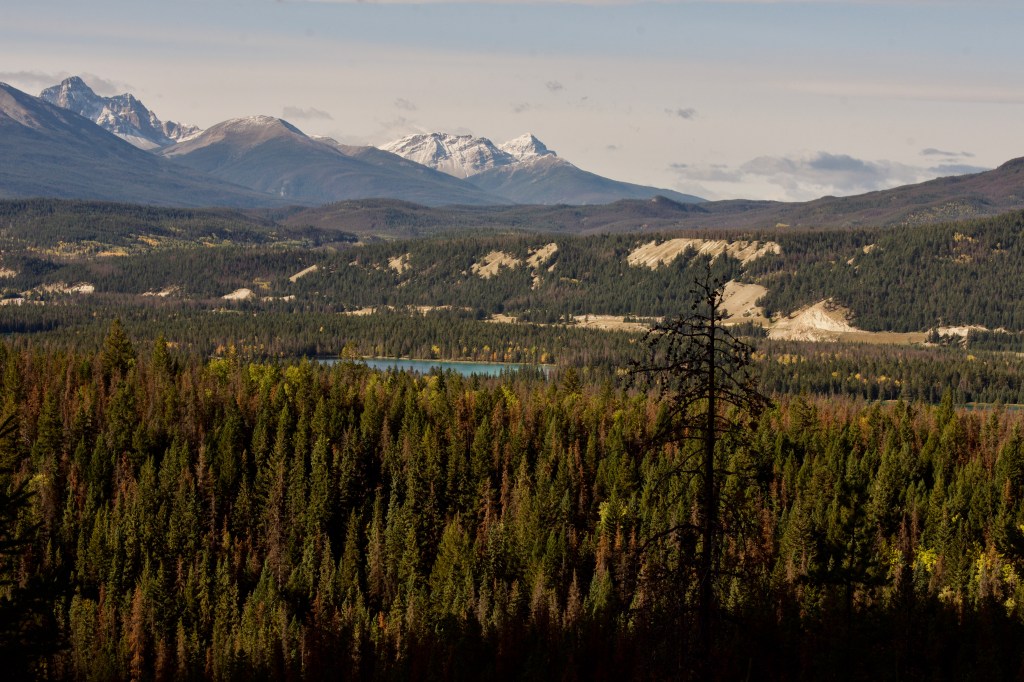
Orchestrating

“Gene Activation
Genes control the growth and development of all organisms—plants and people included. Many of the genes found in plants are also found in animals and other life-forms, providing even more insight into the most basic machinery that is required to be “alive.”
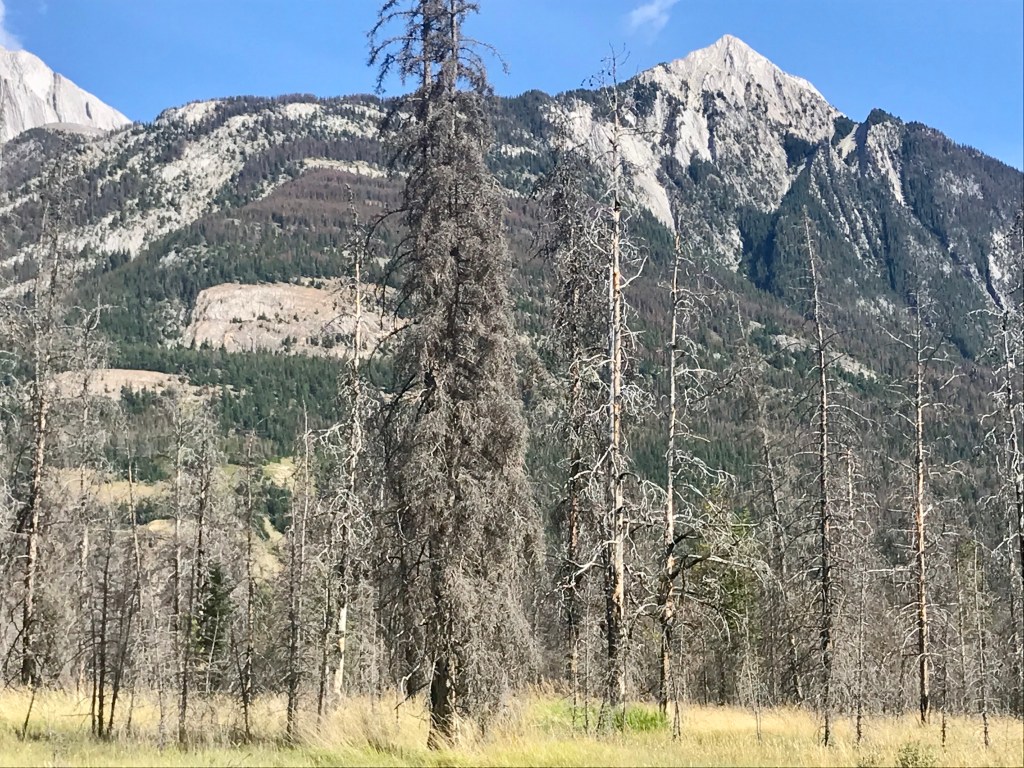
“Arguably the most-studied plant in the world is the mouse-eared cress, Arabidopsis thaliana. Its small size and rapid life-cycle (about 50 days) make it ideal for experimental investigation. Arabidopsis was the first plant to have all of its genes sequenced. Individual genes can now be linked with their biochemical functions, providing a road map to understanding plant development across all of plant-kind.”

“The movie, Arabidopsis thaliana: A Life shows a plant playing out its 6-week life from germination, through growth, flowering, and seed formation, to ensuing death. The background of color-coded visual data indicates the activation state of genes during each life stage.”

“The activity of many genes must be finely orchestrated for any individual—plant or human—to successfully grow and develop through all stages of life.”

https://bit.ly/35bICS9

Plant Behaviour

To access the full article on Plant Behaviour, made available to the public through Creative Commons license https://bit.ly/3lYuHoA and accessible here: https://bit.ly/3jSgIP5.

Citation: W.C. Liu. Plant Behavior. (2014 Fall). The American Society for Cell Biology, CBE Life Sciences 13 (3): 363-368. Retrieved 14:18 September 6, 2020 from: https://bit.ly/3bwTBXs.

Last Word on Plant Behaviour

We conclude the plant behaviour debate (at least in this post) with these words from the sLowlife project, presented in The Herald (September 20, 2012) on the opening of the exhibit at the Montshire Museum of Science in Norwich, Vermont. (https://bit.ly/2GBjIkK)

“Many of us think of and treat plants as inanimate objects. However, a plant grows, reacts to changes in its environment, reproduces, responds to disease and injury, and undergoes a slow decline into old age and death—a saga that sounds hauntingly familiar. Contrary to our conscious perception, plants do move—be it ever so slowly.”

“By turning time on its head, the creators of ‘sLowlife’ have given us a whole new way to look at plants, their activities, their movement, and their lives.”

“sLowlife” is an exciting exhibition that uses science, art, and technology to provide alternative dimensions for experiencing plants. It presents unusual and sometimes unnerving perspectives on how a plant reacts, both short-term and long-term, to its inner and outer worlds.” 

sLowlife: https://bit.ly/35bgFd7

Save the Date!

This year National Tree Day is next week on Wednesday, September 23, 2020 in Canada. Check online for possible events in your community, and we will blog about National Tree Day next week.

I Shall Never See a Poem As Lovely as a Tree

(We welcome guest blogger, journalist Liane Faulder and thank her for adding such a thoughtful personal story to our tree blog. Here it is……)

I think that I shall never see, a post as lovely as a tree. 

Though I’ve taken a liberty with the famous poem by American writer Joyce Kilmer, his point remains as sharp and true today as it was in 1914. 

A tree brings countless blessings to the natural environment, and while a tree is nothing short of perfect, all by itself — defying the common metaphor of a blog post — there is something about the tree that compels us to keep trying to describe what it means.

I remember a very special tree. It was located out front of McDougall United Church, in downtown Edmonton, and it greeted me as I crossed the street daily for some 25 years, passing the church to get to my reporting job at the Edmonton Journal. It was a crab apple, a huge, gnarled creature that nestled next to the historic, red brick church and changed extravagantly with the seasons.

In the winter, it was heavy and quiet with snow. Spring saw a burst of pink blossoms, and in summer, the crab apple tree provided leafy shade as I waited on the corner for the stoplight to change. Come fall, it felt wistful to me, because something was ending. 

I tried to talk my husband, who was a professional photographer, into documenting the seasons of the tree for me, but he just looked at me as if I was mad. When the church underwent extensive renovations in 2016, the tree was chopped down. I felt hollow in my belly for months afterwards every time I crossed the street.

Another memorable tree came to be in the tiny backyard of a duplex I once lived in with my boys, starting when they were about three and five years old. I remember having $150 to spend on yard improvements one spring season, and I struggled to decide between putting a tree into the barren space, and buying a patio set. 

Thankfully, I picked the tree, a delicious Schubert Chokecherry that produced green leaves and sprigs of tiny white flowers in spring, and then turned a rich, deep burgundy as the season progressed. 

When we left that house, it hurt me to leave the Shubert Chokecherry behind, but I managed to transplant my youngest son’s Gr. 1 tree from that modest back yard into the yard of our next home, which provided some comfort.

For all the good that trees do for the environment, and the amount they contribute to sheer beauty, they also carry emotional weight. It comforted me to plant the Schubert Chokecherry at the duplex, to invest in a lasting and meaningful way in the home that I created for the boys and me. The tree would be there long after we were gone, and I liked that. Likewise with the Gr. 1 tree. There is perhaps nothing as solid and satisfying as a sapling no bigger than your index finger that grows strong and tall, content to stay peacefully rooted as its namesake moves out into the world

Liane Faulder with her Algonquin Pillar Pine (photo credit Terry)

Now, in a new home, in a new marriage, a tree once again creates meaning. Though I don’t recall mentioning to my boys, now 32 and 34, that trees hold a special place in my heart, they chose to recognize my 60th birthday by planting an Algonquin Pillar pine in the front yard of our new home.

It has been dug into the north side of the property, near the front window, and I can see it from my living room. The tree frames the yard, just so, and will remind me of the boys, always. It’s hard to describe how much it all means to me — the house, the tree, the marriage, and the children.