Unsettled as 2022 has been, we close the year with gratitude, including for our Readers’ ongoing engagement and encouragement in following together with us in our climate action learning journey.
We are optimistic for the future, with clarity and a mix of confidence and humility to underpin our resolve to keep on our paths for more learning, changing and adapting behaviours to be ever more mindful of our footprint on Planet Earth—this home we share with 7.8 billion fellow humans and the contested estimates of anywhere from 8.7 million to 1 trillion other living species of plants and animals – and to honour our personal desire and commitment to do our part for a better, healthier, livable world for the generations who will follow in our footsteps, with any luck.
“Never doubt that a small group of thoughtful, committed citizens can change the world; indeed, it’s the only thing that ever has.” (Margaret Mead, https://bit.ly/3jGvvBU)
The words of Margaret Mead resonate and inspire for the daunting effort still ahead to keep overall global warming to 1.5C. The real world action and impact of Adama Diémé, one everyday individual resolved to doing his part to make a difference in his corner of southern Senegal inspires us and renews our hope in our fellow humans and what is possible for moving ahead toward a brighter, carbon neutral future for all.
Ununukolaal – “Our Trees”
Mr Diémé was shocked to return to his village in southern Senegal and find an absence of trees where in his childhood they once had been lush along the Casamance River. “With no great reserves of wealth, he began to raise money to make his dream a reality (to plant five million trees in five years) – and has used $5,000 from his own pocket to kick-start the initiative.”
“Mr Diémé’s project is known as Ununukolaal, which in the local language Jola means ‘Our Trees’.” Read more in this BBC piece – BBC – https://bbc.in/3VKCAic
Historic Global Agreement for Nature, Peopleand a Resilient World
Mr Diémé inspires us as an individual.
Fighting climate change and keeping global warming to 1.5C however, will take world-wide effort and cooperation, by individuals, organizations, governments of all levels, NGOs and the private sector, sustained for decades to come.
Protecting for global biodiversity is an inter-related and just as significant, urgent global challenge and call for transformational change in mindsets and practices, on behalf of ecosystems, humanity and a sustainable green global economy.
As 2022 draws to an end, we find hope and optimism for the future in the historic global agreement reached on December 19, 2022, in Montreal, Canada in the wrap up to COP15. Here is what the European Union (EU) reports on its website about the “Kunming-Montreal Global Biodiversity Framework” – https://bit.ly/3jH1QIJ
“Early this morning at the UN Biodiversity conference COP15 in Montréal, Canada, the EU joined 195 countries in the historic Kunming-Montreal Global Biodiversity Framework. This framework contains global goals and targets aiming to protect and restore nature for current and future generations, ensure its sustainable use as well as spur investments for a green global economy. Together with the Paris Agreement on climate, it paves the way towards a climate-neutral, nature-positive and resilient world by 2050.”
“The agreement is a solid framework withclear, measurable goals and targets, with complete monitoring, reporting, and review arrangements to track progress complemented by a robust resource mobilisation package.”
“More than half of global GDP depends on ecosystem services. 70% of the world’s most vulnerable people depend directly on wild species. The Kunming-Montreal agreement will accelerate ambitious policies around the world and mobilise financing for biodiversity from all sources – USD 200 billion per year by 2030. It commits the global community to actions to protect and restore nature and remove pollution – such as those that are part of the European Green Deal. This will ensure that nature continues sustaining societies, economies and communities for decades to come.”
Goals and targets for ambitious action by 2030 and 2050
“The Kunming-Montreal biodiversity agreement includes key global targets to:
Restore 30% degraded ecosystems globally (on land and sea) by 2030 Conserve and manage 30% areas (terrestrial, inland water, and coastal and marine) by 2030
Stop the extinction of known species, and by 2050 reduce tenfold the extinction risk and rate of all species (including unknown)
Reduce risk from pesticidesby at least 50% by 2030
Reduce nutrients lost to the environmentby at least 50% by 2030
Reduce pollution risks and negative impacts of pollution from all sourcesby 2030 to levels that are not harmful to biodiversity and ecosystem functions
Reduceglobal footprint of consumption by 2030, including through significantly reducing overconsumption and waste generation and halving food waste
Sustainably manage areas under agriculture, aquaculture, fisheries, and forestry and substantially increase agroecology and other biodiversity-friendly practices
Tackle climate change through nature-based solutions
Reduce the rate of introduction and establishment of invasive alien species by at least 50% by 2030
Secure the safe, legal and sustainable use and trade of wild species by 2030
Green up urban spaces.”
Mobilising finance and allow for business to take responsibility for biodiversity
“The deal will significantly increase the mobilisation of finance for biodiversity from all sources, domestic, international – both public and private – mobilising at least USD 200 billion per year by 2030. It will create incentives for domestic and international sources, including from business investment.”
“It also addresses subsidies harmful to biodiversity, with the commitment to identify by 2025 and eliminate by 2030 a total of at least USD 500 billion per year.”
“As part of the agreement, the EU subscribed to an international solidarity package, particularly for the most vulnerable countries and the most biodiverse. The new Global Biodiversity Framework Fund established under the Global Environment Facility will be open to financing from all sources.”
“In a major step to improve business action on biodiversity, large and transnational companies and financial institutions will be required to regularly monitor, assess and disclose risks, dependencies and impacts on biodiversity; and provide information to consumers to promote sustainable consumption.” To read more at the EU website – https://bit.ly/3jH1QIJ
Chihuly Glass and Garden Exhibition
We leave 2022 and look ahead to 2023 with a few quotes that we hope will inspire and close with images (and a plant list !) from the beautiful, shimmering, joyful Chihuly Glass and Garden space in Seattle to lift spirits and fire the imagination for growing (and/or travel) season 2023 ahead! (Stock photos above)
“As long as you have a garden you have a future and as long as you have a future you are alive.” ― Frances Hodgson Burnett (https://bit.ly/3i4Z2oh)
“To plant a garden is to believe in tomorrow.” ― Audrey Hepburn (https://bit.ly/3jHAL8i)
“Chihuly has shown his artwork in botanical gardens all over the world, but this was his first time working with a landscape designer to create a space unlike that of any garden or exhibition elsewhere. The unique plant collection is specially chosen to complement Chihuly’s work and the striking colors and forms of the trees, plants, and flowers create a rich backdrop for the art. With an ever-changing, lush landscape, those who visit will enjoy a distinct experience with each new season.” (https://bit.ly/3IcteZl)
Here is the link to the garden’s Master Plant list, where we were intrigued to find, and want to learn more about, perennials (among others) with names such as Fairy Wings, Kangaroo Plant, Mouse Plant and Dwarf Goat Beard. Enjoy and happy garden and/or travel planning 🙂 ! ( https://bit.ly/3VBxX9Y)
We wish everyone a Happy, Healthy, Hopeful and Awe-Inspiring New Year!
The COP-15 Biodiversity Conference is being held now in Montreal, Canada, from December 8-19, 2022 where representatives from 192 countries are focusing on defining a framework for preserving world biodiversity. Negotiators say about 900 so-called “brackets”- points that haven’t yet been agreed on – remain in the draft text. The conference is being chaired by China.
FRIENDS4TREES4LIFE
SEASONS GREETINGS everyone! Before we get into this blog, we want you to know that the best way to view our blog is to go directly into our blog FRIENDS4TREES4LIFE.com via WordPress.com. The next best way to see our full blog is to have it sent to your email.
Regardless of how you get our blog it is best to view it on a computer or laptop, and not on your iPad or cell phone. Our blog does not format well on these smaller devices. We notice that the photos are not available, and the layout is poor on these smaller devices. We want you to enjoy our blog as it is created.
NATURE COP15
So did you know about the COP 15 Conference on Preserving Biodiversity? Lucy credits Catherine for keeping her informed on this important biodiversity conference. The wildlife photos in this blog have been taken by Lucy.
At the main website undp.org (UN Development Programme) UN Biodiversity Conference is this opening statement :
“Despite ongoing efforts, biodiversity is deteriorating worldwide, and this decline is projected to worsen with business-as-usual. The loss of biodiversity comes at a great cost for human well-being and the global economy. The UN Biodiversity Conference is the most significant conference on biodiversity in a decade. It will see the adoption of the post-2020 global biodiversity framework. The framework provides a strategic vision and a global roadmap for the conservation, protection, restoration and sustainable management of biodiversity and ecosystems for the next decade.”
“What needs to happen at COP 15:
Adoption of an equitable and comprehensive framework matched by the resources needed for implementation
Clear targets to address overexploitation, pollution, fragmentation and unsustainable agricultural practices
A plan that safeguards the rights of indigenous peoples and recognizes their contributions as stewards of nature
Finance for biodiversity and alignment of financial flows with nature to drive finances toward sustainable investments and away from environmentally harmful ones”
These actions also help us protect the global climate, and protect us from the effects of climate change. As the architects of the Paris Agreement have said, “There is no pathway to limiting global warming to 1.5C without action on protecting and restoring nature.”
COP15 – A PARIS MOMENT FOR BIODIVERSITY?
Posted on Wednesday 7 December 2022 by Greens/EFA (Environmental representatives of the European Government): An Interview with MEPs of Finland, Ville Niinistö and Jutta Paulus of Germany
Why the COP15 in Montréal must deliver a New Deal For Nature:
“From 7 to 19 December, governments from around the world are gathering in Montréal, Canada, for the 15th Conference of the Parties to the United Nations’ Convention on Biological Diversity – also known as COP15. Our MEPs, Ville Niinistö (Finland) and Jutta Paulus (Germany), argue that governments cannot waste this once-in-a-decade opportunity to advance the protection and restoration of nature worldwide. They need to strike a New Deal For Nature now.”
No climate protection without nature
“Our nature is in crisis. We have lost a third of the Earth’s wetlands and half of all corals – and we continue to destroy natural forests at an alarming rate. A million species are in danger of extinction. In fact, scientists believe that we are living through the sixte mass extinction, and the first mass extinction since humans occupied the Earth.”
“But healthy ecosystems are just as important as a stable climate. They provide us with food and fresh water, protect us from disasters and disease, and form the basis of our economy. Oceans, forests and peat bogs also play a vital role in regulating the global climate. They absorb carbon emissions and shield us from extreme weather events linked to climate change. But they can only do that when they are in good health.”
At COP15 in Montréal: We Need a New Deal For the Nature
“The most important task for the COP15 Montréal conference is to hash out a new Global Biodiversity Framework (GBF) that will guide actions to protect biodiversity until 2030. This framework must be for nature what the Paris Agreement is for the climate – a clear guide to common action by governments around the world. The framework should include a range of numerical, measurable targets, such as the robust protection of at least 30 percent of the world’s land, freshwater and oceans by 2030, and global targets for nature restoration.”
A strong plan to implement biodiversity protections
“It is not the first time that governments set themselves targets on the protection of nature. But so far, they have failed to effectively reach those targets. None of the 2020 targets, the so-called Aichi targets agreed in Japan in 2010, have been fully achieved.”
“Even when they were partly reached, such as the designation of protected areas, they were not always effective in protecting wildlife. Countries have established “paper parks” without sufficient connectivity, adequate management and equitable governance.”
“That is why a solid implementation plan is just as important as well-defined targets. At COP15, parties must agree on an implementation mechanism alongside the global framework. Steps such as planning, monitoring and reporting, as well as reviewing and ratcheting up of action, must be clear from the start. They must also agree on a calendar for taking those steps.”
“Parties must be able to begin to implement the framework immediately by setting national targets and updating their National Biodiversity Strategies and Action Plans (NBSAPs).”
“Sufficient finance is critical to achieve implementation. Money should mainly come from public sources and be redirected from harmful subsidies paid out today. Public investments in biodiversity conservation and restoration make little sense if they are outpaced by investments in nature destruction.”
No deal at COP15 without Indigenous Peoples and local communities
“The effective protection of 30 percent of the world’s land, freshwater and oceans by 2030 will not be possible without the full inclusion of and leadership from Indigenous Peoples and local communities (IPLCs).”
“Generations of Indigenous peoples and local communities have effectively protected nature, and used it in a truly sustainable way. They are nature’s best guardians. Lands owned by these communities cover at least a third of all land on Earth, including particularly valuable, nature-rich areas, and they are generally in a good state.”
“Today, 80 percent of remaining biodiversity is in the lands, waters and territories of Indigenous Peoples and local communities. If we want to mend our broken relationship with nature, we must learn from nature’s long-standing allies and support their efforts to protect, defend and restore their lands and waters.”
“The protection of nature begins with the protection of the Indigenous peoples’ rights, livelihoods and cultures. At COP15, their voices must be at the centre of decision making, management and funding for nature protection.”
According to CBC News on December 11, 2022, “There is a significant Indigenous presence on the ground, with at least 497 of the 15,723 people registered to attend the summit representing Indigenous nations or organizations. A concern is that none of those Indigenous nations have decision-making status.”We always have to have this sponsor to speak for us. It’s as if we are children,” said Jennifer Corpuz, who is a representative for the International Indigenous Forum on Biodiversity at COP15.”
Financial institutions have a role to play in preserving biodiversity:
“Canada’s negotiators at the COP15 conference say business groups and financial institutions have a role to play in preserving the planet’s biodiversity. Basile van Havre, co-chair of one of the Montreal conference’s working groups, says the private sector is looking for rules and certainty on the environmental effectiveness of its investments. He says it’s part of a larger push for performance standards that companies and investors can use to measure their activities against. Van Havre says business groups have learned from climate change discussions that they need a way to assess risks. “They want measures of risk so that they can target their investment the right way,” van Havre said.”
“Although there is broad support for the overall goals at the conference, consensus remains elusive.”
The Canadian Press Published Thursday, December 8, 2022
For more reading on COP15 and how it is different from COP 27 please check out CBC-What On Earth: What is COP15? Why does it matter and what’s at stake at the summit.
“COP, in United Nations jargon, simply means Conference of Parties. It is a decision-making body made up of countries that have signed a convention. COP15 is different from the climate change summit, COP27, which was recently held in Sharm el-Sheikh, Egypt. That conference was under the umbrella of the United Nations Framework Convention on Climate Change.”
“The Montreal summit, COP15, is a meeting under the Convention on Biological Diversity. In 1992, 150 government leaders first signed that convention at the Rio Earth Summit. While biodiversity and climate change are related issues, the two conventions are separate.”
“This meeting marks the second part of COP15; the first part was held last year as a mostly virtual conference based in Kunming, China. “
What makes us uniquely Canadian? That is a vast topic, for different bloggers to tackle.
In terms of wildlife, however, and more specifically plant wildlife, our interest was piqued by a recent CBC article profiling research called “Ours to Save.” The study apparently achieved a Canadian first.
As the report’s authors and sponsors describe, “NatureServe Canada and the Nature Conservancy of Canada (NCC), in consultation with experts from across the country, have developed the first comprehensive list of plants, animals and fungi that can only be found in Canada.”
This select group of 308 of Canada’s “nationally endemic species” occur only in Canada.
The report systematically identifies wildlife species and sub-species that are unique to each province and territory, and flag more than 200 vulnerable species that “only Canada can save from extinction”.
Here we will keep our focus on the findings related to plant wildlife, illustrating example species and profiles of provinces and territories.
The authors hope that, “The results of this project can be used to prioritize conservation actions and to inspirepublic support for species and habitat protection in Canada.”
Readers who want to learn more about a specific region, and/or the other wildlife addressed in the study (e.g., animals, insects) may read the full report (75 pages) here https://bit.ly/2MGZVQq, and species profiles at https://bit.ly/3h95bKT.
Endemic Plants
“There are 109 nationally endemic plants in Canada. Almost 60% are full species and the remainder are subspecies and varieties. Only 12 are ranked by NatureServe as globally Secure or Apparently Secure. These secure plants include species with restricted ranges that are abundant and not threatened, such as Ogilvie Range Locoweed (Oxytropis nigrescens var. lonchopoda) in Yukon, and species that are more widespread but their global range is restricted to Canada. This includes Limestone Scurvygrass (Cochlearia tridactylites) and Limestone Willow (Salix calcicola var. calcicola).”
“Endemic plants occur in every province and territory, with BC and Quebec having the greatest number. The territories, Newfoundland and Labrador, and Saskatchewan are also relatively rich in endemic flora. Key areas for endemic vascular plants in Canada include the Athabasca Sand Dunes, coasts of the Gulf of St. Lawrence and St. Lawrence River freshwater estuary, islands of Canada’s West Coast, mountainous regions in Yukon and limestone plains on the island of Newfoundland.”
“Canada has 14 species of mosses, liverworts, lichens and fungi that are nationally endemic. Only one of these is a subspecies. All are of global conservation concern or are Unranked. These species occur across the country, including a beard lichen (Usnea fibrillosa) endemic to Nova Scotia, Slender Notchwort (Crossocalyx tenuis) endemic to Ontario and Carlott’s Wijkia Moss (Wijkia carlottae) endemic to Haida Gwaii.”
Example Endemic Plant Species Profiles
“Lake Louise arnica” is a small, perennial herbaceous plant in the sunflower family, named for Lake Louise in the Canadian Rockies.
This species’ pale-yellow colour and drooping shape help distinguish it from similar arnica species in the region.
Lake Louise arnica is unique to Canada and is found only in the Canadian Rockies of Alberta and BC. It grows in alpine meadows and on rocky, exposed slopes at high elevations.
This species is globally imperiled with observations in only about 20 locations.” https://bit.ly/37fG04E
“The Gulf of St. Lawrence Aster is a fleshy annual plant with clusters of small, white to pinkish flowers.”
“Its leaves are lance-shaped and range from 1.1 to 6.5 centimetres in length and from two to 9.8 millimetres in width. The tip of its leaves is slightly rounded.”
“Gulf of St. Lawrence aster produces dry fruits, called achenes, with silky tufts, which help the seeds to be dispersed by wind. This plant is also self-fertile and can reproduce on its own without other plants.”
“There are only 29 known populations of this species, whose range is limited to Quebec’s Magdalen Islands, New Brunswick and Prince Edward Island.”
“This species grows on moist sandy soils. It can be found on coastal habitats: beaches, dunes, lagoons and dry areas in salt marshes.”
“The Gulf of St. Lawrence aster is assessed as threatened by the Committee on the Status of Endangered Wildlife in Canada.”
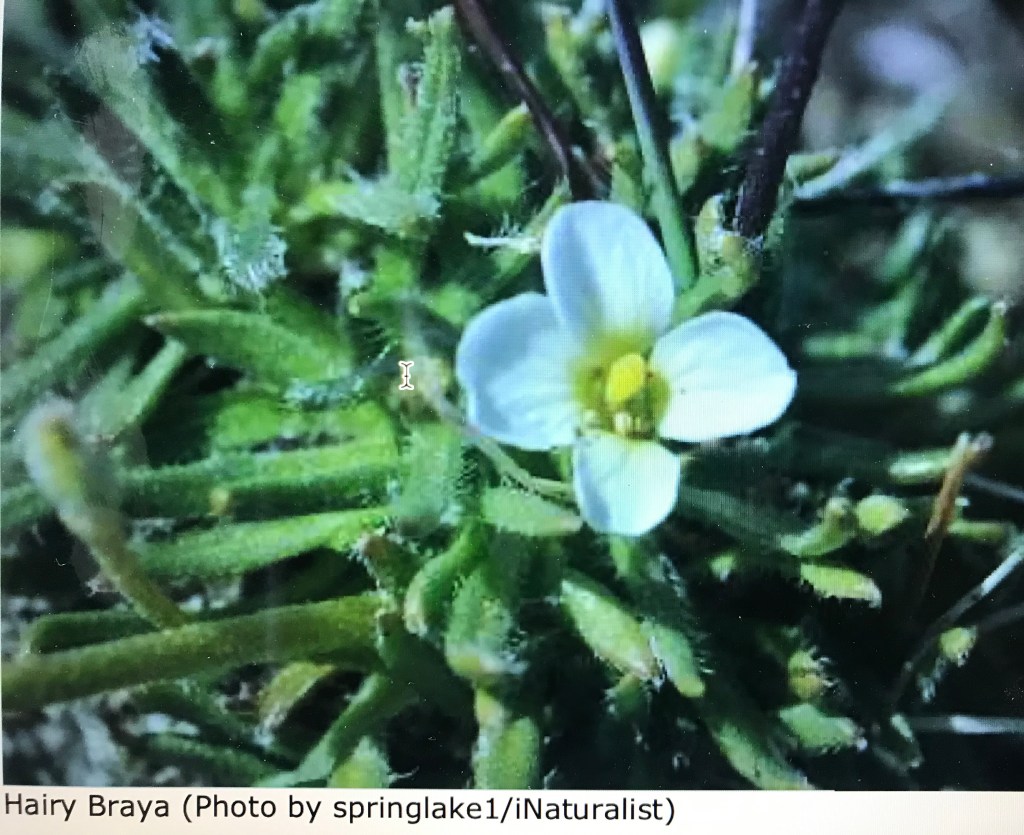
“Hairy braya was first collected during the Franklin expedition in 1826. Journals from the expedition were used to relocate this wildflower more than 150 years after its discovery. It is restricted to a small area along the northern coast of the Northwest Territories and is highly threatened by climate change and rising sea levels.”
Yukon draba: This delicate, white wildflower lives in dry open meadows in southwestern Yukon and is restricted to just a handful of sites. It is a relic of the land bridge that stretched between Russia and the Yukon during the last Ice Age.
Example Profiles forProvinces and Territories
The following excerpts give an illustrating flavour of the way findings are reported for each province and territory.
“Alberta has 54 nationally endemic species — the third highest in Canada (behind British Columbia and Quebec). Fifteen of these are subspecies or varieties, and four species have unresolved taxonomic questions. Alberta’s nationally endemic species include 16 vascular plants and two species of tiger beetles. Alberta also includes a portion of the breeding habitat for Whooping Crane (Grus americana) in Wood Buffalo National Park.”
Most Canadian endemic species occurring in Alberta are associated with the Rocky Mountains, Lake Athabasca and Cypress Hills. Many of the Rocky Mountain endemics can be found in Banff, Jasper and Waterton Lakes national parks and surrounding areas. Lake Louise Arnica (Arnica louiseana) is a colourful wildflower that can be found on exposed alpine slopes and calcareous rock slides at high elevations. There are also a few nationally endemic species that occur in the prairie region of the province. This includes Margaret’s Diving Beetle (Agabus margaretae), a predaceous beetle that only lives in vernal ponds in the northern prairies of Alberta and Saskatchewan.
“British Columbia has 105 nationally endemic species. This is the highest in all of Canada and represents over one-third of Canada’s nationally endemic species. This includes 36 subspecies or varieties, and five species with questionable taxonomy. Over 70% of the nationally endemic species from BC are vascular plants and invertebrates. The province holds the vast majority of Canada’s endemic mammals and birds. There are 76 nationally endemic species found only in BC, by far the highest number in Canada. Many of these occur on Vancouver Island, Haida Gwaii and other islands that probably acted as refugia during the last period of glaciation. Vancouver Island and Haida Gwaii both have several endemic mammals and birds including Vancouver Island Marmot (Marmota vancouverensis), Vancouver Island Water Shrew, (Sorex navigator brooksi) Queen Charlotte Hairy Woodpecker (Dryobates villosus picoideus),Queen Charlotte Pine Grosbeak (Pinicola enucleator carlottae), and several subspecies of the Townsend’s Vole (Microtus townsendii) (Cornely & Verts, 1988).”
“For its size, Nova Scotia has an extraordinary richness of nationally endemic species. Twenty-eight species have been documented, a richness similar to larger regions, including Ontario, Manitoba and Nunavut.”
“Over 40 percent of the national endemic species found in Nova Scotia do not occur in other jurisdictions (Table 11). This percentage of subnational endemics is only greater in British Columbia and Yukon.”
“Nunavut Canada’s largest territory has 29 nationally endemic species. This includes 13 subspecies or varieties.”
“Five Canadian endemic species are found only in Nunavut (Table 12), including two butterflies. Johansen’s Sulphur (Colias johanseni) is only found on the dry tundra at Bernard Harbour in Nunavut. Rankin Inlet Sulphur (also known as the Kivaliq Sulphur) (Colias rankinensis) is more widespread and has been recorded in several locations across mainland Nunavut (Schmidt, 2018).”
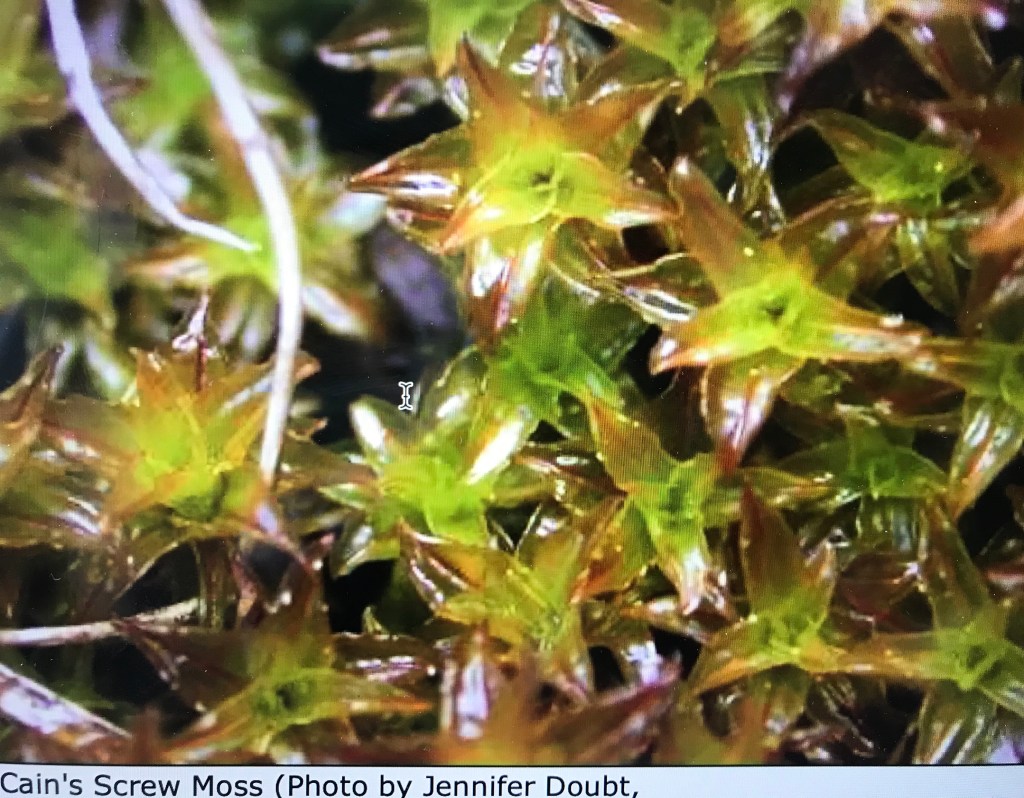
“Ontario has a total of 28 endemic species. One-third are subspecies or varieties, and three species have questionable taxonomy. Most nationally endemic species found in Ontario are vascular plants and invertebrates. Nine of Ontario’s endemic species are entirely restricted to the province (Table 13). These species include a small scavenger beetle (Hydnobius autumnalis) that is only known from eastern Ontario; Slender Notchwort (Crossocalyx tenuis), a liverwort that has only been found on the Bruce Peninsula and Eugenia Falls on the Niagara Escarpment; a lichen (Myriolecis carlottiana) that only occurs on the Bruce Peninsula and Manitoulin Island; and Cain’s Screw Moss (Syntrichia cainii), that is restricted to alvars. The only other moss species restricted to Ontario is now believed to be extinct. Macoun’s Shining Moss (Neomacounia nitida) was first found in 1864 in elm and cedar swamps near Belleville and has only ever been known from those original collections. The original site had been cleared by 1892, and this moss has never been found again despite searches in 1972 and 2001 (COSEWIC, 2002).”
“Quebec has 57 nationally endemic species, the second highest number in Canada. This includes 17 subspecies or varieties, and six species have questionable taxonomy. Over 40% of the nationally endemic species from Quebec are vascular plants and seven are butterflies or moths.”
Which Trees are Best for Reducing Air Pollution?
We are often asked which trees are “best” for climate action.
This May 2020 article in the BBC highlights research findings by “Future Planet” on this question, which to no surprise involves many variables and as such, is complicated to answer.
Nonetheless – our topline take-aways, for Readers who want to cut to the skinny – conifers and low-VOC (volatile organic compound)-emitting trees.
The article starts by giving us examples of urban tree projects intended to help reduce air pollution, with the reminder that of course it is always better “to reduce emissions of pollutants in the first place.”
“But trees also play a vital role in directly removing pollutants from the air. Plants are often seen as the “lungs” of an ecosystem because they absorb carbon dioxide and emit oxygen, says Rita Baraldi, a plant physiologist at the Institute of Bioeconomy of the Italian National Research Council. But they also act as an ecosystems “liver” too, filtering atmospheric pollutants like sulphur dioxide and nitrogen dioxide through their leaves.”
“Trees are particularly effective at removing particulate matter (PM), Nowak adds. PM comes in the form of tiny particles of organic chemicals, acids, metals and dust, emitted from fossil-fuel-burning vehicles and factories, as well as construction sites.”
Our top line take aways: Trees help reduce air pollution through dispersion and deposition of particulate matter (PM). Bigger tree canopies and leaf types with rough, rugged hairy surfaces are the best filters. Silver birch, yew, elder trees, silver maple, honey locusts and conifers, like pines and cypresses, are the most effective. Urban planners are advised to favour conifers and deciduous trees that are low producers of volatile organic compounds (VOCs).
“From an urban planning perspective, plants act as a readily available set of PM purifiers. “Trees can help reduce PM in two main ways,” says Prashant Kumar, the founding director of the Global Centre for Clean Air Research at the University of Surrey.”
Photo by Catherine
“The first one is dispersion – by crashing into trees and plants, concentrated clouds of minuscule particles get dispersed and so diluted by the air, decreasing the risk of inhalation by humans. The second one is deposition. PM can easily get trapped in the waxy, hairy leaves of trees and shrubs. When it rains, most of these particles are washed away by water into drains.”
“The extent to which each species performs such filtering activity depends mostly on canopy size, leaf size and leaf structure,” says Baraldi. Bigger canopies can trap more particles than smaller ones, and larger leaves can trap more pollutants than small ones. When it comes to leaf type, it is those with rough, rugged and hairy surfaces that act as the “best filters” for PM.”
“Recent research suggests that tiny hairs on plant leaves in particular may play a big role in trapping the solid and liquid particles that make up PM. In one recent study, Barbara Maher and colleagues at the University of Lancaster tested the ability of nine tree species to capture PM in wind-tunnel experiments. Silver birch, yew and elder trees were the most effective at capturing particles, and it was the hairs of their leaves that contributed to reduction rates of 79%, 71% and 70% respectively. In contrast, nettles emerged as the least useful of the species studied, though they still captured a respectable 32%.”
Photo by Lucy
Alpine air
“Conifers, like pines and cypresses, are also good natural purifiers. In 2015, Jun Yang, an urban ecologist at the Center for Earth System Science, Tsinghua University, in Beijing, ranked the most frequently occurring species in cities based on their PM 2.5 absorption capacity. The ranking also took into account species’ ability to survive in urban contexts, and any negative impact on air quality, such as the production of allergens, and of volatile organic compounds (VOCs) – a set of substances that can interact with gases emitted by vehicles, like nitrogen dioxide. In the presence of sunlight, these reactions can contribute to ground-level ozone, which is harmful to human health. The effects can be considerable; when a heatwave hit Berlin in 2006, the ozone created by the interaction of plants’ VOCs and vehicles’ pollutants resulted in sudden decreases in air quality.”
Photo by Lucy
“To Yang’s surprise, his ranking system showed that the most widespread species of trees were not the best pollution filters. “Of the 10 most recurring species, only the London plane, silver maple and honey locust ranked above average,” he says. It was conifers, such as pines and cypresses, that were the best pollution filters. Planting conifers, Yang concluded, would make most sense in polluted cities like Beijing to reduce PM2.5s. The Chinese capital routinely reports PM levels above 125 micrograms per cubic meter, more than 10 times greater than World Health Organization recommended threshold of 10 micrograms per cubic meter.”
“The reason for conifers’ success in reducing PM is partly down to their canopy structure – the dense canopy of needle-like leaves typical of conifers is very effective at trapping pollutants. And their seasonal biology helps too. “Conifers offer the best PM reduction because they are an evergreen species,” Nowak says. Unlike deciduous trees, who lose their leaves during winter, evergreen species act as year-round filters. “But that does not automatically make them fit for any context.”
“The issue with conifers, Nowak says, is that many species can be very sensitive to salt levels in soils, which tend to be high in urban areas especially where salt is used to de-ice roads. Compounding the issue, conifers’ year-round canopy can block sunlight from melting snow and ice, which can lead to road traffic problems in cities subject to cold temperatures, Nowak notes. These two drawbacks to conifers were also cited by Yang as caveats to be considered in his recommendations.”
Photo by Catherine
Troubling trees
Our top line take aways: Overall, favour year round canopies offered by conifers, especially conifers with low-production of volatile organic compounds (VOCs) such as hemlocks and junipers and low-VOC deciduous trees like elm, horse chestnuts and basswood.
“Some deciduous species can also come with side-effects, Nowak says. For example, trees commonly found in cities of the northern hemisphere – such as poplars or black gum trees – can emit high levels of VOCs.
“Ideally, you want to be able to identify species that can maximise PM absorption but minimise ozone-precursor production,” says Margarita Préndez, an organic chemist at the University of Chile, who has studied how different species affect air quality in Santiago. Nowak cites conifers like hemlocks, junipers and deciduous trees like elms, horse chestnuts and basswood as examples of low-VOC plants.”
“Based on data from Santiago and other Chilean cities, native trees emit fewer VOCs than non-native trees,” Préndez adds. In Santiago, non-native species like the Prunus and the London plane tree can produce up to 30 times more VOCs than native species.”
“But this rule might not apply everywhere, and Yang says that you can’t generalise when it comes to endemic versus introduced trees. “Some of the best species for air pollution reduction are non-native,” he says. “We should not rule them out for ideological reasons.”
Which trees, where to plant them?
Our top line take aways: Seek expert guidance on which trees to plant and where to plant them to maximize tree benefits for improving urban air quality. It is complicated. Fortunately , there is an expert report to guide urban planners, by the Global Centre for Clean Air Research, University of Surrey, called, “Implementing Green Infrastructure for Air Pollution Abatement: General Recomendations for Management and Plant Species Selection”. The document “summarizes best practice regarding Green Infrastructure implementation for improved urban air quality and reduced pedestrian exposure to air pollution. Generic (i.e. not site-specific) recommendations are offered for typical urban environments.”
“It’s a finely balanced business to find the right trees for a city. But that’s just the start, says Nowak. The next question is where to plant them.”
“Many well-meaning schemes have suffered because of poorly planned planting. “Some cities like Beijing and Mexico City have planted trees pretty far from the city centers,” says Rob McDonald, lead scientist at The Nature Conservancy. ‘That may not be that beneficial.’”
“McDonald, who works with municipal governments to manage urban forests, says that as a rule of thumb, trees need to be planted close to where people – and sources of pollution – are.”
“And as wind direction and landscape structure can affect the way pollution moves, trees need to be planted accordingly, Nowak adds. In narrow streets surrounded by tall buildings, like those of downtown Manhattan, airflow can trap pollutants close to the ground. Planting tall trees with big canopies can make matters worse in this situation by preventing the pollution from dispersing. A recent tree planning scheme in Beijing ended up trapping pollution in certain areas, partly for this reason.”
Photo by Lucy
“Kumar and his team recently issued specific recommendations for urban planners on this point. Hedges or green walls are generally to be preferred to trees in narrow streets flanked by tall buildings. While on broad roads surrounded by low-rise buildings, like those typical of the American suburbs, air can flow more freely so there is less risk of trapping pollutants, making both trees and hedges viable options. Examples of roadside hedges that work well include viburnum, red tip photinia, privet and bay laurel, Baraldi adds.”
“Ensuring biodiversityis also essential, even if one tree species is a standout winner in terms of its pollutant-trapping abilities. Kumar recommends that no more than 5-10% of an urban forest should be made of the same species or family. And a final factor that Nowak notes is that one should be realistic about maintenance and lifespan – plants that require little attention and that will last several decades are to be preferred.”
Implementing Green Infrastructure for Air Pollution Abatement: General Reccomendations for Management and Plant Species Selection – full report https://bit.ly/30qWUMb.
To access the full BBC article on Best Trees to Reduce Air Pollution (May 2020), that is the main source for this Blog post, see https://bbc.in/2XJuR94.
















 FRIENDS4TREES4LIFE