COP27

COP27 – “Conference of the Parties” 27th annual gathering – just wrapped up in Sharm el-Sheikh, Egypt after going two days over-time, almost going off the rails only to close with an historic first agreement on “loss and damage” compensation for countries bearing and ill-equipped to manage for disproportionate negative impacts of climate change on their environments and economies. (Think recent news of devastating flooding and loss of life in Pakistan for example.)

Begun in 1992, with the signing of the original United Nations (UN) climate agreement, 194 signatory countries of the 2015 Paris Agreement now meet at yearly climate summits (COPs) for governments to agree on steps to limit global warming and report on progress, in particular on measurable impacts of each country’s climate actions toward the critical target of keeping overall global temperature rise to 1.5C.

How to take stock of the importance and results of COP27?

How to do so with a view to keeping positivity, hope and motivation for change up and anxiety at bay in face of this complex and seemingly intractable existential threat to our Earth and humanity?

After all, these international talks on climate change have been going on since 1992 – that’s a long time!

Emissions are now being measured, tracked and tackled – that’s a good thing. Not so great is the still small number of nations – 25 (including Canada) – that file regular climate action progress reports with the UN, as agreed upon. More worryingly, notwithstanding international resolve to curtail emissions, overall global emissions of greenhouse gases keep rising (!). And thus, sadly and menacingly, so do global temperatures. Is 1.5C still possible many wonder? If not, then what?

Two BBC articles help us to take stock of COP27 and to frame why it continues to be so important that world leaders and their delegations met for the 27th climate summit, what are the key take-aways, including causes for hope, and remaining areas of tension going forward.


https://bbc.in/3i9plJM

https://bbc.in/3OAmUMm

Why is COP27 Important?

First positive outcome and no small accomplishment in our view is the meeting itself – that 194 nations – virtually all the world – continue to meet and be engaged in addressing a common (albeit largely human-made) threat to life and livelihood is important and essential to facing and solving this threat.

As the first BBC piece explains succinctly — “The world is warming because of emissions produced by humans, mostly from burning fossil fuels like oil, gas and coal.”

Global temperatures have risen 1.1C and are heading towards 1.5C, according to the UN’s climate scientists, the Intergovernmental Panel on Climate Change (IPCC).

If temperatures rise 1.7 to 1.8C above 1850s levels, the IPCC estimates that half the word’s population could be exposed to life-threatening heat and humidity.”

“To prevent this, 194 countries signed the Paris Agreement in 2015, pledging to “pursue efforts” to limit global temperature rises to 1.5C.”

At the recent COP27 climate summit, three main areas of discussion were:

  • Reducing emissions
  • Helping countries to prepare for and deal with climate change (adaptation and mitigation)
  • Securing technical support and funding for developing countries for the above.

Themed days also focused on issues such as biodiversity. (BBC: https://bbc.in/3EZVAUH)

“COP27: Climate costs deal struck but no fossil fuel progress”

The BBC headline above assesses and sums up the overall results of COP27. A major win, and a huge disappointment.

“A historic deal has been struck at the UN’s COP27 summit that will see rich nations pay poorer countries for the damage and economic losses caused by climate change.”

“It ends almost 30 years of waiting by nations facing huge climate impacts.

But developed nations left dissatisfied over progress on cutting fossil fuels.”

“…This year’s talks in Sharm el-Sheikh, Egypt, came close to collapse, and overran by two days.”

“…Luke-warm applause met the historic moment the “loss and damage fund” was agreed in the early hours of Sunday, as a confusing and often chaotic 48 hours left delegates exhausted.”

“It is, though, a huge symbolic and political statement from developed nations that long resisted a fund that covers climate impacts like flooding and drought.”

“…Expectations were low at the beginning of COP27 – it was meant to be an “action” summit that implemented agreements made last year, but would not reach anything new.”

“But the loss and damage deal could be the most significant development since the Paris Agreement.

“For almost as long as the UN has discussed climate change, developed nations worried about signing a blank cheque for climate impacts. Now they have committed to payments – though the details remain to be worked out.”

“…It tops off a conference marked with deadlock, and punctuated by dramatic moments – including Brazil’s President-elect Luiz Inácio Lula da Silva’s first appearance on the global stage since his recent election win. Speaking to rapturous crowds, he told COP27 that Brazil is back on the climate stage, promising to end deforestation and restore the Amazon.”

“It gave an injection of hope that many activists and observers of climate talks say is lacking at UN summits.”

Let’s take in and dwell for a moment on these causes for hope on the world stage, as we renew our own spirits and shore up much needed hope and resilience for the long haul at the personal level.

After 30 years of disagreement, progress is being made for the first time on establishing the historic Loss and Damage Fund.  Brazil’s new leader champions ending deforestation and restoring the Amazon rainforests– acknowledged as critical ‘lungs’ and ‘carbon sinks’ of the world.  Hopeful shifts.

COP27 – Sticking Points

We need and welcome hope to sustain us for the big challenges ahead. We choose to be positive-minded on climate action. This is not the same as being pollyana-ish, however.

And so, it is sobering for us to keep informed and reflect on the significant tensions still remaining.  This November 20th BBC piece discusses four major sticking points among nations as: Loss and Damage; Phasing out Fossil Fuels; Keeping 1.5C Alive; and, US and China.

For us, keeping faith in keeping 1.5C Alive looms large, and spurs us forward, to keep on with Friends4Trees4Life in our efforts to invite, inspire (we hope) and support personal climate action, in whatever ways and areas each individual deems personally relevant and meaningful.

If it is important to dwell in hope for the moment – we get it. (Feel free to skip ahead now to Blue Carbon Ecosystems.)

As and if Readers are ready to temper hope with more sobering food for thought, the BBC piece on remaining COP sticking points is a short read and offers a good place to start – https://bbc.in/3GHcF6Y

No doubt there will be more to discuss on COP27 in future blogs, including more about Canada’s climate action commitments, such as today’s expected announcement on a $1 billion adaptation fund.

We end this blog post with cause for hope put forward by Canadian researchers, as reported by Global News.

Blue Carbon Ecosystems – Oceans’ role in Fighting Climate Change
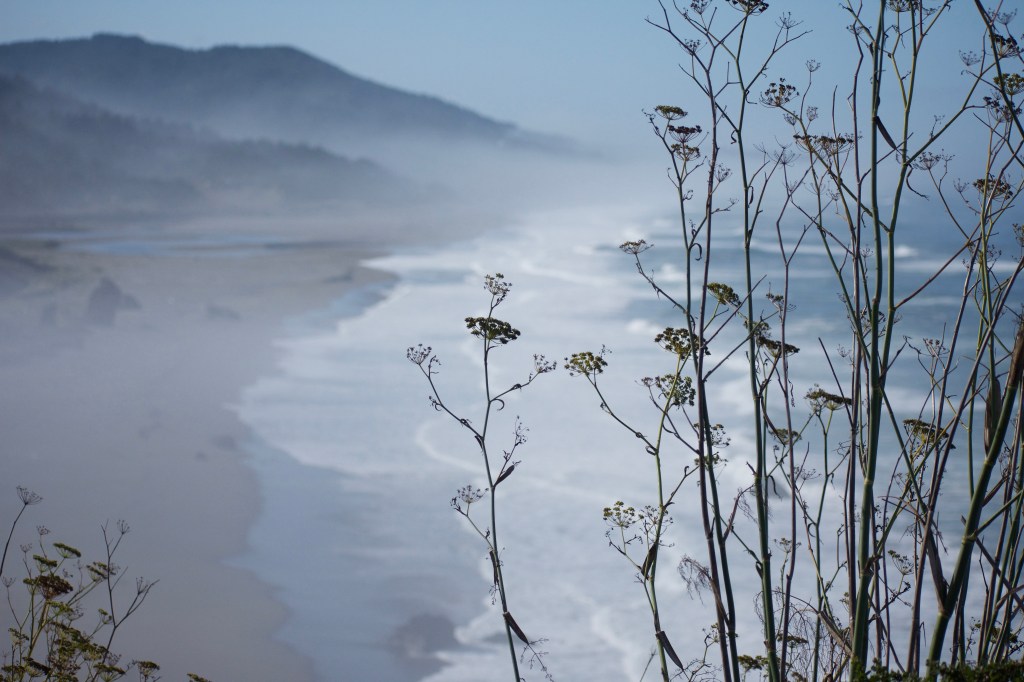
A Canadian delegation of researchers attended COP27 with the goal of raising awareness about the valuable under-represented role of oceans in fighting climate change.

This Global News piece put Dalhousie researcher Anya Waite on our radar.

Read more about how the ‘deep blue carbon sink acts as a buffer and impacts climate forecasts’.

While it is common knowledge about the important role of rainforests as lungs of the world (as we have earlier celebrated about Brazil’s new stance to restore the Amazon), Waite and her team contend that the little known good news is that ‘…oceans hold more carbon than all the rainforests on Earth’ and ‘..oceans have absorbed 90 per cent of the earth’s heat emissions so far…’.

Take hope in our Canadian talent championing knowledge building for cost-effective strategies to fight climate change! 

Climate change is a problem that takes huge resources to tackle, as everyone knows. Waite’s view and research is that “Canada is uniquely positioned to tap the ocean’s potential benefits..and balance its carbon output” and that “..a small investment (in ocean care) can bring enormous benefit for humankind. The problem we have is that the ocean is sort of out of sight, out of mind.”

Raising the profile on ‘blue carbon ecosystems’ seems to us to be the kind of tangible, do-able problem to solve that would move the bench posts and yield outsized dividends toward the bigger goal of driving to keep 1.5C alive to fight global warming and climate change.

We find this very promising and hopeful and a good note to end on for now.

To learn more:

Global News piece – https://bit.ly/3EYSyzP

Dalhousie News on Behind the scenes: How COP27 reached a deal that supports better monitoring of oceans to curb climate crisis – https://bit.ly/3tYN01Y

Ocean Frontier Institute

https://www.ofi.ca/about

https://www.ofi.ca/team/anya-waite

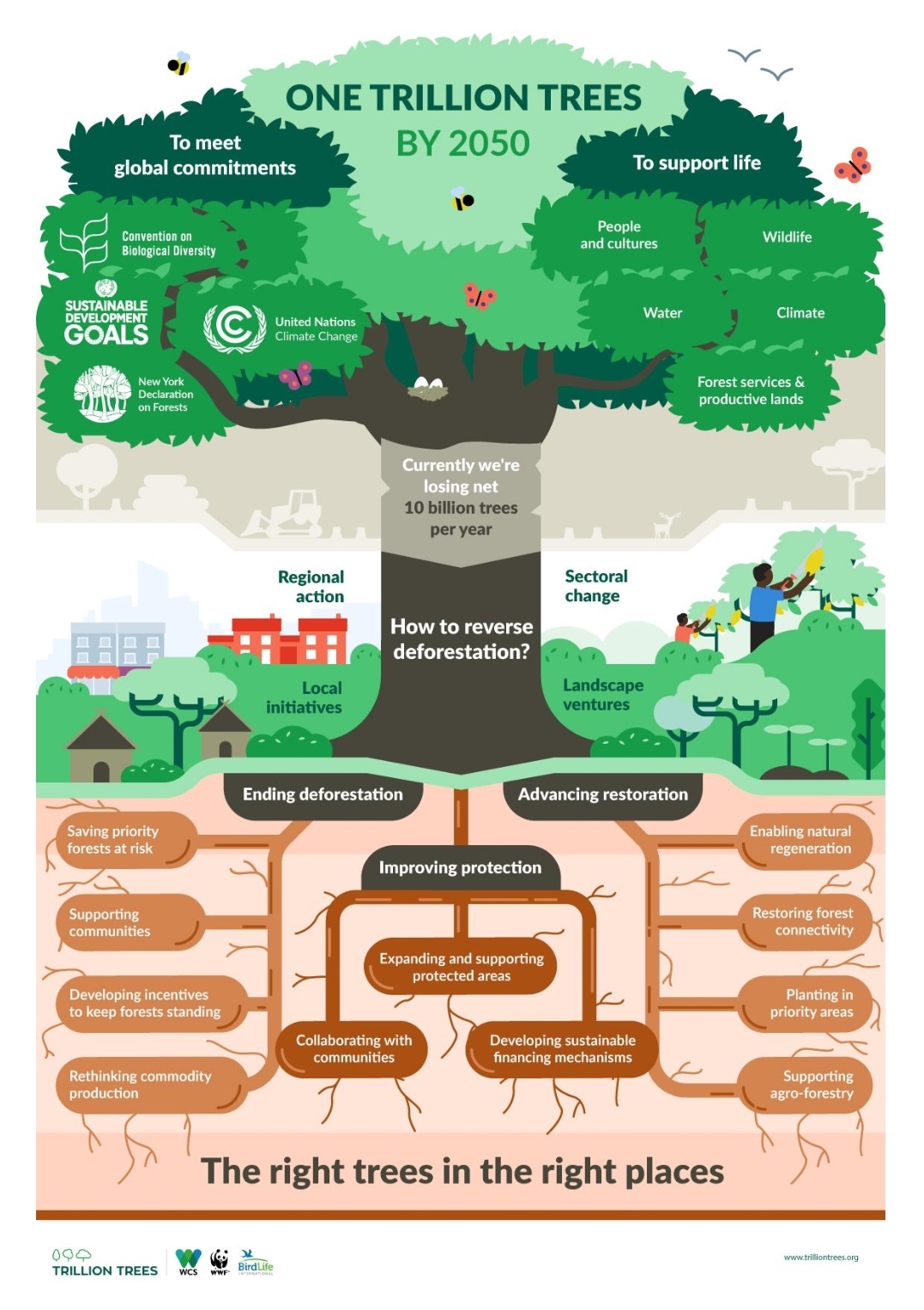
One Trillion Tree Initiative

Photo credit Lucy

Recently we were happy to receive an email from One Tree Planted as they stated their commitment to this commendable cause, the One Trillion Tree Initiative, a cause encouraging the planting of trees, a cause that spurred on this Blog of ours. Here is a summary of this article:

How The 1 Trillion Trees Initiative Can Have a Real Impact on Climate

“Trees are finally getting the international attention they deserve thanks to their potential as a natural climate solution for absorbing carbon, restoring vital ecosystems, and helping humanity adapt to a rapidly changing climate. Reforestation campaigns have been on the rise over the past few years, with everything from cities and countries aiming to break world tree planting records to popular influencers and businesses that want to give back to nature.”

” The latest major development came at the January 2020 session of the World Economic Forum, where the One Trillion Trees Initiative was announced as a means to rapidly increase global reforestation efforts. And we expect this enthusiasm for trees will only grow over the next 10 years because the United Nations has declared 2021-2030 the Decade on Ecosystem Restoration. Thanks to this declaration, corporations and governments have made commitments to plant, restore, and preserve millions of acres of land around the world.”

Source: Trillion Trees 

“Science has played a part in this global awareness, with hundreds of studies contributing to the global conversation around Climate Change and reforestation. A January 2020 study by James Mulligan et. al of the World Resources Institute touted planting trees as one of the best ways to suck carbon dioxide from the atmosphere.”

“While it is clear that on its own planting trees won’t save us from Climate Change, it can help tip the scales in our favor as we address other important factors. The Intergovernmental Panel on Climate Change has made it clear that we need to reach carbon neutrality by 2050 by phasing out fossil fuels. After 2050, we need to maintain carbon negativity at least until 2100 to stabilize rising temperatures at 1.5 C. Reforestation, with its enormous potential for global carbon capture, will play an essential role in this effort.”

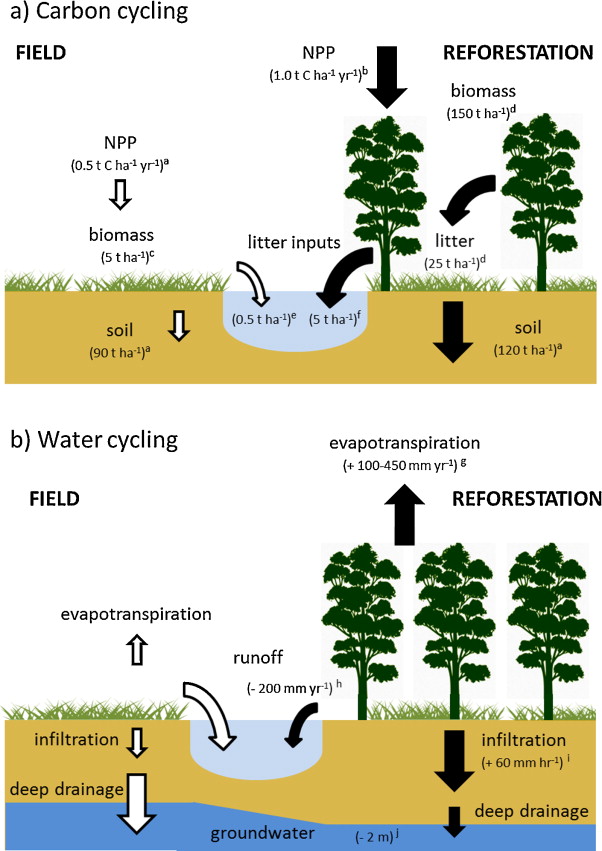
Source: Balancing the environmental benefits of reforestation in agricultural regions, S.C. Cunningham et. al

Quality Matters to Get the Trees Planted Right

“One Tree Planted wholeheartedly believes that by working together, the global community can accomplish the audacious goal of planting one trillion trees. And here’s how it can be done to ensure that this results in a lasting, positive impact.”

Increasing Scale and Capacity

Source: World Resources Institute 

“Scaling up reforestation may seem simple, but it can be anything but. To scale up requires thoughtful consideration of the capacity, impacts, land uses, and existing infrastructure in the intended area. How long will it take to grow a sizable supply of native seeds? Are there enough nurseries to support thousands of seedlings, or do more need to be built? Will tree-planting organizations be able to recruit and train enough local volunteers to start, plant, and nurture sensitive saplings? Can the local ecology withstand concentrated activity, or will it prove detrimental to sensitive species? Will the project comply with regulations set by local and regional governments? Will it put pressure on existing agricultural operations, potentially leading to increased deforestation and other unintended consequences? Is it designed well, having addressed all of these factors—and any others unique to the region? “

“And finally, does it follow these core Principles for Success?

1. Restoration should enhance and diversify local livelihoods, not threaten them.

2. Afforestation should not replace native ecosystems.

3. Reforestation should promote landscape integrity and biodiversity, not establish monocultures.

4. Projections of Carbon Capture should account for the loss of current vegetation.”

Photo by MaryAnn

Working With Local Communities

“Over the years, we have found that an inclusive approach works best. By collaborating with and involving local stakeholders, we ensure that they play an active role in guiding and implementing projects. In doing this, we are able to mitigate common barriers to success. After all, when the last tree is planted and attention has shifted to other projects, it is the local communities that will decide the fate of millions of trees. Knowing this, we develop strong partnerships everywhere we go. “

Investing in Maintenance and Conservation

Source: Balancing the environmental benefits of reforestation in agricultural regions, S.C. Cunningham et. al

“As important as it is to get trees into the ground, it can be argued that maintaining each plot after planting is even more important. Unfortunately, this crucial part of the process can be forgotten in the rush to hit lofty planting goals. Proper maintenance of sensitive seedlings, especially during the first year, requires dedicated people and solid infrastructure. Close monitoring is necessary to determine regional effects and to adapt to changing conditions. Working with local organizations and stakeholders will ensure that viable, cost-effective inititative.”

https://www.trilliontreecampaign.org

The Canopy: Root for Trees Newsletter in Edmonton

Plant Native Species not Ornamental

Here is another email received this month by The Root for Trees program in Edmonton that emphasizes we should “plant native species in areas that are being naturalized, even though other places around the world plant introduced trees because they have desirable benefits—usually faster growing and often as something that will be harvested. A notable benefit of trees is their ability to capture carbon and reduce global warming.

But a recent study in New Zealand found that although introduced species quickly sequester carbon as they grow, upon death non-native plants can actually cause more damage than intended. As they did not evolve in the local environment, non-native plants decompose more readily and release more carbon into the atmosphere than native varieties. 

By planting native plants on your property, you can help cool the planet and make Edmonton a healthy city!”

Right Tree in the Right Place

“Gardeners will tell you that a climate map is a useful tool. It uses temperature, day-length, average frost free days per year, and several other variables to assign zones, indicating where particular plants should survive. For most of the 1900s, Alberta was primarily a Zone 2 edging towards a Zone 3.

Edmonton is currently rated as a Zone 3B. Meaning, plants that previously would not have survived here can now potentially grow!

At the Old Man Creek Nursery, the City of Edmonton’s urban forestry team is testing plants found from other parts of the continent to see if they will live here. Some examples include:”

“Ironwood (Ostrya virginiana) can be found from Nova Scotia to Manitoba.
It is a small deciduous understory tree growing to 18 m tall and 20–50 cm trunk diameter. The leaves turn a bright gold in the fall, and the fruit looks like a hop.”

“Crimson Spire Oak, a trademarked tree with a narrow form and deep red fall colour, this hybrid is extremely tough. It is faster growing than other oaks with dark green foliage throughout the season. It will grow up to 15 m tall and spread about 5 m wide. Upward pointing branches and adaptability are inherited from the English Oak (Quercus robur) parent, while mildew-resistant foliage and red fall colour are inherited from the White Oak (Quercus alba) parent.”

“Fairview Maple (Acer rubrum). Not the leaf of our flag but very similar, this true maple has scarlet red fall leaves. It is characterized by a rounded canopy as it matures – a wonderful source of shade. This moisture-loving tree will get to about 10 m tall and wide.”

https://www.edmonton.ca/city_government/initiatives_innovation/root-for-trees.aspx

Carbon Capture Innovations, and, Rewilding

Trees are vitally important to our success in tackling global warming and climate change.

As the Earth’s ‘lungs and liver,’ trees, and especially forests,  provide a critical healing role by removing carbon dioxide and other harmful greenhouse gas emissions from the air, retaining these, as ‘carbon sinks’ if left undisturbed, while also releasing life-giving oxygen back into the environment.

Photo credit Lucy

Trees also play a role in moderating some of the negative impacts of climate change, by for example, helping to reduce flooding, strengthening resilience where they promote ecosystem biodiversity, and in some cases, acting as fire retardants, when their own native forest biodiversity is sustained and protected.

Changing human behaviour and economic practices to avoid for, reduce and offset, harmful greenhouse gas emissions remain the key, however, to our long-term success for generations ahead.

In past Blogs, we have looked at ways in which we, as individuals, may become more knowledgeable and mindful of our own carbon footprints (see, for example the Carbon Calculators in the Resources section https://friends4trees4life.com/resources/ , and, Lucy’s New Year’s Resolution blog post https://bit.ly/3hql1zX).  We have profiled community action (e.g., Eden Mills, Ontario); country, international and NGO actions; and, illustrated business and economic sector actions to lead transformational change toward a viable, healthy carbon neutral, or even carbon negative, future.

Some, including the Intergovernmental Panel on Climate Change (IPCC), argue that stepped up action on capturing carbon emissions is needed, even while the main focus should continue to be on avoiding and reducing emissions in the first instance. They say human efforts and innovations are needed to augment the heavy lifting done by trees – the scope and scale of the climate change challenge is just that enormous.

So, today’s post looks at innovation in carbon capture. Admittedly, it remains a controversial topic. Some are concerned that it distracts and detracts from keeping a necessary laser focus on reducing or ideally avoiding, emissions.

First, let’s start with this helpful CBC primer on what is carbon capture, and why some view it as so important for the way forward.

Photo credit Jim

“Carbon capture: What you need to know about catching CO2 to fight climate change”

“If global warming is caused by too much carbon dioxide being released into the atmosphere by human activities, intercepting those greenhouse gases before they reach the atmosphere — or, better yet, sucking them right out of the sky — sounds like a logical solution.”

“That’s the promise of carbon capture technologies, one of the few climate change solutions that doesn’t just reduce the amount of carbon emitted, but can actually remove carbon from the atmosphere, thereby generating ‘negative emissions.’ “

“It may in fact be essential if we are to limit global warming to 1.5 C above pre-industrial times — the more stringent of two targets under the Paris accord that aim to prevent the worst impacts of climate change. Last year’s special report from the Intergovernmental Panel on Climate Change (IPCC) found carbon dioxide removal was needed in every successful scenario to cancel out emissions from sources for which no mitigation measures have been identified — things like long-distance air travel and cement production.”

Photo credit Lucy

“The International Energy Agency calls carbon capture a ‘critical tool in the climate energy toolbox.’ “

“Here’s what you need to know about the technology.”

What is carbon capture?

“It’s a range of technologies that either: 

  • Stop carbon dioxide from entering the atmosphere, often by “filtering out” the carbon dioxide en route to the smokestack of a facility such as a power plant or factory. 
  • Remove carbon dioxide that’s already in the air, a process known as ‘direct air capture.’ “

“In both cases, the CO2-containing gases or air are typically absorbed by a solvent or solution, and then separated out again later.”

“So far, most carbon capture projects around the world have been the former, as carbon dioxide concentrations are much higher coming out of a source like a furnace — CO2 makes up just 0.04 per cent of the air — making it cheaper and easier to extract.”

Photo credit Jim

What happens to the carbon after it’s captured?

“It can either be:

  • Permanently stored underground (carbon capture and storage).
  • Converted into a carbon-containing product (carbon capture and utilization).”

“Most of the projects in Canada so far have been carbon capture and storage, where the carbon dioxide is used to push more oil out of aging oil wells and then stored underground in air pockets in the porous rock of depleted wells, with a “cap stone” on top to prevent leakage.”

Where are carbon capture plants located?

“As of 2018, there were 18 large-scale commercial facilities in operation around the world, five under construction and 20 in other stages of development, according to the Global Carbon Capture and Storage Institute, a think-tank based in Melbourne, Australia.”

“Four are located in Canada:

  • Boundary Dam, a coal-fired power plant operated by SaskPower that started capturing carbon in 2014.
  • Quest, an oilsands project run by Shell Canada that started capturing carbon in 2015.
  • Weyburn, which captures CO2 from a North Dakota-based coal gasification and power plant, and transports it by pipeline to the Weyburn oilfield in Saskatchewan.
  • Alberta Carbon Trunk Line, which is set to begin operations later this year, and will take emissions from the Redwater Fertilizer factory and the Northwest Redwater (NWR) refinery currently under construction to aging oil reservoirs in central and southern Alberta.”

Readers may want to learn more by reading the full CBC article (September 2019), which includes a discussion of why some view it as crucial technology even though currently it is not making much of a dent in emissions, and the reasons why others remain “sceptical or critical of carbon capture,”: https://bit.ly/2BmHVZR.

Promoting Innovations in Carbon Capture and Utilization

Below are links to a CBC article and the xPrize.org website, both of which profile innovations in carbon capture and utilization, supported through incentive funding by two groups – Emissions Reduction Alberta, and, Canada’s Oilsands Innovation Alliance (COSIA) in partnership with the Xprize Foundation.

Why would Emissions Reduction Alberta put up $35 million to promote business innovation in carbon capture?

CBC offers one compelling explanation – “The potential may be big. A McKinsey & Company report last year done on behalf of the Global CO2 Initiative said that carbon products — especially in concrete, plastics, fuel, and carbon fibre — could be a market worth between $800 billion US and $1.1 trillion US by 2030.”  To learn more about innovations by companies such as CarbonCure’s enhanced concrete, read the full article (March 2017) at: https://bit.ly/3hrMocZ

This Xprize.org website offers the goal and rationale for the purse prize for the “$20 million NRG COSIA CarbonX Prize” aimed at developing “…breakthrough techonologies to convert CO2 emissions to usable products.” It also profiles the contest’s 10 international finalists chosen from among 27 semi-finalists

https://bit.ly/2E1mYo2, which you may also view in this two-minute finalists’ videoclip https://bit.ly/3hrhr8I (click the link, then scroll down).

The finalists come from Scotland, India, China, the US and Canada and are grouped into two “tracks” – five teams in the Wyoming Track that will “demonstrate conversion of CO2 emissions at a coal-fueled plant in Gillette, WY.,” and five teams in the Alberta Track that will “demonstrate conversion of CO2 emissions at a natural-gas fueled plant in Alberta.”

The four Canadian finalists are:

Carbon Upcycling Technologies (Calgary): “Led by Apoorv Sinha, the team is producing enhanced graphic nanoparticles and graphene derivatives with applications in polymers, concrete, epoxies, batteries and pharmaceuticals;”

Carbicrete (Montreal): “Led by Dr. Mehrdad Mahoutian, the team is producing cement-free, carbon-negative concrete that uses waste from steel production on an alternative to traditional cement;”

CERT (Toronto): “Led by Dr. Alex Ip of the Sargent Group at the University of Toronto, the team is producing building blocks of industrial chemicals;”

CarbonCure (Dartmouth): “Led by Jennifer Wagner, the team is producing stronger, greener concrete.” https://bit.ly/2ZPoFNM

Photo credit Jim

Rewilding

Last word for today goes to Nature and, of course, the trees.

There is a recent, growing movement in Europe – rewilding – that takes the idea of tree planting for climate action to another  level.

Here’s what the RewildingEurope.com website says about rewilding:

“Rewilding is a progressive approach to conservation. It’s about letting nature take care of itself, enabling natural processes to shape land and sea, repair damaged ecosystems and restore degraded landscapes. Through rewilding, wildlife’s natural rhythms create wilder, more biodiverse habitats.”  https://bit.ly/2WJiitq

Rewilding Europe presents its compelling case for rewilding in its 101-page Annual Review 2019 report:

From climate change mitigation to enhanced health and wellbeing, nature has the answers to many of society’s most pressing challenges. On International Biodiversity Day, Rewilding Europe’s latest annual review shows how investing in wild nature can make the world more livable for everyone.”  https://bit.ly/2CCn0m4

In this report, Readers may learn about the principles of rewilding, European rewilding facts and figures (including engagement by 16 countries), and the impact of rewilding projects in areas with intriguing names such as, the Rhodope Mountains, Greater Coa Valley, Southern Carpathians, Central Apennines, Swedish Lapland, Velebit Mountains, Danube Delta, and Oder Delta.

There is even information to entice those who want to “Make Your Next Vacation a Wild One” !

Photo credit Lucy

Rewilding Britain

Rewilding is catching hold in the UK, with big plans and a widening mission to be announced later in 2020, according to this news item by RewildingBritain.org – “New network to spearhead rapid rewilding across Britain,” – “A new project spearheading rapid and massively upscaled rewilding will be launched by Rewilding Britain later this year, to tackle the nature and climate emergencies, and help boost green recovery from the Covid-19 crisis.” The charity explains that —

With nature faring worse in the UK than in most other countries, and many people wanting Britain to ‘build back better’ from the coronavirus pandemic, the charity’s new Rewilding Network will aim to create a rewilding snowball effect by bringing together hundreds of people from across Britain – including landowners, farmers, land managers, community groups and local authorities – who are rewilding land or considering doing so.

Initially the Network will aim to catalyse and support the rewilding of at least 300,000 acres of land – an area the size of Greater Manchester or North York Moors National Park – plus marine areas within the next three years.

Rewilding Britain says bold action is needed to reverse the collapse in UK wildlife, which has left 56% of species in decline and 15% threatened with extinction, and to tackle climate breakdown. Red squirrels, capercaillie, and pollinating insects such as the great yellow bumblebee are among many species facing a bleak future, while returns or rebounds of species like beavers, sea eagles and pine martens are happening slowly.”

“ ‘We need to hit the reset button for our relationship with the natural world, and rebuild our lives and economies in ways that keep nature and us healthy,’ said Rebecca Wrigley, Rewilding Britain’s Chief Executive.”

‘Our Rewilding Network will help propel rewilding to a whole new level – so we can all begin to enjoy a Britain rich in wildlife again, with healthy living systems soaking up millions of tonnes of carbon dioxide, and our lives enriched by wild nature and strong resilient communities, regenerative farms and nature-friendly businesses.’ ” 

Read and learn more at: https://bit.ly/2CWyCAg.

Photo credit Jim