A New Climate Reality is Taking Shape

Happy New Year!

We are ringing in 2024 with more good news on how we, together, are managing global warming! From reading a few blogs, and listening to a few podcasts/interviews we now are hearing an encouraging narrative: we humans have averted the worst case (apocalyptic) scenarios for our planet that were being discussed only just a few years ago (around the time we first started this Friends4Trees4Life Blog). We still do not know what the planet will be like in 30 years, but the progress that has already been made is paving us a future. This optimism is mostly due this decade’s widespread technological development and production of renewable energy, most notably solar energy and wind energy. 

David Wallace-Wells, American journalist and author of the 2017 essay and book 2019 “The Uninhabitable Earth” has written a more recent article in the New York Times called “Beyond Catastrophe-A New Climate Reality is Coming Into View”. This was also the subject of interview by Dave Davies for the Podcast FRESH AIR . Wallace-Wells was initially very sceptical about our ability to tackle global warming, but feels that we now can see a path forward. It’s not an easy path, but there is a way forward. Let’s look at what he has to say.

Mill Creek Ravine Snowfall

Price of Renewables

On interview a year ago Wallace-Wells stated that since 2010, the cost of solar power has fallen by about 85-90% and over that same period of time fossil fuels have not fallen in price at all, so many renewables are much cheaper than their alternatives, and have become more reliable too. He says most of the world now lives in places where building new renewable capacity would be cheaper than building new dirty capacity. As well, in a lot of places it is already cheaper to build new renewables than even to continue running old fossil fuel plants.

And it is not just solar power. As of a year ago, wind energy, both offshore and onshore, had fallen by 60-80%. Battery technology for storing this renewable energy has fallen by about 80-90%. So we are living through an incredibly dramatic collapse in the price of renewables, which means that solar power has now been called, by the International Energy Agency (IEA), “the cheapest electricity in history”. 

Wallace-Wells says, “We’re not moving fast enough, but the energy mix is changing quite dramatically, so a decade from now, I think, it’s going to look very very different than it does today.”
Investment in Renewables

According to Wallace-Wells, “The entire landscape of energy investment has really been transformed, both in the private sector and in the public sector, because anyone in the world who’s looking at these data points and making 10 year, 20 year and 30 year plans, everyone is going to think we should be going all-in on renewables. We should not be building new coal or new oil or new gas capacity. And as a result, that’s what’s happening! Already two years ago the IEA marked that we invested more in renewable capacity than in non-renewables. So we’ve turned a corner here!”

A Faster Transition Means A Richer & Healthier World

Wallace-Wells states, “One big recent report suggested that the global economic benefit could be in the order of $12 trillion, if we transition more quickly. In addition there are climate benefits and public health benefits. Right now it is estimated that 8.7 million people are dying every year from the air pollution produced primarily from the burning of fossil fuels. We can avert some of the suffering that will be caused by increased floods, fires and extreme heat affecting food production, if we move faster.”

“Also good news is that poor countries of the world do not have to develop more slowly, as decarbonization with renewable energy is cheap and this means they can grow more prosperous more quickly. It is encouraging, as well, that each year at the COP Conference the issue of assisting poor countries financially for loss and damage from floods, fires and heat (from global warming caused mostly by the rich countries) gets to be more on the center stage.

Here is the link to this full interview:

Good News of 2023 from Journalist Angus Hervey

On January 2, CBC- The Current, Matt Galloway interviewed Angus Hervey editor of the “Future Crunch” a newsletter focusing on good news. Hervey says despite 2023 being dominated by cruelty, conflict and climate disasters, it has been the “best year ever” for global health, conservation and clean energy, we just don’t hear about it.
Clean Energy Accomplishments in 2023

In terms of clean energy, in 2023 the planet has installed staggering amounts of solar energy; 58% more than in 2022 and, as well, in 2022 we installed 41% more than we did in 2021. So the world’s solar capacity doubled in the last 18 months! Leading that charge was China, which likely means China reached peak emissions in 2023, 6-7 years ahead of expectations.

Progress in Conservation in 2023

  • There is a staggering list of endangered species that are now recovering including the Asiatic Lion, Atlantic Puffin, Golden Lion Tamarin to name a few.
  • The Amazon Forest has seen 55% reduction in deforestation, much as a result of the election of leader Luz Inacio Lula da Silva in Brazil. This is the largest decline since recorded time!
  • The Historic UN Global Ocean Treaty was signed in 2023, thanks to efforts by Greenpeace visiting every ocean and documenting challenges to marine life and ecosystems from destructive fishing to deep sea mining. Hailed as the biggest conservation victory ever, the new treaty paves the way for the creation of ocean sanctuaries in which ecosystems can recover and thrive, potentially saving our oceans from the brink of disaster. 
  • Canada’s First Nations People are leading a revolution in conservation globally. The Canadian government has been turning to Indigenous communities more and more to help manage boreal forests by ceding more of the forest land to them. Last year, the federal government set aside $340 million to support areas protected by Indigenous groups and networks of Indigenous experts. As well, Indigenous people have recently reintroduced Bison to the land!
  • Canada has made great progress towards protecting 25% of it’s oceans by 2025

Hervey says this is not kumbaya, but it is important to recognize the progress being made, to balance the other devastating news that is usually broadcast. And this is just a sampling of the great accomplishments in 2023. Hervey believes optimism is a choice we make in navigating the world, and can help us individually make choices to help be part of the change.

https://www.cbc.ca/player/play/2296243267927

Solar Panels and New Windows on Your Home

Lucia has had solar panels on her roof for about a year now. There is a $5000 grant and 0% interest loan from the Federal Government to assist you to make your home more energy efficient. This grant was supposed to last until 2028, but is so popular that it may not be around through 2024. Solar is not for everyone but Lucia is thrilled that she just got her first electric bill since March, so has been enjoying free energy for about 9 months. It is also great to have the sun charge her electric vehicle most of the year. Catherine has replaced her windows for more energy efficient ones. She uses public transit often and supports small local businesses. We need to keep asking ourselves, “what can we do better?” This Christmas Lucia gifted laundry eco-strips that require little packaging (no plastic jug), and part of the proceeds support other charities. Many people we know are buying electric or hybrid vehicles. We need to keep working together. No one can do everything, but everyone can do something. Is there anything you have been thinking to try?

Reflections

This Friends4Trees4Life Blog was started just before 2020 at a time that we felt not enough people were discussing climate change, so we wanted to get the conversation started. After about 18 months of blogging, we were encouraged that the climate discussion was becoming mainstream, and climate change was becoming something few people denied. Countries started making a plan for change. By 2022 we could see progress being made, but it still felt like there was not enough action to match the policies, and most deadlines were not being met. Now this year, reading about these changes that have taken place in 2023, hearing some big accomplishments are ahead of schedule, we feel more encouraged than ever! Again, it is not kumbaya, but we can see a new climate reality taking shape. With this encouragement, we hope you will feel enthusiastic like we are to find a place in the wheel of change. Using Brazil as an example, it is important to think about who we choose as leaders, because they can dramatically affect the future of our planet like reversing deforestation of the Amazon Rainforest. Lucia knows that she will vote with the planet’s health as a main consideration.

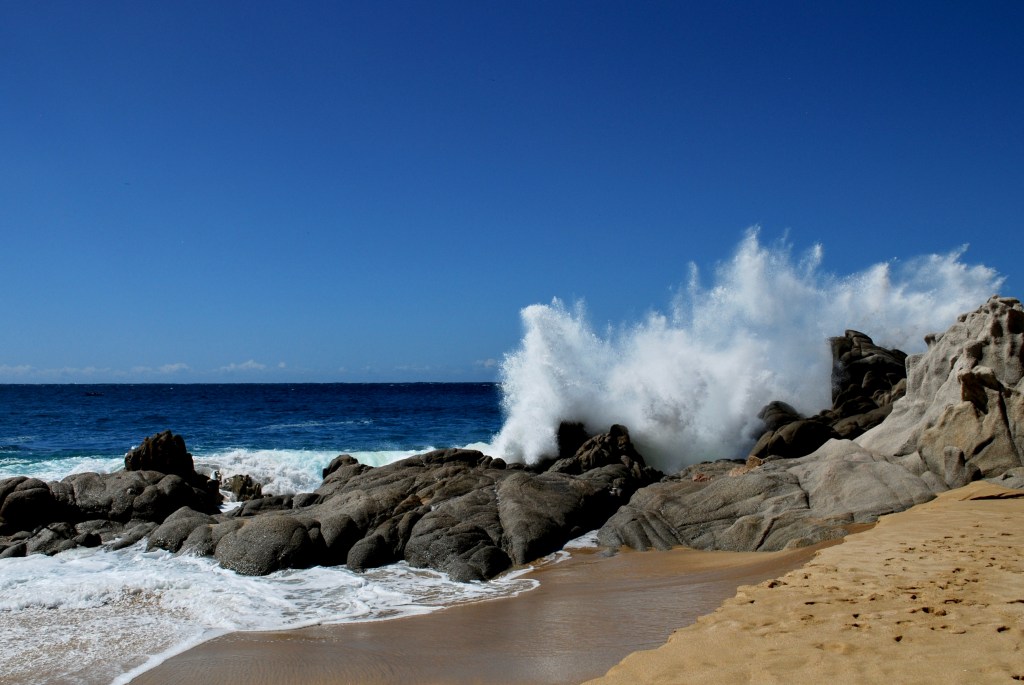
Note: The landscape photos of our planet in this blog were taken by Lucia MacQuarrie

Happy Healthy Hopeful and Inspiring New Year

Unsettled as 2022 has been, we close the year with gratitude, including for our Readers’ ongoing engagement and encouragement in following together with us in our climate action learning journey.

We are optimistic for the future, with clarity and a mix of confidence and humility to underpin our resolve to keep on our paths for more learning, changing and adapting behaviours to be ever more mindful of our footprint on Planet Earth—this home we share with 7.8 billion fellow humans and the contested estimates of anywhere from 8.7 million to 1 trillion other living species of plants and animals – and to honour our personal desire and commitment to do our part for a better, healthier, livable world for the generations who will follow in our footsteps, with any luck.

“Never doubt that a small group of thoughtful, committed citizens can change the world; indeed, it’s the only thing that ever has.” (Margaret Mead, https://bit.ly/3jGvvBU)

The words of Margaret Mead resonate and inspire for the daunting effort still ahead to keep overall global warming to 1.5C. The real world action and impact of Adama Diémé, one everyday individual resolved to doing his part to make a difference in his corner of southern Senegal inspires us and renews our hope in our fellow humans and what is possible for moving ahead toward a brighter, carbon neutral future for all.

Ununukolaal – “Our Trees”

Mr Diémé was shocked to return to his village in southern Senegal and find an absence of trees where in his childhood they once had been lush along the Casamance River.  “With no great reserves of wealth, he began to raise money to make his dream a reality (to plant five million trees in five years) – and has used $5,000 from his own pocket to kick-start the initiative.” 

“Mr Diémé’s project is known as Ununukolaal, which in the local language Jola means ‘Our Trees’.” Read more in this BBC piece – BBC – https://bbc.in/3VKCAic

Historic Global Agreement for Nature, People and a Resilient World

Mr Diémé inspires us as an individual.

Fighting climate change and keeping global warming to 1.5C however, will take world-wide effort and cooperation, by individuals, organizations, governments of all levels, NGOs and the private sector, sustained for decades to come.

Protecting for global biodiversity is an inter-related and just as significant, urgent global challenge and call for transformational change in mindsets and practices, on behalf of ecosystems, humanity and a sustainable green global economy.

As 2022 draws to an end, we find hope and optimism for the future in the historic global agreement reached on December 19, 2022, in Montreal, Canada in the wrap up to COP15. Here is what the European Union (EU) reports on its website about the “Kunming-Montreal Global Biodiversity Framework” – https://bit.ly/3jH1QIJ

“Early this morning at the UN Biodiversity conference COP15 in Montréal, Canada, the EU joined 195 countries in the historic Kunming-Montreal Global Biodiversity Framework. This framework contains global goals and targets aiming to protect and restore nature for current and future generations, ensure its sustainable use as well as spur investments for a green global economy. Together with the Paris Agreement on climate, it paves the way towards a climate-neutral, nature-positive and resilient world by 2050.”

“The agreement is a solid framework with clear, measurable goals and targets, with complete monitoring, reporting, and review arrangements to track progress complemented by a robust resource mobilisation package.”

“More than half of global GDP depends on ecosystem services. 70% of the world’s most vulnerable people depend directly on wild species. The Kunming-Montreal agreement will accelerate ambitious policies around the world and mobilise financing for biodiversity from all sources – USD 200 billion per year by 2030. It commits the global community to actions to protect and restore nature and remove pollution – such as those that are part of the European Green Deal. This will ensure that nature continues sustaining societies, economies and communities for decades to come.”

Goals and targets for ambitious action by 2030 and 2050

“The Kunming-Montreal biodiversity agreement includes key global targets to:

  • Restore 30% degraded ecosystems globally (on land and sea) by 2030 Conserve and manage 30% areas (terrestrial, inland water, and coastal and marine) by 2030
  • Stop the extinction of known species, and by 2050 reduce tenfold the extinction risk and rate of all species (including unknown)
  • Reduce risk from pesticides by at least 50% by 2030
  • Reduce nutrients lost to the environment by at least 50% by 2030
  • Reduce pollution risks and negative impacts of pollution from all sources by 2030 to levels that are not harmful to biodiversity and ecosystem functions
  • Reduce global footprint of consumption by 2030, including through significantly reducing overconsumption and waste generation and halving food waste
  • Sustainably manage areas under agriculture, aquaculture, fisheries, and forestry and substantially increase agroecology and other biodiversity-friendly practices
  • Tackle climate change through nature-based solutions
  • Reduce the rate of introduction and establishment of invasive alien species by at least 50% by 2030
  • Secure the safe, legal and sustainable use and trade of wild species by 2030
  • Green up urban spaces.”

Mobilising finance and allow for business to take responsibility for biodiversity

“The deal will significantly increase the mobilisation of finance for biodiversity from all sources, domestic, international – both public and private – mobilising at least USD 200 billion per year by 2030. It will create incentives for domestic and international sources, including from business investment.”

“It also addresses subsidies harmful to biodiversity, with the commitment to identify by 2025 and eliminate by 2030 a total of at least USD 500 billion per year.”

“As part of the agreement, the EU subscribed to an international solidarity package, particularly for the most vulnerable countries and the most biodiverse. The new Global Biodiversity Framework Fund established under the Global Environment Facility will be open to financing from all sources.”

“In a major step to improve business action on biodiversity, large and transnational companies and financial institutions will be required to regularly monitor, assess and disclose risks, dependencies and impacts on biodiversity; and provide information to consumers to promote sustainable consumption.” To read more at the EU website – https://bit.ly/3jH1QIJ

Chihuly Glass and Garden Exhibition

We leave 2022 and look ahead to 2023 with a few quotes that we hope will inspire and close with images (and a plant list !) from the beautiful, shimmering, joyful Chihuly Glass and Garden space in Seattle to lift spirits and fire the imagination for growing (and/or travel) season 2023 ahead! (Stock photos above)

“As long as you have a garden you have a future and as long as you have a future you are alive.”
― Frances Hodgson Burnett (https://bit.ly/3i4Z2oh)

“To plant a garden is to believe in tomorrow.”
― Audrey Hepburn (https://bit.ly/3jHAL8i)

“Chihuly has shown his artwork in botanical gardens all over the world, but this was his first time working with a landscape designer to create a space unlike that of any garden or exhibition elsewhere. The unique plant collection is specially chosen to complement Chihuly’s work and the striking colors and forms of the trees, plants, and flowers create a rich backdrop for the art. With an ever-changing, lush landscape, those who visit will enjoy a distinct experience with each new season.”  (https://bit.ly/3IcteZl)

Here is the link to the garden’s Master Plant list, where we were intrigued to find, and want to learn more about, perennials (among others) with names such as Fairy Wings, Kangaroo Plant, Mouse Plant and Dwarf Goat Beard. Enjoy and happy garden and/or travel planning 🙂 ! ( https://bit.ly/3VBxX9Y)

We wish everyone a Happy, Healthy, Hopeful and Awe-Inspiring New Year!

COP27

COP27 – “Conference of the Parties” 27th annual gathering – just wrapped up in Sharm el-Sheikh, Egypt after going two days over-time, almost going off the rails only to close with an historic first agreement on “loss and damage” compensation for countries bearing and ill-equipped to manage for disproportionate negative impacts of climate change on their environments and economies. (Think recent news of devastating flooding and loss of life in Pakistan for example.)

Begun in 1992, with the signing of the original United Nations (UN) climate agreement, 194 signatory countries of the 2015 Paris Agreement now meet at yearly climate summits (COPs) for governments to agree on steps to limit global warming and report on progress, in particular on measurable impacts of each country’s climate actions toward the critical target of keeping overall global temperature rise to 1.5C.

How to take stock of the importance and results of COP27?

How to do so with a view to keeping positivity, hope and motivation for change up and anxiety at bay in face of this complex and seemingly intractable existential threat to our Earth and humanity?

After all, these international talks on climate change have been going on since 1992 – that’s a long time!

Emissions are now being measured, tracked and tackled – that’s a good thing. Not so great is the still small number of nations – 25 (including Canada) – that file regular climate action progress reports with the UN, as agreed upon. More worryingly, notwithstanding international resolve to curtail emissions, overall global emissions of greenhouse gases keep rising (!). And thus, sadly and menacingly, so do global temperatures. Is 1.5C still possible many wonder? If not, then what?

Two BBC articles help us to take stock of COP27 and to frame why it continues to be so important that world leaders and their delegations met for the 27th climate summit, what are the key take-aways, including causes for hope, and remaining areas of tension going forward.

https://bbc.in/3i9plJM

https://bbc.in/3OAmUMm

Why is COP27 Important?

First positive outcome and no small accomplishment in our view is the meeting itself – that 194 nations – virtually all the world – continue to meet and be engaged in addressing a common (albeit largely human-made) threat to life and livelihood is important and essential to facing and solving this threat.

As the first BBC piece explains succinctly — “The world is warming because of emissions produced by humans, mostly from burning fossil fuels like oil, gas and coal.”

Global temperatures have risen 1.1C and are heading towards 1.5C, according to the UN’s climate scientists, the Intergovernmental Panel on Climate Change (IPCC).

If temperatures rise 1.7 to 1.8C above 1850s levels, the IPCC estimates that half the word’s population could be exposed to life-threatening heat and humidity.”

“To prevent this, 194 countries signed the Paris Agreement in 2015, pledging to “pursue efforts” to limit global temperature rises to 1.5C.”

At the recent COP27 climate summit, three main areas of discussion were:

  • Reducing emissions
  • Helping countries to prepare for and deal with climate change (adaptation and mitigation)
  • Securing technical support and funding for developing countries for the above.

Themed days also focused on issues such as biodiversity. (BBC: https://bbc.in/3EZVAUH)

“COP27: Climate costs deal struck but no fossil fuel progress”

The BBC headline above assesses and sums up the overall results of COP27. A major win, and a huge disappointment.

“A historic deal has been struck at the UN’s COP27 summit that will see rich nations pay poorer countries for the damage and economic losses caused by climate change.”

“It ends almost 30 years of waiting by nations facing huge climate impacts.

But developed nations left dissatisfied over progress on cutting fossil fuels.”

“…This year’s talks in Sharm el-Sheikh, Egypt, came close to collapse, and overran by two days.”

“…Luke-warm applause met the historic moment the “loss and damage fund” was agreed in the early hours of Sunday, as a confusing and often chaotic 48 hours left delegates exhausted.”

“It is, though, a huge symbolic and political statement from developed nations that long resisted a fund that covers climate impacts like flooding and drought.”

“…Expectations were low at the beginning of COP27 – it was meant to be an “action” summit that implemented agreements made last year, but would not reach anything new.”

“But the loss and damage deal could be the most significant development since the Paris Agreement.

“For almost as long as the UN has discussed climate change, developed nations worried about signing a blank cheque for climate impacts. Now they have committed to payments – though the details remain to be worked out.”

“…It tops off a conference marked with deadlock, and punctuated by dramatic moments – including Brazil’s President-elect Luiz Inácio Lula da Silva’s first appearance on the global stage since his recent election win. Speaking to rapturous crowds, he told COP27 that Brazil is back on the climate stage, promising to end deforestation and restore the Amazon.”

“It gave an injection of hope that many activists and observers of climate talks say is lacking at UN summits.”

Let’s take in and dwell for a moment on these causes for hope on the world stage, as we renew our own spirits and shore up much needed hope and resilience for the long haul at the personal level.

After 30 years of disagreement, progress is being made for the first time on establishing the historic Loss and Damage Fund.  Brazil’s new leader champions ending deforestation and restoring the Amazon rainforests– acknowledged as critical ‘lungs’ and ‘carbon sinks’ of the world.  Hopeful shifts.

COP27 – Sticking Points

We need and welcome hope to sustain us for the big challenges ahead. We choose to be positive-minded on climate action. This is not the same as being pollyana-ish, however.

And so, it is sobering for us to keep informed and reflect on the significant tensions still remaining.  This November 20th BBC piece discusses four major sticking points among nations as: Loss and Damage; Phasing out Fossil Fuels; Keeping 1.5C Alive; and, US and China.

For us, keeping faith in keeping 1.5C Alive looms large, and spurs us forward, to keep on with Friends4Trees4Life in our efforts to invite, inspire (we hope) and support personal climate action, in whatever ways and areas each individual deems personally relevant and meaningful.

If it is important to dwell in hope for the moment – we get it. (Feel free to skip ahead now to Blue Carbon Ecosystems.)

As and if Readers are ready to temper hope with more sobering food for thought, the BBC piece on remaining COP sticking points is a short read and offers a good place to start – https://bbc.in/3GHcF6Y

No doubt there will be more to discuss on COP27 in future blogs, including more about Canada’s climate action commitments, such as today’s expected announcement on a $1 billion adaptation fund.

We end this blog post with cause for hope put forward by Canadian researchers, as reported by Global News.

Blue Carbon Ecosystems – Oceans’ role in Fighting Climate Change

A Canadian delegation of researchers attended COP27 with the goal of raising awareness about the valuable under-represented role of oceans in fighting climate change.

This Global News piece put Dalhousie researcher Anya Waite on our radar.

Read more about how the ‘deep blue carbon sink acts as a buffer and impacts climate forecasts’.

While it is common knowledge about the important role of rainforests as lungs of the world (as we have earlier celebrated about Brazil’s new stance to restore the Amazon), Waite and her team contend that the little known good news is that ‘…oceans hold more carbon than all the rainforests on Earth’ and ‘..oceans have absorbed 90 per cent of the earth’s heat emissions so far…’.

Take hope in our Canadian talent championing knowledge building for cost-effective strategies to fight climate change! 

Climate change is a problem that takes huge resources to tackle, as everyone knows. Waite’s view and research is that “Canada is uniquely positioned to tap the ocean’s potential benefits..and balance its carbon output” and that “..a small investment (in ocean care) can bring enormous benefit for humankind. The problem we have is that the ocean is sort of out of sight, out of mind.”

Raising the profile on ‘blue carbon ecosystems’ seems to us to be the kind of tangible, do-able problem to solve that would move the bench posts and yield outsized dividends toward the bigger goal of driving to keep 1.5C alive to fight global warming and climate change.

We find this very promising and hopeful and a good note to end on for now.

To learn more:

Global News piece – https://bit.ly/3EYSyzP

Dalhousie News on Behind the scenes: How COP27 reached a deal that supports better monitoring of oceans to curb climate crisis – https://bit.ly/3tYN01Y

Ocean Frontier Institute

https://www.ofi.ca/about

https://www.ofi.ca/team/anya-waite

Why Trees? (continued)

Science and scientific research help us understand the important role of trees for carbon capture, and the conditions and required scale of tree planting locally and globally in order to maximize their beneficial role for humans and the environment. Carbon capture is an important part of the overall long-term solutions that are needed on global warming and climate change. For more on this, check out What on Earth: CBC Weekly newsletter: How You Can Be Part of the Global Tree Planting Effort, at http://www.https://bit.ly/2PoFomA.

Scientists and leaders at the recent September 2019 United Nations Climate Action Summit say “the pace of climate action must be rapidly accelerated”.  https://www.un.org/en/climatechange/un-climate-summit-2019.shtml. Some countries are getting this message and stepping up. Organizations such as the Trillion Tree Campaign are taking note. On their Roll of Honour Top 10 tree-planting countries, they list China as number one, at 2.8 billion trees planted to-date, and Ethiopia at number three with 1.7 billion trees planted since the Campaign’s launch in 2006. See the full list at: https://www.trilliontreecampaign.org/ or check out Wikipedia’s description of this worldwide Campaign at https://en.wikipedia.org/wiki/Trillion_Tree_Campaign.

We found OneTreePlanted at www.onetreeplanted.org, to be another useful source of information on tree planting initiatives around the world, including in Canada, and ways for getting involved. OneTreePlanted is a non-profit organization focused on global reforestation. It is an environmental charity, based in the US with international reach, and its mission is to make it simple for anyone to help the environment by planting trees. We registered with them online to receive an email copy of their free, concise one-page poster on Why Trees Matter for Air Quality, Clean Water, Biodiversity, Social Impact, Health, and Climate Regulation. More to come on this organization in our upcoming post on “Don’t have a yard? No problem.”

Our First Blog Post

Why Trees?

Global warming and climate change are complicated and complex, as are their solutions. There is some good news from scientists – trees matter big time. Plus, helping to grow the tree canopy is something any citizen, organization, company and government can do right away, today. No need for new policy, new laws, or committees.

We find this hopeful and compelling. We hope our Readers will too. 

Swiss scientist Thomas Crowther makes a clear case for why trees matter. The ground-breaking study he co-authored and published in July 2019 in the journal of Science, mapped tree density at a global scale for the first time.

The findings caught the attention of scientists, media, governments and the public by storm by quantifying how many trees exist globally and offering research evidence for why efforts to scale up global tree planting are needed and what the gains might be, in terms of positive impacts for helping to slow global warming.

We realize that tree planting (reforestation) doesn’t replace the overarching need for other concurrent actions to reduce or avoid harmful carbon emissions in the first place. We are excited, nonetheless, by the promising potential that scaling up tree planting offers in terms of being a big part of the solution to slow global warming, and we are motivated to act.

Just how much trees matter, is captured in this CBC piece profiling the study’s findings — “The study calculated that over the decades, those new trees could suck up nearly 750 billion tonnes of heat-trapping carbon dioxide from the atmosphere – about as much carbon pollution as humans have spewed in the past 25 years.”  (Click here for the article https://bit.ly/34lo2em.)

The organizers for Earth Day 2020 have set an ambitious goal – to plant 7.8 billion trees in 2020 – one tree for every person on Planet Earth. 

Just as we are learning how much trees matter, we believe that each one of us matters and makes a difference on climate change. That’s why we are learning how to blog, so we may keep on sharing with others as we continue to learn, connect, and do more together on this all important global challenge. Our goal is to post something every Thursday, so we hope you will visit our blog often!